
-


Follow Us

 On Facebook
 On Flipboard
 On Twitter

The Oklahoma City Thunder entered the 2026 NBA trade deadline as defending champions. They owned the league’s best record and had the deepest asset chest in basketball. Stability, continuity, and internal growth had carried them to the mountaintop just months earlier. Deadlines, though, don’t reward comfort. They test urgency. Of course, Sam Presti’s front office once again operated with calculated discipline. However, the Thunder’s biggest mistake may ultimately be defined by what they refused to do when the title repeat window demanded aggression.
Encore without the hangover
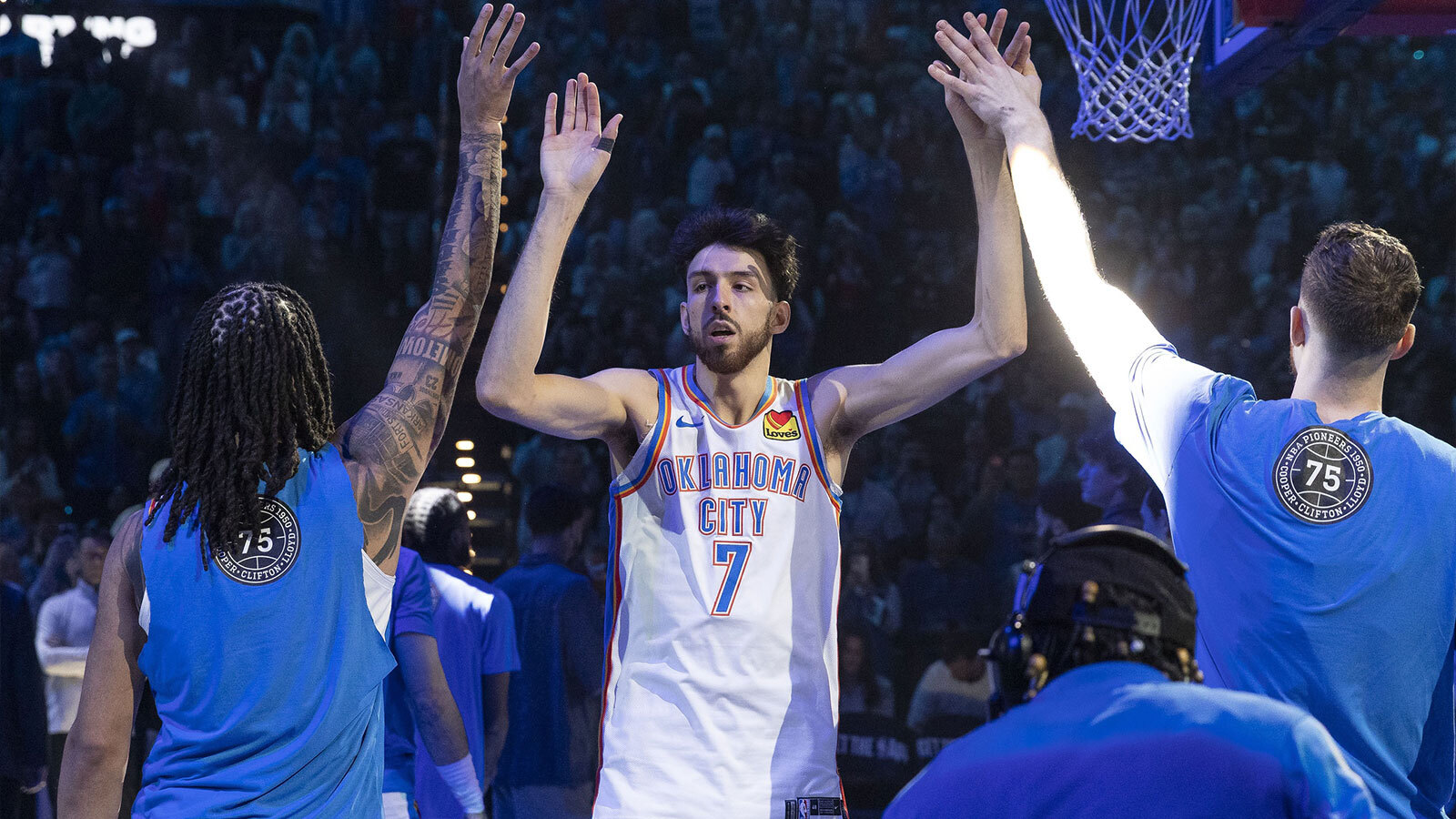
The Thunder began the 2025-26 season playing like a dynasty determined to form rather than a champion satisfied with one ring. Any fears of a title hangover were obliterated almost immediately as OKC stormed to a historic 24-1 start. They tied the 2015-16 Warriors for the best 25-game opening in NBA history.
Everything about their profile screamed sustainability. Shai Gilgeous-Alexander elevated his MVP case to another stratosphere. He is currently averaging a career-high 31.8 points per game while maintaining elite efficiency and late-game composure. The offense hummed, but it was defense that cemented Oklahoma City’s supremacy. Anchored by Isaiah Hartenstein, the Thunder currently boast the league’s No. 1 defensive rating at 107.3. His physical interior presence frees Chet Holmgren to operate as a roaming weakside disruptor. That’s arguably the most devastating defensive pairing in the NBA.
By early February, the Thunder sat atop the Western Conference at 40-13. They wielded a staggering +11.9 net rating that dwarfed the rest of the league. They were flat out overwhelming opponents on both ends.
Injuries shift calculus
Yet championship seasons rarely follow smooth scripts. Just 48 hours before the trade deadline, Oklahoma City’s aura of invincibility took a hit when SGA was sidelined with a significant abdominal strain. Suddenly, the Thunder’s margin for error narrowed.
The injury list didn’t stop there. Jalen Williams was managing a hamstring issue, while Nikola Topic remained unavailable. The timing forced Presti into a philosophical crossroads. He could either double down on internal depth, or leverage Oklahoma City’s unmatched draft capital for immediate reinforcements.
The Thunder opted for subtle reinforcement rather than seismic change. They acquired sharpshooter Jared McCain from Philadelphia to stabilize the depleted backcourt. However, they notably passed on adding veteran frontcourt depth. That omission has since become the defining debate of their deadline strategy.
Calculated, conservative
Oklahoma City’s moves were precise but restrained. McCain arrived in exchange for a Houston-via-OKC first-round pick and three second-rounders. That deal aimed more for long-term flexibility than present contribution. Ousmane Dieng was moved in a salary-clearing maneuver, too. The team quietly acquired the draft rights to Balsa Koprivica in a cap-related stash transaction.
On paper, analysts labeled the Thunder deadline efficient. No overpays, desperation, or panic. That said, championship defense often demands excess insurance instead of efficiency.
Core mistake
If the Thunder fall short of repeating, the defining narrative may center on their failure to acquire a high-impact veteran center.
Sure, the McCain addition addressed short-term guard depth in Gilgeous-Alexander’s absence. However, the frontcourt remained precariously thin. Behind Holmgren and Hartenstein, Oklahoma City relies on Jaylin Williams and small-ball configurations featuring Kenrich Williams. That’s workable in February. It’s dangerous in May.
Playoff basketball is attritional. Matchups become bruising. Rotations tighten. And in a Western Conference suddenly fortified by elite size, the Thunder’s lack of a third reliable playoff-caliber big looms as a structural vulnerability.
Health roulette in the paint
The Thunder are effectively betting their title defense on the health of two players with physically taxing roles. Holmgren’s wiry frame has held up admirably, but his rim-protection responsibilities are immense. Hartenstein’s physical style invites contact nightly.
One injury or even foul trouble in a playoff series would force Oklahoma City into undersized lineups against teams built to punish them inside. The regular season allows schematic creativity. The playoffs punish it.
Free agency cloud
There is also a looming contractual subplot. Hartenstein holds a $29 million club option for the 2026-27 season. League insiders already view him as a potential free-agency target, particularly for frontcourt-needy contenders like Dallas.
By not acquiring another starting-caliber big now, Oklahoma City has doubled its risk exposure. They must rely on Hartenstein’s health for a repeat title run while simultaneously preparing for the possibility of losing him this summer.
A rental acquisition, someone capable of absorbing playoff frontcourt minutes, would have insulated both scenarios. Instead, the Thunder chose continuity over contingency.
Championship math, asset preservation
The broader deadline landscape only sharpens the critique. Across the league, contenders moved aggressively. James Harden landed in Cleveland. Darius Garland shifted to the Clippers. Trae Young was dealt to Washington in a franchise-altering swing.
Oklahoma City possessed the draft capital to outbid nearly every suitor in the league. Yet they resisted the gravitational pull of the market.
That restraint is philosophically consistent with Presti’s long-game stewardship. Still, championship windows are temporal, not theoretical. When you are defending a title with the league’s best record, discipline can blur into passivity.
Presti’s calculus is understandable, of course. Oklahoma City’s core is young, cost-controlled, and positioned to contend for years. Burning premium assets for a short-term rental contradicts the franchise’s sustainability model.
On the other hand, repeating as champions is historically rare. Injuries, variance, and matchup chaos can close windows faster than projected. Asset preservation has value, but banners carry more. The Thunder had an opportunity to turn a dominant roster into an unassailable one. They chose instead to trust internal resilience.
Discipline under the microscope

The Thunder didn’t make a reckless trade or mortgage their future. They didn’t panic.
That said, championship management isn’t judged on restraint but on rings. Oklahoma City remains the title favorite, powered by elite defense, MVP brilliance, and systemic cohesion. Yet if their repeat bid falls short due to frontcourt fatigue or injury attrition, the postmortem will be clear. The Thunder protected tomorrow when they might have needed to insure today.
More must-reads:
- Four players ejected after altercation between Pistons, Hornets
- Damian Lillard making an improbable return to All-Star Weekend
- The 'Super Bowl coaches since 2000' quiz
Breaking News
Trending News



Customize Your Newsletter
 +
+



Get the latest news and rumors, customized to your favorite sports and teams. Emailed daily. Always free!
PRIVACY POLICY EDITORIAL POLICY CONTACT US
ABOUT YARDBARKER TERMS OF SERVICE


Use of this website (including any and all parts and
components) constitutes your acceptance of these
Terms of Service and Privacy Policy.
This site is for entertainment purposes only.
There is no gambling offered on this site.
Gambling Problem? Call 1-800-Gambler.
