
-

-


Follow Us
-

 On Facebook
 On Flipboard

The NFL has never lacked elite talent. What it has lacked is organizations capable of protecting it. Across three decades, franchises have burned through Hall of Fame-caliber players—not because the talent failed, but because the systems around them did. From ignored scouting warnings to catastrophic contract decisions, these ten cases reveal a pattern of organizational dysfunction that continues to destroy careers today. Your team’s star might be next.
10. Washington Trapped Heath Shuler in the Wrong System
Washington selected Heath Shuler third overall in 1994 and placed him under coach Norv Turner in an offensive system that was a poor match for his skill set. The fit issue derailed Shuler before he had a real chance to develop. Meanwhile, Rick Mirer—drafted second overall by Seattle in 1993—showed minimal career progression after a decent rookie year. Both cases illustrate how scheme mismatches can systematically derail quarterback prospects.
9. Cincinnati Bengals Drafted Akili Smith Third Overall in 1999
The Bengals selected Akili Smith with the third overall pick in 1999, passing on a chance to trade the pick to New Orleans, where Mike Ditka had famously offered nearly his entire draft for that selection. Smith’s career production was disastrous: a sub-50% completion rate, more interceptions than touchdowns, and only a handful of starts before he was out of the league by 2003. The pick remains one of the most cited draft busts of the era. It is a textbook case of a franchise overruling internal concerns about a prospect’s readiness.
8. St. Louis Rams Drafted Lawrence Phillips Despite Every Red Flag
The St. Louis Rams drafted Lawrence Phillips sixth overall in 1996 despite well-documented behavioral issues. The organization gambled that raw talent would override character concerns. It didn’t. Phillips was released due to off-field problems and bounced through multiple teams before leaving the league entirely. His case remains one of the starkest examples of a franchise ignoring red flags because draft position created a sunk-cost trap too powerful to resist.
7. Cleveland Browns Mismanaged Baker Mayfield Out the Door
Baker Mayfield’s Cleveland exit in 2022 followed a now-familiar pattern: management conflict, then a quick trade to Carolina after the Browns acquired Deshaun Watson. The No. 1 overall pick from 2018 had already delivered Cleveland’s first playoff win in decades, but the front office moved on without a clear succession plan. Mayfield’s later resurgence in Tampa Bay underscored that the talent was never the problem. The organization’s decision-making was.
6. Oakland Raiders Squandered Randy Moss in His Prime
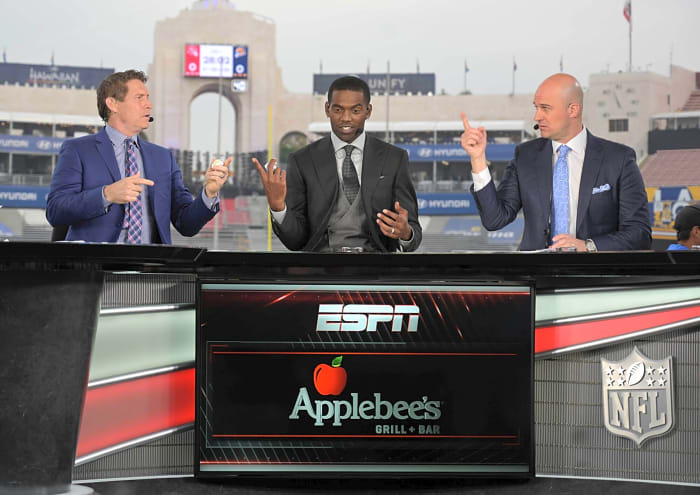
Randy Moss was one of the most explosive receivers in NFL history when the Minnesota Vikings traded him to the Oakland Raiders in 2005. Surrounded by a dysfunctional roster and lacking competent quarterback play, Moss’s production plummeted. The same talent that terrorized defenses in Minnesota looked diminished in Oakland—not because his ability faded, but because the organization couldn’t support it. He later proved his elite status remained intact with New England, posting a record-setting 23-touchdown season in 2007.
5. Pittsburgh Steelers Imploded Alongside Antonio Brown
By the end of the 2018 season, the relationship between Antonio Brown and the Pittsburgh Steelers had completely collapsed. Brown was one of the most productive receivers in the league, but front office friction and locker-room conflict pushed him out, and he was traded to Oakland in March 2019. The Steelers didn’t lose Brown to injury or decline—they lost him to organizational mismanagement. It is a case study in how internal dysfunction can erase even the most consistent statistical production.
4. Detroit Lions Wasted Barry Sanders’ Entire Prime
Barry Sanders didn’t just play for the Detroit Lions—he single-handedly dragged them to the playoffs five times despite limited organizational support. A Hall of Fame running back with 15,269 career rushing yards, Sanders produced elite numbers on a team that hovered around .500 during his tenure. Detroit never built a competent system around him. He retired abruptly in 1999, walking away from football rather than enduring more dysfunction. The Lions wasted a generational gift.
3. Detroit Lions Broke Calvin Johnson Before He Turned 31
Calvin Johnson—”Megatron”—was on a Hall of Fame trajectory when he stunned the football world by retiring after the 2015 season at age 30. Still in his prime, Johnson cited the physical toll of the game and frustrations tied to the organization. Detroit had a generational receiver and surrounded him with mediocrity. Johnson’s early exit proved that even transcendent talent has a breaking point when the system fails.
2. San Francisco 49ers Pushed Joe Montana Out for Steve Young
Joe Montana is a four-time Super Bowl champion and one of football’s greatest players. After missing nearly two full seasons with an elbow injury, San Francisco committed to Steve Young as the starter and ultimately traded Montana to Kansas City in 1993. Montana later spoke publicly about his frustration with how the transition was handled, indicating he was not ready to leave on the team’s terms. Even Hall of Famers can be destabilized when organizations prioritize succession planning over player buy-in.
1. Arizona Cardinals Released Kyler Murray With $54 Million in Dead Cap

The Arizona Cardinals signed Kyler Murray to a five-year deal worth roughly $230 million in 2022, then released him in March 2026. The release created approximately $54.7 million in dead cap charges, which the Cardinals chose to spread across two seasons via a post-June 1 designation. That dead cap handcuffed Arizona’s salary flexibility and complicated meaningful roster rebuilding. The contract has since become a cautionary tale across the league for guaranteed-money structures attached to volatile quarterback play.
The Pattern Never Stops—And Daniel Jones Proves It

The New York Giants released Daniel Jones in November 2024 after years of organizational instability, and he subsequently signed with the Minnesota Vikings. Jones isn’t an isolated case—he’s proof this pattern spans from Barry Sanders in the 1990s through today. Generational talent doesn’t die from lack of ability. It dies from broken coaching fits, dead cap handcuffs, and front offices that ignore their own experts. The system destroys what it should protect. Which franchise do you think wasted the most generational talent—and which active star do you fear is next? Sound off in the comments.
More must-reads:
- Aaron Rodgers' return means Steelers are destined for more of the same
- Cameron Heyward seems to confirm Aaron Rodgers has made Steelers decision
- The 'NFL's active 1K-rushers' quiz
Breaking News
Trending News





Customize Your Newsletter
 +
+




Get the latest news and rumors, customized to your favorite sports and teams. Emailed daily. Always free!
PRIVACY POLICY COOKIE POLICY CONTACT US
ABOUT YARDBARKER TERMS OF SERVICE


By using this site, you agree to our Terms of Service and Privacy Policy.
This site is for entertainment purposes only.
There is no gambling offered on this site.
Gambling Problem? Call 1-800-Gambler.
