
-

-


Follow Us
-

 On Facebook
 On Flipboard


Troy Aikman sat in front of ESPN cameras on a Tuesday morning and said something nobody expected from him. The Hall of Famer, who had spent months questioning Jalen Hurts’ limitations, reversed course entirely. “I believe Jalen can do anything that he’s asked to do,” Aikman declared on “Get Up.” Confident. Definitive. The kind of endorsement a $255 million quarterback needs heading into the most consequential season of his career. Except six weeks earlier, ESPN published something that made those words land differently than Aikman intended.
The Bombshell Nobody Forgot
On March 31, ESPN dropped a report detailing internal friction that had been festering inside the Eagles offense throughout 2025. Sources described Hurts pushing back on offensive changes, resisting going under center, and altering playcalls so frequently that teammates couldn’t anticipate what was coming. “You never know what play is coming out of the huddle when Hurts is leading it,” one team source told ESPN. The relationship between Hurts and A.J. Brown, tested across four seasons, showed visible cracks. Aikman’s praise arrived into that wreckage.
Seven Coordinators, Seven Years
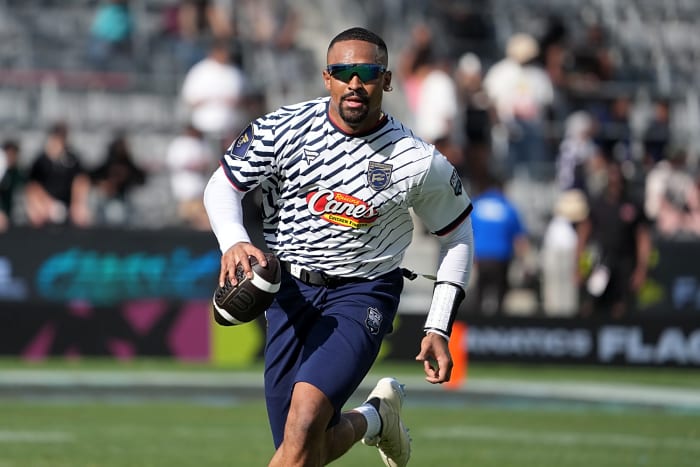
The easy assumption is that Hurts simply can’t learn new systems. Seven offensive coordinators in seven NFL seasons would break most quarterbacks. That level of instability is unprecedented in the modern league. But Aikman argued the opposite: that surviving seven systems proves Hurts can adapt to anything. It sounds reasonable until you read the ESPN report’s specifics. Hurts logged just 107 snaps under center despite Sean Mannion’s West Coast scheme demanding exactly that. The talent was never the question. The willingness was.
The Contradiction That Changes Everything
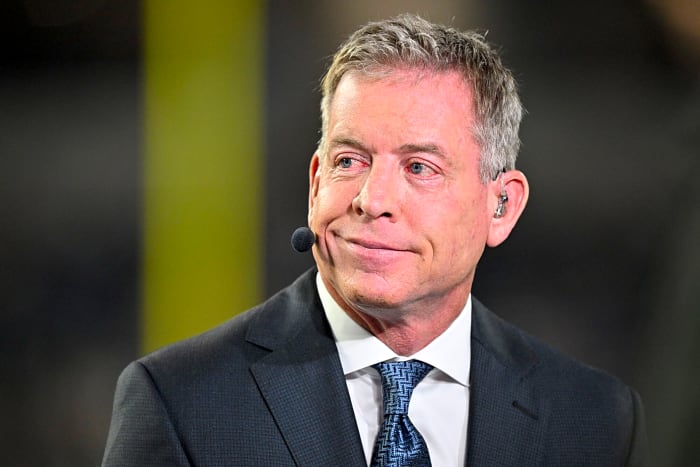
Aikman said Hurts can do anything he’s asked to do. ESPN documented that Hurts refuses to do what he’s asked to do. Both statements exist simultaneously, sourced credibly, separated by six weeks. That gap is the entire story. A Hall of Famer vouching for ability. Teammates describing a quarterback who overrides the game plan. The Eagles publicly backing their franchise player. The same organization structuring his contract with a 2027 decision point. Ability versus willingness. And 2026 is the year the organization finds out which one wins.
The Contract Tells the Real Story
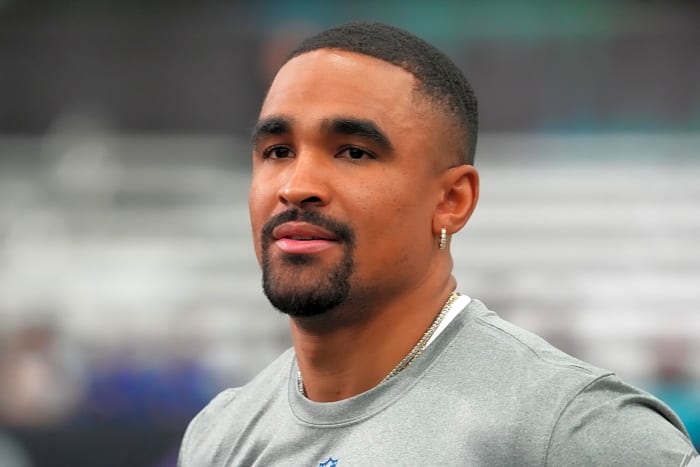
Forget what Aikman said. Forget what Lurie, Sirianni, and Roseman said publicly. Read the contract. Hurts signed a five-year, $255 million extension, the highest-paid deal in NFL history at signing. 2026 is his last fully guaranteed year at $51.5 million, with only $22 million of his 2027 salary guaranteed. His base salary in 2026 is roughly $1.215 million. The real money arrives through a roughly $50.28 million option bonus. After that, the Eagles face a $67 million dead cap decision in 2027. The money says “prove it.” Everything else is noise.
The Numbers Behind the Noise
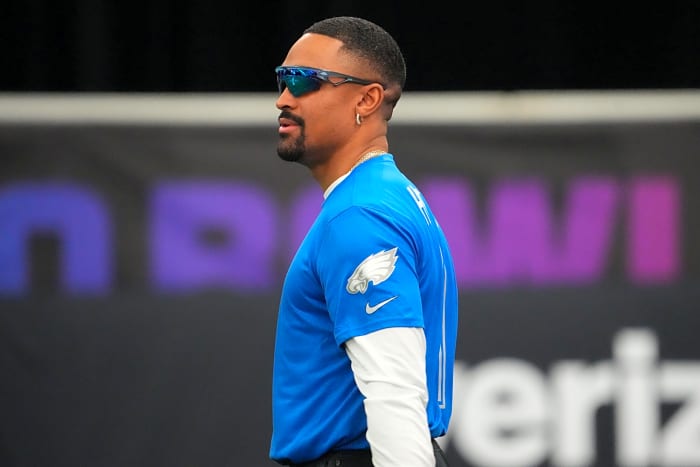
Hurts’ $179.3 million in guarantees ranked second in NFL history at signing, behind Deshaun Watson’s $230 million. Yet the Eagles have no plans to extend Hurts this offseason, even though teams with franchise quarterbacks routinely restructure deals. That silence screams louder than any press conference. Meanwhile, the organization drafted Makai Lemon at No. 20 overall and Eli Stowers at No. 54, weapons designed for Mannion’s scheme. Howie Roseman called the ESPN report “unfair.” Then he drafted as if every word of it were true.
Who Pays When This Breaks
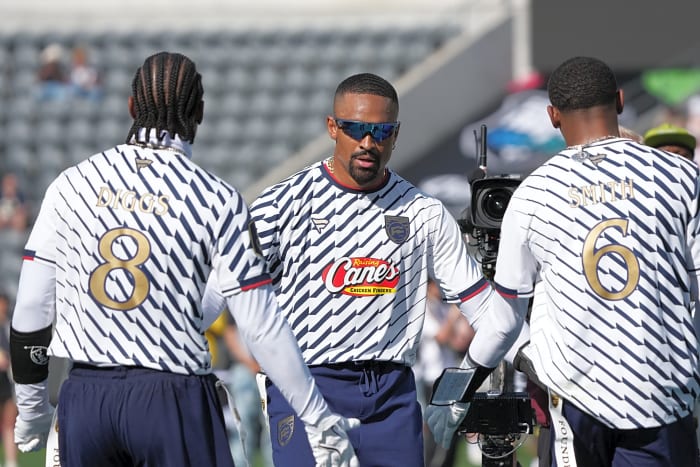
If Hurts reverts to documented patterns, the casualties stack fast. Sean Mannion becomes the scapegoat, coordinator number eight in a system that never had a chance. A.J. Brown’s partnership with Hurts either stabilizes in its fourth year or fractures beyond repair. Nick Sirianni’s job security, already questioned, evaporates entirely. The Eagles absorb a $67 million dead cap hit but gain freedom to find a replacement quarterback for 2028. One season of resistance could cost five careers besides Hurts’ own.
The Precedent Nobody Sees Coming
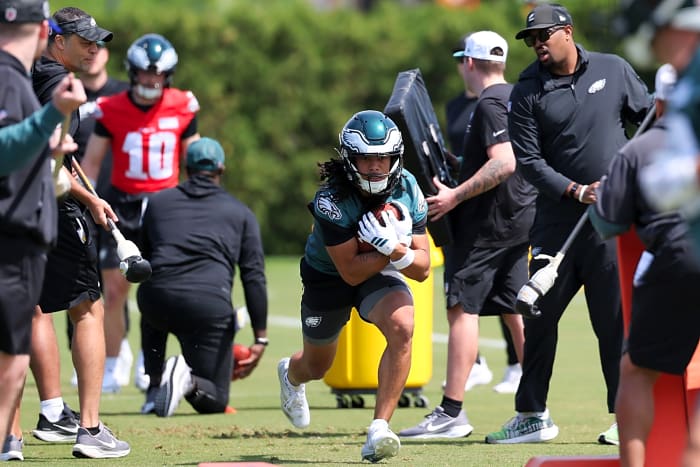
Once you see the pattern, you can’t unsee it. The Eagles guaranteed loyalty through money, prepared contingency through contract structure, and communicated expectations through draft picks rather than direct conversation. Players leaked frustration to national media because internal channels were closed. Leadership defended Hurts publicly while anonymous sources documented his resistance privately. This is how modern NFL organizations manage uncertainty: project commitment, hedge everything, let the contract deliver the ultimatum the front office won’t say out loud. Philadelphia didn’t invent this model. They perfected it.
The Season That Decides Everything
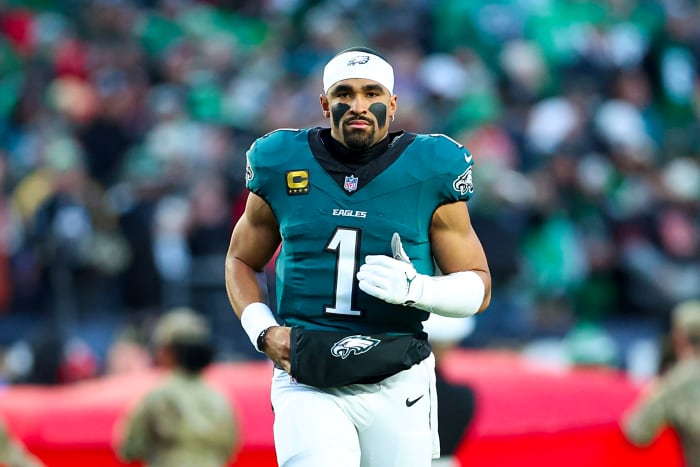
Jeremy Fowler reported Hurts is “fully bought in” to Mannion’s changes. That phrase alone reveals the problem. “Fully bought in” only gets reported when prior buy-in was missing. Every preseason snap under center, every game-plan throw into a tight window, every playcall left unaltered will be monitored obsessively by media and front office alike. If Hurts adapts, the extension conversation reopens. If he doesn’t, the 2027 decision activates. Philadelphia built a $255 million prove-it deal, and the proving starts in months.
What Aikman Really Told You
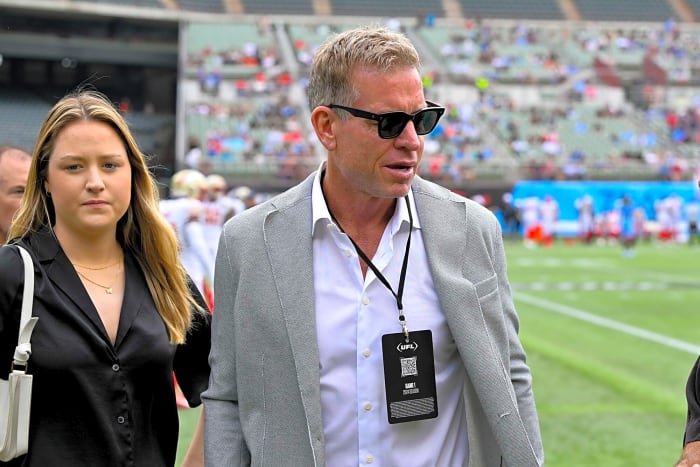
Aikman’s statement wasn’t confidence. It was positioning. A three-time Super Bowl champion went on national television six weeks after the most damaging quarterback report of the offseason and said the exact thing the organization needed someone credible to say. The timing, the platform, the reversal of prior criticism. None of it was accidental. The real message lives in the contract structure, not the quotes. Most fans heard a Hall of Famer defending their quarterback. The sharper read: an institution managing the narrative around a man who has one season to prove he’ll listen. So which side do you trust — Aikman’s endorsement, or the contract the Eagles actually wrote? Tell us in the comments whether 2026 ends with an extension or an exit.
More must-reads:
- Browns may have a new threat to Shedeur Sanders
- ESPN's Adam Schefter gives huge injury updates on Chiefs' Patrick Mahomes, Packers' Micah Parsons
- The 'NFL's active 1K-rushers' quiz
Breaking News
Trending News



Customize Your Newsletter
 +
+



Get the latest news and rumors, customized to your favorite sports and teams. Emailed daily. Always free!
PRIVACY POLICY COOKIE POLICY CONTACT US
ABOUT YARDBARKER TERMS OF SERVICE


By using this site, you agree to our Terms of Service and Privacy Policy.
This site is for entertainment purposes only.
There is no gambling offered on this site.
Gambling Problem? Call 1-800-Gambler.
