
-

-


Follow Us
-

 On Facebook
 On Flipboard


The Buffalo Bills will host the Detroit Lions on September 17 for a Thursday Night Football primetime debut inside a $2.1 billion stadium that is on track to open before construction is fully complete. That’s not a typo. The NFL’s most expensive new venue opens for business while construction crews still occupy the building. The original budget was $1.54 billion. The original completion target was June 2026. Both numbers shifted. What replaced them is a roughly $560 million cost overrun and a certificate-of-occupancy workaround that treats “mostly done” as good enough for tens of thousands of fans. The ripple from this decision reaches further than Buffalo.
Why the Building Can’t Wait
Bills President of Business Operations Pete Guelli has made clear the timetable will not slip. The NFL schedule locked September 17 as the first regular-season game at the new venue. Amazon Prime Video locked the broadcast window for Thursday Night Football. The league doesn’t move dates for concrete. So the Bills are pursuing a certificate of occupancy that lets them legally operate the venue while workers finish remaining items, with full completion expected after the stadium opens.
What Fans Walk Into
Bills fans waited more than five decades for a new stadium. The old Highmark Stadium opened in 1973. What greets them in September is a venue still under active construction. The hydronic snow-melt system, the canopy covering the majority of seats, the upper deck positioned closer to the field: all of it operational by kickoff, with finishing work continuing behind the scenes. Premium seat holders paid for a finished product. They’re getting a preview. Which, honestly, is kind of the deal of the century or the insult of it.
The $560 Million Nobody Budgeted For
The original price tag was $1.35 billion when the deal was struck in March 2022, and the contract figure used to set responsibility was $1.54 billion. Public funding covered $850 million: $600 million from New York State, $250 million from Erie County. Then costs ballooned to “north of” $2.1 billion, with Terry and Kim Pegula responsible for picking up the more than $560 million in overruns beyond $1.54 billion. That turned the largest construction project in Western New York history into something else entirely: a franchise betting its financial future on a building it couldn’t finish on time. The state owns the facility through Empire State Development. The Bills operate it. And the Pegulas ate the overage. The concession math just changed for every hot dog sold inside.
The Broadcast Machine Doesn’t Care About Drywall
Amazon Prime Video has grown into the exclusive Thursday Night Football home and continues to draw a major national audience. That audience expects a spectacle on September 17. A still-finishing stadium hosting Josh Allen against the Lions isn’t a construction delay story to Amazon. It’s a narrative goldmine. The broadcast will frame the venue as cutting-edge. The cameras will avoid the scaffolding. Same mechanism, different industry, identical result: the content schedule bends the physical world to fit the screen.
The System Behind Every New Stadium
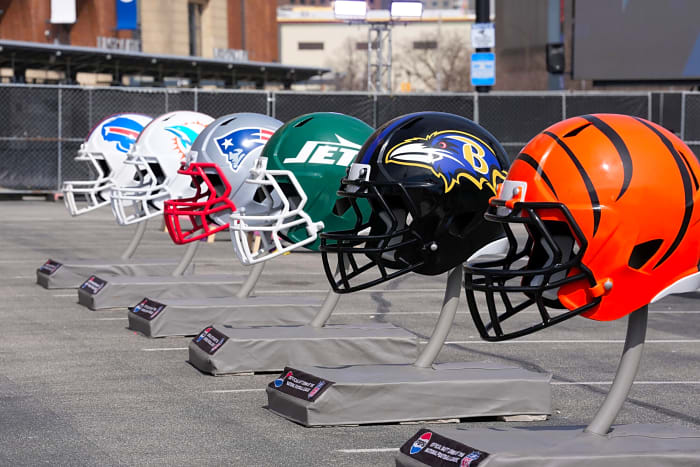
Here’s what connects every ripple. Modern sports infrastructure doesn’t open when the building is fully ready. It opens when the schedule demands it. Certificate-of-occupancy law makes this possible: hit safety thresholds, and the venue operates legally while crews finish behind the scenes. Public funding models assume cost overruns get absorbed privately, exactly as the Pegulas did here. Broadcast contracts assume venues exist on time. The NFL season starts. Stadiums follow. Buffalo to broadcast booth to construction site. One system. One timeline. Your seat might be finished. The hallway behind it might not be.
The Workers Still on the Clock
Construction has been a multi-year effort since groundbreaking, with hundreds of workers reporting to the site at peak. When fans fill those seats in September, some of those workers will still be there. Not as spectators. As employees finishing a job that started after the 2022 deal was signed. Sports Business Journal has highlighted how inflation, labor costs, and added design features pushed the price up. Built for the weather, sure. Built fully on time? That part got defeated months ago. And the workers know it better than anyone.
A New Playbook for Every Future Stadium Deal
Buffalo just wrote the precedent. If a $2.1 billion venue can open before completion and the NFL doesn’t blink, every future stadium negotiation changes. Cities demanding completion guarantees lose leverage. Franchises can point to Buffalo and say: we opened, the league approved it, and the season went on. The old Highmark Stadium hosted regular-season football for more than five decades. The new one couldn’t wait for one full construction cycle. Once you see that math, every stadium ribbon-cutting looks different.
Who Wins and Who Pays
Amazon wins. A stadium debut on primetime Thursday night is premium content, and the construction backstory only adds drama. The Bills win long-term: the venue features modern premium seating that commands top dollar. The losers? Season ticket holders experiencing an incomplete product at full price. Visiting teams like Detroit walking into an unfamiliar facility. And Erie County taxpayers who committed $250 million to a project that blew past every original promise. The people who paid first get the finished product last.
Opening Is Just the Beginning
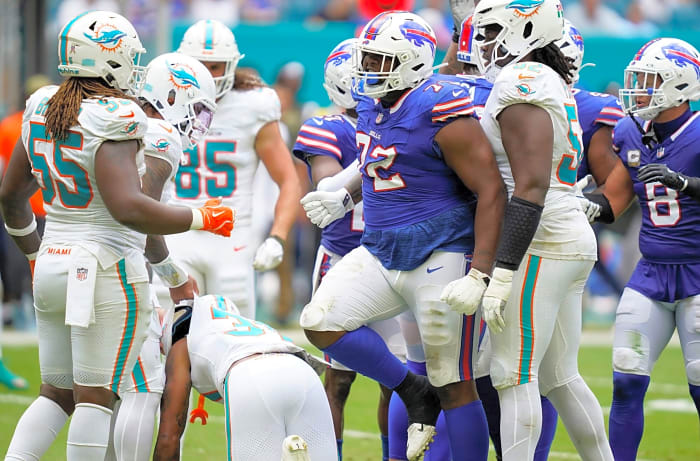
The September 17 debut doesn’t end the story. It starts the next chapter. Competing NFL markets will use Buffalo’s overruns as negotiation leverage, demanding penalty clauses and completion guarantees the Bills never faced. States and counties funding future stadiums will restructure deals around what happened here. If a system failure hits during the season, scrutiny follows. The cascade from one unfinished stadium in Orchard Park reaches every city council considering a billion-dollar sports commitment. The concrete is still drying, and the precedent is already set. Would you pay full price to sit in a stadium that isn’t finished — or is opening on schedule worth the trade-off? Tell us where you land in the comments.
More must-reads:
- Steelers get warning ahead of Mike McCarthy's inaugural season
- Browns may have a new threat to Shedeur Sanders
- The 'NFL's active 1K-rushers' quiz
Breaking News
Trending News





Customize Your Newsletter
 +
+




Get the latest news and rumors, customized to your favorite sports and teams. Emailed daily. Always free!
PRIVACY POLICY COOKIE POLICY CONTACT US
ABOUT YARDBARKER TERMS OF SERVICE


By using this site, you agree to our Terms of Service and Privacy Policy.
This site is for entertainment purposes only.
There is no gambling offered on this site.
Gambling Problem? Call 1-800-Gambler.
