
-

-


Follow Us
-

 On Facebook
 On Flipboard

One of the tricks the Denver Broncos have used to keep players' cap numbers low is the option bonus. The Broncos treat the option bonus like a signing bonus.
When the option is exercised, the money is then spread out over the remaining years of the contract. Sometimes, a team will add void years for cap reasons.
The option bonus can be useful if used wisely, but it also means there aren't other ways to restructure a contract in most cases. And that's important when it comes to the Broncos' future seasons when it comes time for them to discuss a new contract with quarterback Bo Nix.
This brings us to one of the players who still has option bonuses remaining in his contract: defensive lineman Zach Allen. We touched on Patrick Surtain II's contract last, so let's examine Allen's deal and future status with the Broncos.
Contract Status
After signing his extension last summer, Allen has an option bonus of of $15.185 million that is due September 1, along with a $1.3 million base salary and a $765K per-game roster bonus, all fully guaranteed. Once the option is exercised, he'll carry a cap charge of $16.477 million.
In 2027, Allen has another option bonus due by September 1 for $20.89 million, a base salary of $1.345 million, and a per-game roster bonus of $765K. Of that money, $15.75 million became fully guaranteed last March, with the remainder to follow in March 2027. His cap charge will be $16.95 million when the option bonus is exercised.
In 2028, Allen no longer has an option bonus, but does have a $21.375 million base salary, of which $2.25 million becomes fully guaranteed in March 2027. He also has a $765K per-game roster bonus and will carry a cap charge of $37.34 million.
In 2029, Allen has a base salary of $24.48 million, a per-game roster bonus of $1.02 million, and a cap charge of $37.515 million. He has five void years from 2030 to 2035 for cap purposes.
Future Outlook
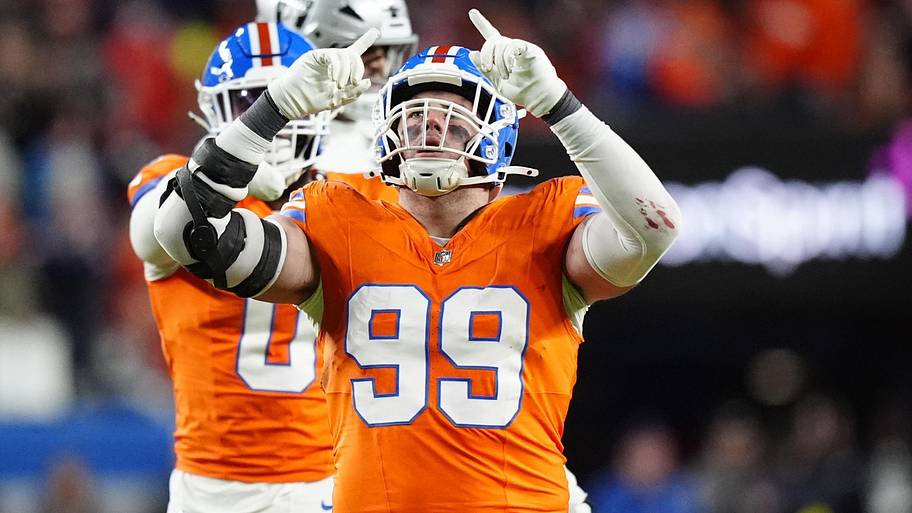
From a practical standpoint, Allen will be with the Broncos through 2027. The Broncos could get out of the deal in 2028, though it would come with a lot of pain.
In 2029, the Broncos would have a little more flexibility to get out of the deal, though the dead money charge would be considerable. In 2030, he would incur a $7.215 million dead-money charge unless he is extended.
The Broncos don't really have any way to reduce Allen's cap charge over the next two seasons, given the option bonuses that have been exercised. In 2028, they will have the ability to gain cap space, but the question is whether they should do so.
Allen will be 31 years old in 2028, and if his play starts to decline, the Broncos might have to move on in 2029. But if he does continue to play well, the Broncos still need to be careful about restructuring his deal.
While Allen does have multiple void years in his contract, if the Broncos restructure his deal in 2028, that's more dead money they would incur once his deal expires. That's why the Broncos need to exercise caution at that point.
The Takeaway
Allen's status with the Broncos isn't in question for the next two seasons. Once 2028 arrives, it's likely the cap will continue to rise, which will help accommodate his cap charge that year.
The Broncos will need to continue drafting well so they can get more players rostered who carry lower cap charges. They can consider option bonuses for younger players they want to extend to help with the cap situation.
But when it comes to Allen's cap charge, the Broncos should view any potential contract restructures in 2028 and 2029 as "in case of emergency only." They can keep him if he continues to play well, but they need to resist the temptation to restructure to add more players.
Allen's contract will be cap-friendly for the next couple of seasons due to the option bonuses. But in future seasons, the Broncos will be better off taking the higher cap charges to minimize the cap impact when his deal expires.
More must-reads:
- Giants sign insurance QB after season-ending Jaxson Dart injury
- Bears reveal Caleb Williams' official status for 'Monday Night Football'
- The 'Active NFL catch leaders' quiz
Breaking News
Trending News




Customize Your Newsletter
 +
+




Get the latest news and rumors, customized to your favorite sports and teams. Emailed daily. Always free!
PRIVACY POLICY COOKIE POLICY CONTACT US
ABOUT YARDBARKER TERMS OF SERVICE


By using this site, you agree to our Terms of Service and Privacy Policy.
This site is for entertainment purposes only.
There is no gambling offered on this site.
Gambling Problem? Call 1-800-Gambler.
