
-

-


Follow Us
-

 On Facebook
 On Flipboard

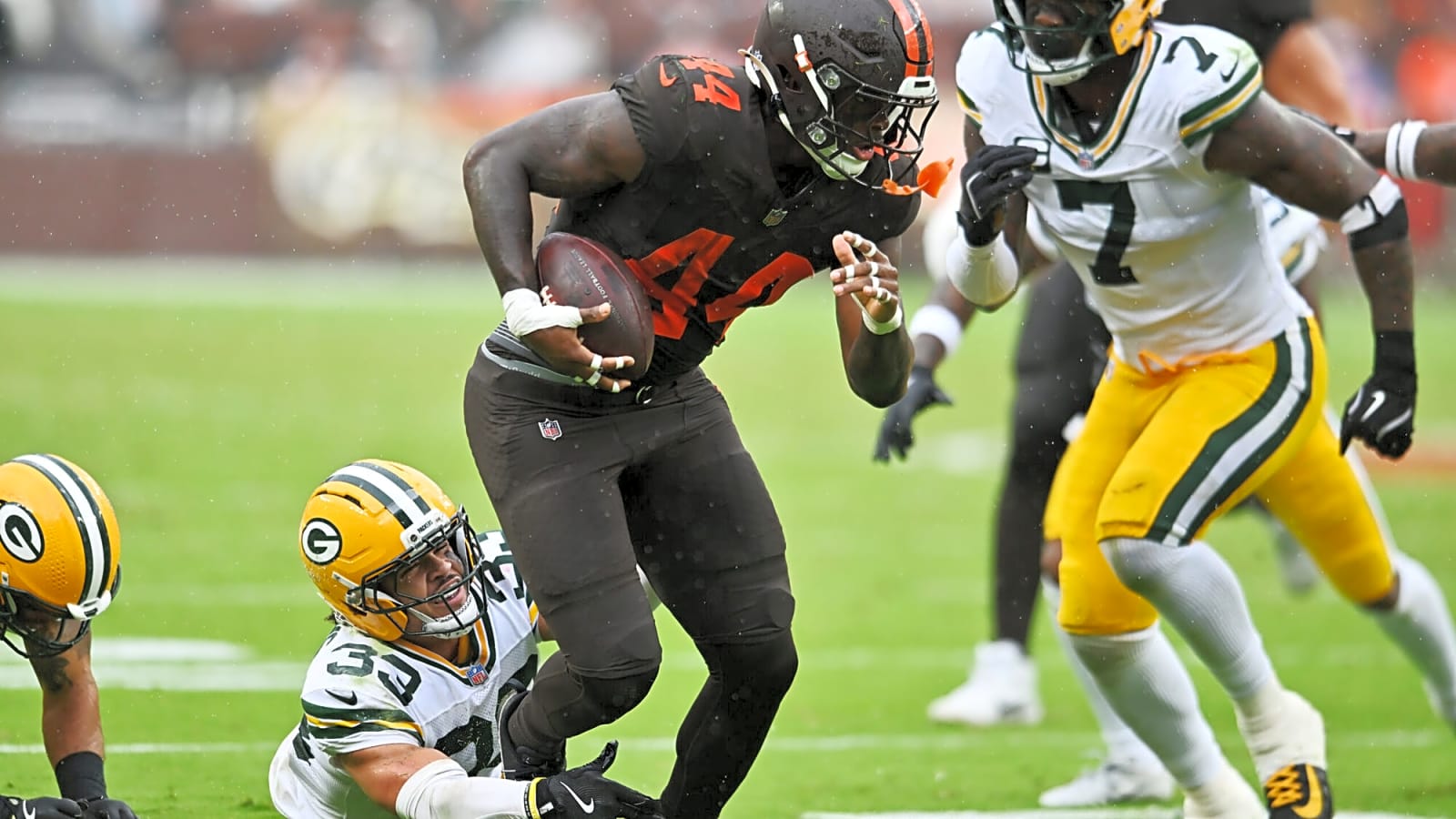
David Njoku signed a one-year deal worth up to $8 million with the Los Angeles Chargers on May 11, 2026, leaving the only franchise he ever knew. Nine seasons in Cleveland. 384 career receptions. 34 touchdowns. Second only to Hall of Famer Ozzie Newsome in Browns tight end history. And the organization replaced him with a third-round rookie who outproduced him by nearly 40 receptions last season. Njoku ranked 76th on The Athletic’s Top 150 free agents list and signed for up to $8 million on a rental agreement. The structure tells a bigger story than the signing.
Why Cleveland Let Him Walk
Harold Fannin Jr. posted 72 receptions in his rookie 2025 campaign — a Browns rookie record. Njoku managed 33. That production gap forced Cleveland’s hand. The Browns didn’t just move on from a veteran. They moved on from a philosophy: experience over output. Njoku missed 11 games across the 2024 and 2025 seasons, and his 293 receiving yards represented a 67% collapse from his 2023 Pro Bowl peak of 882 yards. Cleveland chose the cheaper, healthier, more productive option. Every other NFL front office took notes.
Why the Chargers Needed Him Now
The Chargers fired offensive coordinator Greg Roman after back-to-back playoff losses in which the team scored only 15 combined points — 12 against Houston in the 2024 wild-card round and 3 against New England in the 2025 wild-card round. Fifteen. That offensive sterility forced Jim Harbaugh to hire Mike McDaniel and rebuild the passing attack. Njoku fills a specific gap: McDaniel’s Shanahan-derived system requires pass-catching tight ends as a foundational piece, not blocking specialists. The Chargers released Will Dissly, a blocker, to free $4 million in cap space, then signed Njoku, a pass-catcher, just over two months later. Opposite skill sets. Same roster spot. The philosophy flipped overnight.
A Crowded Room Nobody Expected

Njoku arrives to find Oronde Gadsden II already established. The rookie posted 664 receiving yards in 2025. The Chargers also signed Charlie Kolar to a three-year, $24.3 million contract in March. Three pass-catching tight ends competing for targets in the same offense. McDaniel’s system can deploy multiple tight ends simultaneously, but targets are finite. Justin Herbert’s incumbent receiver group of Keenan Allen, Ladd McConkey, and Quentin Johnston already commands a heavy share. Njoku’s targets will come from somewhere. Gadsden’s development timeline just got compressed.
The Aging Tight End Market Reality
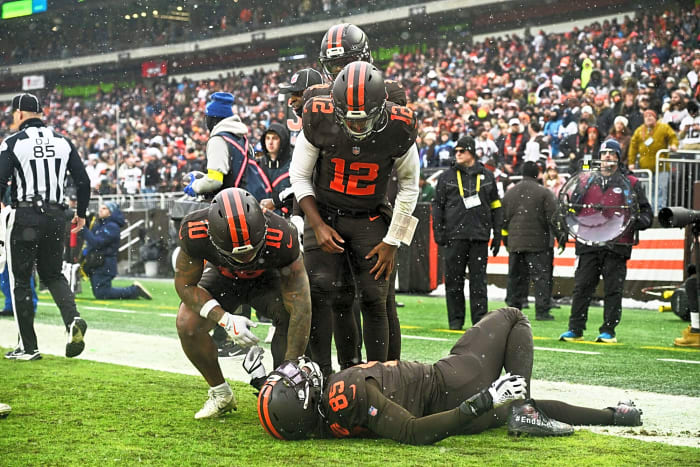
Njoku’s contract structure reveals something bigger than one negotiation. The NFL tight end free agent market has split into two distinct tiers: elite young players commanding premium multi-year deals, and veterans over 29 getting slotted into one-year prove-it structures. Njoku was ranked No. 76 in The Athletic’s Top 150 free agents heading into 2026. A first-round pick. A Pro Bowler. Outside the top 75. The league now prices production decline, not pedigree. That shift reaches every aging veteran at every position, and the correction accelerated this offseason.
Same Machine, Every Position
One mechanism connects every ripple. Coaching system changes create instant positional scarcity. McDaniel replaced Roman. Roman’s offense leaned on blocking tight ends. McDaniel’s requires pass-catchers. That single coaching hire made Dissly expendable and Njoku necessary inside the same offseason. Scheme change. Positional demand shift. Targeted acquisition at discount. The Chargers’ tight end overhaul, the Browns’ youth movement, Njoku’s market positioning: all products of the same structural force. When a coordinator gets fired, the roster consequences cascade across two franchises and an entire free agent class.
A Beautiful Journey to a Rental Agreement

After his contract voided on Feb. 10, 2026, Njoku publicly thanked Cleveland and announced his search for a new home. Read that knowing what followed. The “new home” is a one-year contract with performance escalators, on a team that already has two younger tight ends under longer deals. Beautiful journey. Temporary destination. The gap between what a veteran announces publicly and what the contract structure reveals privately is where the real story lives.
The New Rules for Veterans
Cleveland’s decision to replace a nine-year veteran with a third-round rookie sets a precedent other franchises will follow. The Browns proved that institutional loyalty carries zero contractual weight when a cheaper player outperforms. One-year prove-it deals have become the industry standard for age-30-plus veterans, functioning as risk-transfer mechanisms where teams acquire declining players at discount while retaining complete exit options. The Chargers haven’t won a playoff game since the 2018 season, and history says adding weapons alone changes nothing structural.
Who Wins, Who Loses, What to Watch
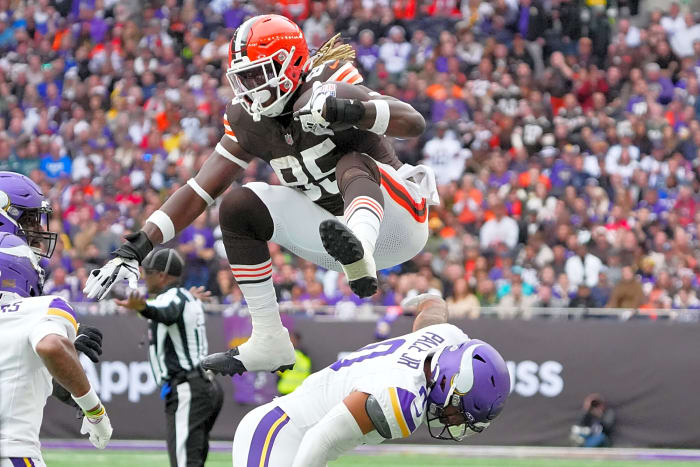
Winners: the Chargers, who acquired a former Pro Bowler at up to $8 million with zero long-term obligation. Cleveland, which freed cap space while upgrading production through Fannin Jr. Losers: Will Dissly, released to create cap room. Every aging tight end entering the 2027 market, now facing further valuation compression. And Njoku himself, who went from franchise cornerstone to a No. 76 free-agent ranking in three seasons. First-round pedigree, Pro Bowl credentials, Ozzie Newsome comparisons. None of it held the price.
The Cascade Keeps Breaking
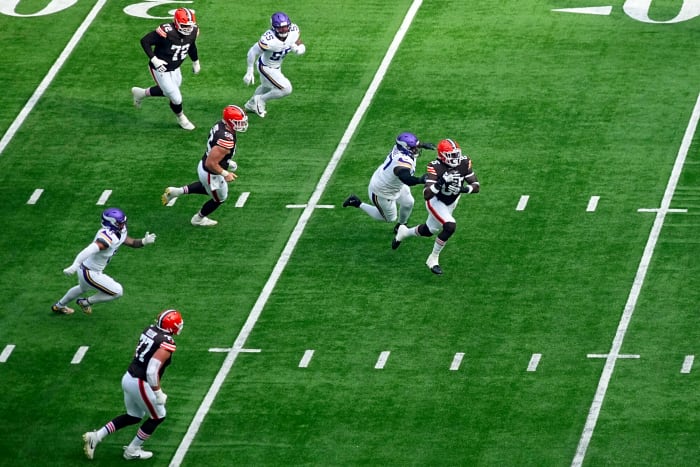
If McDaniel’s system resurrects Njoku’s production, every team in the league copies the template: fire your coordinator, hire a scheme innovator, acquire discounted veterans to fill the new system’s gaps. If Njoku’s decline continues, the Chargers release him with minimal cap damage and the prove-it market hardens further against aging players. Either outcome accelerates the same trend. Neither Cleveland nor Los Angeles built their future around David Njoku. Both used him as a temporary piece at the lowest possible cost. The “new home” was always a stopover. Did Cleveland just out-smart the rest of the league, or will Njoku make them regret letting a Pro Bowler walk for a rookie? Sound off in the comments.
More must-reads:
- Steelers get warning ahead of Mike McCarthy's inaugural season
- Browns may have a new threat to Shedeur Sanders
- The 'NFL's active 1K-rushers' quiz
Breaking News
Trending News



Customize Your Newsletter
 +
+




Get the latest news and rumors, customized to your favorite sports and teams. Emailed daily. Always free!
PRIVACY POLICY COOKIE POLICY CONTACT US
ABOUT YARDBARKER TERMS OF SERVICE


By using this site, you agree to our Terms of Service and Privacy Policy.
This site is for entertainment purposes only.
There is no gambling offered on this site.
Gambling Problem? Call 1-800-Gambler.
