
-

-


Follow Us
-

 On Facebook
 On Flipboard


Isiah Pacheco stood at a podium in Detroit wearing a fresh Lions polo, two Super Bowl rings still on his fingers, and told reporters he was starving. Not for money. Not for a roster spot. For something Kansas City’s dynasty never gave him. “I went to three Super Bowls but I’m unsatisfied,” he said. “I’m hungry and I’m dying to get back in that environment, especially with this crew here that’s never done it.” Behind him, the Chiefs had already moved on. The price tag for forgetting him was $45 million.
The Résumé That Shouldn’t Exist
Pacheco entered the NFL as a seventh-round pick, 251st overall, in 2022. By the end of his second season, he owned two championship rings and a line in the record book nobody else occupies: the only running back in NFL history to win two Super Bowls in his first two seasons. He scored a crucial touchdown in his Super Bowl debut. He piled up 547 playoff rushing yards, second-most in Chiefs franchise history. Four postseason touchdowns, third all-time in Kansas City. Then the dynasty quietly stopped needing him.
The Goal That Haunted Him

Every offseason, reporters asked Pacheco the same question. Every offseason, he gave the same answer: “Same thing: 1,000 yards. Let’s go get it.” He never got it. His closest shot came in 2023 with 935 yards. The Chiefs ran a committee backfield, splitting carries with Kareem Hunt, and Pacheco’s individual numbers suffered inside a system built to win games, not build stars. Two rings on his hand, zero 1,000-yard seasons on his ledger. That gap ate at him louder than any trophy could quiet.
The Body Broke Before the Dream Did

Pacheco’s 2024 season collapsed under injuries: a broken fibula cost him multiple games, a rib injury took another, and an MCL sprain further limited him. He finished his most recent season with 462 rushing yards on 118 attempts. His yards-per-carry dropped to 3.9, down from 4.7 in his first two seasons. Zero runs of 20 yards or more. A two-time Super Bowl champion averaging under four yards a carry, watching his replacement value crater in real time. Kansas City lost Super Bowl LIX to Philadelphia, 40-22, and Pacheco’s dynasty chapter closed with a blowout.
The $45 Million Goodbye

The Chiefs signed Kenneth Walker III to a three-year deal worth up to $45 million as Pacheco’s direct replacement. Pacheco signed with Detroit for one year and $1.81 million fully guaranteed. The math is brutal: Kansas City’s deal is worth roughly 25 times more in total value than what the Lions paid for a man who won two Super Bowls. That disproportion tells the whole story. Durability, not legacy, sets the market. Rings depreciate. Healthy legs appreciate. The Chiefs didn’t replace a champion. They replaced an injury risk.
The Committee Trap

Here is what most people miss about dynasty running backs: the system that wins championships is the same system that erases individuals. Pacheco shared carries. He accumulated 2,537 rushing yards across four seasons, solid but anonymous inside a machine designed around Patrick Mahomes. His playoff production was elite. His regular-season volume was committee-level. The rings proved the team worked. They proved nothing about whether Pacheco was a star or a cog. He wanted proof. Kansas City’s system would never provide it.
Detroit’s Discount Gamble

The Lions paired Pacheco with Jahmyr Gibbs, building a two-headed backfield for a fraction of Walker’s price. But there is a bitter irony baked into this move: Pacheco left a committee system in Kansas City and walked straight into another one in Detroit. His 1,000-yard dream now competes with an elite young back for touches. If his carry volume drops further, the personal milestone that drove him out of a dynasty could remain permanently out of reach, even on a new team hungry for its first Super Bowl title in franchise history.
The Precedent Nobody Saw Coming
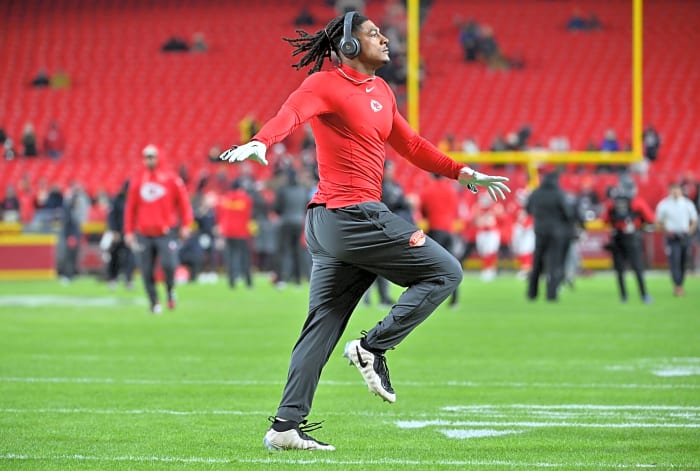
Pacheco’s departure rewrites the retention playbook for every dynasty in football. Rings used to be the ultimate loyalty tool. You won a championship, you stayed grateful, you took the discount. Pacheco proved that formula is dead. He wore his Super Bowl rings to his Rutgers graduation ceremony, criminal justice degree in hand, then walked into free agency weeks later. Trophies and diplomas on the shelf. Personal hunger still gnawing. If a two-time champion with a historic first leaves voluntarily, no role player is safe from ambition.
The Clock at 27
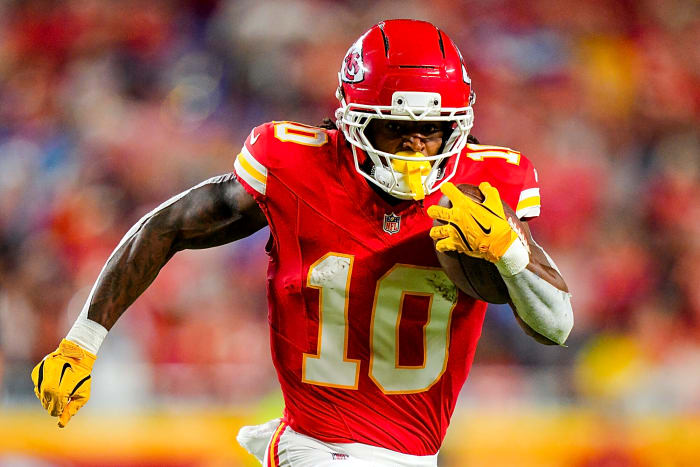
Two injury-plagued seasons have narrowed Pacheco’s window to a crack. Running backs decline fast, and his recent durability record gives no comfort. If Walker outperforms him on that $45 million deal, the narrative hardens: Pacheco needed the Chiefs more than they needed him. If Walker underperforms, Kansas City faces significant dead capital while the man they let walk chases history in Detroit. Either outcome reshapes how teams value championship-tested backs with broken bodies.
Rings Don’t Fill the Hole
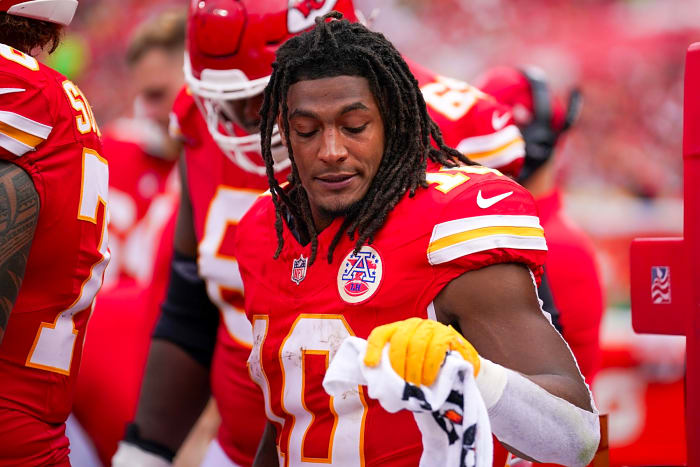
Pacheco told Detroit’s press conference exactly what drove him: “I’m hungry and I want to win it here, not anywhere else.” The word “here” carries all the weight. Not back in Kansas City, where he already won. Here, where nobody has. He wants to be the reason, not a passenger. Dynasties assume winning solves everything. Pacheco just proved it solves everything except the question that keeps elite performers awake: was it me, or was it the machine? Detroit gives him one season to answer.
Sources:
Detroit Lions Official, “Lions sign unrestricted free agent RB Isiah Pacheco,” March 11, 2026
ESPN, “Lions RB Isiah Pacheco eager to make his mark,” March 13, 2026
NFL.com, “Lions signing ex-Chiefs RB Isiah Pacheco following David Montgomery trade,” March 10, 2026
The Associated Press, “Chiefs land Super Bowl MVP Kenneth Walker on a 3-year deal worth up to $45M,” March 8, 2026
The Athletic, “Running back Isiah Pacheco agrees to free-agent deal with Lions,” March 10, 2026
Detroit Free Press, “Have Detroit Lions ever won the Super Bowl?,” January 10, 2026
More must-reads:
- Winners, losers from Day 3 of NFL Draft: Steelers make feel-good pick, Diego Pavia goes undrafted
- Five best fits from Day 3 of 2026 NFL Draft
- The 'No.2-overall NFL Draft picks' quiz
Breaking News
Trending News




Customize Your Newsletter
 +
+




Get the latest news and rumors, customized to your favorite sports and teams. Emailed daily. Always free!
PRIVACY POLICY COOKIE POLICY CONTACT US
ABOUT YARDBARKER TERMS OF SERVICE


By using this site, you agree to our Terms of Service and Privacy Policy.
This site is for entertainment purposes only.
There is no gambling offered on this site.
Gambling Problem? Call 1-800-Gambler.
