
-

-


Follow Us
-

 On Facebook
 On Flipboard

The helmet came off slowly. Charvarius Ward stood on the Indianapolis sideline, eyes fixed somewhere past the field, past the scoreboard, past anything football could measure. Three times in one season, the Colts’ $60 million cornerback walked into concussion protocol. Three times, the league’s medical staff pulled him from the only thing that still made sense after burying his daughter. Ten games vanished from a season that was supposed to prove the investment was worth it. The sideline kept finding him instead of the field.
The Contract That Raised the Stakes
Indianapolis handed Ward a three-year deal worth up to $60 million with $35 million guaranteed and a $20 million signing bonus, betting that the 2023 second-team All-Pro could anchor a rebuilt secondary. That kind of money buys a franchise cornerstone. It also buys expectations that don’t pause for tragedy. Ward arrived carrying credentials from a Super Bowl run with the 49ers and a 2023 season in which he led the NFL with 23 passes defensed. The Colts paired him with safety Camryn Bynum and pinned hopes on him stabilizing the boundary opposite a young secondary. Then Week 1 hit, and so did the first concussion.
A Season That Kept Breaking
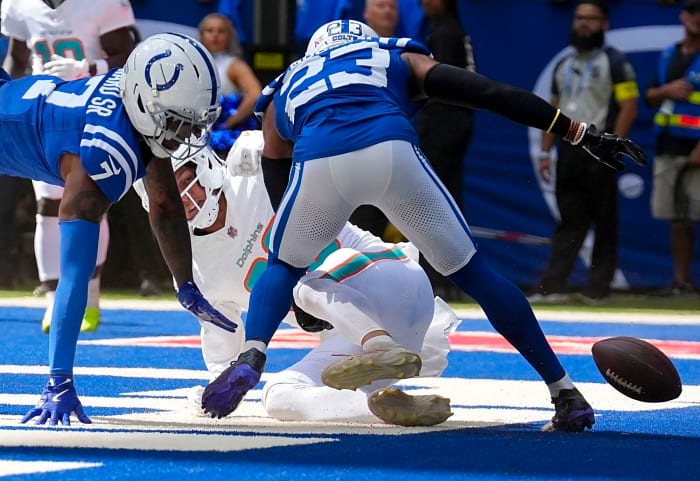
Ward entered concussion protocol after Week 1, returned, then suffered a second concussion during pregame warmups before the Week 6 game against the Cardinals after a violent collision with tight end Drew Ogletree. That second concussion sent him to injured reserve. He fought back, played again, and suffered a third concussion in Week 14 that ended his regular season for good. Three separate brain injuries in a matter of months. Each time he cleared protocol and suited up, the next blow arrived faster. The pattern looked less like bad luck and more like a body sending warnings nobody wanted to hear.
The Weight Nobody Listed on the Injury Report
Ward’s daughter Amani Joy died in October 2024, just shy of her second birthday. He has said publicly he hasn’t felt happiness since. On paper, the Colts listed “concussion” beside his name for those 10 missed games. Inside Ward’s head, those absences belonged just as much to the loss of his daughter as to any hit he took on the field. Multiple outlets reported that her death contributed directly to his thoughts of retirement. Concussions grounded him. Grief made him wonder why he’d ever get back up.
How Three Concussions Compound
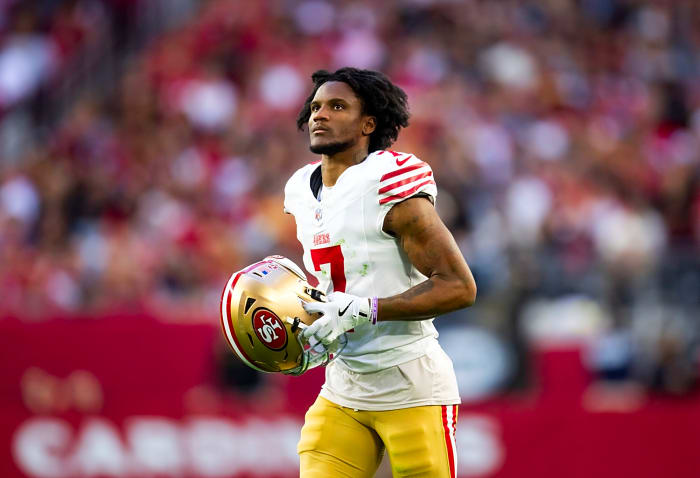
Post-concussion syndrome doesn’t negotiate. Ward described his second concussion as a “real-deal traumatic injury,” reporting dizziness, vomiting, and blurred vision that made basic tasks impossible, let alone covering NFL receivers at full speed. Three concussions in a single season create a compounding neurological problem where each recovery takes longer and each return carries higher risk. The brain doesn’t reset to zero between hits. It accumulates damage. Ward played seven games and recorded 17 solo tackles and 7 passes defensed. Solid numbers that hide the fact his brain was deteriorating between every snap.
Ten Games in a Seventeen-Game World

Ten missed games represents more than half the regular season. The Colts invested up to $60 million in a corner who watched the majority of their schedule from a hoodie on the sideline. Ward was placed on injured reserve, with that stint alone erasing weeks of defensive continuity. Indianapolis built a secondary around an aggressive free-agent overhaul. For most of 2025, they operated without their top corner. The cap commitment stayed. The coverage didn’t.
A Franchise Feeling the Ripple

Ward’s absence didn’t just hurt one position. It reshaped the entire defensive game plan under new coordinator Lou Anarumo. Opponents attacked his replacement’s side of the field. The Colts’ secondary investment was designed to lock down the boundary at a level the team had treated as an afterthought for years. Instead, they spent most of the year scrambling for depth. Every week Ward missed forced Indianapolis to adjust schemes, rotate backups, and absorb matchup losses they’d specifically paid to avoid. One player’s crisis became an entire unit’s problem.
The Precedent Ward Is Setting

Ward has spoken openly about working on his mental strength, affirmations, and faith as part of his return to football. That framing carries more weight than any stat line. He’s publicly naming mental health alongside physical rehabilitation as equal priorities, in a league where players have historically hidden both. Ward considered retirement after his second concussion due to lingering symptoms. He chose instead to come back, addressing grief and brain recovery simultaneously. Once you see that framing, his story stops being about one cornerback’s bad year and becomes a test case for how the NFL handles the collision between neurological damage and emotional trauma.
The Clock Nobody Talks About
Three concussions in one season raises a question the Colts and Ward both have to answer: what happens after the fourth? Every return carries escalating neurological risk. Ward’s contract runs through 2027, with his $12.9 million 2026 salary already vested as guaranteed in March 2026, meaning Indianapolis has years of cap commitment tied to a brain that’s already absorbed repeated trauma. If 2026 brings another concussion, the conversation shifts from comeback story to career-ending medical decision. The Colts can’t restructure neurology. They can only watch their investment step onto the field and hope.
Coming Back to a Game That Almost Broke Him
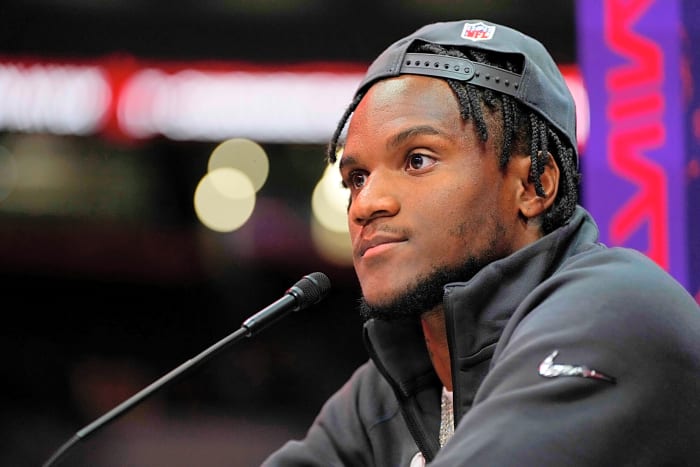
Ward has spoken publicly about how fame and football mean little without his daughter. Then he chose football anyway. That contradiction is the entire story. He returns to a sport that gave him three concussions in one year while carrying grief he says hasn’t lifted. Most people who read about his comeback will see an All-Pro reclaiming his career. The people paying attention will see a man testing whether the game that nearly broke him can also be part of what puts him back together. Do you think Ward should hang up the cleats while he still can, or has he earned the right to write his own ending? Drop your take in the comments.
More must-reads:
- How Tom Brady has been different amid Raiders' springtime workouts this year
- Jets' Geno Smith adds to Cade Klubnik hype amid tanking talk
- The 'NBA Coaches of the Year' quiz
Breaking News
Trending News





Customize Your Newsletter
 +
+




Get the latest news and rumors, customized to your favorite sports and teams. Emailed daily. Always free!
PRIVACY POLICY COOKIE POLICY CONTACT US
ABOUT YARDBARKER TERMS OF SERVICE


By using this site, you agree to our Terms of Service and Privacy Policy.
This site is for entertainment purposes only.
There is no gambling offered on this site.
Gambling Problem? Call 1-800-Gambler.
