
-

-


Follow Us
-

 On Facebook
 On Flipboard

The 2025 NFL Draft pulled in an average of 7.5 million viewers each day. This made it the second most-watched draft ever. Mel Kiper Jr. sat at the center of ESPN’s coverage, his “best available” board a constant presence on the screen for three days straight. Out of 32 first-round picks, Kiper got just four exactly right. That’s only 12.5%. ESPN did not blink. The draft is now a cultural juggernaut worth billions. Kiper, the face of the event, misses on seven out of eight picks, and the audience keeps watching.
The $400 Contract That Started Everything
In 1984, ESPN brought Kiper on board for just $400. The network was barely out of its infancy, only four years old. The draft took place in modest hotel ballrooms, barely a blip on the wider sports world’s radar. Kiper had been self-publishing draft guides since 1979, even as seasoned reporters told him he was wasting his time. He introduced the mock draft, a simple idea that became the playbook for an entire industry. That move gave ESPN a content goldmine and gave Kiper a status that mattered more than accuracy: he owned the whole category.
Your Draft Party Costs More Now
The spectacle Kiper helped create now draws crowds worthy of a music festival. Detroit’s 2024 draft set a new record: 775,000 fans showed up in person. Green Bay kept the momentum going in 2025, topping 600,000 and tying Nashville’s 2019 mark for second place. Cities now compete for hosting rights as if bidding for the Olympics. Rounds 2 and 3 brought in 7.5 million viewers in 2025, a 48% increase from the previous year. Fans plan vacations around the event and buy jerseys for rookies who have not played an NFL game. The draft economy runs on speculation, not results. Kiper remains the face of that world.
The Analyst Arms Race He Triggered
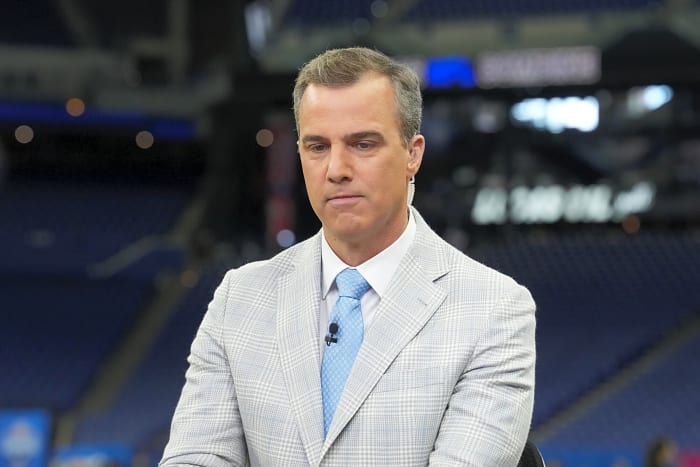
Kiper’s rise inspired a wave of challengers. Daniel Jeremiah managed 15.6% exact accuracy in 2025, while Todd McShay reached 9.4%. Even the best analysts rarely predict more than one in six picks. Kiper popularized the format and created a scoreboard for the profession, but the scoreboard exposed a difficult reality: accuracy rates remain low across the industry. In other jobs, such numbers would mean dismissal. At ESPN, Kiper remains a fixture, because higher accuracy alone does not change the appeal of the product. The format is what draws the audience.
When the Draft Reached the Betting Window

Mock drafts expanded from ESPN into sportsbooks, fantasy leagues, and prop bet markets. Kiper’s creation became the foundation for draft-related gambling, with millions wagered on predictions that remain unpredictable. The 2026 draft could feature several quarterbacks in the first round, fueling more speculation. The result is more mock drafts, more bets, and further cycles of projections with a 12.5% hit rate. Kiper’s influence helped launch a speculation industry built around the draft.
The Founder Who Can’t Be Fired
Kiper made the mock draft famous, and ESPN adopted it as the core of its coverage. The format soon became the industry standard. The same format Kiper introduced is now used to evaluate the accuracy of analysts. He created the standard by which his own record is measured. If ESPN removed him, it would amount to an admission that the draft spectacle was never about accuracy. After forty years, one analyst and his board have become part of the foundation of the event. Removing that foundation would destabilize the entire broadcast model.
“I’m Done. That’s It. I’m Out.”

In 2010, Kiper staked everything on Notre Dame quarterback Jimmy Clausen: “If Jimmy Clausen is not a successful quarterback in the NFL, I’m done. That’s it. I’m out.” He gave himself eight years. Clausen won just one game as an NFL starter. Kiper stayed for 15 more years. Nobody enforced the ultimatum. Nobody could. Damon Amendolara later described Kiper’s on-air posture as “awkward and bizarre defiance,” particularly during the 2025 Shedeur Sanders collapse. Kiper had Sanders as his top quarterback prospect, projecting him as a top-five pick. Sanders fell to pick 144. That’s a massive miss, broadcast live while Kiper expressed “disgust” at teams ignoring his board.
The Rules Changed Around Him

Kiper’s longevity has set a precedent that extends beyond sports. Combining tenure, a compelling story, and founder status provides a level of immunity from evaluation based solely on results. That formula now influences how networks manage on-air talent in many fields. Sanders’ rookie year reinforced this reality: 7 touchdowns, 10 interceptions, and a QBR of 18.8, the lowest ever for a Browns starter with at least six starts. The evidence accumulated, but the institution remained unchanged.
Who Wins When Accuracy Doesn’t Matter
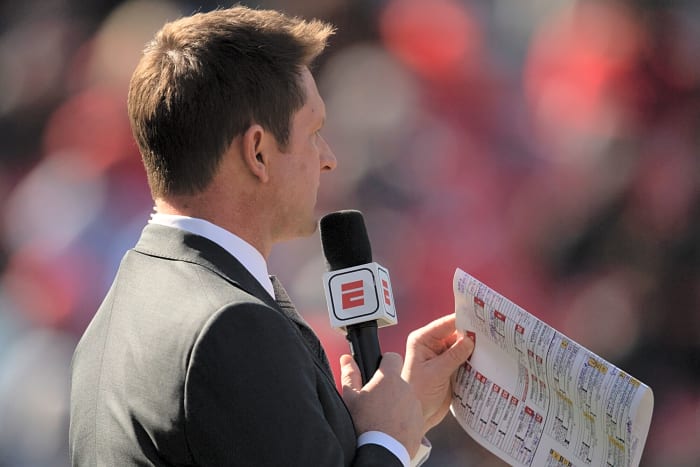
ESPN continues to draw viewers because of Kiper’s name, regardless of his accuracy. The NFL benefits as well, with analyst debates providing free promotion for the event. Sportsbooks profit, since mock drafts drive prop bets that are rarely successful. Younger analysts like Jeremiah and McShay face a difficult environment, where accuracy tops out at 15.6% and tenure outweighs results. The criteria for advancement now influence how the next generation approaches the profession.
The Empire Keeps Expanding
Kiper’s 2026 coverage will receive close scrutiny. Any visible mistake will trigger another round of #KiperWatch on social media, a cycle that began with the Sanders case. ESPN may gradually shift Kiper to an emeritus role, reducing his profile but preserving his legacy. Kiper demonstrated that, in American media, longevity and prominence often outweigh accuracy. He did not solve the draft, but he made it unpredictable enough to become essential television. The system now depends on that unpredictability, and no replacement has emerged.
Sources:
NFL.com — “2025 NFL Draft is second most-watched draft ever” — April 29, 2025
Inside The Star — “NFL Draft Expert’s Draft Accuracy: Who Was Best?” — February 24, 2026
Awful Announcing — “Mel Kiper made $400 working his first NFL Draft for ESPN” — May 1, 2014
ESPN — “Detroit shatters NFL draft attendance record with over 775K fans” — April 26, 2024
Yahoo Sports — “Shedeur Sanders’ rookie season was historically bad” — January 5, 2026
SB Nation — “Mel Kiper has to retire, due to Jimmy Clausen bet” — April 18, 2018
More must-reads:
- Bengals make win-now move with shortsighted Dexter Lawrence trade
- Predicting landing spots for top QBs in 2026 NFL Draft
- The 'Stanley Cup Playoff hat-tricks' quiz
Breaking News
Trending News



Customize Your Newsletter
 +
+




Get the latest news and rumors, customized to your favorite sports and teams. Emailed daily. Always free!
PRIVACY POLICY COOKIE POLICY CONTACT US
ABOUT YARDBARKER TERMS OF SERVICE


By using this site, you agree to our Terms of Service and Privacy Policy.
This site is for entertainment purposes only.
There is no gambling offered on this site.
Gambling Problem? Call 1-800-Gambler.
