
-

-


Follow Us
-

 On Facebook
 On Flipboard

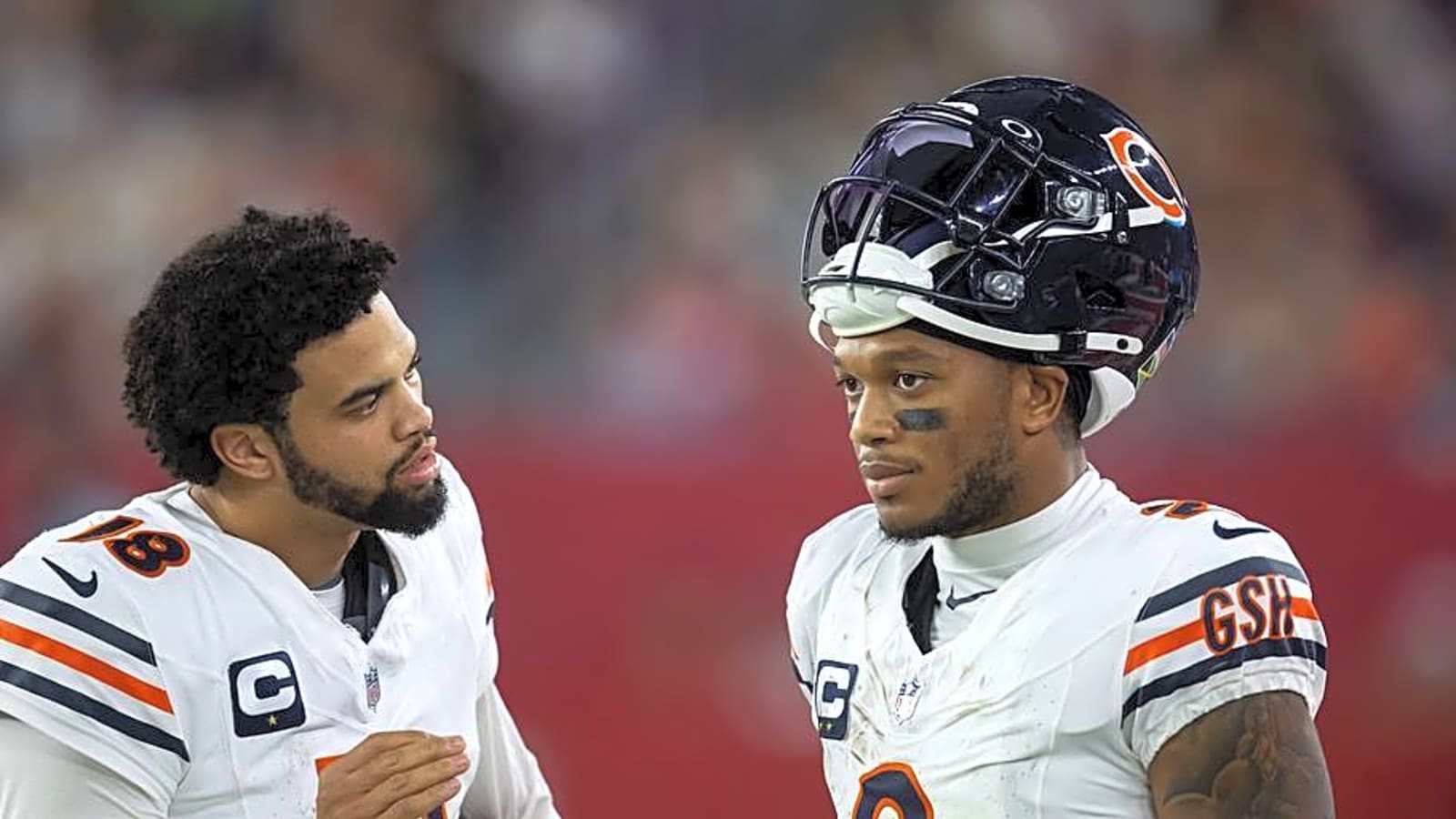
One real possibility for the Bears and their fans to consider is DJ Moore piling up huge catch totals and yardage for the Buffalo Bills this season after being traded there in March.
In that case, the attitude should simply be good for him. The Bears shouldn't be affected regardless of Moore's total, and there was no guarantee he would have piled up big numbers if the Bears hadn't traded him.
Caleb Williams should be unaffected by losing the player who provided numerous big Bears receptions over the past three years, dating back into the Justin Fields QB era.
Williams losing a player deemed his No. 1 target isn't a problem because Moore never really was his No. 1 target. Moore might have led in catches and targets in Williams' rookie year but his workload was similar to several other receivers.
Chicago Bears boasting an arsenal of pass-catchers for Caleb Williams… EXPLOSIVE… pic.twitter.com/17cM19PUpe
— John Frascella (Football) (@NFLFrascella) May 5, 2026
Williams has always been an equal-opportunity passer and never really attaches himself to one receiver to a degree so high that it should bother him if he is throwing to other targets.
In 2025, Williams threw to Moore 16% of the time, or 85 total targets. He threw even more often to Rome Odunze, at 16.9% with 90 targets. Colston Loveland received 15.5% of the targets (82), Olamide Zaccheaus 12.2% (65) and Luther Burden 11.3% (60). Cole Kmet had 9% (48).
A year earlier, it wasn't a lot different even in a different offense. While Moore was targeted most with 140 opportunities (26.6%), Keenan Allen (23%, 121) and Odunze (19.2%, 101) were right there with him. The big difference was he threw less to tight ends in 2024 under coordinators Shane Waldron and Thomas Brown, with Kmet getting 55 targets and no other tight end being close to the leaders.
31 Touchdowns in 31 days.
— Motivated Grim Cutty (@iamcogs) May 5, 2026
Every day in May I will post a Caleb Williams touchdown from the 2025 regular season.
TD #5:
35-yard pass to Rome Odunze. Caleb's deep ball improved by leaps and bounds in 2025. Going from 37th in Adj% in 2024, to 7th in 2025.pic.twitter.com/xEnF5Yq8rG
Balanced targeting even in college
This habit of a even pass distribution traces all the way back into college with Williams.
Although he had Tahj Washington (59 catches) and Brenden Rice (45) at USC in 2023, he had three other receivers catch between 24 and 31 passes. The previous year, when Jordan Addison still played at USC, he caught 59 passes for 875 yards and eigt TDs. But Washington was right with him at 50 receptions and three other receivers caught 39 to 46 passes.
As a freshman at Oklahoma, Williams split the passing duty with Spencer Rattler and Marvin Mims burst out with 705 receiving yards, but he didn't even finish first or second in actual catches. There were six players with 39 to 23 receptions and then Mims with 22.
On the DJ Moore trade…
— Matt Bowen (@MattBowen41) March 5, 2026
Have to look at the emergence of Luther Burden III late in his rookie season.
Three-level playmaker. Dynamic mover + ball carrier vision in space. Creates his own separation — plus Ben Johnson can scheme for Burden, too (screens, fly sweeps, more).
Bottom line, Williams has never leaned too heavily on any one target. He definitely never overworked Moore.
When the trade came down, Williams referred to Moore as a real "pro."
"He’s been that since he has been in the league," Williams said. "And so on the football side of it obviously, you’re going to miss him out there making plays for you, for me and for the team. But on the other side of the football side, you do understand that there is a business side to this and you have to roll with the punches."
the bears put up 47 points and Rome odunze had 0 targets and 0 yards while Caleb Williams had 2 catches himself ? Lmao pic.twitter.com/EI4OTtLhtE
— John (@iam_johnw) November 2, 2025
Williams went on about the personal side of losing a friend to a new team but definitely didn't dwell upon it.
The difference in who the Bears target going forward is really just a matter of who is open and who Williams sees available. It's always been this way with him. Luther Burden, Colston Loveland, and Rome Odunze get more targets. Williams had thrown a greater percentage of his passes to Keenan Allen in 2024 than he did to Moore last season, and seemed unaffected by losing Allen.
It can all mean greater unpredictability, and they already operated this way last season.
Caleb Williams
— No Expert Fantasy Sports (@NoExpertFS) May 5, 2026
Mini Breakout in 2025
- 5,008 Total Yards
- 34 Total TDs
- QB6
Regular Season
- 3,942 Passing Yards
- 383 Rushing Yards
- 30 Total TDs
For This Year
- Elite Coaching
- Elite Weapons
- Elite OLine
No reason he can’t finish as a Top 3 QB… pic.twitter.com/1wxRX6zOoZ
X: BearsOnSI
More must-reads:
- Aaron Rodgers' return means Steelers are destined for more of the same
- Cameron Heyward seems to confirm Aaron Rodgers has made Steelers decision
- The 'NFL's active 1K-rushers' quiz
Breaking News
Trending News





Customize Your Newsletter
 +
+




Get the latest news and rumors, customized to your favorite sports and teams. Emailed daily. Always free!
PRIVACY POLICY COOKIE POLICY CONTACT US
ABOUT YARDBARKER TERMS OF SERVICE


By using this site, you agree to our Terms of Service and Privacy Policy.
This site is for entertainment purposes only.
There is no gambling offered on this site.
Gambling Problem? Call 1-800-Gambler.
