
-


Follow Us

 On Facebook
 On Flipboard
 On Twitter
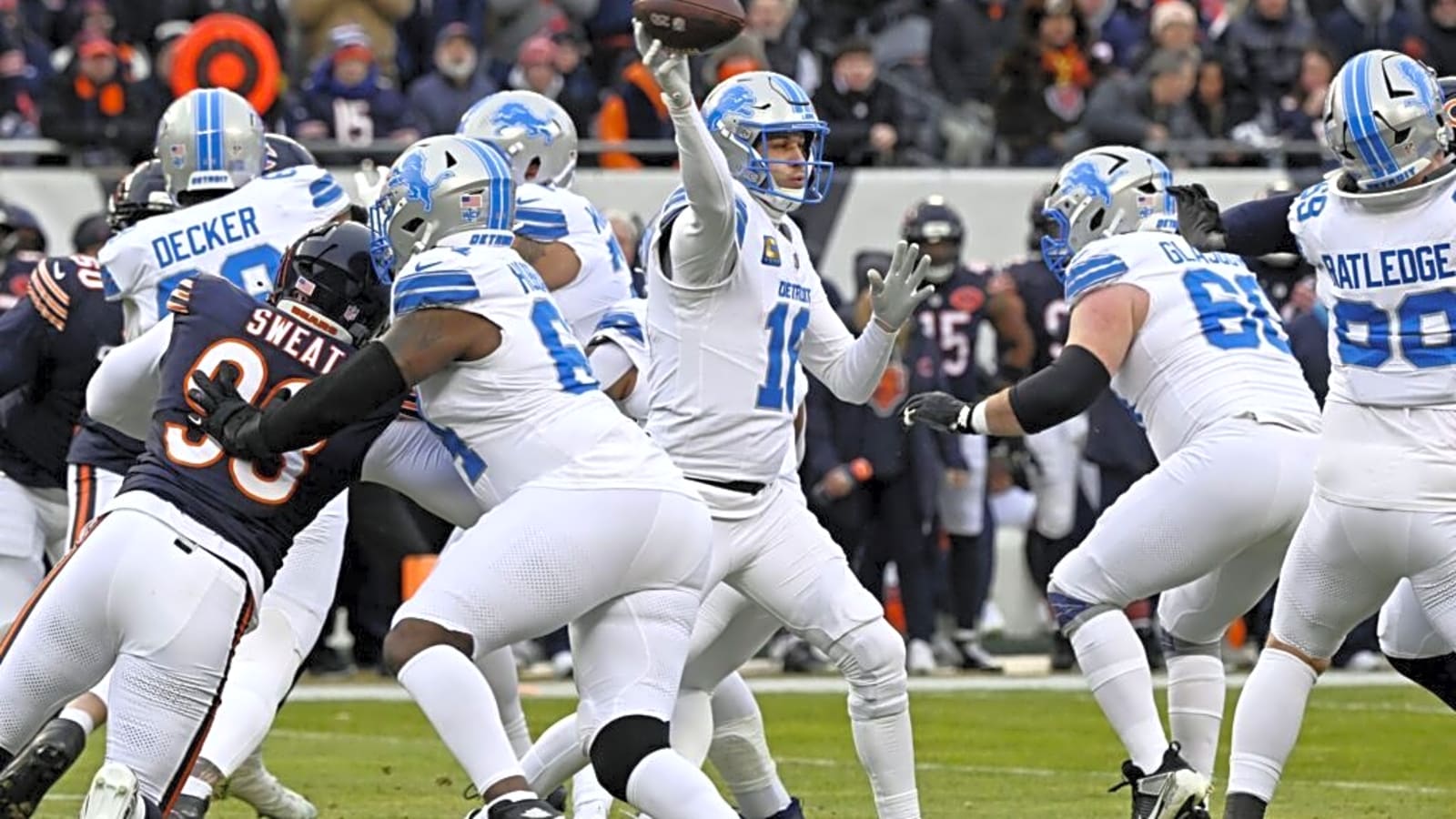
Jared Goff Is Not to Blame for the Collapse of the Detroit Lions
After the Detroit Lions finished the 2025 season at the bottom of the NFC North with a 9-8 record and missed the playoffs for the first time since 2022, fans searched for a scapegoat. For many, that blame fell on Lions quarterback Jared Goff.
But a closer look reveals the truth: Goff was far from the root of the Lions problems.
Jared Goff Played at an Elite Level
Jared Goff’s 2025 stats illustrate a QB who is anything but the problem. He ended the season with a 68% completion rate, 4,564 yards, 34 touchdowns, and a 105.5 QBR, making him objectively one of the best QBs in the league. Even when other players on the field fell short, he consistently produced yardage and created scoring opportunities.
Goff was not a liability; he was one of the reasons the Lions playoff chances stayed alive as long as they did. This was an incredible feat, considering Detroit faced numerous roster issues.
Injuries Damaged Their Defensive Identity
As the season went on, it became clear the Detroit Lions had lost their identity, and it started on defense.
Early on in the season, Detroit’s depth slowly whittled away, more specifically in the trenches and secondary. Defensive tackle Alim McNeill, who suffered a knee injury late last season, never returned to his normal level of play, making his impact up front limited. Several key players never even saw the field this season, including DT Levi Onwuzurike, who tore his ACL during training camp, defensive end Josh Paschal, recovering from a back injury, and cornerback Ennis Rakestraw, who underwent shoulder surgery.
These absences forced Detroit to rely on backup players and short-term strategic fixes to address gaps in its roster. Despite their efforts, this approach did nothing to address the actual problems.
Injuries began to plague the secondary, causing the rotating safeties and cornerbacks to miscommunicate and make coverage mistakes.
This combination led to a defense that struggled to contain explosive plays or make quick stops, putting even more pressure on the offense to score on every drive to stay in the game.
Offensive Line Injuries Disrupted Rhythm
Just last year, Detroit had one of the best offensive lines in the league, but, like the defense, it slowly disintegrated.
Injuries to the interior made both the run game and pass protection unstable. This past June, center Frank Ragnow announced his retirement from the NFL. Six months later, he announced he would be coming back to the Detroit Lions. But his second stint with the Lions didn’t last long: before he could even set foot on an NFL field, he was diagnosed with a Grade 3 hamstring strain, leaving the Lions right back where they started.
With constant changes in the interior, timing was disrupted. This not only stalled the run game but also eliminated immediate routes and collapsed the pocket, posing a major issue for Goff.
The OL’s weaknesses forced the offense to make more predictable plays, making it far easier for opposing defenses to take control late in the game.
Detroit Lions Lost Star TE, Sam LaPorta
One blow to the Lions offense that has not been discussed enough is the loss of tight end Sam LaPorta. After playing just nine games, LaPorta’s season came to an end after he suffered a back injury in the Week 10 matchup against the Washington Commanders. Losing LaPorta meant Goff lost one of his most reliable weapons over the middle and a target on third downs and in the red zone.
Without LaPorta, Detroit’s playbook shrank and left fewer reliable options when Goff was under pressure. Drives grew longer, efficiency in the red zone declined, and it became increasingly difficult for the offense to convert on third down.
Offensive Coordinator Changes Disrupted Rhythm
While Detroit’s offense continued to be one of the top units in terms of yardage and points, numbers don’t always tell the whole story.
After losing former offensive coordinator Ben Johnson during the offseason, the Detroit Lions chose John Morton to take over his duties. But in mid-November, after several games consisting of disappointing offensive play, head coach Dan Campbell officially took over play-calling duties. For a short period of time, this change worked, but later on, it resulted in inconsistent structure and play-calling.
Despite the inconsistency caused by this change, Goff still played at an elite level, proving once again that he was never the underlying issue holding the Detroit Lions back.
Goff Was Never the Problem
Anyone who blames Jared Goff for the Lions lack of success this season is missing the real story underneath it all.
Even as the Detroit Lions faced a constant stream of injuries that stripped the team of its identity, Goff still showed up every game, delivering efficient, high-level performances. Detroit’s season didn’t decline because of the quarterback on the field; the season declined because the team built around him collapsed while playing through one of the most challenging schedules in the league.
Detroit’s collapse this season had nothing to do with quarterback play and everything to do with what fell apart around it.
More must-reads:
- Packers reportedly make Matt LaFleur decision amid John Harbaugh rumors
- Micah Parsons calls out Packers players in defense of Matt LaFleur
- The 'Active 1K-receiving-yard seasons' quiz
Breaking News
Trending News





Customize Your Newsletter
 +
+




Get the latest news and rumors, customized to your favorite sports and teams. Emailed daily. Always free!
PRIVACY POLICY EDITORIAL POLICY CONTACT US
ABOUT YARDBARKER TERMS OF SERVICE


Use of this website (including any and all parts and
components) constitutes your acceptance of these
Terms of Service and Privacy Policy.
This site is for entertainment purposes only.
There is no gambling offered on this site.
Gambling Problem? Call 1-800-Gambler.
