
-

-


Follow Us
-

 On Facebook
 On Flipboard
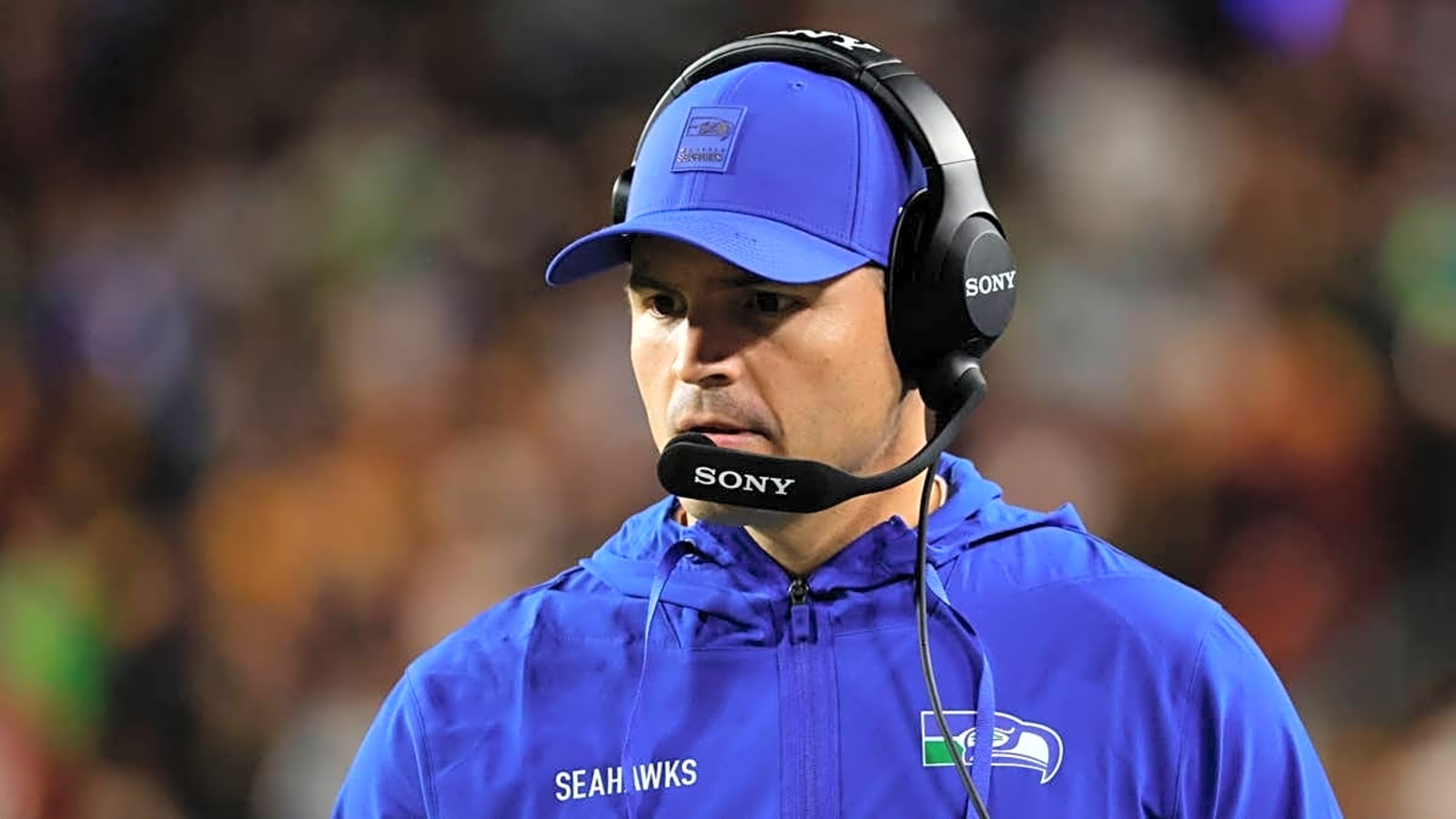
Before he became the third head coach in Seattle Seahawks history to take the franchise to a Super Bowl — Mike Holmgren and Pete Carroll were the others — and the second after Carroll to win a Lombardi Trophy for the Emerald City, Mike Macdonald made his name as an immediate reformer of bad defenses.
That was the case under Jim Harbaugh at Michigan, and under John Harbaugh with the Baltimore Ravens, which led the Seahawks to make Macdonald Carroll’s replacement on Jan. 31, 2024. Immediately, a team that had lost its way under Carroll began to refocus. Year 1 of the Macdonald era saw the Seahawks barely miss the playoffs with a 10-7 record, and Year 2 saw the franchise tear through the rest of the NFL in a season that culminated with a 29-13 win over the New England Patriots in Super Bowl LX.
Macdonald’s process-driven coaching style is a big part of his life, but there’s more to the story. He graduated summa cum laude with a bachelor’s degree in finance from the University of Georgia’s Terry College of Business in 2010, and he earned his master’s degree in sports management from Georgia in 2013 while serving as safeties and defensive quality control coach for the Bulldogs. That led to a six-year stint with the Ravens during which he rose from coaching intern to linebackers coach before accepting the job as Michigan’s defensive coordinator.
When you talk with the players Macdonald coaches, the singular subject that comes up is his ability to cultivate a universal buy-in very quickly. Now, Macdonald’s challenge is the rare achievement of winning back-to-back Super Bowls, and Athlon Sports spoke with him as he was preparing for that opportunity.
Athlon Sports: In 2021, you became Michigan’s defensive coordinator and ran a defense that allowed 17.4 points per game (eighth in the FBS) after allowing 34.5 points per game the year before (95th in the FBS). In 2022, you became the Ravens’ defensive coordinator, and the defense went from 28th in DVOA in 2021 to eighth in 2022 to first in 2023. Then, Seattle’s defense went from 28th in DVOA in 2023 to 10th in your first season in 2024 to first in 2025. How do you keep turning defenses around?
Mike Macdonald: I guess I don’t see it as turning anything around. That’s probably the first principle. I think we had a great opportunity at Michigan. That was my first opportunity to employ the vision that I had about how we wanted to play defense, and we obviously catered that schematically to what I felt like we needed to be able to do in college. Some of the language and how you streamline it with signals and tempos, all that stuff was a little different. The methods behind it were a little different. But to see how it came together like that, you could do it the way that I envisioned. I think that those are the principles of how we’re applying it.

I don’t really see it as a turnaround because it’s a new opportunity. It really doesn’t matter what they did before. I think just the way we see defense, it takes everybody. It has to be complementary. And you can’t play in silos. The three levels of defense need to be connected at all times.
You’ve got to build it from the ground up, and how you play is really important. How you can connect your staff so you can be in one accord all of the time. Those are the principles that match how I felt like we needed to be able to play.
And then, schematically or tactically, I think it’s about knowing what you need to be able to do in order to stop offenses. I actually had this thought when I was at Michigan, and I was watching the [NFL] playoffs. I was watching the Patrick Mahomes-Josh Allen game that went back and forth, and the lead changed all the time at the very end. [Macdonald is referring to the 2021 AFC divisional playoff game, in which the Kansas City Chiefs beat the Buffalo Bills, 42-36, and the lead changed hands five times in the fourth quarter and overtime.] And it just came to me. I was like, look, you can’t blitz or “cute pressure” your way to a championship. You can’t do that every down. You have to have a connected team that can rush and affect these athletic quarterbacks and get them to hold the ball.
In Super Bowl LIX, the Philadelphia Eagles beat up Mahomes, and they didn’t blitz once. I asked [Eagles linebacker] Zack Baun how they were able to do it. Baun said, “Because everything is interconnected, and everyone knows what everyone else is doing.” It’s pretty much the same thing.
Yeah, I’m thinking more like style of play. Can you create a place where, how you do what you do is important right down the line? For everyone on our staff, to all our players, there’s a standard of how we want to play. We do have a vision about how we want to play, about being able to play match coverages and denying the ball, and getting the quarterback to hold it, but also to have the ability to bring various kinds of targeted strike pressures when needed.
I felt like we didn’t want to just be a one-track team. I guess that’s my point. You can’t just do one thing. You can’t just blitz your way to a championship. I don’t think you can four-man rush your way to a championship. What the Eagles did, that’s not really my expertise.
ALSO FROM THE MAGAZINE:
Changing Face of Modern NFL Defense
Era of Reclamation Quarterbacks
All in the Coaching Family
Golden Age of Wide Receivers
In the Super Bowl, you guys were in dime (six defensive backs) on 40 of your 72 defensive snaps, but you were able to keep the Patriots’ power-run game under wraps. Why are you able to believe in your “sub-package” defenses, which are really base, as much as you do?
We pictured that’s where we needed to be able to go, where we didn’t want teams to be able to win by living in 11 personnel, and building 11, 12 and 13 out of it. By how we reacted on the field, we wanted to dictate more terms of the offense, if that makes sense. You don’t want your opponent to be able to figure out how you’re going to play them after the huddle rather than before the huddle. It would help us if we could stay as much in the same personnel group as possible.
And then, it’s to see the guys do what they do every day that gives you the confidence to say that you can play that way. You know, as you’re watching us train, and you’re watching our players play, and then you’re game-planning, you’re kind of trying to overlap those things to see if we’re going to be able to play our style of ball and put ourselves in situations where we can stop the run and do things like that. But that’s what gives you the confidence, to see how our guys played, how we were coaching it, what they did in practice, and then obviously their body of work.
By committing to that, we do know how to defend a lot of the plays that we’re getting now in these structures. I think it’s kind of like an AI bot. You just kind of keep learning as it goes, you know, and as teams start to evolve, you’re evolving with it. You also have the advantage of growing from those reps that you’ve seen, rather than living in different worlds. And now, it’s hard to stack some of those run-defense looks, and how you want to play them. So, the guys get a lot of time on task.

Last season, you played five different base coverages at least 12% of the time. Why is it so important for you to be coverage-agnostic, for lack of a better term?
I don’t think we’ve ever put a number on anything that we want to do. We don’t say we want to be in a coverage a certain percent of the time; we don’t say we want to be in a four-man rush a certain percent of the time. We just don’t think through that lens. The way we train our guys and the way we coach our system, we go through concepts first, and we go through techniques, before we ever introduce a coverage name or a full-fledged play. We don’t install a play until you know, the middle of Phase 2.
Our guys have to learn conceptually about how things fit, and how you’ve got to play certain techniques. And then it’s about, okay, how do we put the scheme together to let our guys go play fast, and give them as many answers as possible? But we’re not tallying the percentages of what we’re playing and when. I think it’s all about how we want to attack certain offenses.
It seems that offenses can’t really get a tell on what you do. It’s not, “Oh, if we do this, they’re going to switch to Cover-3.”
Yeah, that’s right. We don’t. It goes back to the personnel things. Why give them the answers to the test before you have to, you know? We’re trying to figure out what they’re trying to figure out based on what we can do. So, it’s a game of attrition on that front.
You’re also about creating havoc at the line with stunts. I think you stunt more than you blitz, which is unusual for some teams. And then, you have a lot of post-snap coverage switches. Why are both so important to what you do?
Well, the stunt and the pressure thing, again, it doesn’t come from, “Hey, we need to stunt more than we need to pressure.” We don’t really have that conversation, but I will say, we believe that when you do move the front, especially in passing situations, that creates the most pressure. But it requires you to play together, and it requires you to play in this kind of synergistic way, and have that type of attitude to do it. You can’t just run stunts for the hell of running stunts.
It’s a chemistry thing about how you play off one another. You don’t just run them in silos, if that makes sense. It’s all connected with who wins and when, and how you overlap. That takes a lot of time on task and chemistry and buy-in, and all that stuff. But we do feel like that is the best way to operate, rather than just letting a guy win and then we play off of that.
(Regarding disguised coverages) I mean, our default presentation is a [two-high safety] shell. And again, if you’re not forced to, and why would you tell them what you’re in before the ball is snapped? We play a lot of match coverage. I think the NFL right now is trending more towards disguised versions of Cover-2, and over rotations, and things like that where people are getting to the spots from funky alignments. We prefer more subtle changes to our coverage, rather than these big overarching crazy shifts when the ball is snapped. I guess it starts with the philosophy of trying to get the quarterback to hold the ball, and you let the rush come to life. If you’re running spot-drop (predetermined) zones, there’s time and place for it. We just don’t do it as much as I feel like the rest of the league is going right now.
The Seahawks now have the opportunity to be the 10th team and ninth franchise to win back-to-back Super Bowls. What are you telling your team about how to get that done? Have you spoken to anyone responsible for some of those back-to-backs about how to get a better view of the process?
I have reached out to some people who have won back-to-back championships. And it’s been great advice, but I think the thing that we learned last year is like, look, we want to do it our way with how we go about our business every day, and what’s best for the Seahawks. It’s great to learn from other people, but by no means are we trying to copy other people’s style or trying to do it that way. The overarching thing is, it’s the same destination, but the journey is completely different with a completely different set of people.
Even for the people that were here last year … I mean, it’s different viewpoints, and it’s different experiences that are under their belts. We’re going to have a lot of new people joining us from other teams who lost some great players. So to me, we’re saying that instead of running it back or defending anything, we want to run our process forward. How do we be us and take the next version of us as a team forward, and do that every day? I don’t think that our process or our viewpoint about who we want to become, or how we get there, changes because of the Super Bowl or what we evolved to in terms of what we did every day and what our mentality was because it was the end of the season. I think you keep that same mentality of what we’re trying to achieve every day. Even though now it’s the 2026 season, it’s all the same thought process about how we want to be us as Seahawks. And there are going to be different challenges that we’re going to face along the road. We know that going in, but in no way are we saying that we’re defending anything.
Let’s just try to nail being us as well as we can, and stack those days. And then once we get to the season, we’ll go from there.
More must-reads:
- Vikings reporter thinks Kyler Murray could make shocking decision after J.J. McCarthy competition
- Tom Brady shares final verdict on Bill Belichick debate
- The '2026 American League All-Stars' quiz
Breaking News
Trending News




Customize Your Newsletter
 +
+




Get the latest news and rumors, customized to your favorite sports and teams. Emailed daily. Always free!
PRIVACY POLICY COOKIE POLICY CONTACT US
ABOUT YARDBARKER TERMS OF SERVICE


By using this site, you agree to our Terms of Service and Privacy Policy.
This site is for entertainment purposes only.
There is no gambling offered on this site.
Gambling Problem? Call 1-800-Gambler.
