
-


Follow Us

 On Facebook
 On Flipboard
 On Twitter
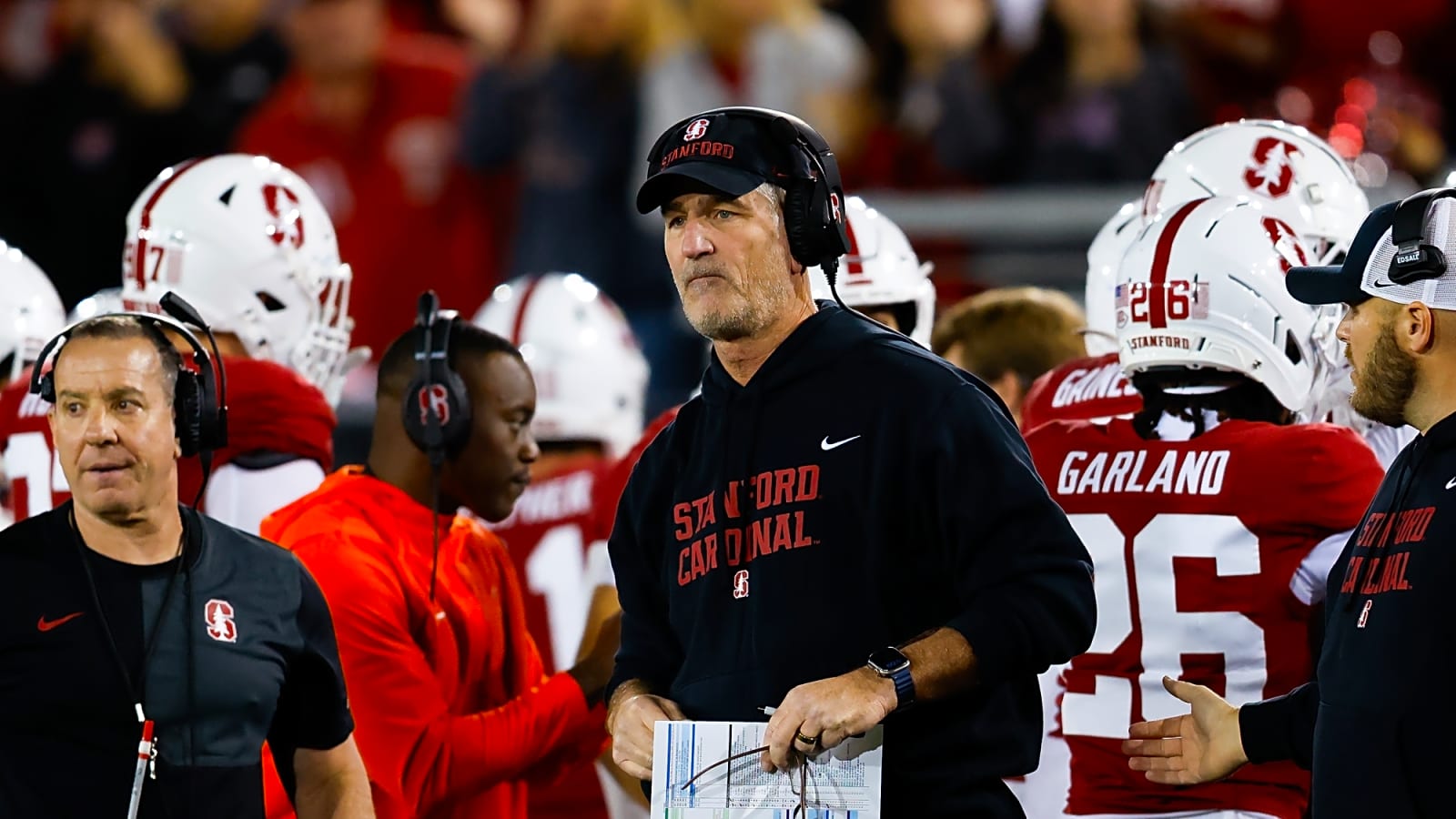
After winning three games and dumping their offensive coordinator over three weeks into the offseason, Aaron Glenn’s New York Jets were not exactly the type of staff that NFL coaches would be itching to join.
As expected, Glenn had to scrape the bottom of the barrel to find a replacement for Tanner Engstrand. His finalists for the role were three veteran coaches who have had success in the past, but have seen their stocks plummet in recent years: Darrell Bevell, Greg Roman, and the eventual winner, Frank Reich.
No other NFL team interviewed any of these three candidates for a head coach or offensive coordinator role. Yet, for a Jets team that appears to be a sinking ship from the outside, this was the best they could realistically hope for.
Reich is a highly experienced offensive leader, having served 10 seasons as an offensive coordinator or head coach. There have been flashes of greatness in there, but Reich’s most recent performances were disastrous. The Jets are gambling that Reich can return to his heights as a coach, rewarding New York for buying low on him.
The problem with New York’s logic is that we are not talking about a spring chicken here. Reich is 64 years old. At this point, it’s been five calendar years since he led an above-average NFL offense. So many things change within the league’s schematic zeitgeist over a half-decade, and over the last two years, Reich wasn’t even in the NFL to take note of those changes.
There are legitimate concerns about whether Reich’s scheme and philosophies are outdated in today’s league. It already seemed like the league had passed him by three years ago, when the Indianapolis Colts and Carolina Panthers fired him mid-season in back-to-back years after he oversaw two straight bottom-two offenses (per DVOA).
Now, three years later—well into his sixties, with no additional NFL experience since then—Glenn is tasking Reich with rescuing his offense (and his job).
In 2026, the NFL game is more scheme-based than ever. The X’s and O’s are overtaking the Jimmies and Joes.
Last year, the Jets had a 42-year-old coordinator who was tuned in with league-wide trends after spending multiple seasons as the pass game coordinator for one of the league’s most innovative modern offenses, the Detroit Lions, under a revered offensive mind, Ben Johnson. He seemed like the exact type of guy that the Jets should want leading their offense.
Yet, it appears that Glenn thinks Reich, who is 22 years older, can bring ingenuity that Engstrand did not.
It’s quite the gamble. Is there a method to Glenn’s madness, though?
That’s what we’re here to find out.
I combed through Reich’s six seasons as an offensive play-caller (2018-23) and charted 50 different metrics that quantify his schematic and philosophic tendencies.
From his pre-snap motion usage, to how often he targets each route type (slant, post, etc.), to his favorite personnel packages, to shotgun/under-center splits, to no-huddle frequency, to first-read reliance, to his favorite run concepts (outside zone or gap?), to play action rate, to release speed, and much more, we’ve got it all.
Through an analysis of these metrics over a six-season body of work, we can identify trends that tell us a whole lot about who Reich is as an offensive mind.
These trends can help us answer the looming question: Is Reich behind the times?
In a few areas, we will find out that Reich was already a little behind the times a few years ago, and will need to make major changes to his tendencies to catch up with today’s league.
It’s not all bad, though. In some areas, Reich’s tendencies would be a welcome change of pace for Jets fans who are accustomed to familiar habits from offensive play-callers.
Let’s jump in. We’ll go through each category that was analyzed and highlight some of the main takeaways. The data is courtesy of Pro Football Reference, Pro Football Focus, Sumer Sports, Sharp Football Stats, and FTN Fantasy. Some metrics are not available dating back to 2018, in which case it will be noted.
Note: For the 2022 Colts and 2023 Panthers, when Reich was fired in-season, the full-season data will be analyzed. Some of these metrics cannot be split by weeks, and it makes sense to attribute the full season to Reich anyway, since it was still his playbook and his players.
Target depth
Is Reich the type of coach who likes to chuck bombs? Or does he attempt to move the ball methodically through screen passes? Maybe he prefers the middle of the field?
We can find out by analyzing where his teams tended to throw the ball most frequently across his six years.
Here is the average percentage of pass attempts that Reich’s teams threw to each level of the field, compared to the 2025 NFL average:
- Behind line of scrimmage: 14.8% (2025 NFL average: 15.4%)
- Short (0-9 air yards): 45.9% (2025 NFL average: 44.1%)
- Intermediate (10-19 air yards): 21.8% (2025 NFL average: 20.8%)
- Deep (20+ air yards): 9.8% (2025 NFL average: 11.3%)
The main takeaway is that Reich seems to prefer targeting the middle of the field. He tends to target short and intermediate passes at above-average rates, while he is typically below-average when it comes to screens and deep passes, particularly the latter.
So, don’t expect many vertical bombs from Reich. That doesn’t mean he will be calling a bunch of passes behind the line of scrimmage, either. As we’ll see in the next section (route types), Reich’s favorite concepts are those that attack the middle of the field with in-breakers.
Route types
Route type data from FTN Fantasy is only available dating back to 2021, so for this category, we can only analyze Reich’s three most recent seasons (2021-23).
That’s fine for the purpose of answering the most pressing question about Reich, though. We’re trying to see whether he’s tuned in with modern NFL trends. His most recent seasons give us the best answer.
Seen below are the average percentages of pass attempts that Reich’s 2021-23 teams threw to each of the 13 route types charted by FTN Fantasy. They are sorted by their differential relative to the 2025 NFL average.
This lines up quite well with what we saw in the target depth category.
Reich’s favorite routes from 2021-23 were the dig and drag routes. Both are in-breakers over the middle of the field, designed to get the ball to playmakers in the open field with a head of steam. This explains why his teams tended to favor the short and intermediate ranges. Drags are his bread-and-butter in the short game, and digs are the go-to in the intermediate game.
Go and post routes are Reich’s least favorite, which explains why his teams had such a low deep pass frequency, especially from 2021-23. Vertical shots are rare in his offense compared to the average team. Relative to league average, he prefers to throw corners or deep outs when going downfield.
Interestingly, Reich actually calls screens fairly often. However, it is cancelled out by a low rate of swing passes.
So, what does all of this mean for Reich’s fit in the modern NFL? Is this the route distribution of a top-tier play designer in 2026?
Well, it’s a mixed bag. In some ways, Reich is not aligned with trends that tend to facilitate success in today’s league. In other ways, he’s actually been doing precisely what the league’s best offenses are doing.
Let’s start with the negative. The lack of go and post routes seems to be the opposite of what works in today’s league. In the 2025 season, there was a correlation coefficient (r) of 0.409 between go/post pass attempt rate and overall pass offense DVOA.
In English, the more teams threw go and post routes, the more successful their passing attacks tended to be.
It’s not a one-to-one correlation—teams such as the 49ers and Lions had strong passing games without throwing many vertical shots—but that’s a noticeable correlation. You’d prefer to be on the right side of that chart.
From 2021-23, Reich’s teams averaged a go/post rate of 10%. That would have ranked third-lowest in the 2025 season. The only teams under 11% were the Browns (9.1%), Lions (9.8%), and Jets (10.1%).
Meanwhile, the top two teams in go/post rate were the Rams (17.4%) and the Patriots (16.1%), home to the two MVP finalists and the two best pass offenses based on DVOA.
You’d like to see Reich incorporate more vertical shots in his offense moving forward. His route distribution is not all bad, though.
The good news is that Reich’s emphasis on digs and drags is another common component of successful offenses in today’s league.
In 2025, the top eight offenses in dig/drag rate were the Lions, Bills, Jaguars, Browns, Colts, 49ers, Bears, and Patriots. Save for the obvious exception of the Browns, the other seven teams all ranked top-11 in pass offense DVOA.
Reich’s average dig/drag rate from 2021-23 was 18.5%, which would have ranked third-highest in the NFL this past season behind the Bills (18.6%) and Lions (21.6%).
Overall, the correlation coefficient between dig/drag rate and pass offense DVOA was 0.337, which is not quite as solid as the 0.409 between go/post rate and pass offense DVOA, but it’s still noteworthy, especially given how successful the top users of dig and drag routes tended to be. So, it’s positive that Reich emphasizes those routes.
Go, post, dig, and drag routes tend to be the bread-and-butter of today’s best offenses. The teams that rely on anything outside of those four route types tend to struggle. Those passes are where money is made in today’s game.
For the sake of this exercise, we’ll call any pass that isn’t a go, post, dig, or drag route a “non-money pass”. In 2025, the correlation coefficient between non-money pass rate and pass offense DVOA was a shocking -0.590. Basically, there was a very strong tendency for teams who threw fewer go/post/dig/drag routes to be less successful in the passing game.
What does this mean for Reich?
From 2021-23, his teams’ average non-money pass rate was 68.5%, which would have been almost identical to the 2025 league average (68.6%). So, he is essentially up to par when it comes to emphasizing the four route types that correlated the closest with overall passing success in 2025.
Reich’s emphasis on dig and drag routes is a very positive sign for the Jets, but the lack of go and post routes is troubling. These two things cancel each other out, giving Reich a “meh” outlook.
Going into 2026, Reich’s goal is to maintain his emphasis on dig and drag routes while finding ways to convert some of his less efficient passes, like corners, hitches, and screens, into vertical shots. If he can do that, the Jets might actually have a route distribution that is highly modernized.
It could also go the other way, though. If Reich continues avoiding deep shots but struggles to cook up dig and drag routes to the same degree that he did in the past, the Jets’ offense could look as archaic as ever.
Ultimately, Reich’s route distribution is a mixed bag, and it’s hard to tell what the Jets will get from him in this department.
Pre-snap motion
FTN Fantasy’s pre-snap motion data is available going back to 2023, so we can only analyze Reich’s lone season in Carolina.
At least for this one season, Reich was behind the times when it comes to pre-snap motion.
The Panthers ran any type of pre-snap motion (either before or during snap) on 28.3% of their offensive plays in 2023. That is barely more than half of the 2025 NFL average (55.9%).
The pre-snap motion rate has skyrocketed since the 2023 season. That year, the league average was down at 40.5%. Even then, the Panthers’ 28.3% was one of the lowest marks in the NFL.
As I mentioned, FTN Fantasy does not offer this data before the 2023 season, but according to this tweet from ESPN’s Seth Walder, the 2022 Colts had a 34.4% pre-snap motion rate, which was third-lowest in the NFL. And yet, despite the league average increasing year over year, the 2023 Panthers dipped by over 6% from the 2022 Colts’ already-minimal mark, indicating Reich’s clear disdain for pre-snap motion.
Reich would have to double his 2023 pre-snap motion rate of 28.3% just to catch up with the 2025 league average of 55.9%. Most likely, though, the league average will take another leap in 2026, in which case, doubling his pre-snap motion rate wouldn’t even be enough to catch the league average.
You do not have to be at the mountaintop of pre-snap motion rate to field a successful offense in today’s NFL. In fact, this past season, the correlation coefficient between pre-snap motion rate and overall offensive DVOA was just 0.176, which is a weak correlation.
So, it’s not as if there is a direct correlation that suggests offenses will get better and better as their pre-snap motion rate increases. However, the fact remains that most of the NFL’s best offenses use pre-snap motion at a rate above the league average.
In 2025, 13 of the top 16 teams in overall offensive DVOA used pre-snap motion at a rate above the 55.9% league average, including eight of the top 10:
- Rams (62.1% motion rate)
- 49ers (73.7%)
- Patriots (57.3%)
- Bills (69.3%)
- Colts (48.4%)
- Packers (60.9%)
- Lions (59.2%)
- Cowboys (63.1%)
- Bears (58.2%)
- Seahawks (43.7%)
- Ravens (67.0%)
- Chiefs (56.6%)
- Bengals (56.7%)
- Jaguars (58.6%)
- Broncos (38.2%)
- Steelers (57.9%)
Using a lot of motion does not guarantee you will be successful. As a matter of fact, the Jets used plenty of it last year, ranking fifth at 65.4%. This is why there is not a direct correlation between pre-snap motion rate and overall success.
However, if you don’t use pre-snap motion at a rate that at least meets the current NFL standard, there is a pretty good chance your offense won’t be successful. Of the 13 teams that used pre-snap motion less often than the league average, only three fielded a top-16 offense. One of those was the NFC champion Seahawks, so it is not a death sentence, but they are an outlier.
The Panthers’ 28.3% pre-snap motion rate in 2023 would have ranked last in the NFL this past season; the Eagles were last at 33%, and they had a highly underwhelming offensive season, ranking 17th in overall offensive DVOA despite elite talent. It resulted in offensive coordinator Kevin Patullo getting fired.
The Jets don’t need Reich to suddenly start coaching like Mike McDaniel, who runs pre-snap motion almost constantly, but they do need Reich to bump his pre-snap motion rate up to at least league-average if they want a realistic chance of fielding a competent offense in 2026.
Run concepts
FTN Fantasy has offered run concept data since the 2022 season, so we can analyze Reich’s favorite run concepts over his two most recent seasons.
Here is the frequency at which Reich’s 2022-23 teams utilized each of the five different run concepts tracked by FTN Fantasy (based on percentage of total rush attempts), compared to the 2025 NFL averages:
- Outside zone: 11.7% (2025 NFL average: 22.0%)
- Inside zone: 31.9% (2025 NFL average: 24.9%)
- Man/duo: 29.0% (2025 NFL average: 20.6%)
- Power: 5.0% (2025 NFL average: 8.7%)
- Counter: 2.6% (2025 NFL average: 3.6%)
These are some very clear tendencies.
Over his two most recent seasons, Reich featured a heavy emphasis on the inside run game, split between inside zone and man/duo. These two concepts made up nearly 62% of his teams’ rush attempts, well above the 2025 league average of 45.5%.
Reich is clearly not a fan of outside zone compared to most other coaches in today’s league, employing it barely more than half as frequently as the average team in 2025. Power and counter were rare change-ups for him, even more rare than your typical offense.
Do these splits make Reich’s run scheme outdated?
Eh, not really.
Unlike the route type data, I could not find any meaningful trends with run concepts. There wasn’t any particular concept that saw its usage correlate with overall rushing success.
For instance, the correlation coefficient between the usage rate of either inside zone or man/duo and rushing offense DVOA was 0.087, which is nothing. There were teams that ran a lot of inside zone/duo and thrived, like the Rams, and those who struggled, like the Texans. It wasn’t a good or bad thing to either rely on those concepts or ignore them.
The same goes for outside zone. It didn’t mean much if a team used it more or less frequently.
Ultimately, for a team to be successful on the ground, they have to find the concepts that work for them.
For the league’s top rushing team in 2025 (based on DVOA), the Rams, inside zone and man/duo were the bread and butter, representing a league-high 63% of their rush attempts. The third-ranked Ravens were a heavy outside zone team, ranking third with a 31.1% usage rate, while using inside zone and duo at a league-low 30% rate. The second-ranked Bills landed in the middle, using inside zone or duo 47.7% of the time and outside zone 19% of the time.
Reich has to figure out what works for the strengths and weaknesses of the Jets’ players. That includes their offensive linemen, tight ends, running backs, and the quarterback. It also requires him to consider the team’s core concepts in the passing game.
In today’s league, deception is everything. You want your passing plays to look like they could be run plays, and vice versa. If Reich wants to call plenty of play action bootlegs, he could run more outside zone to force teams to buy on the lateral movement of the line. If Reich wants to take more vertical shots on seven-step dropbacks (something we said he should do more of), then he can rely on more inside runs to get opponents to bite on play fakes from the I-formation.
There is no run scheme that clearly works best in today’s league. Each coach must figure out what works best for their team.
It’s something that Reich struggled with at his last two stops. The 2023 Panthers ranked 28th in garbage time-adjusted EPA per rush attempt (-0.171), per RBSDM, while the 2022 Colts were 31st (-0.211).
Back in 2021, though, the Colts were second-best (0.073). Reich’s first three seasons in Indy were about league-average.
Can Reich find a formula that works as well for the Jets as the magic he cooked up for Jonathan Taylor and company in 2021?
Target distribution by position
Here is a breakdown of how Reich’s teams from 2018-23 distributed their targets across the three offensive skill positions, compared to the 2025 NFL average:
- Wide receivers: 57.2% (2025 NFL average: 57.9%)
- Tight ends: 21.8% (2025 NFL average: 23.9%)
- Running backs: 21.0% (2025 NFL average: 18.2%)
The main takeaway is a clear emphasis on targeting running backs. In each of his first five seasons, Reich gave a larger chunk of his team’s targets to running backs than the average NFL team in 2025.
This is good news for Breece Hall, should he return to the Jets.
First down approach
We can learn a lot about a coach’s philosophy from his approach to first down, before the yardage-to-go influences his decision-making. Does Reich like to set the tone with runs? Or is he a pass-first coach?
In 2025, the league average pass-run split on first down was 48%/52%. Here are Reich’s splits across his last six seasons:
- 2018: 61.8% pass
- 2019: 47.7% pass
- 2020: 49.2% pass
- 2021: 49.5% pass
- 2022: 48.5% pass
- 2023: 52.3% pass
In his lone season with Andrew Luck, Reich was extremely pass-heavy on first down. Since then, he hasn’t strayed too far from the league average, although he typically leans slightly toward the pass.
Personnel packages
We already did a full breakdown on Reich’s preference for 11 personnel packages (1 RB/1 TE/3 WR), but let’s dive deeper into the numbers and what they mean in today’s NFL.
Here is a look at Reich’s personnel preferences from 2018-23, compared to the 2025 NFL averages.
Clearly, Reich is an 11 personnel coach. He was comfortably above the 2025 league average in each of his last six seasons, including two straight seasons of being leaps and bounds above the league average. On average, his teams had an 11 personnel usage rate of 72%, which would have led the NFL in 2025.
When he does not use 11 personnel, Reich usually pivots to 12 personnel (1 RB/2 TE/2 WR), subbing out a receiver for a tight end. You rarely see him utilize anything else. Outside of a slight uptick in 13 personnel usage from 2019-20, the vast majority of Reich’s offensive plays featured either 11 or 12 personnel.
Does Reich’s heavy usage of 11 personnel fit into the modern NFL?
In 2025, there was a minimal correlation between 11 personnel usage rate and overall offensive EPA per play, yielding a coefficient of -0.147. However, the fact that the correlation was negative is worth noting, as it indicates that teams had a very slight tendency to perform better offensively as their 11 personnel usage decreased.
Similar to pre-snap motion rates, it’s not as if the correlation with overall success is directly aligned, but there is a certain bar that tends to separate the great teams from the bad teams.
Of the top 10 teams in offensive EPA per play, only one also ranked top-10 in 11 personnel usage: the Dallas Cowboys (66.4%, 5th). Eight of the top 10 teams in 11 personnel usage struggled offensively, ranking in the bottom half of offensive EPA per play. This suggests that a heavy emphasis on 11 personnel probably isn’t the best strategy in today’s league.
However, there were five other top-10 offenses who used it at a rate above the 56% league average: the Broncos (63%, 11th), Colts (62.7%, 12th), Bills (60.8%, 13th), Rams (58.7%, 16th), and Lions (58.1%, 17th).
It would seem that offenses can certainly achieve success in today’s league when using 11 personnel at an above-average rate, but an extreme reliance on the package tends to be counterproductive.
Perhaps it is due to the predictability of using the same package on such a high percentage of the plays. It is also possible that bad teams end up using 11 personnel more frequently because they’re often trailing, forcing them to go pass-heavy, which in turn leads to more three-receiver sets.
Most teams in today’s NFL use 11 personnel as their base package, and it is extremely common for teams to use it on over half of their plays. So, it’s not an issue for Reich to continue using plenty of 11 personnel. However, very few of the league’s best offenses in 2025 were using it nearly as often as he typically does.
Even the lone top-10 offense that ranked top-10 in 11 personnel usage, Dallas (66.4%), used the package about 6% less frequently than Reich’s average over the past six seasons (72%). In each of his last two seasons, Reich’s 11 personnel usage rates (77% and 87%) would have been at least 10% above Dallas.
At the bare minimum, Reich should pull his 11 personnel usage rate back down to the 67% average he maintained over his first four seasons. Ideally, though, he should probably kick it down to around the 63% mark. That’s the approximate sweet spot where elite offenses tend to disappear on the league-wide rankings, while struggling offenses tend to start springing up in droves.
Miscellaneous: Play action, first reads, shotgun
When it comes to play action, Reich’s resume is all over the place.
In 2021, Reich ran play action 32.5% of the time, well above the 2025 league average (23.1%). But in his two most recent seasons, he plummeted. The 2022 Colts had a 16.3% play action rate, while the 2023 Panthers stooped even further to a microscopic 13.3% rate.
Another consistent trend across Reich’s two most recent seasons was a low rate of first-read passes. According to FTN Fantasy, 55.8% of NFL pass attempts came on the first read in 2025; the 2022 Colts were way down at 46.9%, while the 2023 Panthers were at 51.4%.
There’s a common theme emerging here: Across his two disastrous seasons in Indianapolis and Carolina, Reich’s teams were near the bottom in both play action passes and first-read passes. This suggests that Reich’s play-calling put a ton of extra pressure on the quarterback’s plate. Matt Ryan and Bryce Young received little help from the deceptiveness of a play fake and had fewer easy decisions schemed up for them than most quarterbacks.
Another notable aspect of Reich’s career is his tendency to call plays out of the shotgun. We have this data going back to 2019. From 2019-21, Reich’s teams averaged a 66.3% shotgun rate across all offensive plays, which is slightly above the 2025 league average (65.6%). In his last two seasons, though, this number skyrocketed, up to 75.6% with the 2022 Colts and 82.7% with the 2023 Panthers.
Perhaps Reich should consider moving back to more of an under-center, play-action-based approach moving forward? Less play action and more shotgun does not necessarily have to be a bad thing, but Reich’s downfall across 2022-23 aligned with a stark decrease in his play action usage and a stark increase in shotgun usage.
Cooking up more first-read throws will also be critical, as those throws make up well over half of all pass attempts in today’s game, and Reich averaged a paltry 49.2% rate over his past two seasons.
Takeaways
Ultimately, we have no idea what type of offense Reich is planning to run in 2026. His vision for the Jets could look similar to the numbers we broke down today, or he could have something completely new in mind.
It is also difficult to determine which of these numbers can be directly attributed to Reich and which are affected by external factors. There are so many variables that go into determining these metrics, especially the talent on the roster, the play style of the quarterback, and the game situations the team faces (as a result of the players’ execution, including the defense).
Still, it was fascinating to agglomerate Reich’s body of work across his six seasons as a head coach and see what notable trends emerged. If something sprang up over and over again across multiple years, spanning all different types of quarterbacks and players, then it probably means Reich wanted it to happen, as he is the common denominator among those teams.
I would say these are the most notable takeaways:
- Reich loves 11 personnel… probably a little too much.
- Expect to see a low rate of vertical shots and a heavy dosage of in-breakers over the middle. The reliance on in-breakers is a positive sign, but to fully catch up with the best offenses in today’s league, he should incorporate more vertical shots.
- A significant spike in pre-snap motion will be necessary. The Jets don’t need to lead the NFL, but Reich has not been anywhere close to the bar that is typically cleared by above-average offenses in today’s league.
- Inside zone and man/duo will likely anchor the run game, with outside zone taking a back seat. However, there isn’t a league-wide trend favoring any particular concept; it’s up to Reich to figure out what works best for the Jets’ players.
- Look for a slight lean towards passing on first down. If the Jets somehow manage to get a quarterback Reich can trust as much as Luck, the pass lean could be extreme.
- Running backs should get a relatively high chunk of the targets.
- The Jets need Reich to scheme up more first-read pass attempts, especially if they have a young quarterback under center.
- Reich should consider leaning heavier into more of an under-center, play-action-heavy offense, as he had more success in his early Colts days when he used less shotgun and more play action.
Overall, there are some decent signs with Reich, but there are clearly plenty of areas where significant changes must be made for his scheme and philosophies to catch up with the NFL in 2026.
Can he make those changes at 64 years old after two years out of the league? Glenn seems to think so.
More must-reads:
- Patriots' Robert Spillane says Tom Brady's Super Bowl comments make him 'sick'
- Jets hire Seth Ryan, son of Rex Ryan, as passing game coordinator
- The 'NFL active TD-pass leaders' quiz
Breaking News
Trending News





Customize Your Newsletter
 +
+




Get the latest news and rumors, customized to your favorite sports and teams. Emailed daily. Always free!
PRIVACY POLICY EDITORIAL POLICY CONTACT US
ABOUT YARDBARKER TERMS OF SERVICE


Use of this website (including any and all parts and
components) constitutes your acceptance of these
Terms of Service and Privacy Policy.
This site is for entertainment purposes only.
There is no gambling offered on this site.
Gambling Problem? Call 1-800-Gambler.
