
-


Follow Us

 On Facebook
 On Flipboard
 On Twitter
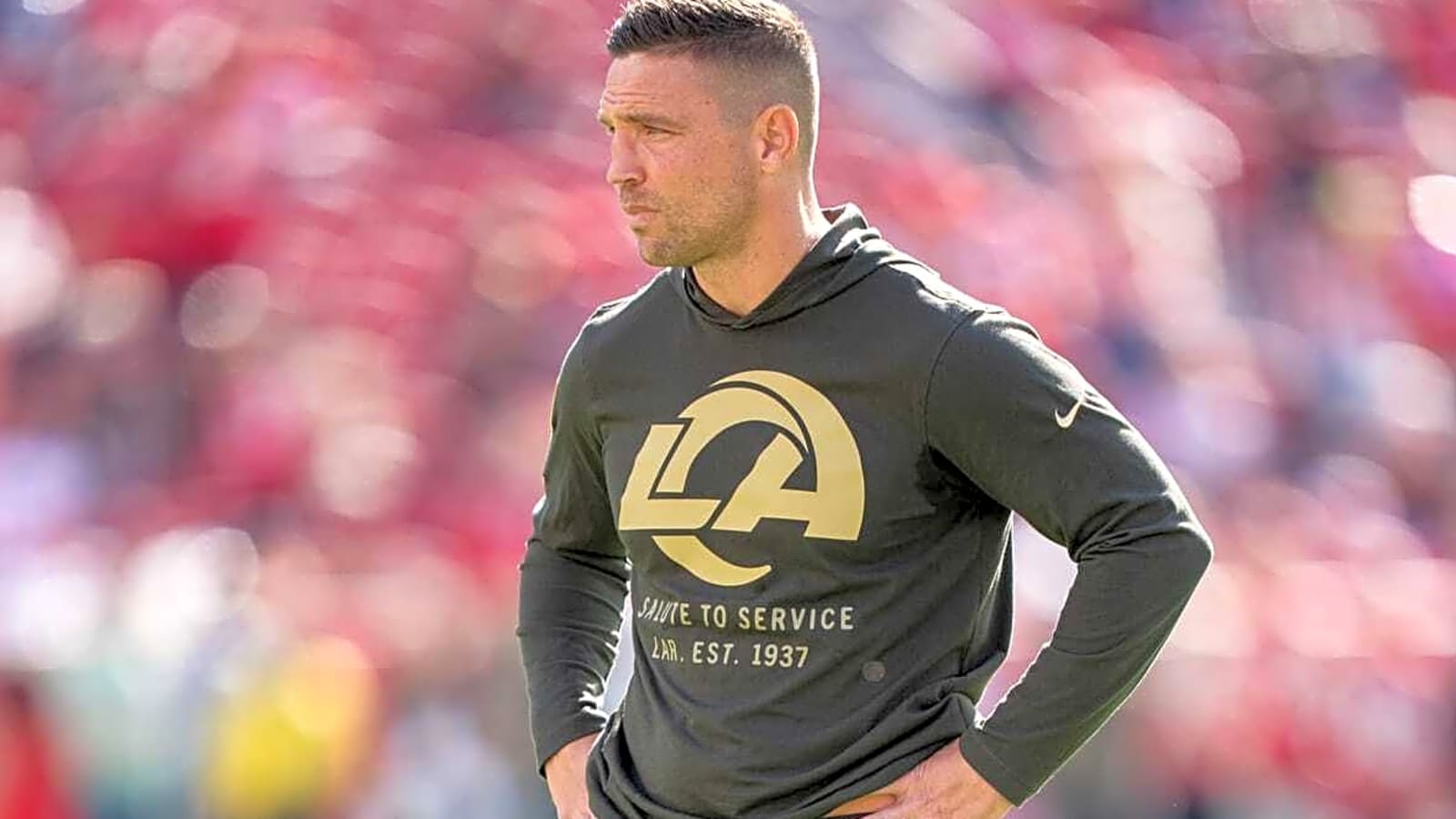
For most of the season, the Los Angeles Rams’ defense has been defined by resilience, versatility, and the ability to punch above its collective weight. Central to that identity has been safety Quentin Lake. Through 10 games, Lake put together one of the league’s most quietly impactful seasons: 61 total tackles (35 solo), two tackles for loss, an interception, a sack, a forced fumble, and a fumble recovery. The Rams deployed him everywhere — deep safety, slot, dime linebacker, even as a schematic problem-solver.
That adaptability wasn’t just flashy on tape; it showed up in the numbers. Before Lake’s Week 11 injury against Seattle, the Rams were allowing 19.1 points per game, holding multiple opponents under 20 points, and ranking competitively in pass-defense EPA. Lake’s ability to clean up run fits, disguise coverages, and settle the secondary pre-snap had become the backbone of the unit’s identity.
When he exited that Week 11 matchup, Los Angeles hoped the drop-off would be manageable. One week later, it seemed contained: the Rams allowed just 7 points to Tampa Bay. But Sunday in Carolina, everything that Lake typically patched, anticipated, or prevented came undone at once.
Support Local and Independent Sports Writing – Subscribe To the LAFB Network Today!
Young Finds the Cracks, and the Panthers Exploit Them
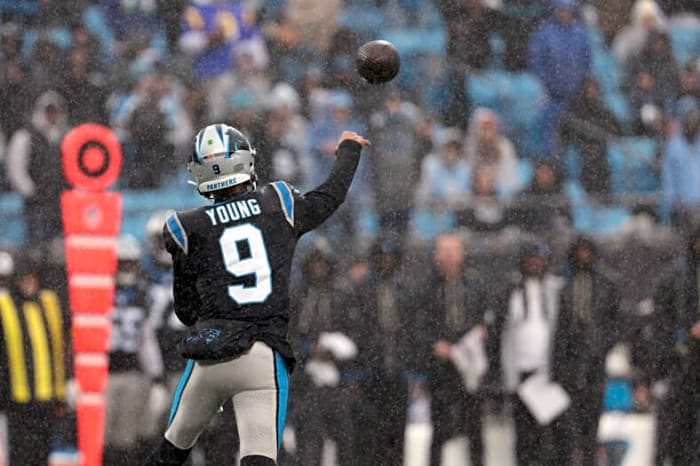
The Panthers didn’t dominate by accident. They attacked the exact vulnerabilities created by Lake’s absence. Carolina found explosiveness through the air and rhythm on the ground, even controlling all but three plays of the third quarter.
Bryce Young — often rattled early in his career — looked completely at ease, finishing 15-of-20 for 206 yards, three touchdowns, and zero turnovers. That stat line would have been improbable against this defense two weeks earlier. Without Lake, the Rams lost the communicator who settles chaos, the safety who diagnoses formations, signals adjustments, and gives corners over-the-top help, and a run defender whose blitz presence prevents blockers from climbing to the second level.
The Rams’ front seven, which forms the identity of the team’s defensive blueprint, also faltered. After generating pressure on 39% of dropbacks through Weeks 1-12, the pass rush fell to just 25% in Carolina — a 14-point drop. While the team still converted pressures into sacks efficiently, the scarcity of disruption left the defensive backs exposed. For a unit built to funnel offensive players into coverage traps, the lack of pressure forced corners into more isolation, longer routes, and high-leverage situations — exactly where Emmanuel Forbes Jr.’s limitations became magnified.
Support Our LA Firefighters In Style
Forbes’ Worst Day Arrives at the Worst Time

Forbes had been one of the season’s success stories: a once-maligned draft pick revitalized in Los Angeles, turning into a dynamic, developmental cornerback. But his afternoon in Carolina was a painful regression.
Two fourth-down touchdowns were scored directly in his coverage: one to Jalen Coker on fourth-and-three to swing the lead, the other to Tetairoa McMillan on fourth-and-two for the game-winner. Forbes admitted he “got beat” on the first and was “bumped” on the second, but the film tells a deeper story: poor leverage, late recovery, and snaps where receivers simply ran behind him.
He allowed five catches on five targets for 110 yards, two touchdowns, and a perfect 158.3 passer rating. Forbes also missed a key tackle and twice had his lack of mass exposed in run support. Cobie Durant struggled as well, allowing five catches on six targets for 66 yards and a touchdown, but Forbes’ lapses swung the game. The rookie corner’s limitations — feast-or-famine playmaking without positional consistency — were amplified in a defense unable to generate its usual pressure.
A Defense Still Capable — But Missing Its Anchor

The Rams’ defensive DNA is still built to disrupt quarterbacks and create turnovers. But the absence of a versatile star like Lake exposes the fragility underneath: the secondary becomes reactive rather than proactive, and the pressures that normally dictate coverage angles are no longer guaranteed.
This structural reliance reflects the Rams’ roster construction philosophy: premium draft capital invested in the front seven versus an inexpensive, patchworked secondary. The system works when the pass rush is performing, but when pressure drops — as it did in Carolina — the secondary must operate without the safety net Lake provides, and even talented corners struggle.
Los Angeles didn’t just lose a game; they lost the NFC’s No. 1 seed and were reminded how fine the margins are without a player who does so much of the invisible work. Lake’s return timeline will shape the rest of the Rams’ season, while Forbes’ challenge is clear: recover from this performance, or risk further exposure in a defense that depends on its front seven to carry its identity.
More must-reads:
- Five things new Raiders HC Klint Kubiak must do to carry over success from Seahawks
- New Dolphins regime has reportedly made huge Tua Tagovailoa decision
- The 'Super Bowl coaches since 2000' quiz
Breaking News
Trending News




Customize Your Newsletter
 +
+




Get the latest news and rumors, customized to your favorite sports and teams. Emailed daily. Always free!
PRIVACY POLICY EDITORIAL POLICY CONTACT US
ABOUT YARDBARKER TERMS OF SERVICE


Use of this website (including any and all parts and
components) constitutes your acceptance of these
Terms of Service and Privacy Policy.
This site is for entertainment purposes only.
There is no gambling offered on this site.
Gambling Problem? Call 1-800-Gambler.
