
-

-


Follow Us
-

 On Facebook
 On Flipboard


With playoffs taking place around the hockey world and the Under-18 World Junior Championships (U18 WJC) in full swing, that means the 2026 NHL Entry Draft is growing closer and closer. The 2026 class of prospects has seen plenty of excitement, development, and even movement in their respective seasons. In February, I came out with my first rankings for the 2026 Draft, and there has been some movement coming into these rankings.
While there are a handful of netminders who could very easily see their names called in the second round (Brady Knowling, Tobias Trejbal, Michael Orsulak), none of them currently crack the top-64 in my rankings. There have been plenty of prospects who have had busy seasons, with some making history in the leagues in which they have played their draft-year seasons, and others who are still in the midst of representing their country at the U18 WJC. Without further ado, the April Top-64 Draft rankings.
First Round
1. Ivar Stenberg, LW, Frölunda HC (SHL)
In February, I had Ivar Stenberg sitting at the top spot over Gavin McKenna, and it could really be a toss-up between the two again, but with Stenberg’s all-around two-way game being more refined, he gets the nod again. After a solid U20 WJC with Sweden, Stenberg continued to display the aforementioned two-way game as well as the game-breaking talents he has in the offensive zone. After putting up the most points by an 18-year-old in the SHL (33) since the Sedin twins in the 1998-99 season, he has positioned himself well as we climb closer to the 2026 Draft.
2. Gavin McKenna, LW, Penn State (NCAA)
A strong showing like Stenberg had at the WJC led to Gavin McKenna rolling the second half of the season with Penn State. The offensive game that has helped make him one of the top prospects in this year’s class was on full display. He still seems like he has the highest ceiling of any player this year, but the biggest knock is his defensive engagement, which continued to show up at times in the second half and is what, in my mind seperates him and Stenberg at this point. Obviously, any NHL organization would love to have a player with the offensive upside McKenna has, and it will come down to whoever has the first pick on whether they choose him or Stenberg.
3. Chase Reid, RD, Soo Greyhounds (OHL)
The rise of Chase Reid continues to grow in his draft-year season. He did not fail to impress at both ends of the ice this season with the Soo Greyhounds and was one of the league’s best defensemen all year long. An injury kept him out for about a month and a half, but he came back and looked like the same player he was before he got hurt. Defensively, he is about as steady as they come. The two-way game and ability to eat up minutes, while adding plenty of offense with a toolbox full of skills, has helped push him to being the top defenseman in my rankings.
4. Caleb Malhotra, C, Brantford Bulldogs (OHL)
Caleb Malhotra continues to impress with his non-stop motor and work ethic as the Brantford Bulldogs trek on through the OHL Playoffs. He has spearheaded the Bulldogs’ success in the playoffs, with 23 points in 12 games so far. His offensive game is led by the fact that he is very detail-oriented, with playmaking abilities, and the knack for always being in motion and looking to make a play, making him a threat at any point in time. To top it off, Malhotra is a two-way center who is very responsible, acting as the “third defenseman” in the defensive zone from his center position.
5. Keaton Verhoeff, RD, University of North Dakota (NCAA)
In the second half of his freshman season at North Dakota, Keaton Verhoeff seemed to become fully confident and comfortable at the collegiate level of play. His all-around game transitioned well from junior hockey, and his offensive numbers were really solid for a freshman defenseman. His strong shot from the point sticks out, and he has zero problem being physical and is a problem for opponents. After playing a ton of minutes for North Dakota and captaining Canada at the U18 WJC, Verhoeff could very easily end up as a top-five pick.
6. Carson Carels, LD, Prince George Cougars (WHL)
Carson Carels proved this season that he can fill multiple roles, whether it was being a power play quarterback, a shutdown defenseman, or even a player who leads rushes through transition. He plays a very multi-faceted game at both ends of the ice, leading to a strong stat line for his draft-year season (20 goals, 53 assists). Defensively, he is great at taking time and space away from opponents thanks to his skating, speed, and even physicality. He can then turn that into offense and has a top-notch shot from the point.
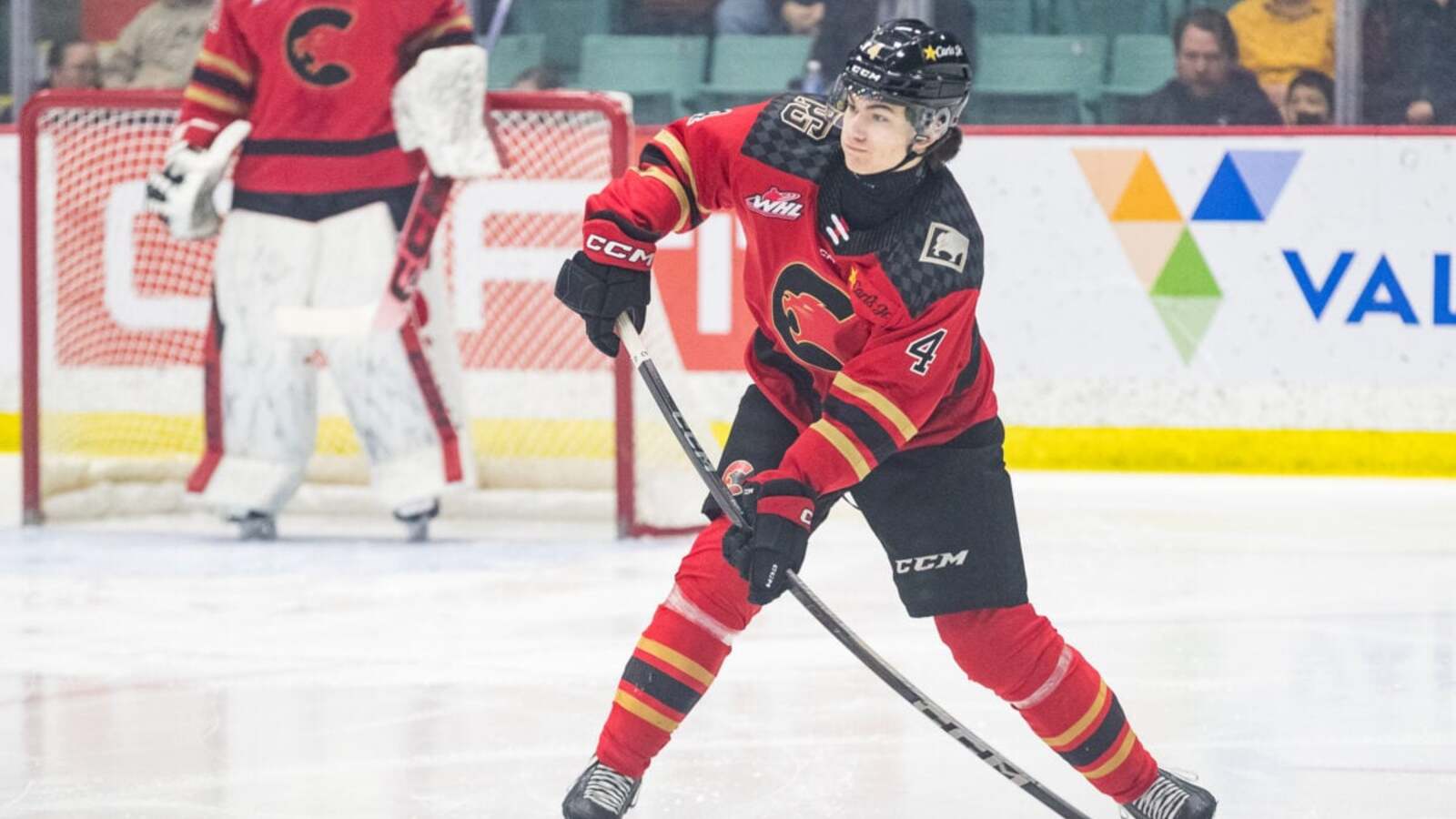
He may not end up being a top unit power play player, but he has the potential to be a top-four defenseman who can take over a second-unit.
7. Viggo Björck, C, Djurgårdens (SHL)
Viggo Björck continues to refuse to let his size (5-foot-10, 172 pounds) deter his play. He has the mobility and hands to maneuver and keep himself out of danger against bigger competition. His vision and hockey IQ are top-notch, and he is a high-end playmaker. After finishing up his season in the SHL, where, as a 17-year-old, he played a ton of minutes, he played at the U20 level and absolutely tore it up in the playoffs, putting up 20 points in nine games. While not being able to see him represent Sweden at the U18 WJC is disappointing, Björck has surely improved his draft value with his play in the playoffs at the U20 level.
8. Alberts Šmits, LD, EHC München (DEL)
Alberts Šmits’ busy season continued with his time at the Olympics with Latvia, and then, after seeing his season end with Jukurit (Liiga), he was loaned to EHC München (DEL). In all the action he has seen this season, he has shown off his confidence and all-around game. His offensive numbers during the regular season were not eye-popping, but he has the skating and puck-handling to lead rushes and to set up in the offensive zone. Defensively, he plays a sound game and has no problem throwing his weight around. The amount of experience he has had at the professional level this season has helped him further mature and develop into one of this year’s top defenseman prospects.
9. Tynan Lawrence, C, Boston University (NCAA)
After a bit of a slow start at Boston University, Tynan Lawrence’s game picked up in the last part of the season. His speed helps spearhead the work ethic and motor he has at both ends of the ice, and he has the vision and IQ to be a strong two-way player. Tied in is the strong shot he has from all ranges. After a solid showing at the U18 WJC wth Canada and showing flashes of why he was able to be one of the USHL’s most consistent players last season, he should find himself being a top-10 pick. A full season of college hockey will also be a big plus for Lawrence’s development and maturation.
10. Daxon Rudolph, RD, Prince Albert Raiders (WHL)
Calmness is the name of the game for Daxon Rudolph. The smooth-skating defenseman sees the ice well at both ends, as he is positionally sound defensively and has taken his offensive game to another level this season. Defensively, he uses that calmness to patiently wait out opponents and keep them out of high-danger areas, and then turns around and uses that calmness and vision offensively to set things up from the point. Rudolph has great playmaking skills and a great shot that packs a punch to it, which helped him put up 78 points in the regular season and another 15 so far in the WHL Playoffs.
11. Ethan Belchetz, LW, Windsor Spitfires (OHL)
A shoulder injury cut Ethan Belchetz’s season short, but the big winger put up a strong showing in his draft-year season. He has zero issue with using his size at either end of the ice to make a play and has the hands to be a power-forward style of player at the NHL level. Belchetz battles for the puck anywhere on the ice and makes opponents pay when he feels like throwing his weight around. His skating is a bit of an area of concern at his size, though. Before getting injured, he was playing at almost a point-per-game pace thanks to his knack for being around the net and having an above-average shot that has plenty of power and accuracy behind it.
12. Ryan Lin, RD, Vancouver Giants (WHL)
Another strong two-way defenseman, Ryan Lin, is a great decision maker with strong vision and hockey IQ. He sees the ice very well and has the maturity in his game to make him a dual threat. Defensively, he uses his skill set to position himself in the right spot and does not allow opponents too much time or space with the puck on their stick, while also not allowing his size to deter him from playing physically when needed. He uses that same skill set to be a strong playmaker with the puck on his stick and loves to be around the play in the offensive zone, and saw his goal-scoring production make a massive jump this season (14 compared to five last season).
13. Elton Hermansson, W, MoDo (HockeyAllsvenskan)
Having the ability to play on both sides of the ice at the winger position, Elton Hermansson has a very fundamentally sound game. He does lack in the intensity department, but he has the offensive skill to be a difference maker on the ice despite that. It starts with his transition game, where he thrives thanks to having good puck skills and stickhandling that help him maneuver around or even through opponents to make a play. Once set up offensively, he has a dangerous shot that is very accurate. After putting up great numbers at the Hlinka Gretzky Cup and so far at the U18 WJC for Sweden, Hermansson could push his way further up draft boards before the end of June.
14. Oliver Suvanto, C, Tappara (Liiga)
A big-bodied center (6-foot-3), Oliver Suvanto has zero problem using it. He loves to use it defensively to separate opponents from the puck and is a reliable player in the defensive zone. Offensively, while the numbers do not jump off the page (14 total points), Suvanto has solid hands and an overall game to be impactful, mainly at the front of the net. When his offensive game is not clicking, he can make an impact on the game in other aspects. If he can continue to refine his skating ability, he has the potential to turn into a power forward at the next level.
15. Adam Novotný, LW, Peterborough Petes (OHL)
While his rookie season in the OHL got off to a solid start, Adam Novotný saw his game continue to grow and go to another level in the second half of the season. He became one of the Peterborough Petes’ most consistent players at both ends of the ice, thanks in large part to the motor and work ethic he possesses. He is a relentless forechecker and is very defensively responsible. Offensively, he has the skating ability and shot to be dangerous at any time. Throw in the fact that he has zero issue going to the dirty areas of the ice to make a play, Novotný has the makings of being a top-six power forward at the NHL level.
16. Oscar Hemming, LW, Boston College (NCAA)
A whirlwind first half of the season, which saw Oscar Hemming having to wait to play any kind of hockey, he finally made his way to Boston College. While the offensive numbers were not the greatest, he showed why people are high on him ahead of the 2026 Draft. The Finnish-born winger plays with a high motor and is all over the ice, looking to make a play, and he does not shy away from getting involved physically. He may not have elite-level offensive skills, but he has a solid shot from mid and long range, and a style of play that makes him a pest to play against.
17. Xavier Villeneuve, LD, Blainville-Boisbriand Armada (QMJHL)
Much like Lin, Xavier Villeneuve is on the smaller side for a defenseman, but has the creativity with the puck on his stick to be a difference maker from the backend of the ice. Along with that comes his skating ability and the speed he possesses. He can activate from the point in the offensive zone and still be able to recover if things do not work out to play his defensive position.
Xavier Villeneuve pulled out the fancy moves!
— IIHF (@IIHFHockey) April 26, 2025#IIHF #U18MensWorlds #LATCAN @HockeyCanada pic.twitter.com/AexG8FoX1O
He has the ability to drive play from the point with the skills he has, and even with missing almost two months due to an injury, he could end up being a mid-first-round pick. The biggest question mark is whether his physicality, or the lack thereof, can work at the next level of hockey.
18. Marcus Nordmark, LW, Djurgårdens IF U20 (Nationell)
A player who constantly finds himself around the puck in the offensive zone, Marcus Nordmark has plenty of offensive upside in his game to be a first-round pick. He has top-notch puck-handling skills and vision that make him a threat when he is fully engaged and rolling. He can be a distributor with the puck or fire it towards the net, having a solid mix of goal-scoring and playmaking habits. The biggest knock on his game is that he tends to be disengaged with the play and does disappear at times defensively. Nordmark is going to be a prospect who has plenty of offensive potential, but who also has question marks attached to his name.
19. Nikita Klepov, RW, Saginaw Spirit (OHL)
In a rookie season that saw him become the first rookie to lead the OHL in points since Patrick Kane did it in the 2006-07 season, Nikita Klepov had a superb draft-year season. He has the work ethic to be a pest on the forecheck, while constantly looking for a lane or teammate when he has the puck on his stick. There are similarities in Kane and Klepov’s games in the sense that the 2026 OHL Rookie of the Year has the patience and vision with the puck on his stick to not force a play, and has the stickwork to put himself in a better position. He also has a strong mix of goal-scoring and playmaking abilities, having a great shot with a quick release.
20. JP Hurlbert, LW, Kamloops Blazers (WHL)
There is zero doubt about JP Hurlbert’s goal-scoring ability, having an NHL-level shot already, but that is not the only area of his game that stands out. He has taken his playmaking to another level this season, using his vision and IQ to read plays and space in front of him. When he sees he has the ice in front of him to attack, he does so and makes opponents pay. If he has a passing lane, he has shown that he can make the pass to a teammate. Working on his play away from the puck and his skating are going to be the biggest areas for Hurlbert to work on as he continues to develop his game, but he no doubt has the chance to be a legitimate goal-scorer in the NHL.
21. Malte Gustafsson, LD, HV71 (SHL)
Standing at 6-foot-4, Malte Gustafsson moves very well and is mobile for his size from the backend of the ice. He does not have a ton of offense in his game, but is a smart and safe player when he does have the puck on his stick. His bread and butter is on the defensive side of the puck, where he relies on his reach to take away gaps and time for opponents to keep them to the outside of the zone. He does use his body to throw his weight around when given the chance, but not as much as expected. If he can develop his offensive game more, he could turn into a strong two-way defenseman, but for now, he projects more as a shutdown defenseman.
22. Juho Piiparinen, RD, Tappara (Liiga)
One of the most sound defensive defensemen in this year’s class, Juho Piiparinen, has also shown flashes of having solid offensive tools in the toolbox. At the U20 SM-sarja level, he racked up 13 points in 15 games, but with Tappara of Liiga, he only totaled three in 29 games. He is more of a puck mover than he is a play driver offensively, but is rock solid on the defensive side of things. He is very positionally sound, plays with physicality, and can anticipate and read plays well in front of him to shut them down before his opponents get to the high danger areas of the ice.
23. Ilia Morozov, C, Boston College (NCAA)
One of the youngest players in the NCAA this season, Ilia Morozov, made a strong impact in his freshman season at Boston College. It was not just offensively where he did so, as his physical play and motor were a major thorn in the side of opposing teams, with Morozov loving to battle for pucks and being relentless on the forecheck. When he was on his game offensively, he showed great skill in transition and has strong playmaking abilities. On the defensive side of the puck, his motor shines through with being strong on the backcheck and reliable in his own end of the ice. Taking the next jump in his goal-scoring production next season could help elevate his game even more, and there will certainly be an NHL organization that sees what potential he has.
24. Mathis Preston, RW, Vancouver Giants (WHL)
While having injury issues after being traded to the Vancouver Giants earlier on this season, Mathis Preston put his entire game on display when he was healthy. He has a strong two-way game that is led by the skating and speed he plays with. He is deceptive and shifty when he has the puck on his stick and can make a defender miss him rather easily. He has no problem playing on either the outside or inside of the offensive zone to make a play and has a dangerous shot to go along with the rest of the skills he has. Defensively, he uses his speed and stick work to stick with opponents and is another reliable forward in his own end.
25. Maddox Dagenais, C, Québec Remparts (QMJHL)
Playing a simplistic, not-so-flashy game, Maddox Dagenais has plenty of tools that help him stand out as a potential first-round pick. He is a relentless worker without the puck on his stick, loving to battle anywhere on the ice, and being strong on the forecheck to earn possession of the puck. Once he has the puck, he uses the mix of his speed and physicality to get himself in goal-scoring position, where he has a great shot (30 goals this season). He loves to have the puck on his stick, which can be a detriment at times, but he has the overall skill to lead rushes by himself.
26. William Håkansson, LD, Luleå HF (SHL)
For a 6-foot-4, 207-pound defenseman, William Håkansson is a very strong skater from the backend. He may not bring a ton of offense to the ice, but he is a shutdown defenseman at this point in his development. He not only uses his reach to keep opponents to the outside and in check, but loves to throw his weight around and reminds his opponents to think twice of coming his way. He has a compete level at both ends of the ice, but is more of a first pass type of defenseman when he has the puck on his stick. A top-four role as a shutdown player at the NHL level is right up Hakånsson’s alley.
27. Wyatt Cullen, LW, USNTDP (USHL)
A player who has really helped his draft value as the season progressed has been Wyatt Cullen. On a United States Developmental Team that was not the strongest this season, Cullen has probably been their best player. He is a do-it-all type of player, whether it is on the forecheck, backcheck, board play, or goal-scoring, he can do whatever is needed. He has the speed and awareness at both ends to be a pest and had a great showing for the United States at the U18 WJC, putting up nine points in just five games.
OH MY WYATT CULLEN
— Game Notes (@GameNotesBud) April 27, 2026pic.twitter.com/5fySoyJ55P
He very easily could end up going higher than expected with his play at the tournament and the mentality he plays with.
28. Egor Shilov, C Victoriaville Tigres (QMJHL)
In his first season with the Vicotriaville Tigres, Egor Shilov proved why he has been viewed as one of the best Russian-born prospects in this year’s class. He has the offensive skill to be either a playmaker with strong vision and creativity with the puck on his stick, or use that same creativity and high-end shot to be a goal-scorer. He thrives in the transition game and has the skating ability to lead rushes through the neutral zone. Defensively, he is responsible and a capable defender, but his overall game in his end of the ice could use a bit of refinement.
29. Liam Ruck, RW, Medicine Hat Tigers (WHL)
Putting up 104 points this season in the WHL, only second to his twin brother Markus, Liam Ruck really caught the eye of many in the hockey world. Liam is great with the puck on his stick and has top-notch decision-making with it. He has the ability to anticipate and scan the ice to find the soft spot in a defense and then attack it while using his size to drive to the net. He loves going to the net and is a great finisher in tight. He also uses the ability to anticipate defensively and is overall a strong two-way player, but the biggest question marks are how he performs without his brother and if his skating can improve.
30. Niklas Aaram-Olsen, LW, Örebro HK U20 (Nationell)
Another prospect who very well could end up seeing their draft value rise after a strong showing at the U18 WJC is Niklas Aaram-Olsen. He had a really strong showing for Norway at the tournament, putting up four goals in five games. His two-way game stood out, as it has all season long. He uses his speed and strong skating at both ends of the ice, while having a solid mix of goal-scoring and playmaking ability. When he has the puck on his stick, Aaram-Olsen has a great shot from mid-range that can beat a goaltender, while also loving to lower the shoulder and get to the middle of the ice for a high-danger chance.
31. Jaxon Cover, RW, London Knights (OHL)
I remain high on Jaxon Cover just due to the fact of what he has been able to do this season with the London Knights. He has only been playing ice hockey for a handful of years, and yet has plenty of skills that make him a prospect who could hear his name called in the first round. He has the natural goal-scoring touch around the net, loves to go to the dirty areas of the ice, and has the vision and creativity at both ends of the ice to be a two-way threat. In the 2026 OHL Playoffs, he was one of the Knights’ best players in the lone series they played in. With the raw potential and upside he has, an NHL organization is going to look at him as a long-term pick, which fits a team that is picking toward the end of the first round.
32. Ryan Roobroeck, LW, Niagara IceDogs (OHL)
When he is fully on his game, Ryan Roobroeck has the potential to be a game-breaker. He has the size to be a power forward at the NHL level, on top of having a potent shot in his arsenal. He can be a net-front presence and has the hands and strong enough skating to be a top-six forward, but it all comes down to consistency. His play is hit or miss, but if an organization can get the best of him more consistently, he could end up being a late first or early second round pick that could really blossom into a strong NHLer.
Second Round
33. Alexander Command, C, Örebro HK U20 (Nationell)
34. Tomas Chrenko, C, HK Nitra (Slovakia)
35. Pierce Mbuyi, LW, Owen Sound Attack (OHL)
36. Victor Plante, LW, USNTDP (USHL)
37. Adam Valentini, C, University of Michigan (NCAA)
38. Jack Hextall, C, Youngstown Phantoms (USHL)
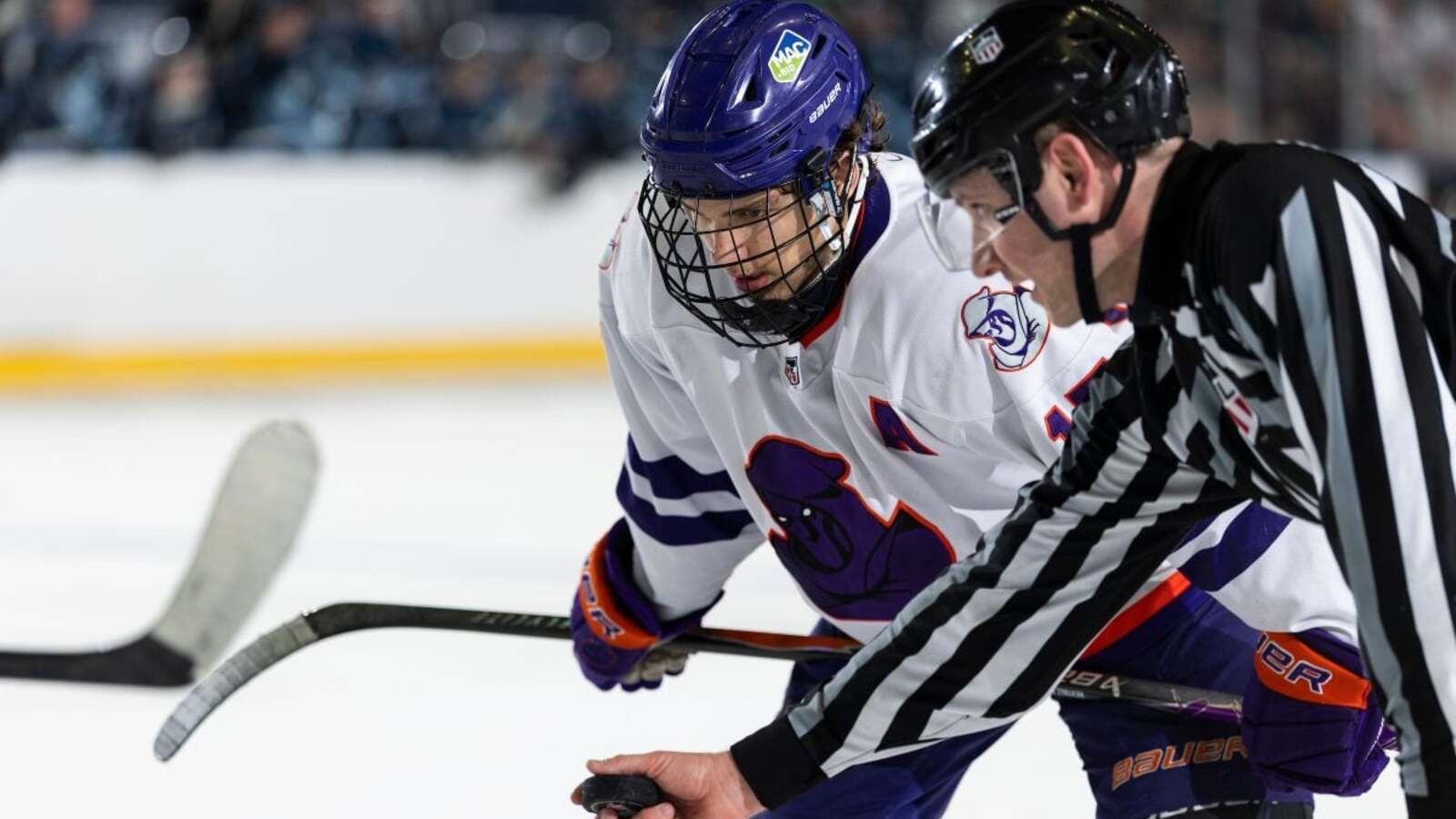
39. Casey Mutryn, RW, USNTDP (USHL)
40. Nikita Shcherbakov, LD, Tolpar Ufa (MHL)
41. Adam Goljer, RD, HK Dukla Trencin (Slovakia U20)
42. Markus Ruck, C, Medicine Hat Tigers (WHL)
43. Beckham Edwards, C, Sarnia Sting (OHL)
44. Simas Ignatavicius, Genève-Servette HC (NL)
45. Ben Macbeath, LD, Calgary Hitmen (WHL)
46. Thomas Bleyl, RD, Moncton Wildcats (QMJHL)
47. Alessandro Di Iorio, C, Sarnia Sting (OHL)
48. Adam Nemec, LW, Sudbury Wolves (OHL)
49. Vladimir Dravecky, LD, Brantford Bulldogs (OHL)
50. Giorgos Pantelas, RD, Brandon Wheat Kings (WHL)
51. Filip Novak, LW, HC Sparta Praha (Czechia)
52. Oscar Holmertz, C, Linköping HC U20 (Nationell)
53. Lavr Gashilov, C, Avto Yekaterinburg (MHL)
54. Lars Steiner, RW, Rouyn-Noranda Huskies (QMJHL)
55. Brooks Rogowski, C, Oshawa Generals (OHL)
56. Ryder Cali, C, North Bay Battalion (OHL)
57. Vertti Svensk, LD, SaiPa (Liiga)
58. Luke Schairer, RD, USNTDP (USHL)
59. Axel Elofsson, RD, Örebro HK U20 (Nationell)
60. Thomas Vandenberg, C, Ottawa 67s (OHL)
61. Gleb Pugachyov, RW, Chaika Nizhny Novgorod (MHL)
62. Cole Zurawski, RW, Owen Sound Attack (OHL)
63. Viktor Fyodorov, C, Chaika Nizhny Novgorod (MHL)
64. Matias Vanhanen, LW, Everett Silvertips (WHL)
More must-reads:
- Blackhawks get bad Connor Bedard news that will impact first part of season
- Mark Cuban takes Mavericks owner Patrick Dumont to court
- The 'First-overall NHL Draft picks' quiz
Breaking News
Trending News




Customize Your Newsletter
 +
+




Get the latest news and rumors, customized to your favorite sports and teams. Emailed daily. Always free!
PRIVACY POLICY COOKIE POLICY CONTACT US
ABOUT YARDBARKER TERMS OF SERVICE


By using this site, you agree to our Terms of Service and Privacy Policy.
This site is for entertainment purposes only.
There is no gambling offered on this site.
Gambling Problem? Call 1-800-Gambler.
