
-

-


Follow Us
-

 On Facebook
 On Flipboard


The Boston Bruins 2026–2027 season isn’t about easing in. They’re coming in the way they always do—steady, disciplined, and already locked into who they are. No theatrics, no noise — just a team built for the Atlantic’s grind. Boston doesn’t need a grand entrance; they simply show up and get to work. They step in with quiet force, confident in who they are, and make it clear that the rest of the league will need to adjust to them.
This season preview isn’t about hype or reinvention. It’s a roster built to stay competitive, with a standard that doesn’t slip no matter who comes or goes. Boston enters the 2026–2027 season exactly where they’ve lived for years: in the fight, whether anyone wants to acknowledge it or not—and usually they don’t, which is fine. The Bruins don’t need the attention. They only need the points.
The Atlantic Division Doesn’t Care About Comfort
The Atlantic is a mess again—a loud, crowded, unforgiving mess.
Toronto is loaded and already planning the parade route. Florida is unpredictable in the way that makes coaches lose sleep. Tampa refuses to die, even when everyone politely suggests it might be time. Detroit is climbing. Buffalo is chaotic. Montreal is Montreal. Ottawa is still trying to figure out what it wants to be when it grows up.
Boston? Boston sits right in the middle of it, the quiet problem nobody ever fully solves. They don’t collapse. They don’t drift. They don’t chase whatever trend the rest of the division is obsessed with. They keep showing up—the quiet problem no one accounts for until they’re wrecking someone’s playoff math.
That’s why the Bruins enter the 2026–2027 season projected to finish fourth in the Atlantic—not a favorite, not an underdog, just the team that refuses to go away.
The Blue Line Will Decide Everything
The Bruins’ season hinges on the blue line, with Charlie McAvoy suspended for the first six games. That immediately puts pressure on the rest of the Boston defense.
Mason Lohrei is the big one. He’s the young defenseman Boston has been grooming for a larger role, and now he’s getting thrown into it earlier than expected. Lohrei has the size, the skating, and the poise, but he hasn’t carried top-pair responsibility over an 82-game grind. With McAvoy out, he’s not just filling minutes—he’s being asked to prove he can handle real weight.
Will Borgen was brought in because Boston needed a steady, no-nonsense right-shot defenseman who can survive tough matchups. He’s not flashy, but he’s reliable, physical, and hard to play against. He closes space quickly and wins battles. He doesn’t complicate the game — the kind of presence you need when your top pair is disrupted.
Connor Clifton returns to Boston as a familiar face who knows the system. He can move up or down the lineup when needed. He’s not a McAvoy replacement, but he keeps the bottom pair stable. Clifton doesn’t panic, and he doesn’t overextend. He understands exactly what this team expects. He brings pace, he brings edge, and he delivers steady, consistent shifts.
So the blue line opens the season with a clear test: Can Lohrei grow fast enough? Can Borgen anchor the right side? Can Clifton keep the floor from dropping?
If they settle quickly, Boston becomes dangerous. If they don’t, the Bruins spend October digging out of a hole—again.
Goaltending Is The Emotional Anchor
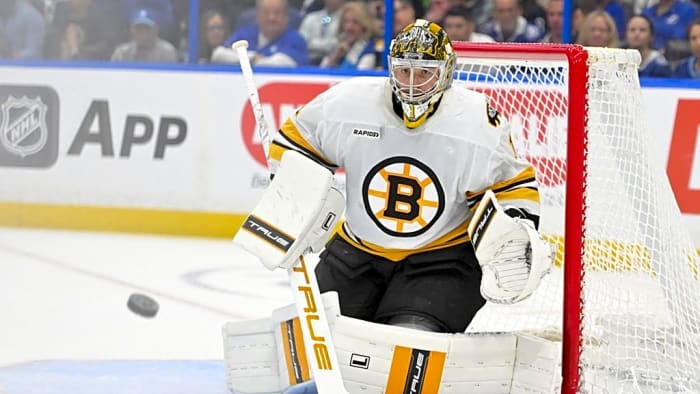
Some teams rely on stars. Some rely on systems. Boston relies on goaltending, and that starts with Jeremy Swayman.
Swayman isn’t just Boston’s starter; he’s the emotional engine of the roster. He’s 27, hyper‑competitive, and plays with a calm that settles the entire bench. His positioning is elite, his puck tracking is sharp, and his movement is efficient — all traits that fit perfectly within Boston’s structured defensive identity. When the Bruins steal games they shouldn’t win, it’s usually because Swayman shuts everything down and erases mistakes before they become problems.
Behind him is Michael DiPietro. He’s not asked to be Swayman, and he doesn’t try. DiPietro gives Boston exactly what it needs from its backup: clean reads, steady positioning, controlled rebounds, and simple, predictable decisions. He keeps the team in games, supports the bottom pair, and delivers the consistency Boston demands every night — regardless of who’s starting.
Together, they give Boston the one thing the rest of the Atlantic hates: a team that refuses to go away because its goaltending won’t let it die. They stabilize the defense. They calm the bench. They extend leads and erase breakdowns. They drag the Bruins through nights when the legs aren’t there.
This is where Boston’s underlying strengths show up—structure, discipline, and elite goaltending that keep them alive even when everything else goes sideways. They will steal points. They will frustrate teams. They will survive nights where the offense disappears.
Goaltending is the reason Boston’s floor is higher than anyone wants to admit.
An Offense Built To Run Hot And Cold
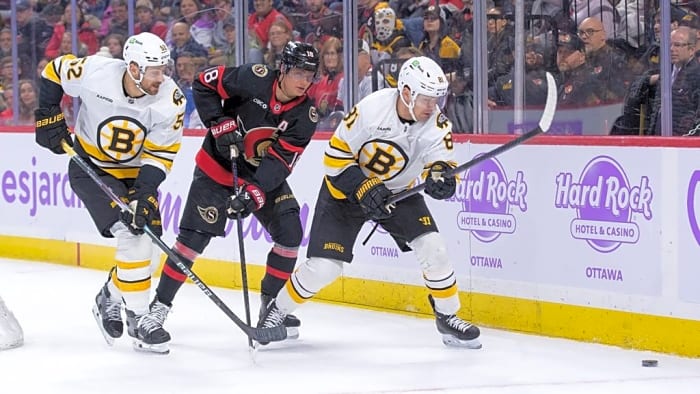
Boston’s offense is going to run hot and cold — not because it’s broken, but because of how it’s built. They don’t have steady secondary scoring behind Pastrnak, so production comes in waves. Their attack depends on pace, and pace isn’t consistent. Some nights it opens the ice. Some nights it gets smothered. Some nights it forgets to show up entirely.
That’s where the youth movement comes in.
James Hagens, Fraser Minten, and Marat Khusnutdinov aren’t just prospects — they’re Boston’s wildcards up front. Each brings something the Bruins don’t already have, and each fits a different piece of the identity they’re trying to build.
Hagens gives Boston pure skill and creativity. He sees plays early, attacks space, and has the kind of offensive instincts the Bruins have lacked in their middle six. He can tilt a shift with one touch, which makes him valuable even when he’s quiet.
Minten brings size, responsibility, and center‑lane discipline. He plays a mature game, wins battles, and understands structure — traits Boston values more than flash. He’s the kind of forward who can stabilize a line and make everyone around him better.
Khusnutdinov adds pace and pressure. He plays fast, hunts pucks, and forces mistakes. His motor fits Boston’s identity perfectly: relentless, disruptive, and hard to play against. When the Bruins need energy, he supplies it.
The Bruins don’t expect them to be heroes; they want them to buy into the team’s identity and contribute when it counts. In Boston, it’s about making an impact in the moments that matter — because in the NHL, if you can’t keep up, you get left behind.
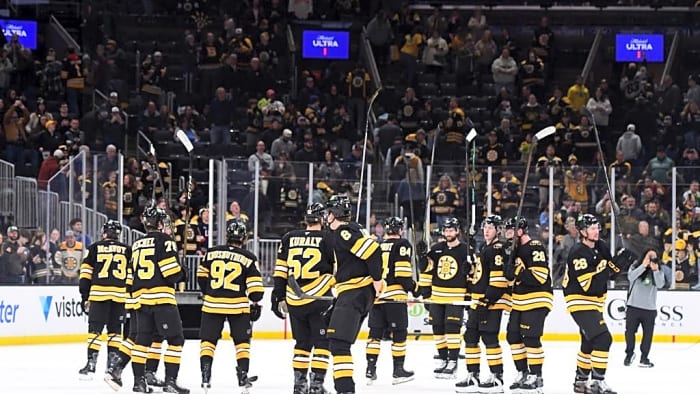
Here’s the difference this season: those bursts matter more.
The JJ Peterka trade with Utah gives Boston the speed and spark they’ve been missing. Pastrnak remains elite. The rookies add unpredictability. The defense can generate offense again. Goaltending keeps them alive long enough for those streaks to swing games.
They won’t score consistently, but when they do score, it will matter. That’s why they’re more dangerous than they look on paper.
The youth movement isn’t a trend. It’s the test that defines how high this offense can climb—and how many heart rate spikes fans will experience along the way.
What This Season Comes Down To
At its core, the Bruins’ season depends on how quickly they settle into who they are. Not the version people argue about online. The version they actually are.
The blue line has to stabilize. The goaltending has to stay sharp. The offense has to ride its streaks without letting them define the year. The rookies have to grow inside the identity, not outside it.
If Boston locks in early, they become the kind of team that drags opponents into uncomfortable games and refuses to let go. If they don’t, they’re chasing the season from behind in a division that doesn’t slow down for anyone.
This season isn’t about perfection. It’s about staying in the fight long enough to matter … and maybe, just maybe, scoring more than two goals on a Tuesday night.
End Of My Boston Bruins 2026–27 Season Rant
Boston finishes in that annoying middle zone, fighting for a wild card spot. They’re the playoff opponent nobody wants because they refuse to go away. They drag games into slow, uncomfortable places and force teams to adjust. Their structure tightens when pressure rises, and their discipline rarely cracks. Their goaltending stretches nights longer than anyone expects. They don’t overwhelm opponents; they grind them down shift by shift. They make every inch feel contested, and every decision feel heavier. They’re the team you think you should beat until the game changes. Ignore them at your own risk.
Read More Hockey News From Stadium Rant Here: Hockey News
More must-reads:
- Packers are bracing for imminent Josh Jacobs crisis
- Preseason mock draft has QBs going 1-2-3; history suggests that's unlikely
- The 'Switch-hitter 35-HR seasons' quiz
Breaking News
Trending News






Customize Your Newsletter
 +
+




Get the latest news and rumors, customized to your favorite sports and teams. Emailed daily. Always free!
PRIVACY POLICY COOKIE POLICY CONTACT US
ABOUT YARDBARKER TERMS OF SERVICE


By using this site, you agree to our Terms of Service and Privacy Policy.
This site is for entertainment purposes only.
There is no gambling offered on this site.
Gambling Problem? Call 1-800-Gambler.
