
-

-


Follow Us
-

 On Facebook
 On Flipboard

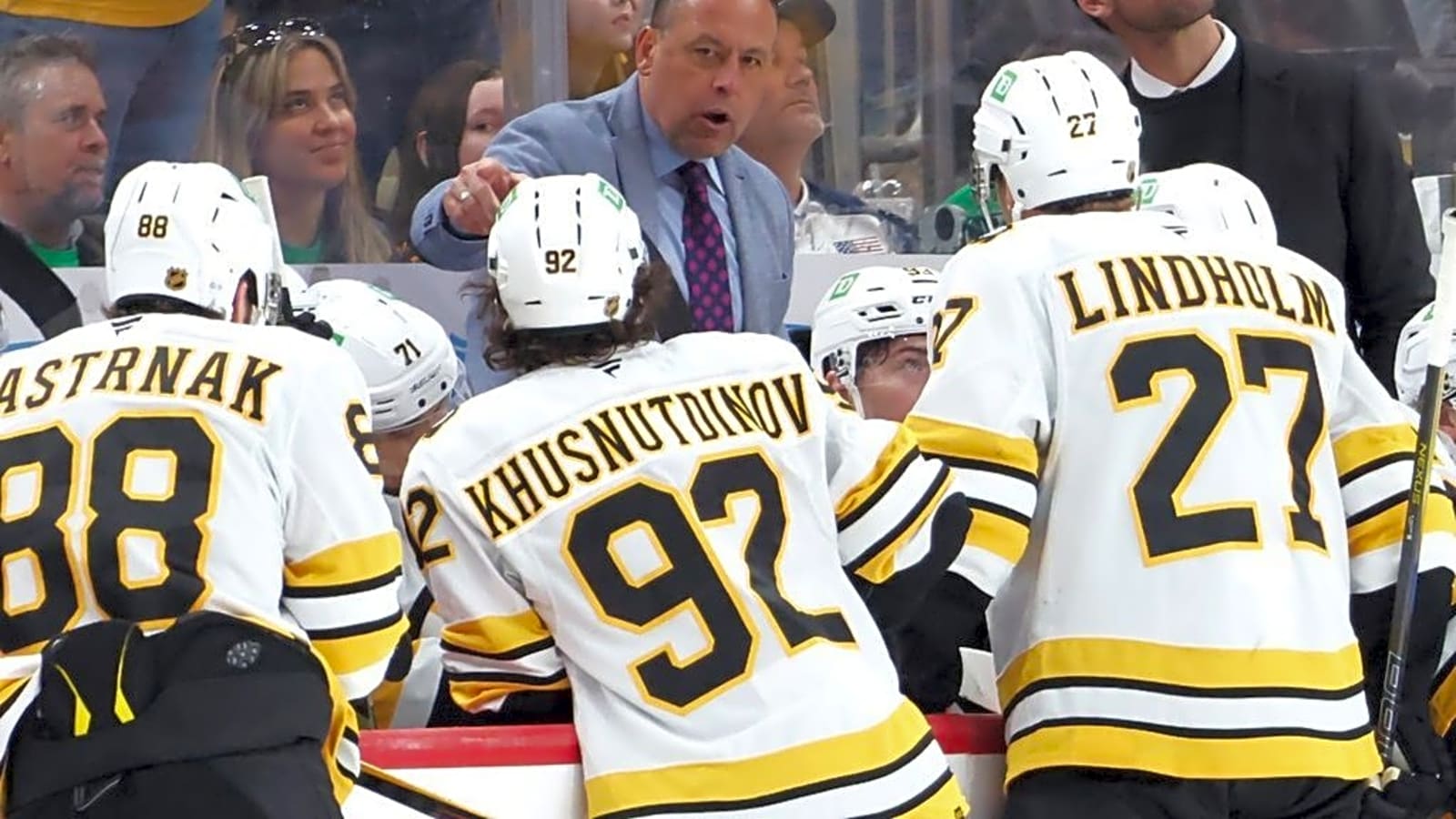
The Boston Bruins don’t sneak up on people. They don’t need to. They’re the team you stop thinking about — right up until they ruin your night.
Every offseason, the Atlantic Division turns into a seven‑team circus. Toronto hosts its annual self‑help seminar. Tampa Bay refuses to acknowledge gravity. Florida weaponizes chaos. Buffalo sells hope like a subscription service. Detroit insists the rebuild is finally over. Montreal pretends vibes are a strategy. Ottawa exists.
While everyone else is busy performing, the Bruins are sharpening the knife. They don’t chase attention. They don’t audition for relevance. They show up, collect points, and wait for you to underestimate them again.
Boston Isn’t A Mystery — They’re A Recurring Problem
Boston finished 45‑27‑10 (100 points) last season — and did it while playing the sixth‑hardest schedule in hockey. That’s not a fluke. That’s a team that kept winning while everyone else was busy explaining why they shouldn’t.
They scored 268 goals and allowed 247, the statistical profile of a team that doesn’t need hype to stay dangerous. They just keep showing up. They just keep collecting points. They just keep irritating the people who forget about them.
Boston wasn’t lucky. They weren’t inflated. They were actually good — even when the league made their life difficult.
The Core Pieces Aren’t Subtle
The Boston Bruins core isn’t loud. It isn’t theatrical. It isn’t built to win headlines. It’s built to win games — with cold, mechanical consistency.
David Pastrnak — The Engine
Pastrnak casually dropped 100 points like he was filing paperwork. He’s not just a scorer — he’s a gravity well. He bends the geometry of the ice every time he touches the puck.
Jeremy Swayman — The Backbone
Swayman posted 31 wins with a 2.71 Goals Against Average (GAA), the profile of a goalie who refuses to let the floor collapse. He doesn’t steal games with theatrics — he steals them with control.
Charlie McAvoy — The Hinge
Suspended or not, McAvoy is the hinge of the entire operation. He erases mistakes before they become problems. The structure bends without him, but it doesn’t break.
JJ Peterka — The Spark
Peterka gives the Bruins ignition through acceleration. He outruns chaos, stretches the neutral zone, and tilts the ice with movement alone. Boston didn’t add a winger — they added a catalyst.
Hampus Lindholm — The Stabilizer
Lindholm makes everything cleaner, calmer, more predictable. He’s the glue that keeps the blue line from fraying.
The Bruins core isn’t flashy. It’s built for survival. It’s built for stability. It’s built to handle chaos. That’s exactly why the Atlantic should be nervous.
The Blue Line Fixes
Boston didn’t rebuild its defense with vibes or wishful thinking. They rebuilt it with intent — cold, targeted intent. Three problems were killing them last season: rush chances, shot volume, and crease chaos. So they went out and found three players who don’t just patch those holes — they erase them.
This wasn’t a makeover. It was a correction.
Mason Lohrei — The Speed Breaker
The Atlantic wants to play fast. Lohrei makes them play slow. He kills rushes before they become danger, forces dump‑ins, and drags transition chances into the mud. When he’s on the ice, teams don’t fly — they stall.
Connor Clifton — The Pressure Valve
Shot volume is the silent killer. Clifton shuts the faucet off. He breaks cycles, kills plays early, and turns sustained pressure into one‑and‑done possessions. He lowers the temperature of the game without ever looking like he’s trying.
Will Borgen — The Crease Sheriff
The modern NHL is won in the three feet around the net. Borgen owns that space like it’s fenced‑off property. Screens, rebounds, jam plays — he erases the ugly goals that swing momentum. He doesn’t just protect the crease. He patrols it.
Three problems. Three solutions. More importantly: three players who reinforce Boston’s identity.
While the rest of the Atlantic is chasing chaos, the B’s are building a defense that absorbs it. Lohrei slows the game down. Clifton reduces the noise. Borgen locks down the most dangerous real estate on the ice.
This isn’t a blue line built for highlights. It’s a blue line built for survival. And in a division this volatile, survival becomes a weapon.
Why The Atlantic Chaos Makes Boston Even More Dangerous
The Atlantic isn’t chaotic because analysts keep calling it chaotic. It’s chaotic because every team in this division thinks this is the year — and that delusion is exactly what makes the whole thing dangerous.
Seven teams pulling in seven directions, all convinced they’re climbing, all convinced they’re close, all convinced they’re relevant.
That’s not competitiveness. That’s volatility. Volatility doesn’t reward noise. It rewards teams that don’t get swept up in it. Boston is the one team in the room that doesn’t flinch.
The Predictions Miss The Point
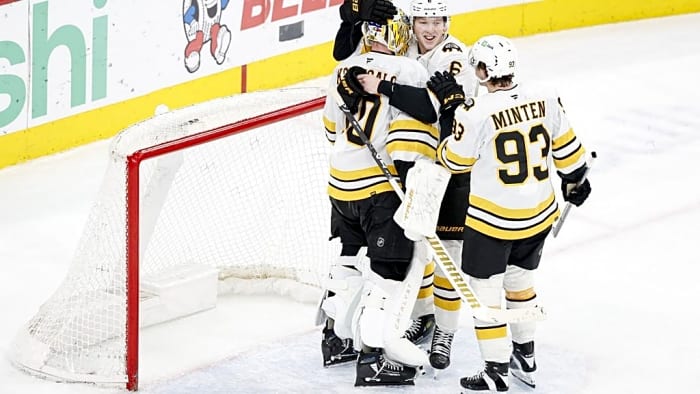
Every major projection puts Boston at 4th in the Atlantic, around 98 points, living on the wild‑card bubble. On paper, it looks like a shrug — the kind of prediction analysts make when they don’t want to commit to calling the Bruins good or bad.
A 98‑point season is exactly the kind of year where the Bruins slip under the radar, stack wins while no one’s looking, and ruin someone’s playoff math in March. It’s not a warning sign. It’s a setup.
Narratives love clean arcs. Boston snaps them in half. Narratives love tidy storylines. The Bruins drag them into the mud. Narratives love teams that rise and fall on schedule. Boston refuses to follow the script.
The projections don’t fail because they’re bad — they fail because they’re built to measure what teams should be, not what Boston is. The Bruins have never behaved the way the league expects.
Boston stabilizes when they’re supposed to slip. They hang around when they’re supposed to fade. They claw back when they’re supposed to disappear.
They don’t chase hype cycles or preseason narratives. They chase wins.
And wins don’t care about projections.
End Of My Boston Bruins Rant
The Bruins are not the flashiest team in the Atlantic. They are not the loudest. They are not the most dramatic.
They are the team that ruins your night. The team that turns your playoff math into a migraine. The team that steals points you already counted. The team that makes their flaws your problem.
Every season, someone forgets about Boston. Every season, someone writes them off. Every season, someone assumes the window is closing.
Every season, the Bruins respond the same way:
They show up. They play their game. They ruin someone’s night.
No theatrics. No declarations. Just the steady, statistical certainty that they’re still here — and still a problem.
If the league keeps forgetting that, the Boston Bruins will be happy to remind them — one ruined night at a time.
More must-reads:
- Consistency is key for coach Pascal Jansen's jumbled but promising NYCFC
- Kids who will be playing on Sundays: Ohio State's Jeremiah Smith, Texas' Ryan Wingo highlight best Week 1 CFB performances
- The 'NCAA football national champions' quiz
Breaking News
Trending News






Customize Your Newsletter
 +
+




Get the latest news and rumors, customized to your favorite sports and teams. Emailed daily. Always free!
PRIVACY POLICY COOKIE POLICY CONTACT US
ABOUT YARDBARKER TERMS OF SERVICE


By using this site, you agree to our Terms of Service and Privacy Policy.
This site is for entertainment purposes only.
There is no gambling offered on this site.
Gambling Problem? Call 1-800-Gambler.
