
-

-


Follow Us
-

 On Facebook
 On Flipboard

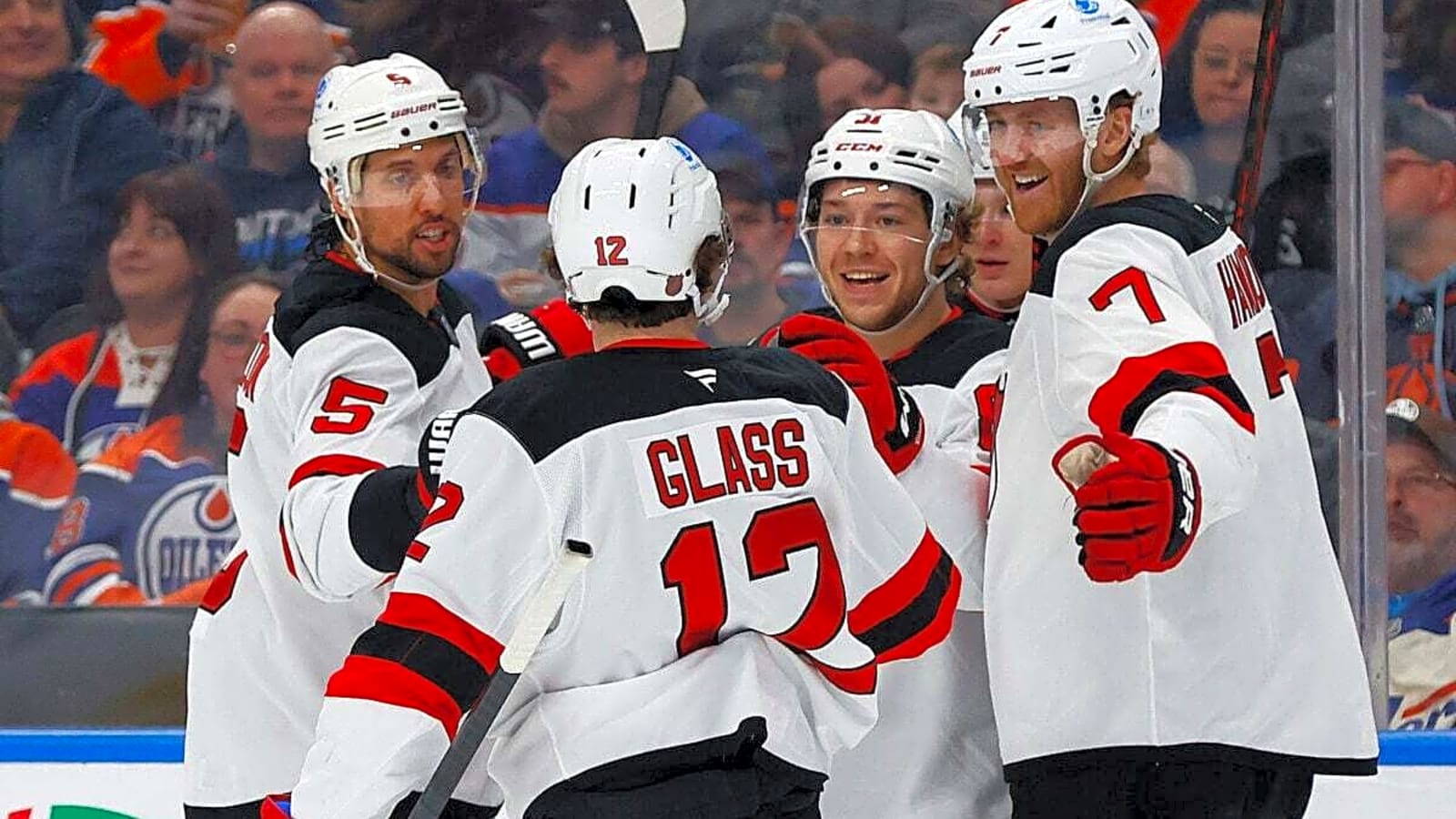
The New Jersey Devils are emerging from the Olympic break in a less-than-ideal scenario. With just 25 games at hand — and a bleak 28-27-2 record — the team needs a hard reset in order to salvage the season. It’s hard to believe that the same group that kicked off 2025-26 with an impressive win streak is second to last in the Metropolitan Division, victimized by goalscoring droughts and riddled with inconsistencies.
But after a much-needed respite from Devils hockey, the team is set to return to action on Wednesday night. They will take on the Buffalo Sabres at Prudential Center, facing off against former head coach Lindy Ruff for the third time this season. Hopefully, the time off provided the perfect opportunity for players to recalibrate, so the Devils can turn the page on their rough patch and finish the season strong. Here’s everything they should focus on in the meantime.
Star Players Must Keep Scoring
The good news is that the 2026 Winter Olympics reassured fans of one thing: the Devils’ top players find their way onto the score sheet when it matters most. All seven of New Jersey’s finest advanced to the quarterfinal round, giving their all while representing their home country. But two players in particular stood out, excelling after having a streaky or injury-laden season.
Timo Meier kicked things into high gear early on in the tournament, with two goals in Group A’s opening game against France. Not only did he finish the game with four shots on goal and a plus-3 rating, but he also became the first Swiss NHL player to record multiple goals in an Olympic game. By the end of the tournament, he tallied seven points in five games, including one power-play goal. After such a strong performance, fans should be excited to see what the infamous “March Meier Madness” could look like next month.
Likewise, all eyes will be on Jack Hughes in the near future, after he scored the golden goal that led Team USA to an overtime victory. He sat out the last three Devils games before the break with a strained groin, but cemented himself as a hero in the Olympics with seven points in total — two of which were game-winning goals. He’s shown a willingness to win no matter the cost, which will hopefully translate to the remainder of the Devils’ season.
Improvement During 5-on-5 and High-Danger Scenarios
There are a multitude of reasons as to why the Devils continue to be outplayed time and time again. Aside from countless injuries that have taken out goal scorers, blueliners, and goalies alike, they struggle with puck possession in 5-on-5 and high-danger situations.
As of right now, the Devils rank startlingly low in a wide variety of statistics, but the most concerning is their goal metrics. For starters, they have a goal differential of minus-29, which is tied for the fourth-worst in the NHL and a 245% decrease from last season (plus-20). To make matters worse, the Devils are 31st in the league in goals for per game (2.51). But what’s caused this disastrous decline?
Finishing scoring chances has been an issue all season long, but difficulties have been most obvious at 5-on-5 and during high-danger scenarios. In 5-on-5 situations, they’ve allowed nearly as many shot attempts against (2,673) as they have shot attempts for (2,771). Paired with a 50.72 shots for percentage (SF%) and just 1.88 goals every 60 minutes (GF/60), things are looking rough for the Devils, who can’t seem to convert scoring opportunities into goals.
Then there’s the matter of high-danger chances. Last season, the Devils finished second in the NHL in high-danger shots on goal, but now have the second-worst high-danger shooting percentage (15.73 HDSH%) in the league. And at the other end of the ice, Devils’ goaltenders have a .786 high-danger save percentage (HDSV%), which certainly doesn’t help matters.
Overall, the Devils must work on capitalizing on scoring opportunities by adjusting their approach at 5-on-5 and in high-danger areas surrounding their opponent’s net.
Boost in Confidence and Depth Scoring
Looking past the injuries, the goalscoring woes, and the volatility of the Devils’ play, perhaps the most important thing the team needs is to believe in their group. The Olympic break could very well turn into a blessing in disguise, offering players the chance to regroup for one last push.
So far, they’ve struggled to meet the demands of a grueling schedule, and the nonstop grind has clearly taken a toll on players. Tensions were high, morale was low, and their confidence suffered as a result. Since the start of 2026, the Devils are 7-10-0, and have lost by three or more goals five times within that frame.
Players like Nico Hischier and Cody Glass have been shouldering much of the team’s burden as of late, combining for eight goals and 13 points in their last 10 games. But for the rest of the season, the emphasis will be on depth scoring.
The hope is that newcomer Nick Bjugstad will help with this matter, who was acquired earlier this month from the New York Islanders in exchange for Ondrej Palat. The team will also look toward players like Dawson Mercer, Paul Cotter, and Luke Glendening, who have been dealing with point droughts throughout the season. If the Devils can resolve their secondary scoring issues, there’s a strong chance they can finish with a slightly higher standing in the Eastern Conference.
Once again, New Jersey has become the underdog, fighting for redemption in the final hour.
More must-reads:
- John Tortorella doubles down on controversial challenge that backfired
- Dylan Larkin trade request shows how far once-proud Red Wings have fallen
- The '20-point Stanley Cup Playoffs' quiz
Breaking News
Trending News


Customize Your Newsletter
 +
+




Get the latest news and rumors, customized to your favorite sports and teams. Emailed daily. Always free!
PRIVACY POLICY COOKIE POLICY CONTACT US
ABOUT YARDBARKER TERMS OF SERVICE


By using this site, you agree to our Terms of Service and Privacy Policy.
This site is for entertainment purposes only.
There is no gambling offered on this site.
Gambling Problem? Call 1-800-Gambler.
