
-

-


Follow Us
-

 On Facebook
 On Flipboard

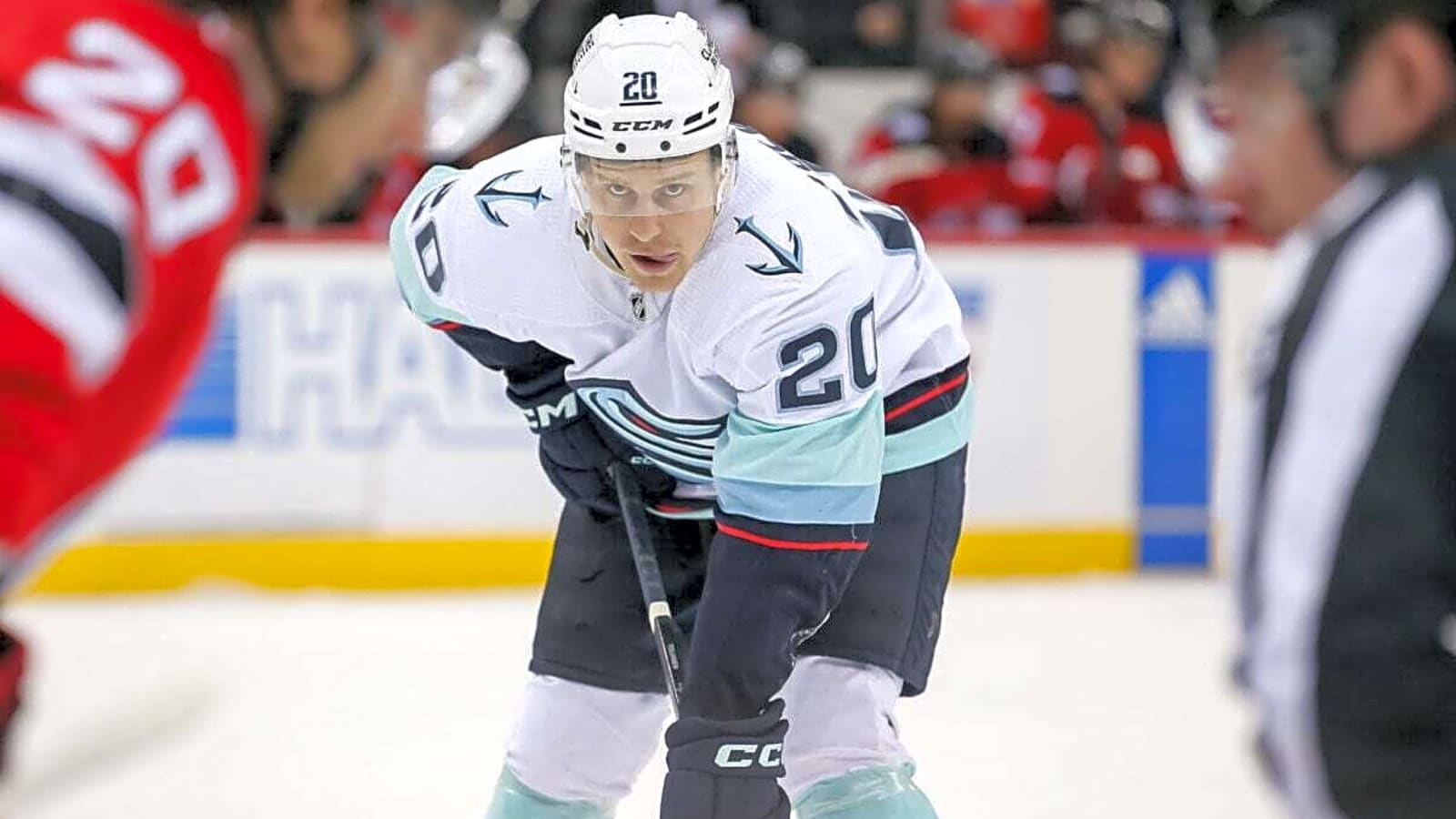
The Pittsburgh Penguins still have enough salary-cap flexibility to make another addition, and Eeli Tolvanen is the one unsigned forward worth considering. Tolvanen recorded 12 goals and 36 points in 78 games for the Seattle Kraken last season. The 27-year-old can play either wing, contribute on both special-teams units and provide more physicality than his 5-foot-10 frame suggests.
He also would not require Pittsburgh to surrender a draft pick or prospect to add another player with legitimate middle-six experience. The Penguins do not need to offer Tolvanen a long-term contract or guarantee him a prominent role. They should be willing to make a short-term offer that allows them to buy low on a former 23-goal scorer whose finishing declined during his contract year.
If Tolvanen is willing to accept that structure, president of hockey operations and general manager Kyle Dubas should take the chance.
Tolvanen’s Scoring Decline Creates Rebound Potential
Tolvanen’s 12-goal season explains why he remained available more than a month after free agency opened. It also explains why Pittsburgh should pursue him now rather than when his market was stronger. He scored 23 goals in 81 games during 2024-25, before falling to 12 last season. The decline was not caused by a major reduction in shot volume either; he had 141 shots on goal but converted only 8.5%, well below his career shooting percentage of approximately 12%.
His career scoring and shot totals provide a reasonable basis for expecting some positive regression. Tolvanen has scored 92 goals on 768 shots through 423 career games, and he reached at least 16 goals in each of his first three full seasons in Seattle.
A return to his career shooting rate on the same 141-shot volume would have produced approximately 17 goals. That would not transform Pittsburgh’s offense, but it would give the roster another winger capable of contributing in the middle six without requiring ideal deployment.
Tolvanen also owns a high-end shot that once made him a first-round selection. He can release the puck quickly from the circles, score from the flank on the power play and finish opportunities created by stronger puck carriers. Pittsburgh’s ability to generate dangerous looks could give him a better chance to recover some of the production that disappeared last season.
The Penguins should not assume his shooting percentage will automatically rebound. His underlying results were uneven, and his offensive role on the Kraken did not produce a consistent five-on-five impact. However, the reduced goal total still makes him more affordable than he would have been following his 23-goal campaign. That is the type of market efficiency Pittsburgh should explore.
Tolvanen Offers More Than His Shot
Signing Tolvanen would not be the same as adding another one-dimensional scoring gamble. Seattle expanded his responsibilities last season, using him on the power play and penalty kill while continuing to rely on his physical forechecking. He averaged 1:45 of power-play time and nearly one minute of short-handed ice time per game, giving him experience in situations Pittsburgh could use throughout the lineup.
The Kraken also viewed him as one of their most physical forwards. A feature on Tolvanen’s evolving game detailed how his forechecking, net-front work and willingness to initiate contact became important parts of his identity. He led Seattle in hits during the first half of last season while earning additional penalty-killing responsibility.
That versatility would give Penguins head coach Dan Muse options. Tolvanen could play beside a skilled center, provide pressure on a checking line or move onto a special-teams unit when injuries affect the roster. His left-handed shot would also allow him to play either side depending on the line combination.
Pittsburgh has several forwards with more offensive upside, but not all of them provide the same combination of shooting and physical engagement. Andrei Kuzmenko offers greater finishing potential around the net but less defensive value. Nick Robertson brings another dangerous shot without Tolvanen’s established penalty-killing experience.
Tolvanen would not have to beat those players to play the same role. His ability to contribute in several situations could create a separate path into the lineup.
Penguins Can Afford a Short-Term Bet
The financial side should not prevent Pittsburgh from entering the conversation. The Penguins currently have approximately $13.7 million in projected cap space under the $104 million ceiling. Their current salary-cap projection gives Dubas enough room to add Tolvanen without compromising the flexibility required for injuries, recalls or a larger in-season opportunity.
Tolvanen is coming off a two-year contract with a $3.475 million annual value, and his current market value should be lower than that after the drop from 23 goals to 12 and the prolonged period without a new agreement. That does not mean Pittsburgh should offer whatever he wants.
Sportsnet reported that Tolvanen was seeking term while ranking him among the top unsigned free-agent options. A multi-year request would create a much more difficult decision for a team already carrying several forwards beyond this season.
The Penguins should target a one-year contract or, at most, a two-year agreement without restrictive trade protection. A short deal would allow Tolvanen to rebuild his value while allowing management to evaluate whether his broader game fits.
It would also preserve his potential marketability. If he rebounds and Pittsburgh falls out of contention, an affordable winger with scoring, physicality and special-teams experience could attract interest at the deadline. If the Penguins remain competitive, he would provide experienced depth for the postseason.
The low-risk argument disappears if Tolvanen insists on significant term or money close to his previous contract. Pittsburgh should be interested, not desperate.
Crowded Forward Group Is the Main Obstacle
The larger concern is not the cap hit. It is finding enough opportunity to justify another addition. The team already has Bryan Rust, Rickard Rakell, Egor Chinakhov, Kuzmenko, Robertson and Justin Brazeau competing for wing positions. Rutger McGroarty and Ville Koivunen need chances to prove they can become permanent NHL players, while Ben Kindel may also spend time outside the middle.
The Penguins’ July roster projection showed how quickly the forward group became crowded. Adding Tolvanen would create stronger competition, but it could also leave another player without a meaningful role. Dubas should therefore have a lineup plan before making an offer.
Tolvanen would make the most sense if Pittsburgh expects to move another forward, believes one of its younger players requires more development in the American Hockey League or wants additional protection against Kuzmenko’s recovery from knee surgery. The Penguins should not sign Tolvanen merely because they have cap space. A player seeking to rebuild his value needs regular minutes, not a rotation between the press box and fourth line.
That opportunity could still exist. Pittsburgh’s veteran forwards have recent injury histories, and an increased 84-game schedule will test the organization’s depth. Tolvanen’s ability to play both wings and contribute in multiple situations makes him easier to accommodate than a player requiring top-six and power-play deployment.
His arrival would also raise the standard for the roster’s young forwards. The Penguins’ five breakout candidates should receive opportunities when they earn them, but the organization does not have to reserve NHL jobs regardless of performance. Competition is useful when every player has a plausible path. The Penguins must make sure the forward group does not become crowded simply for the sake of depth.
Tolvanen Is Worth the Call
Tolvanen is not the major difference-maker the team still needs. Signing him would not solve the long-term scoring problem or provide a successor to Sidney Crosby and Evgeni Malkin. He could make the current roster better at a reasonable cost.
Tolvanen remains young enough to rebound, has reached 23 goals in a season and carries useful experience on both special-teams units. His physicality would add another dimension to the forward group, while his reduced shooting percentage gives Pittsburgh a legitimate reason to believe last season represented a low point rather than his new standard.
The Penguins can offer him a reasonable contract, a competitive team and the possibility of playing beside accomplished centers. He can offer the team another shot threat without requiring management to trade any part of its future. The fit depends on the contract and the role. If Tolvanen wants several years at his previous price, Dubas should move on. If the market pushes him toward a short-term opportunity, Pittsburgh should be one of the first teams calling.
The Penguins have spent the offseason making calculated bets on players who may benefit from a different opportunity. Tolvanen fits that strategy as well as anyone still available.
More must-reads:
- Penguins face uncomfortable reason top players no longer want to play in Pittsburgh
- Tarik Skubal speaks on solid Dodgers debut in loss to Cubs
- The 'Last five-hit game by MLB team' quiz
Breaking News
Trending News




Customize Your Newsletter
 +
+




Get the latest news and rumors, customized to your favorite sports and teams. Emailed daily. Always free!
PRIVACY POLICY COOKIE POLICY CONTACT US
ABOUT YARDBARKER TERMS OF SERVICE


By using this site, you agree to our Terms of Service and Privacy Policy.
This site is for entertainment purposes only.
There is no gambling offered on this site.
Gambling Problem? Call 1-800-Gambler.
