
-

-


Follow Us
-

 On Facebook
 On Flipboard
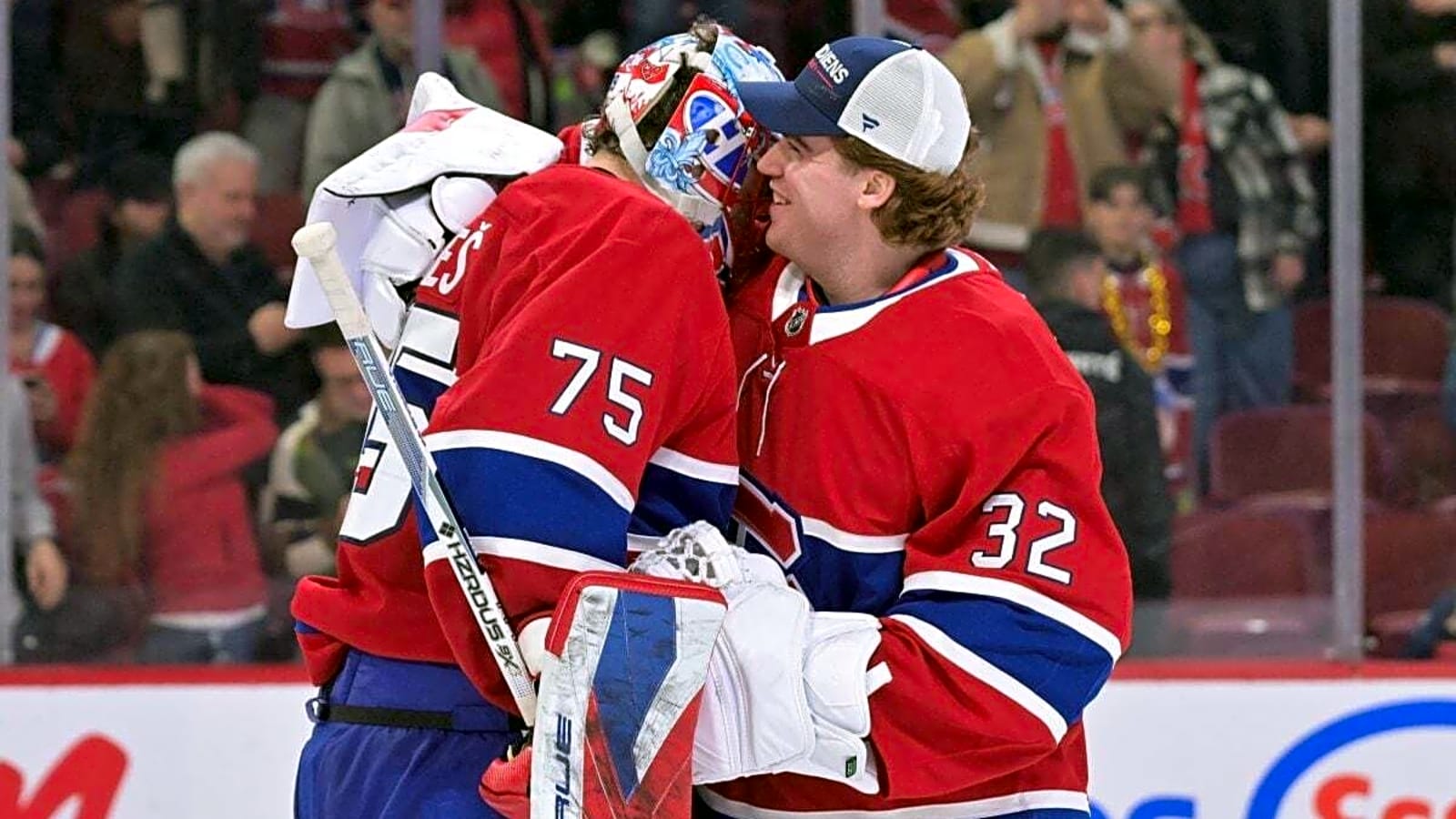
As the Montreal Canadiens get set to return to the playoffs for a second straight season, expectations are starting to shift in Montreal. This is no longer just a team happy to be there; it’s a group that showed down the stretch it can compete with anyone, backed by strong momentum and a growing belief inside the locker room. Here are three questions surrounding the team heading into the playoffs.
Can the Young Goalies Hold Up?
If there’s one storyline that will define the Canadiens’ playoff run, it’s in the crease. Montreal is heading into the postseason with two extremely young goaltenders in Jakub Dobes (24) and Jacob Fowler (21), and while both have been excellent down the stretch, the playoffs are a completely different beast.
Dobes has carried a significant portion of the load late in the season, racking up wins and consistently keeping the Canadiens in games. His ability to limit damage has been a major factor in Montreal’s push. Fowler, on the other hand, has shown flashes of brilliance both with the Laval Rocket and Montreal, proving he can step in and perform despite his limited NHL experience.
But here’s the reality: combined, they are among the least experienced goalie tandems of any playoff team. The intensity, pressure, and pace of playoff hockey test even the most seasoned veterans. Rebounds get attacked harder, traffic increases, and every mistake is magnified.
We’ve seen young goalies steal series before, but we’ve also seen them struggle under the spotlight. The question isn’t whether Dobes and Fowler are talented enough. It’s whether they can maintain their composure and consistency when every game feels like a Game 7. If they do, the Canadiens become a dangerous team. If they don’t, it could be a short run.
How Costly Are the Injuries on Defence?
Timing is everything, and for the Canadiens, injuries to Noah Dobson and Alexandre Carrier couldn’t come at a worse moment. Both are expected to miss the start of the playoffs, and their absence leaves a significant hole on the blue line.
Dobson has been a cornerstone of Montreal’s defence this season. Logging heavy minutes, contributing offensively, and stabilizing play at both ends, he’s the type of defenceman you rely on in tight playoff games. Losing him not only impacts puck movement and offensive support but also forces others into bigger roles.
Carrier, while less flashy, has been just as important in terms of defensive reliability. His ability to play tough minutes, kill penalties, and bring structure to the back end is something that doesn’t easily get replaced, especially in the playoffs where defensive breakdowns often decide games.
Without both of them, the Canadiens will likely lean heavily on players like Mike Matheson and some younger defencemen who may not have faced this level of pressure before. It also opens the door for players like Arber Xhekaj or David Reinbacher to step into bigger roles.
The concern isn’t just talent, it’s depth and stability. In a seven-game series, opposing teams will exploit weaknesses, target mismatches, and apply relentless pressure. The Canadiens’ defensive group will need to simplify their game, avoid costly turnovers, and rely on structure more than ever.
If they can survive the early games without Dobson and Carrier, and potentially get reinforcements later in the series, they could stabilize. But until then, this is a major question mark.
Where Will the Secondary Scoring Come From?
Offensively, the Canadiens have a clear strength, their top line. Nick Suzuki, Cole Caufield, and Juraj Slafkovsky have driven the team’s scoring all season long, consistently producing and carrying the offensive load.
Opposing teams will match their best defensive pairs and checking lines against Suzuki’s line, forcing the Canadiens to find offence elsewhere. And that’s where the concern lies. Montreal’s second line is young and inconsistent, while the third and fourth lines have struggled to generate offence for much of the season.
Players like Ivan Demidov and Oliver Kapanen have shown flashes, but relying on young players in high-pressure playoff situations is always risky. Depth scoring often becomes the difference between winning and losing tight playoff games; a timely goal from a third-line winger or a fourth-line grinder can swing an entire series.
Right now, it’s unclear who will step up in that role for Montreal. If the Canadiens become a one-line team, they’ll be much easier to contain. But if they get even modest contributions from their depth, it changes everything. It spreads defensive coverage, creates matchup problems, and takes pressure off the top line.
In the playoffs, you don’t need everyone to score, but you do need someone unexpected to make a difference. And for the Canadiens, finding that someone could be the key to their postseason success.
More must-reads:
- Alex Ovechkin may have dropped hints at plans for NHL future
- Maple Leafs may have found their next offensive piece
- The 'Masters runners-up since 2000' quiz
Breaking News
Trending News





Customize Your Newsletter
 +
+




Get the latest news and rumors, customized to your favorite sports and teams. Emailed daily. Always free!
PRIVACY POLICY COOKIE POLICY CONTACT US
ABOUT YARDBARKER TERMS OF SERVICE


By using this site, you agree to our Terms of Service and Privacy Policy.
This site is for entertainment purposes only.
There is no gambling offered on this site.
Gambling Problem? Call 1-800-Gambler.
