
-


Follow Us

 On Facebook
 On Flipboard
 On Twitter
Team USA surges to early lead in Olympic team figure skating
Olympic figure skating is finally here.
The 2026 Winter Olympic Games kicked off on Friday, Feb. 6, with the team figure skating event, a multi-day, multi-discipline competition featuring ten nations and many of the world's best skaters.
Three of the opening four events—ice dance, pairs and women's skating—have wrapped, with just men's skating to come before the field of ten nations is whittled down to five.
Team USA leads the standings with 25 points after winning the ice dance round, placing fifth in pairs and placing second in the women's short program. Japan is second with 23 points; it won the pairs and women's events but finished eighth in ice dance to balance out its score. Italy, after stronger-than-expected performances in all disciplines, is holding down third with 22 points.
Here's how the opening day of the team competition went down:
Ice dance - rhythm dance
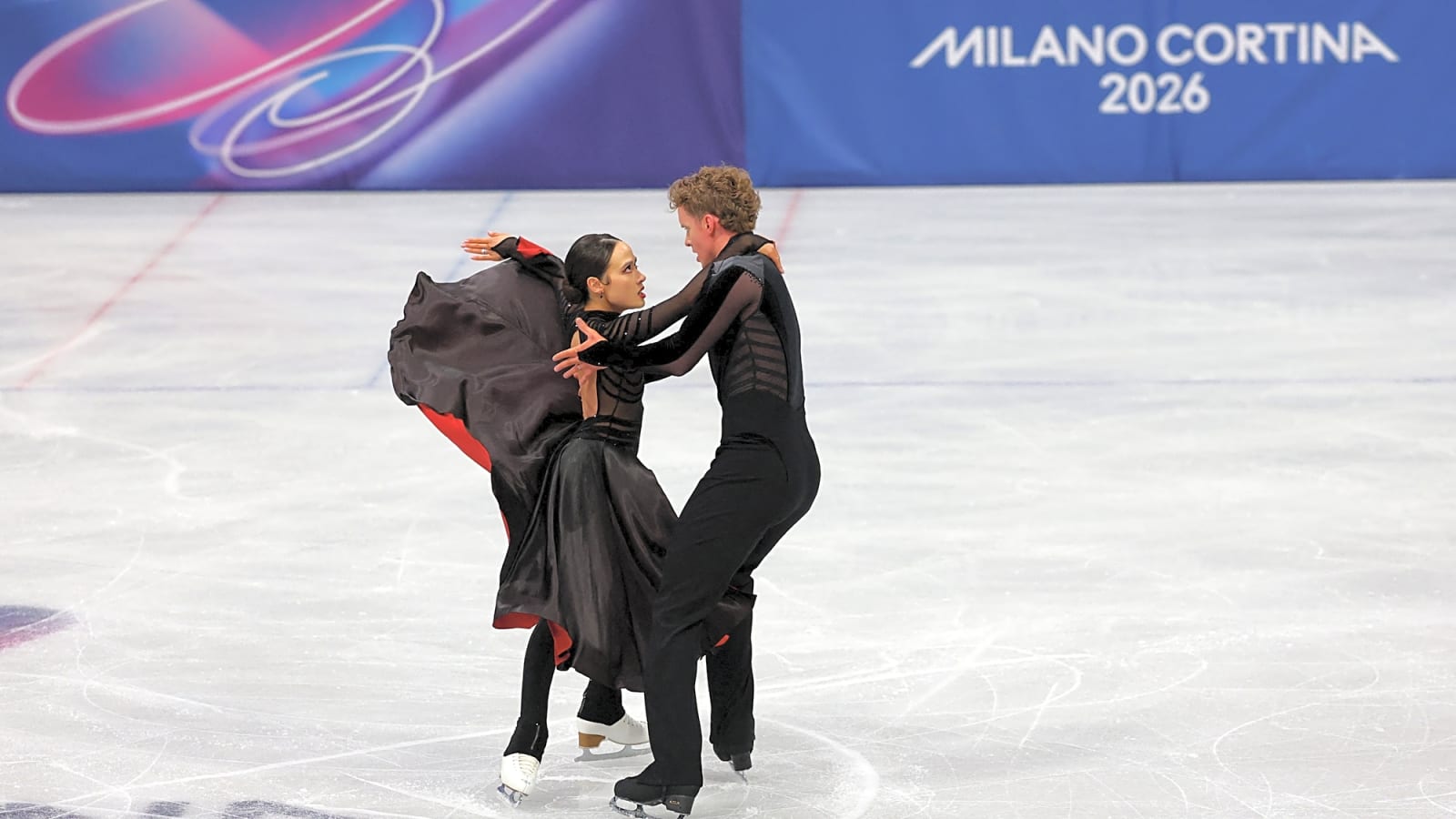
Madison Chock and Evan Bates, competing in their fourth and likely final Olympic Games, topped the rhythm dance standings to push Team USA into first place following the opening rotation. Their Lenny Kravitz-inspired program pushed them just beyond the controversial French team of Laurence Fournier-Beaudry and Guillaume Cizeron. The one-point gap between these two evenly-matched teams is meaningful: if both skate as cleanly in the individual ice dance event as they did here, the scores seem likely to tilt in Chock and Bates's favor.
While the United States and France excelled, Canada stumbled. The usually world-class duo of Piper Gilles and Paul Poirer looked stiff, nervous and overawed by their return to Olympic ice. They entered the rotation as first-place contenders; they left it all the way down in fourth.
Pairs - short program
The day continued with the pairs short program, and this rotation delivered spills and surprises from the opening routine. Precious few teams managed a clean, fall-free skate, and the ones that did—Riku Miura and Ryuichi Kihara of Japan, Anastasiia Metelkina and Luka Berulava of Georgia and Sara Conti and Niccolo Macii of Italy—cruised onto the podium with ease.
Georgia and Italy's success here changed the competition drastically. Their points haul, coupled with Canada and France's lower-than-expected numbers, pushed them firmly into the top five of the standings.
Women's - short program
The day concluded with the women's short program, and it wound up being the best rotation by far. Every single woman skated cleanly: no falls, no nerves and no regrets. The high performance level meant that each woman was evaluated purely on technical and artistic skill, not on how many elements she managed to land.
It was always going to be a tight battle between Japan's Kaori Sakamoto and the United States' Alysa Liu here. Both skated beautifully to emotional programs, but it was Sakamoto who finished the rotation on top, posting a score of 78.88 to Liu's 74.90. They were joined in the top three by Italy's Lara Naki Gutmann, whose stellar performance on home ice earned her the highest numbers she's seen all season.
What's next
Just one rotation remains in the opening round of the team event: the men's short program, which is set to kick off on Saturday, Feb. 7 at 1:45 pm ET. The results of that rotation will eliminate the five lowest-scoring nations. Poland, China, Great Britain and Korea are near-certainties for elimination, but they'll take one more nation with them...and it looks like it'll be one of France, Canada or Georgia, all of whom are heavyweights in the sport.
The top five nations will return for four more rotations, sending representatives to compete in long programs in each skating discipline. The ice dance long program is set for Saturday, Feb. 7 at 4:00 pm ET; the men's, women's and pairs long programs will all take place on Sunday, Feb. 8.
More must-reads:
- Five biggest stories from the 2026 Milan Cortina Olympic Games opening ceremony: Mariah Carey, la moda and more
- Protests prevalent in Milan ahead of Olympics' opening ceremony
- The 'NFL active TD-pass leaders' quiz
Breaking News
Trending News







Customize Your Newsletter
 +
+




Get the latest news and rumors, customized to your favorite sports and teams. Emailed daily. Always free!
PRIVACY POLICY EDITORIAL POLICY CONTACT US
ABOUT YARDBARKER TERMS OF SERVICE


Use of this website (including any and all parts and
components) constitutes your acceptance of these
Terms of Service and Privacy Policy.
This site is for entertainment purposes only.
There is no gambling offered on this site.
Gambling Problem? Call 1-800-Gambler.
