
-


Follow Us

 On Facebook
 On Flipboard
 On Twitter
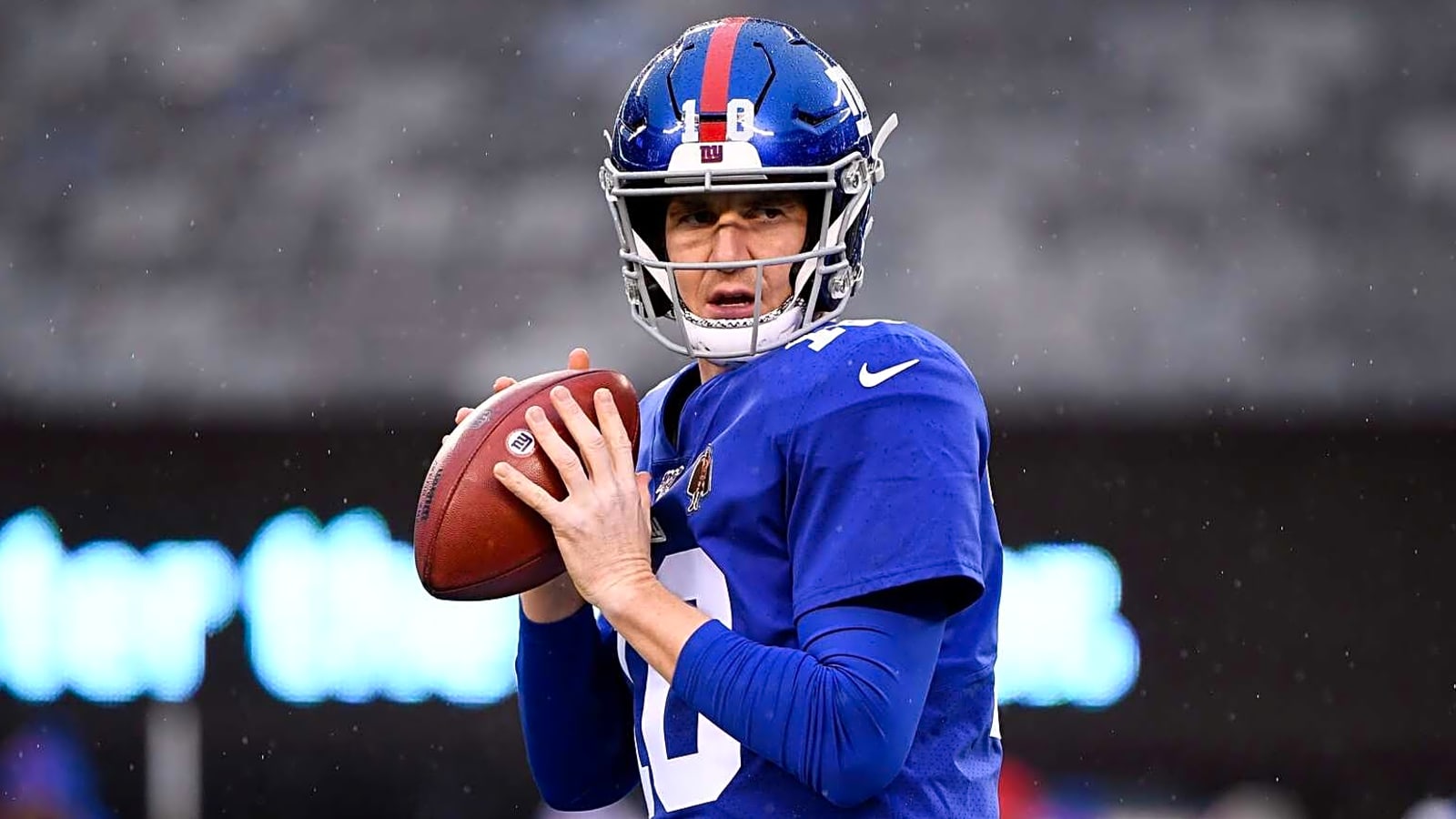
How Eli Manning, Ben Roethlisberger compare ahead of next Hall of Fame cycle
In his second year on the Pro Football Hall of Fame ballot, Eli Manning was once again not selected. Those selected were wide receiver Larry Fitzgerald, running back Roger Craig, linebacker Luke Kuechly, kicker Adam Vinatieri and quarterback Drew Brees.
With Hall of Fame votes kept private, it is unknown how close Manning was or if he gained traction compared to last year.
Next year's ballot will contain 12 newly eligible players. Headlining that group are running back Adrian Peterson, tight end Rob Gronkowski, offensive lineman Andrew Whitworth and quarterback Ben Roethlisberger.
The latter of that group poses an interesting scenario for Manning on next year's ballot.
Comparing Hall-of-Fame cases for Eli Manning, Ben Roethlisberger
Regular-season success
Both drafted in 2004, Roethlisberger and Manning embodied the term loyalty, spending 18 and 16 years with their respective franchises.
In both passing yards and touchdowns, Roethlisberger beats out Manning. Roethlisberger tallied 64,088 yards and 418 TDs in his career, while Manning notched 57,023 yards and 366 TDs. That fact can be directly attributed to two reasons.
One: Manning retired two years before Roethlisberger.
Two: Manning spent his rookie year behind Kurt Warner, starting only the final seven games, and he only started four games in his final season before Daniel Jones took over.
When taking a deeper look at the two signal-callers, both have almost identical stats on a per-season basis. For Roethlisberger, he averaged 3,560 yards and 23.2 touchdowns a year, while Manning averaged 3,564 yards and 22.9 touchdowns a year.
Despite these almost identical numbers, the Pittsburgh Steelers had a 165-81-1 record with Big Ben compared to Manning's 117-117 record with the New York Giants.
Wins and losses are not directly attributed to the quarterback but instead to the whole team. In terms of a defensive supporting cast, Roethlisberger lucked out compared to Manning.
The Steelers had a top-10 defense in points allowed 11 times through Roethlisberger's career; four times, they were the top-ranked unit. On the other end, the Giants had a top-10 defense twice and had a bottom-10 defense eight times during Manning's career.
Playoff time
Over their lengthy careers, both QBs delivered postseason success. Manning and the Giants made and won two Super Bowls, while Roethlisberger made three, winning two.
In 2005 and 2008, the Steelers won their fifth and sixth titles, with Roethlisberger failing to earn a Super Bowl MVP in either. In 2007 and 2011, the Giants won their third and fourth championships with Manning taking home the game's MVP award twice.
Aside from those two championships, the Giants only made the playoffs four other times in Manning's career as he finished with a career playoff record of 8-4.
For the Steelers, Roethlisberger and head coach Mike Tomlin were the epitome of consistency, never finishing below .500 and making the playoffs 12 times. Roethlisberger finished his career with a playoff record of 13-10.
Final verdict
In the end, both of these two quarterbacks had incredible and lengthy careers. The reasoning in comparing these two is because of how similar they really were.
Similar stats, similar accolades and similar postseason success. The final verdict is not a matter of one quarterback being in the Hall of Fame over the other, but rather the two being tied together.
If one is held out of the Hall, then both should be, and if one receives a gold jacket, then both should be wearing gold jackets.
Along with (most likely) Peterson, Gronkowski and Whitworth, Manning and Roethlisberger should be a part of the Pro Football Hall of Fame Class of 2027.
More must-reads:
- Emmitt Smith shares passionate response to Tom Brady Hall of Fame talk after Bill Belichick, Robert Kraft snubs
- 2026 Pro Football Hall of Fame class unveiled
- The 'Super Bowl passing leaders' quiz
Breaking News
Trending News





Customize Your Newsletter
 +
+




Get the latest news and rumors, customized to your favorite sports and teams. Emailed daily. Always free!
PRIVACY POLICY EDITORIAL POLICY CONTACT US
ABOUT YARDBARKER TERMS OF SERVICE


Use of this website (including any and all parts and
components) constitutes your acceptance of these
Terms of Service and Privacy Policy.
This site is for entertainment purposes only.
There is no gambling offered on this site.
Gambling Problem? Call 1-800-Gambler.
