
-


Follow Us

 On Facebook
 On Flipboard
 On Twitter
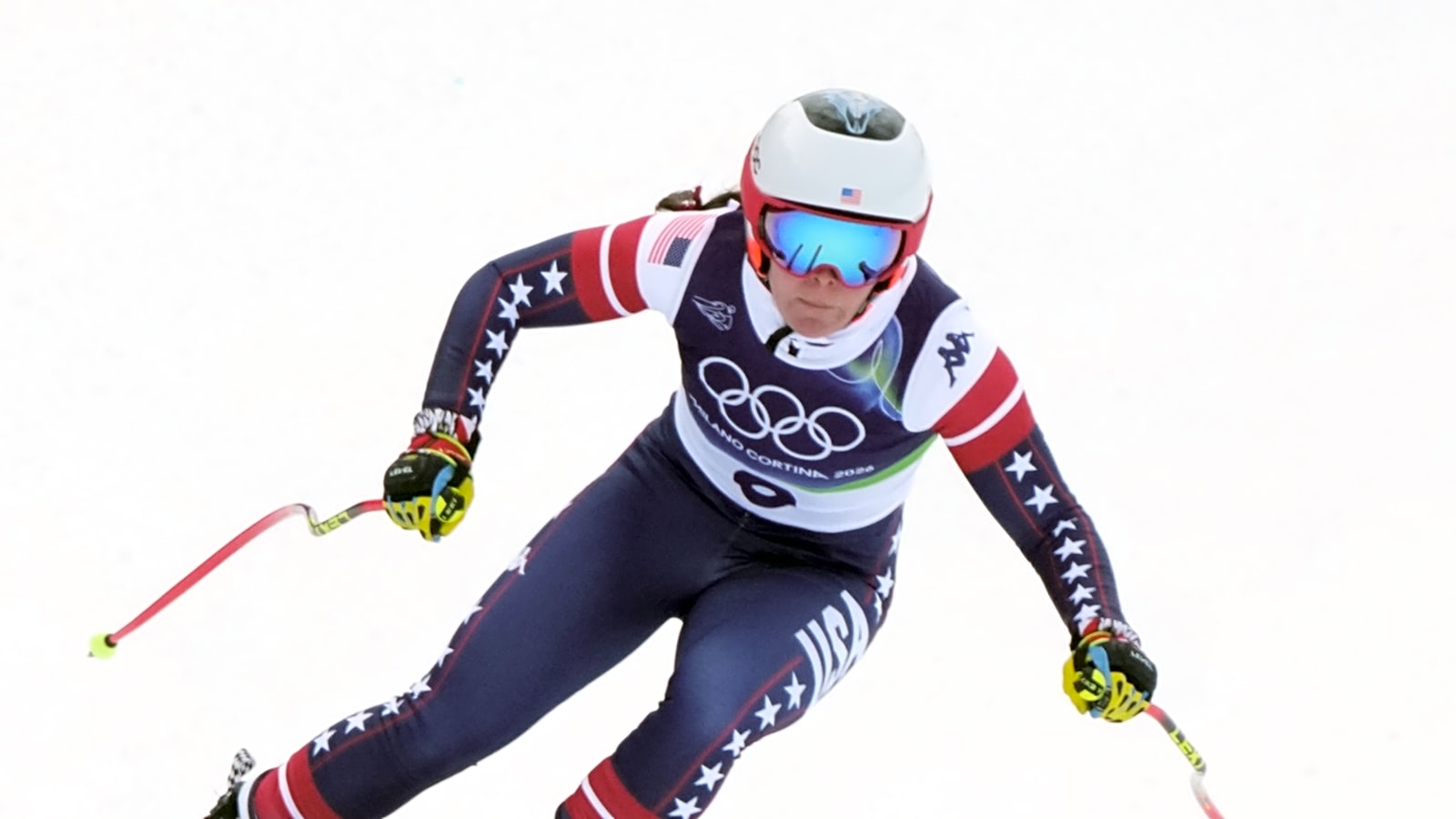
American Breezy Johnson wins Olympic women's downhill after Lindsey Vonn suffers horror crash
It was a tale of impossible highs and heartbreaking lows for Team USA in the 2026 Olympic women's downhill race.
American Breezy Johnson stormed out of the gate to bring home Team USA's first gold medal of the Games, but her teammate Lindsey Vonn suffered a heavy crash to bring her Winter Olympics to an early end.
The 41-year-old Vonn entered the race after rupturing her ACL in the weeks leading up the event. The injury hurt her hopes of taking home her third career Olympic medal, but it didn't dash them entirely: she performed admirably in her training runs before the race, finishing 11th and third in her two passes of the course.
Alpine skiing is, quite literally, a game of edges, and Vonn has always been a racer who goes closer to the edge than anyone. It's a double-sided instinct. It made her one of skiing's most famous faces—you can't win races without it—but it pushed her too far in Cortina.
Fearless or foolhardy?
Much was made of Vonn's decision to race through her ACL injury, with many outlets hailing her grit, bravery and never-say-die spirit. But it's worth questioning the media's breathless praise of that decision in the wake of her high-speed Olympic crash. There is no inherent bravery in over-extending oneself through a serious health crisis, especially not in an individual event like the women's downhill. Vonn's advanced age added context to her choice — she rightfully viewed this as her last chance at Olympic glory — but the media's celebration of her decision sent a dangerous message to young athletes who might be tempted to take similar risks.
We have no way of knowing whether Vonn's ACL was to blame for her heavy crash, but we do know that it cannot have helped her protect herself once her tumble began.
Ruptured ACLs are common on the alpine skiing circuit, and racing through them is often done but rarely discussed.
"The dirty secret is that it happens in skiing, and some people talk about it and some don’t,” Vonn's American teammate (and eventual gold medal winner) Breezy Johnson said, via Matthew Futterman of The Athletic.
"It’s very easy for doctors to say no, this is impossible," Vonn said. "When I tore it before the Olympics, I skied down and I didn’t think I had torn it. It’s hard. It’s not easy. It’s not the safest thing that you can conceive of doing, but it can be done, and it is done."
If Vonn's 2026 Olympic journey is remembered for anything, hopefully it will be for frank discussions of how to handle ACL injuries in the world alpine racing...and for the media's role in accurately framing them for the public.
The show must go on
Vonn's terrifying crash overshadowed the women's downhill race, but she was just one racer of 32 on the day, and the rest of the field played out a fascinating battle for gold.
The conditions were beautiful and the course was noticeably faster than it was in training: Breezy Johnson's gold-medal run of 1:36:10 was nearly two-tenths faster than her table-topping practice time of 1:37:91.
Johnson's victory was a long time coming. This was her second Olympics appearance after debuting in the 2018 Pyeongchang Games and missing the 2022 Beijing Games through injury. The 30-year-old Jackson, WY native bounced back to win the FIS downhill world championship in 2025 and was predicted to challenge for a medal in this event.
Johnson was joined on the podium by 22-year-old Emma Aicher of Germany and 33-year-old legend Sofia Goggia of Italy. It was Aicher's first appearance on an Olympic downhill podium and Goggia's third after winning gold and silver medals in 2018 and 2022.
More must-reads:
- Ranking the men's hockey teams at the 2026 Winter Olympics
- USA advances to Olympic team skating final, but Ilia Malinin stumbles
- The 'Winter Olympics host cities' quiz
Breaking News
Trending News








Customize Your Newsletter
 +
+




Get the latest news and rumors, customized to your favorite sports and teams. Emailed daily. Always free!
PRIVACY POLICY EDITORIAL POLICY CONTACT US
ABOUT YARDBARKER TERMS OF SERVICE


Use of this website (including any and all parts and
components) constitutes your acceptance of these
Terms of Service and Privacy Policy.
This site is for entertainment purposes only.
There is no gambling offered on this site.
Gambling Problem? Call 1-800-Gambler.
