
-

-


Follow Us
-

 On Facebook
 On Flipboard

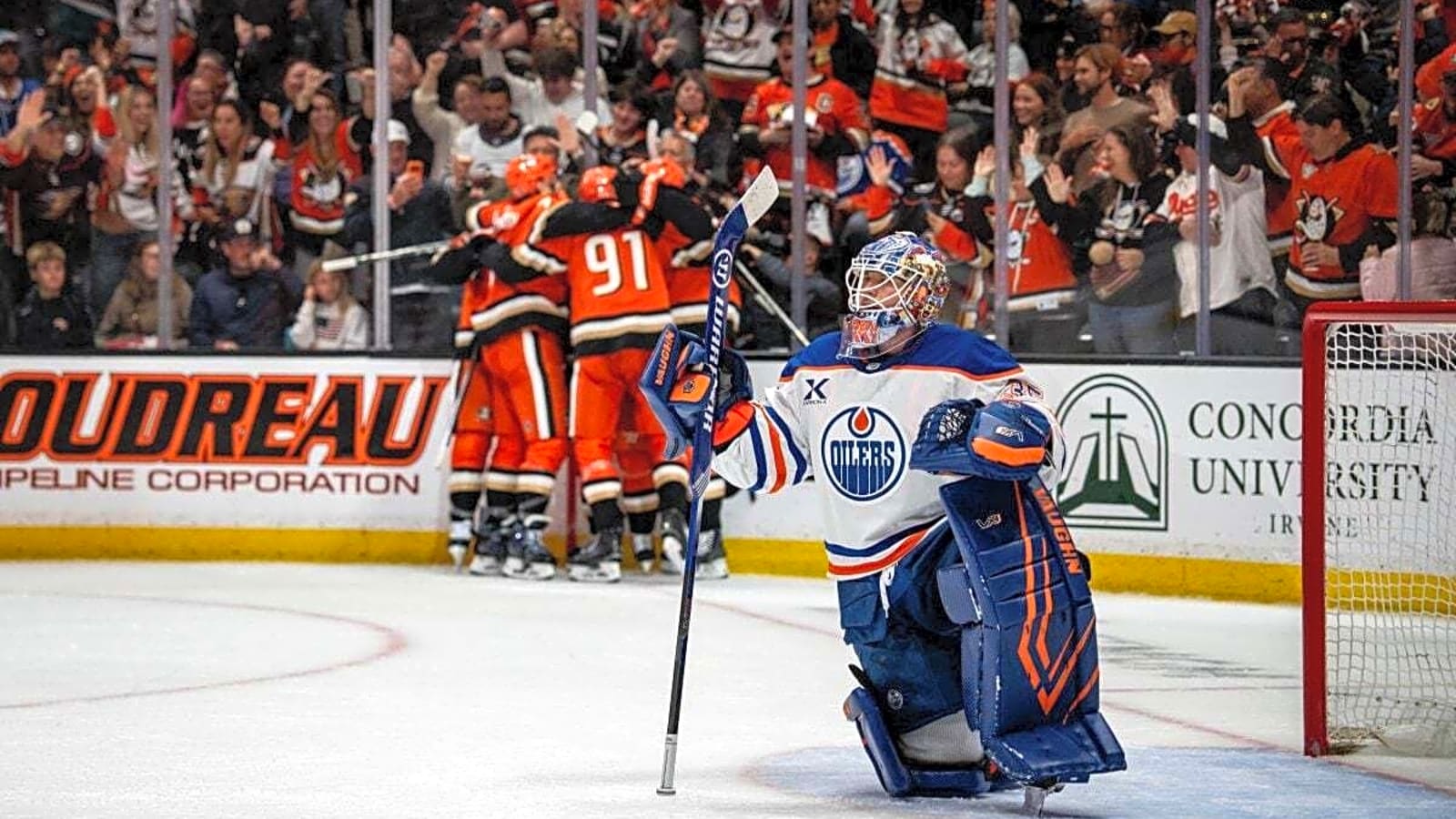
When the Edmonton Oilers made the decision to trade for Tristan Jarry, there were plenty of concerns. The biggest of the bunch was whether Jarry was any sort of upgrade over Stuart Skinner, who was one of the pieces to head the other way in the deal. After all, Jarry, despite having some solid seasons earlier in his career, struggled so much in 2024-25 that he was placed on waivers and spent a brief period of time in the American Hockey League (AHL).
There were also plenty of concerns over Jarry’s contract, as he is locked up through the 2027-28 season on a deal that carries a $5.375 million cap hit. Skinner, on the other hand, is set to become an unrestricted free agent (UFA) this offseason, meaning the Oilers could have simply just walked away from him and looked elsewhere for a goalie.
As if that weren’t bad enough, many Oilers fans also felt it was questionable that Brett Kulak, a very reliable blueliner during his time in Edmonton, needed to be included in the trade. Though the deal was only made in December, it’s already become crystal clear that the Oilers management group made a very poor decision with this deal.
Further concerns were revealed with Tristan Jarry
Making matters worse, it started to be said more and more that at times the Penguins had concerns with Jarry’s work ethic and compete level. While not necessarily deemed as a lazy player, his competitive edge didn’t seem to be as high as what you’d expect from an NHLer. Once he started to struggle, his compete level became a source of frustration within the Penguins organization.
Any hopes that joining a team in more of a win-now mode would change that work ethic seemingly hasn’t been the case. Late in the regular season, Bob Stauffer alluded to the fact that some Oilers teammates appeared to be a bit discontent with the effort level they were seeing from Jarry in practice. That effort level, or perhaps better phrased as a lack of intensity, has carried into games.
After sitting out the first three games of the playoffs versus the Anaheim Ducks, Jarry got the call to start in Game 4 with the Oilers trailing 2-1. Overall, he had a solid performance, allowing four goals on 38 shots in a 4-3 overtime loss. That said, former NHL goaltender and current New York Rangers analyst Stephen Valiquette was still concerned by what he saw from the Oilers netminder.
“It doesn’t look like he’s competing at a high level,” Valiquette said on Sportsnet 590. “The puck is moving around at the blue line, the iso camera that’s behind the goaltender’s net, you can just watch his feet not track passes when it’s moving up at the blue line. [He’s] gliding backwards as the puck is moving laterally, and right before shots are being taken, [he’s] just not lined up with the toe caps of [his] skates wrapped around the puck.
[He’s] late, but [he’s] late because of effort … For Jarry, the game is always moving right now at a pace faster than him because he’s off angle to start the sequence. Here’s the thing guys. When you start any sequence, whether it’s in your defensive zone coverage or off the rush and you’re not on your true angle, you never regain the angle, you never catch up. The game is just too fast. Now you’re in motion, and you get beat because of it.”
Can’t teach an old dog new tricks
This is obviously concerning in real time, but what gets even worse is realizing that this probably isn’t going to improve for Jarry. This isn’t some young, raw prospect who is still needing to round out his game. Jarry is 30 years old and already has 326 career games under his belt. It’s unlikely he’s going to make major mechanical changes to his game, and he may not even be receptive to it if it were brought to him. Should he be back in an Oilers sweater next season, there could be even more struggles that lie ahead.
More must-reads:
- Dan Vladar steals Game 6 to send Flyers to second round
- Canadiens overcome blown leads vs. Lightning to steal Game 5
- The 'Conn Smythe Trophy winners' quiz
Breaking News
Trending News







Customize Your Newsletter
 +
+




Get the latest news and rumors, customized to your favorite sports and teams. Emailed daily. Always free!
PRIVACY POLICY COOKIE POLICY CONTACT US
ABOUT YARDBARKER TERMS OF SERVICE


By using this site, you agree to our Terms of Service and Privacy Policy.
This site is for entertainment purposes only.
There is no gambling offered on this site.
Gambling Problem? Call 1-800-Gambler.
