The NHL has had an interesting new millennium. It was a league sans a salary cap when the 2000s started… and then the owners locked the players out for an entire season. After that, the salary landscape in the league changed, but free agency remained. Here are the best and worst free agent deals in the NHL since the 2000-01 season kicked off.
Geoff Burke/Imagn Images
Redden was good with the Senators, but we stress good. The defenseman had a couple of double-digit goal seasons, and he once finished fifth in Norris voting. After he turned 30, though, the Rangers signed him to a six-year, $39-million deal in the summer of 2008. It was questionable at the time, but Redden was brutal with the Rangers. So much so that he was waived in 2010 after just two seasons.
Eric Canha/Imagn Images
As an Islander, Chara was tall. We mean, he was tall his entire NHL career, but that was the notable thing about him. He stands 6’9’’, but to be fair to the Islanders, he was quite raw when they moved him to Ottawa. Chara was good with the Senators, but then the Sens chose Wade Redden over him. Boston signed the defenseman to a five-year, $37.5-million deal and immediately named him captain. That was the start of a 14-year run that included a Norris, a Stanley Cup, and the bulk of a Hall of Fame resume.
Ed Mulholland/Imagn Images
In 2011-12, Clarkson scored 30 goals with the Devils. He also had only 16 assists. Also, prior to the summer of 2013, he had that single season with over 20 goals. Toronto, with money burning a hole in its pocket, signed him to a seven-year deal worth $36.75 million. He scored a total of 15 goals for the Leafs. Now, after a couple of seasons, he developed back issues that effectively led to his retirement, which isn’t on Clarkson or the Leafs, but it did make him one of those infamous contracts traded around the NHL to fill up cap space.
Stan Szeto/Imagn Images
Not everybody who hits the NHL late is destined to be a flop. Panarin joined the Blackhawks from Russia at the age of 24, getting just under the wire to win the Calder. However, he only lasted two years there before being sent to Columbus in a trade. Panarin opted not to stay with the Blue Jackets, and the Rangers shelled out $81.5 million over a seven-year deal. That was a lot to live up to, even in 2019, but he did. Panarin had multiple 90-point seasons, including one where he got to 120, and finished in the top five in the Hart voting twice. With his contract expiring and the Rangers rebuilding, he was moved to the Kings at the end of the 2025-26 season, but they still got bang for their buck.
James Guillory/Imagn Images
In the big picture, Sergei Bobrovsky didn’t play up to his massive contract with the Panthers, but he was in the net for two Stanley Cup wins, and if we called him one of the worst contracts, he could simply tell us to count the rings and we’d have to concede on that point. A rookie, Bob was actually the Flyers’ netminder the season before the team brought in Bryzgalov on a nine-year, $51 million deal. Yes, he was in his thirties and had only played 326 NHL games, but Philly opted to sign him for 9 years. After two seasons of memorable quotes and poor play, the Flyers bought out Bryzgalov’s contract.
Gary A. Vasquez/Imagn Images
Did the Ducks get a little lucky? Sure. Niedermayer was already a Hall of Famer when he hit unrestricted free agency in 2005, and basically everybody wanted to sign him. The Devils offered him the maximum contract to bring him back. However, he took $6.75 million a year for four years from the Ducks because he wanted to play with his brother Rob. Immediately a steady presence on the blue line, Niedermayer finished second in the Norris voting his first two seasons, and he was the Conn Smythe winner when Scott and Rob (and the rest of the Ducks) won the Cup.
Ed Mulholland/Imagn Images
The thing about a guy like Brad Marchand is that, well, first of all, he’s skilled. Second, he very much had the “You want him on your team, but you hate him when he’s playing against you.” These days, he’s toned down the nonsense and leaned into the bit enough that he’s pretty much just liked. Avery was the kind of guy you despised when he was playing for the opposition…and frankly you didn’t really like him when he was on your team either. He is the rare NHL player with a lengthy “controversies and bullying” subsection on his Wikipedia page, and that does not include his post-career arrest for domestic abuse. Anyway, the Stars signed him to a four-year, $15.5-million deal in July 2008 and waived him in February 2009 just to be rid of him.
Leon Halip/Imagn Images
The Red Wings used to be able to splash cash with gusto before the introduction of the salary cap, after which they could no longer put together “Galactico” lineups, to borrow a term from European soccer. Rafalski had been a good defenseman with the Devils, but he grew up in the Detroit area, so perhaps they got him on a deal when he signed a five-year, $30 million deal with the team in 2007. That next season he set a personal best with 13 goals and added 14 playoff points en route to a Cup for Detroit. This alone probably would have justified the deal, but the next season he set his personal best with 59 points and delivered for four seasons before he had to retire with a year left on the deal due to injuries. Even so, a good deal for Detroit.
Timothy T. Ludwig/Imagn Images
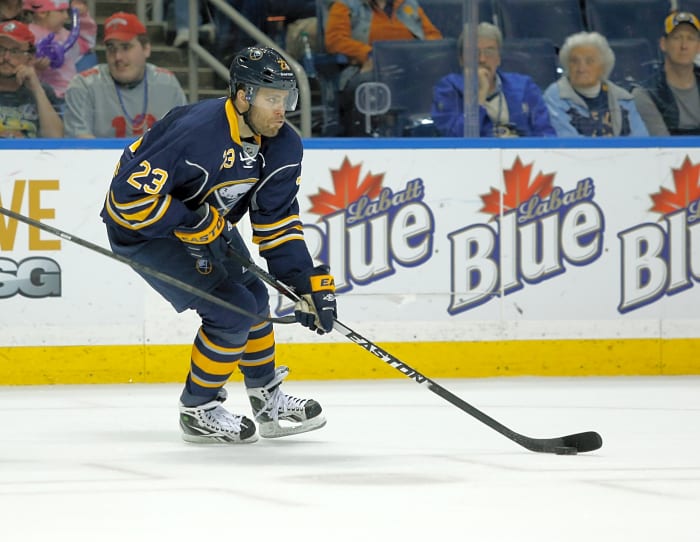
Leino had a reputation as “the best player outside the NHL” when he was crushing it over in Finland, so the Wings took a shot on him when he was 25. He struggled to find a role, though, and he was moved to Philadelphia. There, he had his one good NHL season, posting 19 goals and 34 assists. That was enough for the Sabres, perhaps with money burning a hole in their pocket, to sign him to a six-year deal worth $27 million in 2011, which was pretty much uniformly considered baffling. In his entire Buffalo tenure, he scored 10 goals, and then he went back to Europe to finish his career.
John E. Sokolowski/Imagn Images
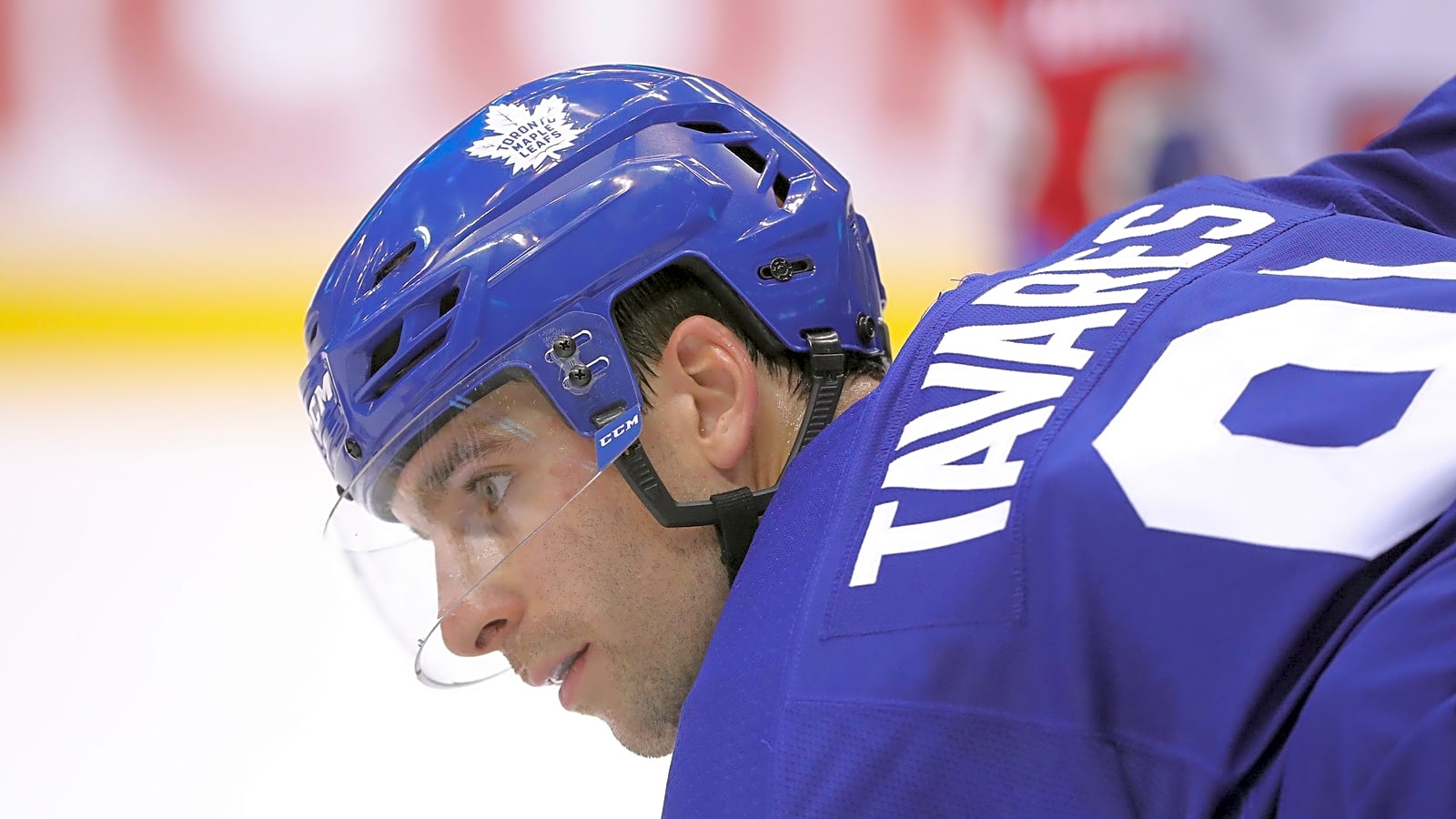
Maple Leafs fans may disagree because the team still hasn’t won the Cup since 1967. Also, Tavares lost the captaincy so that it could be given to Auston Matthews. We don’t care. Toronto signed a future Hall of Famer for seven years and $77 million. In those seven seasons, he tallied 493 points in 515 games, and then got him on a four-year extension for a massive hometown discount of $4.38 per season. No man can win a Cup by himself. Just ask Mats Sundin.
Brad Rempel/Imagn Images
We’re doubling up here because the Suter and Parise deals are forever linked. The Wild have done some good business in recent years, but looking to make a splash in 2012, the team signed Suter and Parise to matching 13-year, $98 million deals. Contracts that long in baseball are dicey. Contracts that long in hockey are stupid. Plus, these were not future Hall of Famers Minnesota was signing. Both were very good players, and Parise in particular was a local boy, but these deals were always going to turn out poorly. Parise couldn’t stay healthy, Suter topped out as a 50-point defenseman, the Wild didn’t make a single Cup final, and, of course, neither guy played the full 13 seasons of the deal out.
Tom Szczerbowski/Imagn Images
Though not the player his father, the legendary Peter Stastny, was, Paul was a good center for the Avalanche, who, of course, began life as the Quebec Nordiques, Peter’s team. When the Avalanche couldn’t agree to a new deal with Stastny, though, he moved on to the Blues for four years and $28 million in 2014. He dealt with injury issues, but contributed plenty when healthy, and he was the ideal number-two center for a contender. To that end, Stastny stayed healthy during the 2018-19 playoffs and contributed 13 points as the Blues won the franchise’s first Stanley Cup.
13 of 15
Best: Dave Andreychuk
Kim Klement/Imagn Images
How much is veteran presence worth? In the case of Andreychuk and the Lightning, plenty. Andreychuk was in his late thirties, had just played a season with his first-ever team, the Sabres, and seemed primed to retire as a future Hall of Famer. The Lightning front office convinced him not to. In his first season, Andreychuk helped get Tampa’s ship in order, and he also scored 20 goals. The next season, he became captain, scored 20 goals, and got the Lightning back into the playoffs. In his third season, 20 more goals, plus the first Stanley Cup in franchise history. He came back on a pittance of a deal after the lockout, but he was effectively done as a player. No matter. Those first three years saw Andreychuk, in his way, reshape the Lightning franchise.
Steve Roberts/Imagn Images
We’re going to end with two current contracts, both from the Predators. Marchessault was coming off two stellar seasons in a row with Vegas, but when you sign a guy entering his age-34 season to a five-year, $27.5 million deal, you’re taking a risk. Basically, he needs to not slow down for at least three seasons, and the team needs to win big. Marchessault immediately dropped down to 21 goals and a minus-29 rating in the first season of the deal. In the second, he had 31 points. Also, Nashville hasn’t made the playoffs either season.
15 of 15
Best: Ryan O’Reilly
Steve Roberts/Imagn Images
Like Marchessault, O’Reilly had a Conn Smythe to his name when the Predators signed him, with his deal coming in 2023. However, he had been a captain; he was two years younger than Marchessault at the time he signed with Nashville, and his deal was for four years and $18 million. O’Reilly, an alternate captain with the Predators, is now a down-ballot Selke guy, as opposed to a top-five Selke guy, but he’s finished with a positive plus/minus in two of his three seasons with the Predators, and he’s had seasons with 69 and 74 points as well. One franchise, two very different free agent deals.





 On Facebook
 On Flipboard








 +
+






