-

-


Follow Us
-

 On Facebook
 On Flipboard


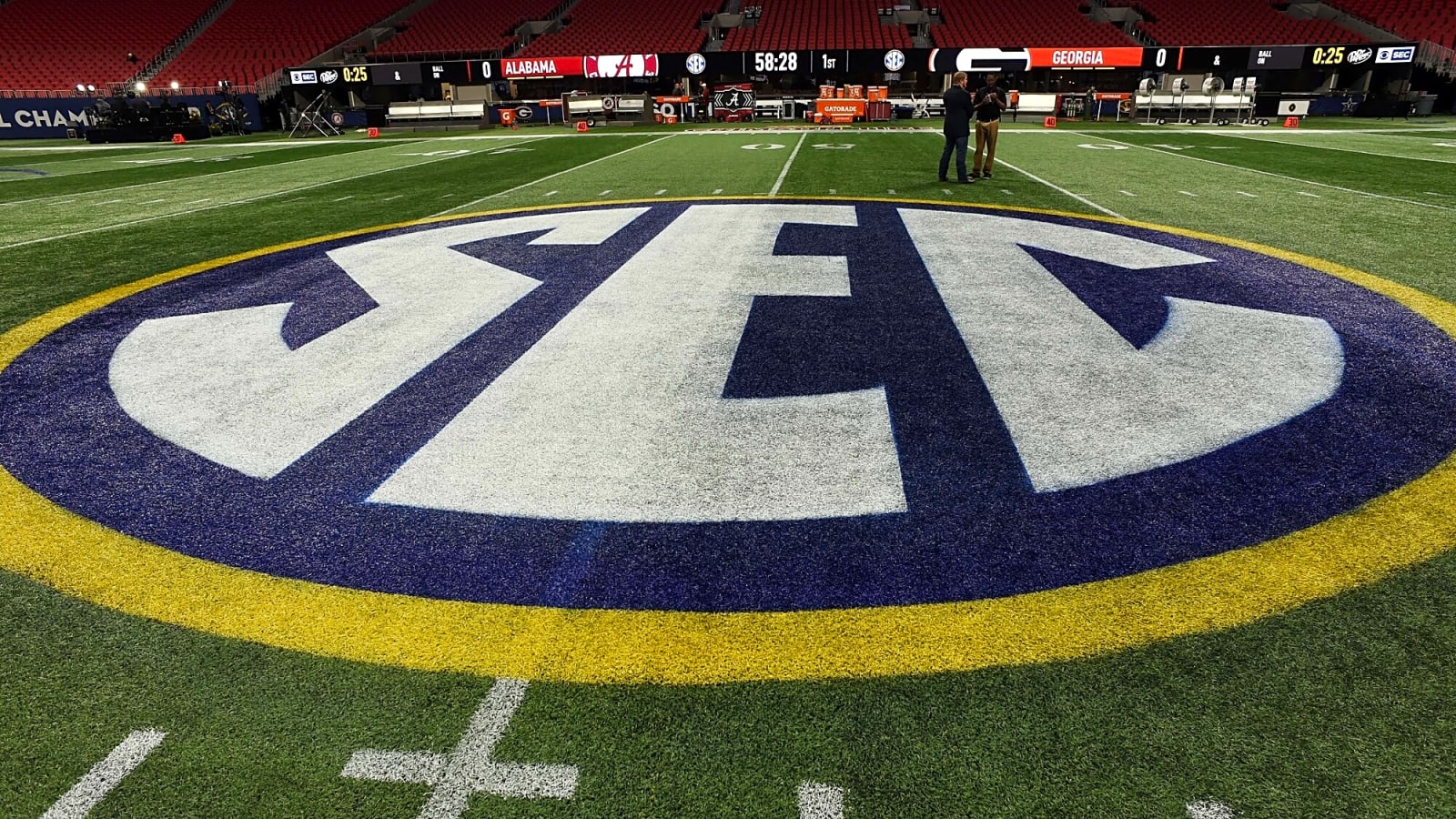
SEC + ACC?! Let's throw it back to college football's original superconference
The top level of college football has been trending toward superconferences in recent years.
Texas and Oklahoma emigrated from the Big 12 to the SEC, USC and UCLA led an exodus of 10 schools from the Pac-12 and programs such as BYU, Cincinnati, Houston and UCF graduated to the "Power 4" level — all since 2022.
Indeed, all four power conferences are bursting at the seams. The Big Ten boasts 18 members. The ACC has 17 members and a scheduling agreement with Notre Dame. The SEC and Big 12 are both composed of 16 members.
Consequently, travel has become a beast. The ACC stretches from California to Massachusetts. The Big Ten spans from California to New Jersey. The Big 12 runs from Arizona to West Virginia.
Among the power leagues, only the SEC adheres to a logical geographical plan. Even so, a road trip from Oklahoma to Florida is legit.
Movement always seems to be afoot in the world of conference affiliations. Will we see any of these superconferences collapse under the top-heavy weight of a far-flung footprint?
Believe it or not, this exact scenario played out more than 90 years ago when the nation's first collegiate superconference fractured.
Southern Conference once had 23 member institutions
The Southern Conference formed in 1921 with 14 members: Alabama, Alabama Polytechnic (Auburn), Clemson, Georgia, Georgia Tech, Kentucky, Maryland, Mississippi A&M (Mississippi State), North Carolina, NC State, Tennessee, Virginia, Virginia Tech and Washington & Lee. The new alliance afforded scheduling certainty and a ban on freshman athletes that its loosely constructed predecessor, the Southern Intercollegiate Athletic Association, did not.
In subsequent years, the Southern Conference's membership swelled to 23 schools with the additions of Florida, LSU, Ole Miss, South Carolina, Sewanee, Tulane and Vanderbilt (all in 1922); Virginia Military Institute (1923) and Duke (1929).
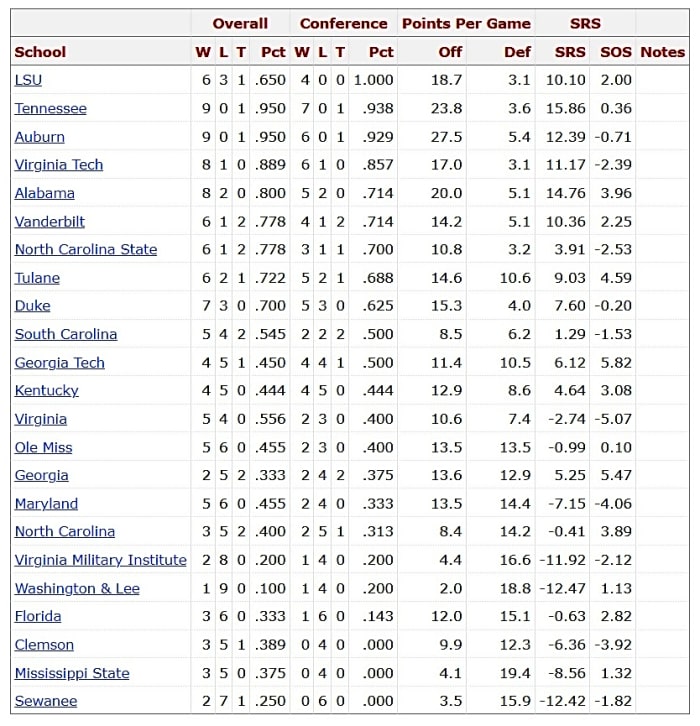
Just look at the glorious monstrosity that is the 1932 Southern Conference standings chart, courtesy of College Football Reference:
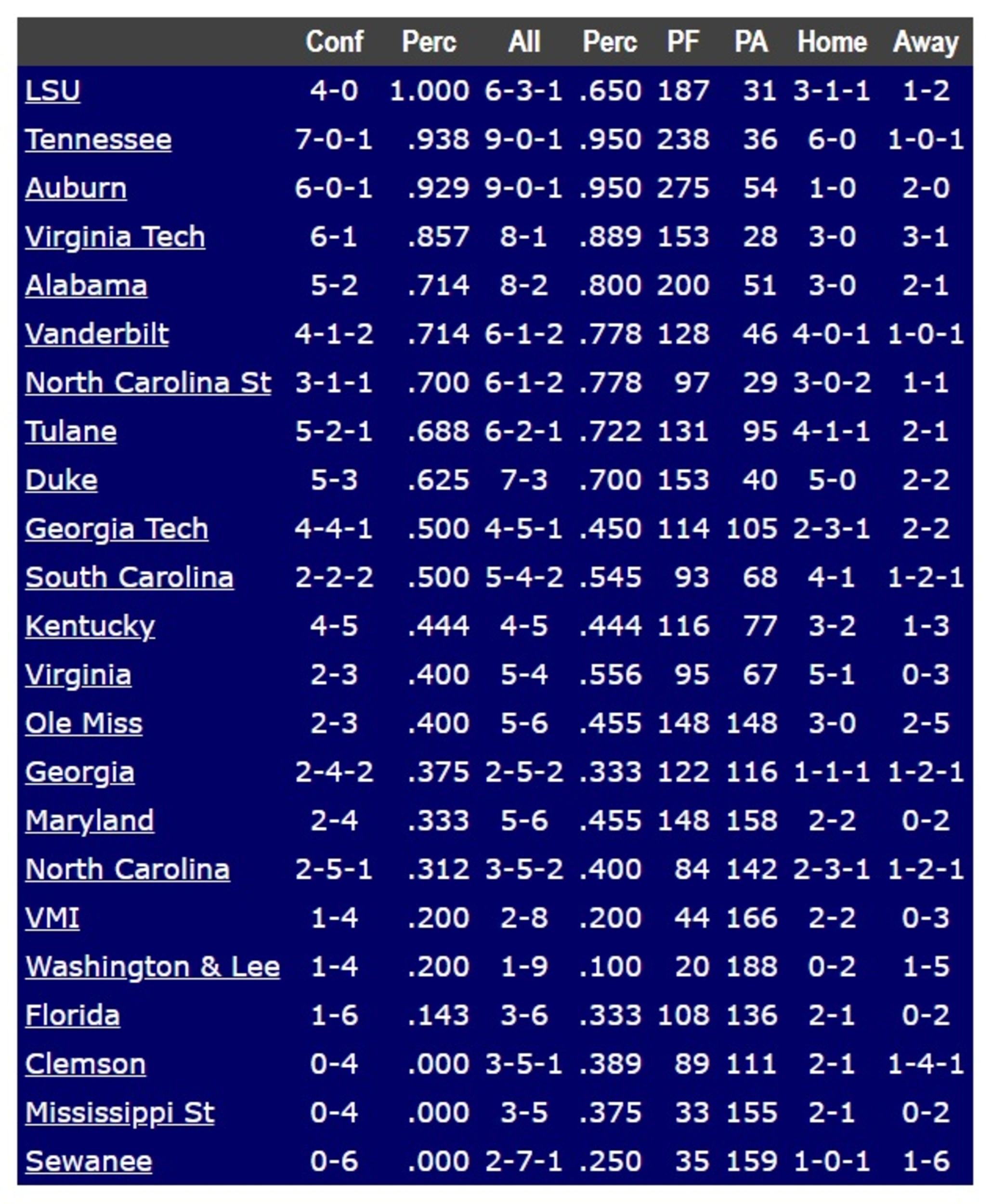
Here's another version, with even more data, courtesy of Shrp Sports:
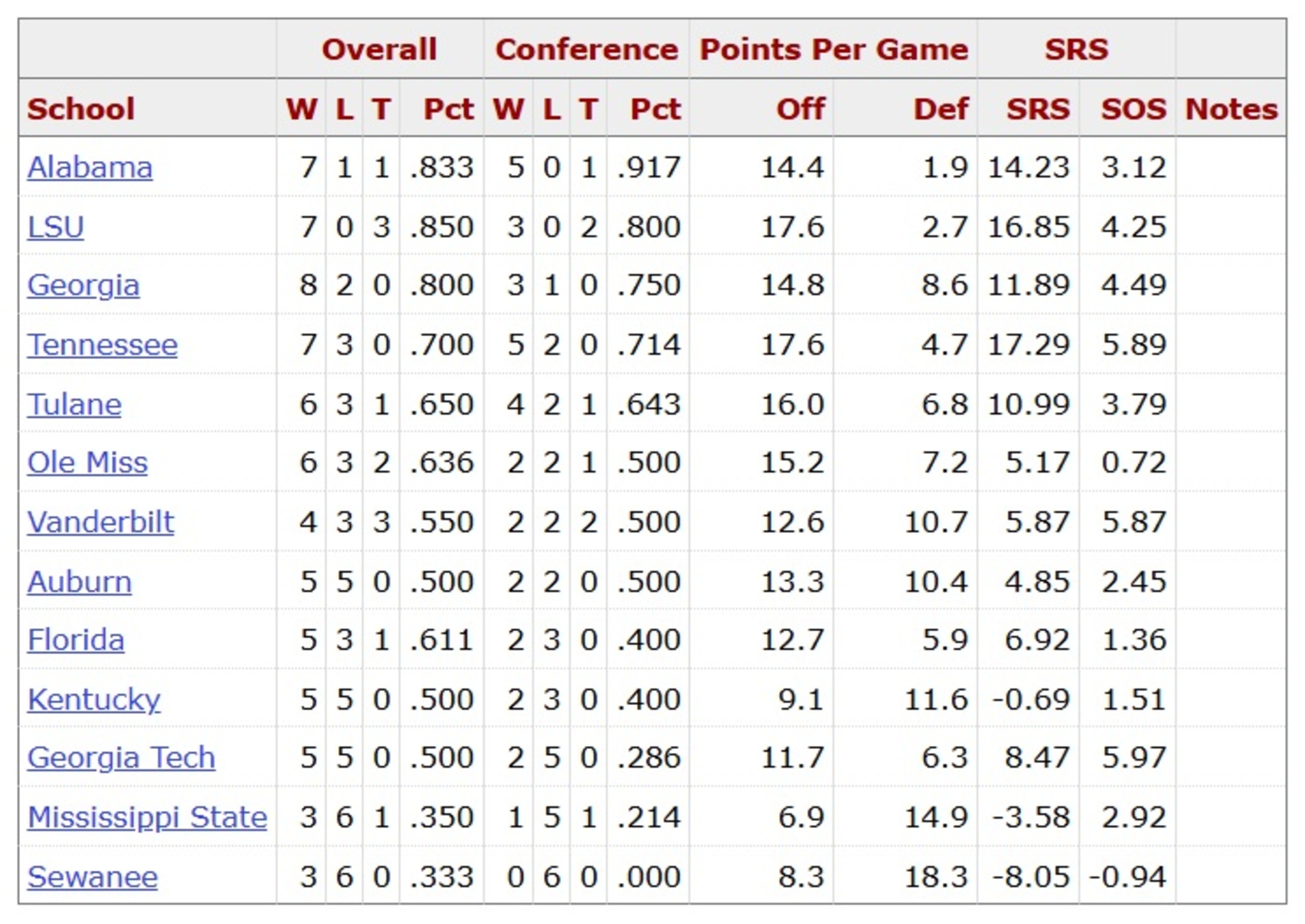
It wouldn't last. By December 1932, the 13 schools south and west of the Appalachian Mountains broke off to create the Southeastern Conference. Here is the 1933 SEC standings table, courtesy of College Football Reference:
Remarkably, the SEC has retained most of its core membership nearly a century later. The SoCon's remaining schools continued along relatively unbothered until the larger members of the league stepped away to form the Atlantic Coast Conference in 1953.
The SoCon was considered a major football conference until 1981. It exists today at the FCS level, composed of Chattanooga, the Citadel, East Tennessee State, Furman, Mercer, Samford, Tennessee Tech, VMI, Western Carolina and Wofford.

More must-reads:
- Kamario Taylor to return to Mississippi State, become highest-paid college QB
- Ole Miss expected to lose star running back Kewan Lacy for remainder of season
- The 'Winningest football coaches in SEC history' quiz
Breaking News
Trending News








Customize Your Newsletter
 +




Get the latest news and rumors, customized to your favorite sports and teams. Emailed daily. Always free!
PRIVACY POLICY COOKIE POLICY CONTACT US
ABOUT YARDBARKER TERMS OF SERVICE


By using this site, you agree to our Terms of Service and Privacy Policy.
This site is for entertainment purposes only.
There is no gambling offered on this site.
Gambling Problem? Call 1-800-Gambler.