
-

-


Follow Us
-

 On Facebook
 On Flipboard


Somewhere in Chicago, wrecking crews are being lined up for a building that opened the year after Calvin Coolidge took office. Soldier Field, the NFL’s oldest and smallest stadium at roughly 61,500 seats, sits in the crosshairs of a $4.7 billion replacement project the Bears have staked their franchise future on. Stadium demolition, it turns out, is a real estate transaction wearing a jersey. More than a dozen iconic venues across four continents face the same fate before 2030, and the reason has nothing to do with crumbling concrete.
A Multi-Billion Dollar Wrecking Spree
The Bears, led by president and CEO Kevin Warren and chairman George McCaskey, have pledged $2 billion of their own money toward a new roughly 65,000 seat domed stadium, an unusually high private share by modern NFL standards. Nashville’s replacement for Nissan Stadium carries a $2.1 billion price tag with $1.26 billion in public subsidy, roughly 60 percent taxpayer funded and among the largest stadium subsidies in U.S. history.
In Cleveland, Jimmy and Dee Haslam’s Browns project in Brook Park has climbed to approximately $2.4 billion, with substantial private investment and roughly $600 million in state-backed bonds under consideration. Buffalo’s new Highmark Stadium project has passed $2 billion, with the Bills set to move in for the 2026 season while phased demolition of the old bowl began May 1, 2026 and is scheduled to continue through March 2027. Jacksonville’s “Stadium of the Future” renovation of EverBank Stadium is projected to top $1.4 billion on a roughly 50/50 public private split. Across more than a dozen major stadium replacement projects globally, tens of billions in public and private money are flowing into demolition and replacement of buildings that mostly still stand perfectly fine.
The Bears Haven’t Actually Decided

Chicago fans arguing about this know what the headline numbers miss. The Bears are currently focused on Arlington Heights, Illinois, and Hammond, Indiana, as potential stadium sites, with CEO Kevin Warren telling reporters he expects a decision by late spring or early summer 2026. Gov. JB Pritzker has publicly indicated that building a new stadium in the city is “no longer an option,” effectively sidelining the earlier Burnham Park lakefront proposal. Illinois General Assembly negotiations have stalled over taxpayer impact and making Chicago whole on the 2003 Soldier Field renovation debt. The $4.7 billion figure is real, the $2 billion private commitment is real, but the groundbreaking is not. The Bears can buy their way out of their Soldier Field lease in 2026 for roughly $84 million.
Structurally Sound, Financially Dead

The assumption most fans carry is that old stadiums get torn down because they are falling apart. Old Trafford opened in 1910 and still hosts around 74,000 people. Manchester United wants 100,000 seats, luxury suites, and year round event hosting. San Siro opened in 1926 and has served two clubs for nearly a century. Mestalla has stood since 1923. St. James’ Park has hosted football continuously since 1880. None of these venues collapsed. The revenue model did. Modern profit demands capacity, premium seating, and mixed use development that century old architecture physically cannot deliver.
The Taylor Swift Math

The single biggest number fans never see on a stadium balance sheet is concert revenue. A modern NFL stadium does not pay itself off on ten home games and a handful of playoff runs. It pays itself off on Taylor Swift’s Eras Tour, Beyoncé, Kendrick Lamar, Messi friendlies, WrestleMania, and College Football Playoff weekends. SoFi Stadium’s naming rights alone are worth more than $30 million a year to the Rams and Chargers ownership, among the richest such deals in sports. A single luxury suite in a top tier NFL venue can gross $500,000 to more than $1 million per year. Soldier Field physically cannot host either a retractable roof concert tour or the suite count needed to compete. That is the real demolition argument.
One Stadium Chicago Wants to Save

Soldier Field’s fate is not sealed. In February 2026, the Chicago Park District unveiled a roughly $630 million proposal to reinvent the 102-year-old lakefront stadium as a year-round concert and special-events venue if the Bears depart, with about $130 million earmarked for direct upgrades such as sound systems and dressing rooms and roughly $500 million for surrounding infrastructure and traffic improvements. Even Gov. Pritzker acknowledged the plan reflects the new reality that a new Bears stadium inside the city is no longer on the table. In other words, the NFL’s oldest stadium may well outlive its primary tenant rather than be torn down.
Racing the Clock at San Siro

AC Milan and Inter Milan signed the deeds to acquire San Siro on November 5, 2025, paying €197 million for the stadium and surrounding land. They had to finalize the deal before a heritage protection threshold tied to the stadium’s second tier turning 70, which would have made demolition significantly harder under Italian cultural property law. Two of the world’s best known football clubs moved on a near century old cathedral of sport before the law could further restrict their options. They plan a new 71,500 seat venue west of the existing site, targeting the 2030 to 31 season ahead of Euro 2032. Heritage protection did not slow demolition. It accelerated the sale.
RFK Vanished in Roughly a Year
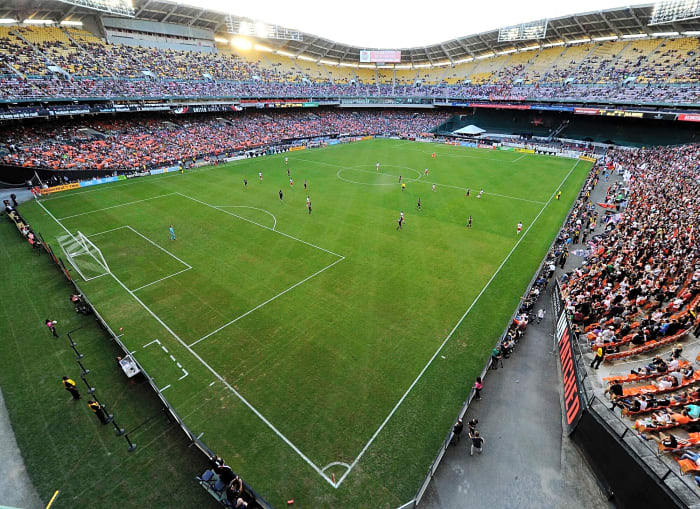
RFK Stadium sat largely empty after D.C. United played its last game there in 2017. By January 2026, WTOP reported demolition was nearly complete one year after the District took control of the site, and by May 2026 the footprint had been substantially cleared. That is how fast a sixty plus year old venue becomes a hole in the ground once the political will aligns. Washington D.C. is committing roughly $1 billion in public money toward the Commanders’ new stadium on the same site, while owner Josh Harris has pledged at least $2.7 billion in private investment. Meanwhile, construction companies approached about demolishing Mestalla’s century old walls were reportedly reluctant to associate their brands with the project. The profit was there. The stomach was not.
The Machine Behind the Wrecking Ball

Every one of these demolitions runs on the same engine. Municipalities in the U.S. typically fund 40 to 60 percent of replacement costs through bonds and tax revenue. Teams retain the vast majority of operational profits from the new venue. Nashville’s taxpayers covered 60 percent of the new Nissan Stadium, a bill independent analyses have estimated at well over $1,000 per Davidson County household when interest is included across the 30 year bond. Valencia expects substantial proceeds from selling Mestalla’s footprint, with hundreds of homes planned on the site. Land beneath old stadiums gets rezoned for housing, retail, and hotels. The stadium is the wrapper. Real estate is the product.
One Stadium Found Another Way
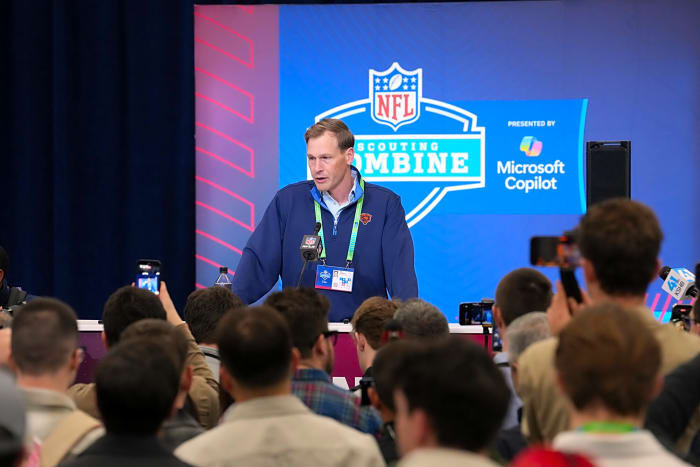
Rome’s Stadio Flaminio is proving demolition is not inevitable. In February 2026, Lazio president Claudio Lotito unveiled a project worth more than €480 million to redevelop the abandoned 1959 venue built for the 1960 Olympics, preserving Pier Luigi Nervi’s distinctive concrete architecture while expanding capacity past 50,000 seats. The design by Archea Associati aims to keep Nervi’s signature features intact while introducing modern construction solutions. Real Madrid’s recently completed Santiago Bernabéu overhaul proved the same thesis on a larger scale, rebuilding a world class venue around the original bones rather than flattening them. If Flaminio works, it undermines the argument that modernization requires erasure. San Siro’s deadline rush and Mestalla’s reluctant contractors suddenly look like choices rather than necessities.
The Cascading Arms Race
Once three or four clubs modernize, every rival faces a revenue gap. Old Trafford’s planned 100,000 seat replacement forces competitors to respond or fall behind. San Siro’s new 71,500 seat venue pressures Serie A peers. The Bears’ $4.7 billion proposal resets the NFL’s facility standard just as Cleveland and Jacksonville reset their own. Smaller market teams that cannot fund multibillion dollar replacements face a widening competitive disadvantage. Municipal bonds financing these projects reduce city capital available for schools, transit, and infrastructure. Every billion spent on a stadium is a billion not spent somewhere else.
2027 And 2028 Will Break Everything Open
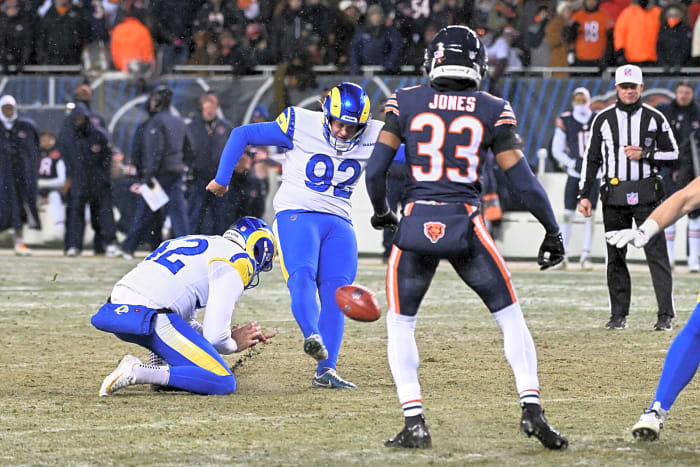
Nashville’s new Nissan Stadium is targeting a 2027 opening. Valencia is preparing to finally move into Nou Mestalla as the old ground winds down. Buffalo’s old Highmark Stadium demolition runs through March 2027 while the Bills’ new home opens for the 2026 season. Jacksonville’s “Stadium of the Future” is aiming to reopen in August 2028. Cleveland’s Brook Park dome is targeting a 2029 opening. Four continents will watch iconic venues vanish or transform in a compressed stretch. Behind each project sits the same formula. Public money helps build it, private ownership profits from it, and heritage becomes the line item nobody budgets to protect.
The Bill Your City Already Signed

Here is what most fans still miss. Cities often absorb a significant share of construction costs while teams capture nearly every dollar of game day revenue, naming rights, and concert bookings. The land beneath the old venue gets flipped for residential and commercial development, generating a second windfall that rarely appears in the public subsidy debate. Soldier Field’s century plus of Chicago history becomes irrelevant the moment mixed use development value exceeds venue value, unless Chicago’s own $630 million preservation plan wins out. Rome’s Flaminio model and Madrid’s Bernabéu renovation offer proof that preservation and profit can coexist. Whether any U.S. city copies that approach determines if your stadium survives the next decade. So the question every fan should be asking their mayor right now is simple.
Would you rather your city preserve its stadium or bankroll a new one?
Sources:
Chicago Bears official statement, April 24, 2024, announcing a proposed $4.7 billion domed lakefront stadium with a $2 billion private commitment from the franchise.
Illinois Sports Facility Authority, Soldier Field renovation timeline and capacity records, confirming the 61,500-seat reconfiguration completed in 2003.
Milan City Council and joint AC Milan and Inter Milan ownership announcement, Nov. 5, 2025, confirming the €197 million purchase of San Siro and surrounding land.
WTOP News, Jan. 8, 2026, reporting that demolition of RFK Stadium was nearly complete one year after the District of Columbia took control of the site.
SS Lazio and Archea Associati project announcement, February 2026, detailing the €480 million Stadio Flaminio redevelopment preserving Pier Luigi Nervi’s original structure.
Office of Illinois Gov. JB Pritzker, public statements on Bears stadium negotiations and outstanding Soldier Field debt held by the Illinois Sports Facility Authority.
More must-reads:
- World Cup check-in: Big changes in the USMNT midfield
- NBA legend believes LeBron James is destined to play for this rival
- The 'Active playoff scoring leaders' quiz
Breaking News
Trending News








Customize Your Newsletter
 +
+




Get the latest news and rumors, customized to your favorite sports and teams. Emailed daily. Always free!
PRIVACY POLICY COOKIE POLICY CONTACT US
ABOUT YARDBARKER TERMS OF SERVICE


By using this site, you agree to our Terms of Service and Privacy Policy.
This site is for entertainment purposes only.
There is no gambling offered on this site.
Gambling Problem? Call 1-800-Gambler.
