
-

-


Follow Us
-

 On Facebook
 On Flipboard
 On Twitter
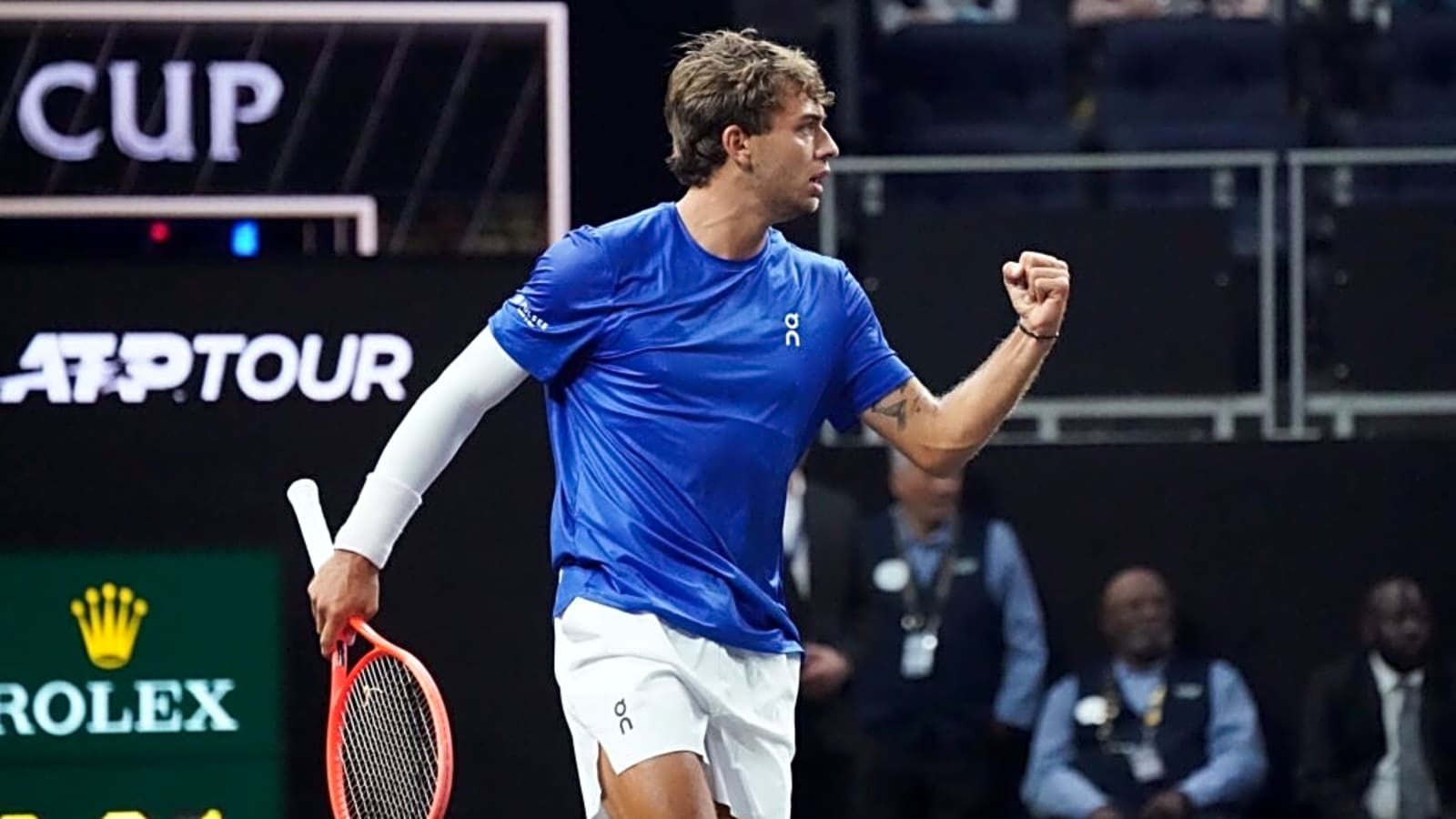
It is probably asking too much of Flavio Cobolli to expect his Davis Cup heroics over the last week to translate into immediate and enduring domination of men’s tennis, as was the case with Novak Djokovic in 2010 and Jannik Sinner in 2023. Djokovic and Sinner are truly great players who won the very next Major they played in after leading their countries to triumph in the Davis Cup. Nevertheless, although it remains unlikely that Cobolli will be holding the Australian Open trophy aloft at the start of February 2026, his remarkable efforts for Italy in the last seven days suggest that in time he is capable of following the lead of Djokovic and Sinner, and winning a Major Singles title.
Davis Cup Perfect Preparation For The Majors
One of the reasons why Djokovic and Sinner went so quickly from leading their country to Davis Cup success to winning a Major Singles title (in Djokovic’s case, the 2011 Australian Open was his second Major Singles title, whereas in Sinner’s case the 2024 Australian Open was his very first Major Singles title) is that for all the Davis Cup’s manifold faults, which prevent it from being a real “World Cup of Tennis”, it is also probably the best possible preparation for individual Slam success.
As the events in Bologna in 2025 proved, outside of the Majors themselves the Davis Cup remains the greatest, highest-pressure event in men’s tennis, with players who are used to only representing themselves suddenly being burdened with the pressure of playing not only for their fellow team-mates but their entire country. Time and again over the last week, players either responded positively to the increased pressure they were under, with Cobolli being the obvious example of that, or wilted under it, with France’s Corentin Moutet unfortunately being the obvious example of that, after his crazy attempt at a tweener completely turned his match against Raphael Collignon of Belgium and with it the whole tie.
The fact is that Cobolli went through the kind of torturous tennis test this week that both Djokovic and Sinner experienced when they first won the Davis Cup for their countries. Djokovic bore all the weight of a Serbian nation desperate for some sporting success (and distraction) after nearly two decades of war in the Balkans, whereas Sinner had to survive match-points against Djokovic in his singles match before somehow beating him again in the Doubles match that they played immediately afterwards.
Cobolli might not have faced the uniquely difficult challenge that Sinner faced in the semifinal against Serbia in 2023, when he effectively had to beat Djokovic twice in one afternoon (a feat that many players have not managed once in a whole career). However, he still put together a passable impersonation of Hercules completing one of his labours.
Cobolli’s Herculean Achievements
After a straightforward straight-sets victory over Austria’s Filip Misolic in the quarterfinal, Cobolli faced the exact opposite in his semi-final match against Belgium’s Zizou Bergs. Bergs gave a display worthy of his (nick)namesake, the great Zinedine Zidane, in winning the second set and going a break up in the third set, before surviving the first few match-points against him to take the match to a deciding tiebreak. And what a tiebreak it proved to be. It was probably the greatest in Davis Cup history and might yet prove to be the making of Cobolli, as he eventually won it 17-15 after facing no fewer than seven match points against him.
Cobolli’s match in the final against Spain’s Jaume Munar was not quite as dramatic, but it was still a fairly epic encounter, in which Munar completely outplayed Cobolli in the first set, which he won 6-1, before Cobolli somehow defied the physical and mental fatigue that must have enveloped him after the Bergs match to win in three sets, 1-6 7-6 (7-5) 7-5.
It must be remembered that among the worst failings of the current Davis Cup set-up is that Italy enjoyed a full day’s rest between their semifinal and the final, a luxury that was denied to Spain. If Cobolli had not had 24 hours between two such gruelling matches, it is highly unlikely that he would have been able to raise himself again for the final. As it was, however, having had a full day’s break between the semifinal and the final, he was able to shake off all the shock and fatigue that he must have experienced in the first set, when Munar was crushing him, to recover brilliantly at the end.
Can Cobolli Translate Team Success Into Individual Achievement?
The challenge now for Cobolli is to translate the team success he has enjoyed with his country into individual achievement on tour, particularly at the Majors. He is already a Major quarter-finalist, of course, having reached the last eight at Wimbledon last summer. Now, however, his Davis Cup heroics will prompt speculation that he can follow his illustrious compatriot Sinner and become a Major-winner, thus extending the golden age, or “Tenaissance”, that Italian men’s tennis and indeed Italian tennis in general is currently experiencing.
There is no guarantee of that, of course, as there are far more examples of players excelling in the Davis Cup and then failing on tour than there are of players excelling in the Davis Cup and then immediately excelling on tour or at a Major. Perhaps that is an achievement that is only possible for the most extraordinary of talents, like Djokovic and Sinner.
However, if Cobolli can take all the lessons that he has learned from spearheading Italy’s Davis Cup hat-trick or “threepeat” in 2025, there is every chance that in the coming years he can follow in Jannik Sinner’s illustrious footsteps, not only by leading his country to Davis Cup glory but by winning a Major Singles title in his own right.
More must-reads:
- New details emerge about Tiger Woods' arrest
- Hidden keys to victory for men's Final Four
- The 'NBA yearly free throw leaders' quiz
Breaking News
Trending News








Customize Your Newsletter
 +
+




Get the latest news and rumors, customized to your favorite sports and teams. Emailed daily. Always free!
PRIVACY POLICY COOKIE POLICY CONTACT US
ABOUT YARDBARKER TERMS OF SERVICE


By using this site, you agree to our Terms of Service and Privacy Policy.
This site is for entertainment purposes only.
There is no gambling offered on this site.
Gambling Problem? Call 1-800-Gambler.
