
-

-


Follow Us
-

 On Facebook
 On Flipboard
 On Twitter
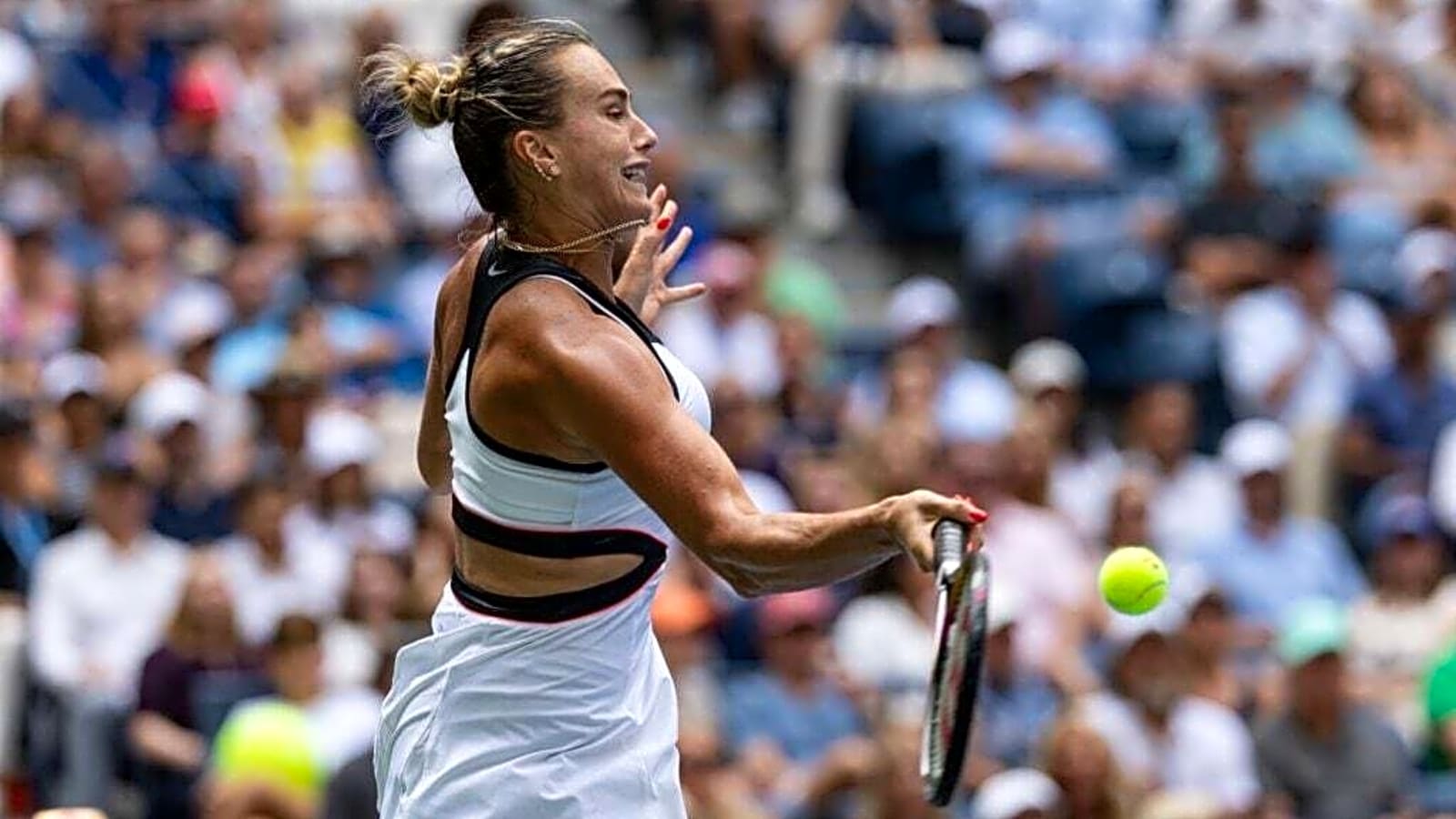
Women’s Tennis Power Rankings: Clay Commences
As the clay season opens for business, the WTA Tour is in a genuinely compelling state. More competitive at the top than it has been for years, with question marks hanging over some familiar names and a fresh wave of talent demanding to be taken seriously. These rankings blend recent form, body of work across the first three months of 2026, and a clear-eyed assessment of what the surface shift means for each of these players. With Roland Garros on the horizon, the clay factor matters. But form matters more.
- Aryna Sabalenka
There is not really a debate. Sabalenka holds a 23-1 record in 2026, becoming the fifth woman in history to complete the Sunshine Double by winning both Indian Wells and Miami in the same year, joining an elite list that includes Steffi Graf, Kim Clijsters, Victoria Azarenka, and Iga Swiatek. She is the first woman to complete the Sunshine Double in both singles and doubles, and her only loss this season came against Elena Rybakina in the Australian Open final in January. On clay, she has been improving year after year. She reached the French Open final in 2025, losing a thriller to Gauff, and has a title in Madrid to her name. She is now a 24-time singles champion, playing at a level that is simply historic in terms of this season’s start. Nobody is close right now.
- Coco Gauff
Gauff comes into clay season as the defending Roland Garros champion and arguably the most dangerous player on the surface this spring. At the 2025 French Open, she became the youngest woman to reach the finals of the three biggest clay court tournaments–Madrid, Rome, and Roland Garros–in the same year, before defeating Sabalenka in the Paris final. She has a 20-5 lifetime record in Paris and has reached at least the quarterfinals in each of the last four years. In 2026, her hard court season has been solid rather than spectacular. A Miami final run ended in defeat against Sabalenka. But with 865 points to defend in April alone, she will be intensely motivated to go deep during the clay swing. She is the reigning champion, she loves this surface, and her movement is arguably the best in the women’s game. Expect her to be a major threat from the very first week.
- Iga Swiatek
This is a placement that would have been unthinkable even twelve months ago, and yet here we are. Swiatek has had, by her own admission, a nightmare start to 2026. She holds a 12-6 record on the season, well below her standards, and has yet to reach a single semifinal this year. She lost to Magda Linette in the first round of Miami, extending a poor run of results that has left her without a title of any kind in 2026. Compounding the difficulty, she confirmed her split with coach Wim Fissette shortly after the Miami loss, meaning she enters clay season in a state of genuine uncertainty about her support structure.
And yet she cannot be written off. She is a six-time Grand Slam champion, a multiple-time Roland Garros winner, and clay is the surface where she has built most of her legacy. History says she finds another gear in the spring. Whether this is the year that history stops repeating itself is one of the most fascinating questions hanging over the clay season. We are watching very carefully.
- Elena Rybakina
What a few months it has been for Rybakina. She captured her second Grand Slam title at the 2026 Australian Open, coming from 3-0 down in the third set to defeat Sabalenka 6-4 4-6 6-4 on Rod Laver Arena. She has the most match wins on tour since Wimbledon last summer, and was riding a streak of 20 wins from 21 matches heading into Melbourne. Clay is not traditionally where Rybakina has produced her best results, but her serve, which led the WTA tour last year with 516 aces, an astonishing 143 more than second place, is a weapon on any surface, and her confidence is at its highest point. With relatively few clay points to defend going into the swing, she is genuinely dangerous. This could be the year she breaks through on the dirt.
- Elina Svitolina
Svitolina has put together one of the most quietly impressive seasons on the Tour, and she deserves far more recognition for it. She is top three in match wins in 2026 with 20 victories, and remains undefeated in three-set matches at 6-0 on the season. She won the Auckland title to open the year, reached the Dubai final, made the Australian Open semifinals, and then delivered a stunning upset over World #2 Swiatek in the Indian Wells quarterfinals. Her 2025 clay record was a remarkable 16-3, including a title at Rouen and a Madrid semifinal. At 31, she is playing some of the best tennis of her career, and with the clay season arriving, her best results historically have come in spring. A genuine dark horse for a title before Paris.
- Jessica Pegula
Pegula is one of the most consistently excellent players in the game, and 2026 has been another strong year. She arrived at Indian Wells as one of the title contenders, having claimed the Dubai WTA 1000 and reached the semifinals in each of her last seven WTA Tour events. She also made her first Australian Open semifinal this year, adding to a 2026 record that underlines just how solid she has been across all surfaces. Clay is not where Pegula peaks, but she is a formidable competitor who makes every match difficult, and she won the Charleston title in 2025, proving she is no pushover on the terre battue. She has spoken about the last six months as a period in which she has become a genuinely better player, and that growth is visible every time she steps on court.
-
<
li> Mirra Andreeva
This is the honest placement. Andreeva’s 2026 has been a step back relative to the heights she scaled in 2025, when she won two WTA 1000 titles back-to-back at Dubai and Indian Wells, becoming the youngest WTA 1000 champion since the tournament tier began in 2009. In 2026, she picked up the Adelaide title early in the year but has since struggled for consistency. She failed to defend her Indian Wells title, losing to Katerina Siniakova in the third round, and has been beaten by Victoria Mboko twice in three meetings across the season.
But clay is genuinely where Andreeva’s skill set shines. Her heavy topspin, her creativity, her ability to construct points from defence. She reached the Roland Garros semifinals in 2024 at just 17 years old. A pickup in form on the dirt feels not just possible but likely. The talent has never been the question with Andreeva. The consistency is the work still in progress.
- Amanda Anisimova
Anisimova arrives at clay season with something to prove. She reached her career-high ranking of World #3 in January, and her early season showed real promise, but it has not all gone to plan since then. She lost in the first round of Miami and has been somewhat inconsistent since the Australian Open, where she reached the quarterfinals. What makes her interesting heading into this swing is her big-match temperament and her ballstriking, both of which travel to clay. She can hit through the court from any position, and when she is playing well, she is capable of beating anyone in the draw. The clay season is a real opportunity for her to reassert herself and remind the Tour that her early season ranking jump was not a fluke.
- Victoria Mboko
The story of the women’s season so far. Mboko made her Top 10 debut in February, becoming the fastest player to accomplish that feat since Jennifer Capriati did so in 203 days back in 1990. She holds a 19-5 record in 2026 and has reached her fourth WTA 1000 quarterfinal with her Miami run, consistently punching above her weight against elite opposition. A breakthrough 2025 saw her win titles in Montreal and Hong Kong, establishing herself as one of the most exciting young players in the game.
Clay is relatively uncharted territory. The vast majority of her wins have come on hard courts. But her athleticism, her serve, and her mental fortitude suggest the surface shift will not slow her down too dramatically. The clay season is where we will genuinely find out how high her ceiling extends.
- Jasmine Paolini
Paolini rounds out the list, and the framing here is entirely about what she has done on clay versus what 2026 has looked like so far. In 2025 she won her second WTA 1000 title at Rome on home soil, and her favurite surface is clay. Her 2026 record stands at a modest 10-5, and she has been far from her brilliant 2024 and early 2025 peak when she was reaching Grand Slam finals and climbing to world number four. But the Italian’s game, compact, creative, relentlessly consistent from the baseline, is built for clay. She is a former Roland Garros finalist and has reached the final at the French Open across both singles and doubles. Do not be surprised if the red dirt wakes her up.
The Clay Has Arrived
This is the thing about clay season in women’s tennis right now: nothing is settled, and almost anything feels possible.
The World #1 is nearly untouchable, but the defending Roland Garros champion is coming for her crown. The four-time Paris winner is in the strangest form slump of her career, yet heads to the surface she loves more than any other. Two teenagers, one Russian, one Canadian, are already among the best players on the planet and will use the clay swing to either announce or define themselves. A Ukrainian who survived war, returned from motherhood, and is now playing the best tennis of her career at 31. An Italian who loves the dirt more than almost anyone.
From Stuttgart to Madrid, Rome to Roland Garros, women’s clay season 2026 is going to be extraordinary.
Get ready.
More must-reads:
- Islanders' firing of Patrick Roy changes perception about present, future
- Michigan's Yaxel Lendeborg reveals his injury status for national title game
- The 'NCAA men's basketball champions' quiz
Breaking News
Trending News








Customize Your Newsletter
 +
+




Get the latest news and rumors, customized to your favorite sports and teams. Emailed daily. Always free!
PRIVACY POLICY COOKIE POLICY CONTACT US
ABOUT YARDBARKER TERMS OF SERVICE


By using this site, you agree to our Terms of Service and Privacy Policy.
This site is for entertainment purposes only.
There is no gambling offered on this site.
Gambling Problem? Call 1-800-Gambler.
