
-

-


Follow Us
-

 On Facebook
 On Flipboard

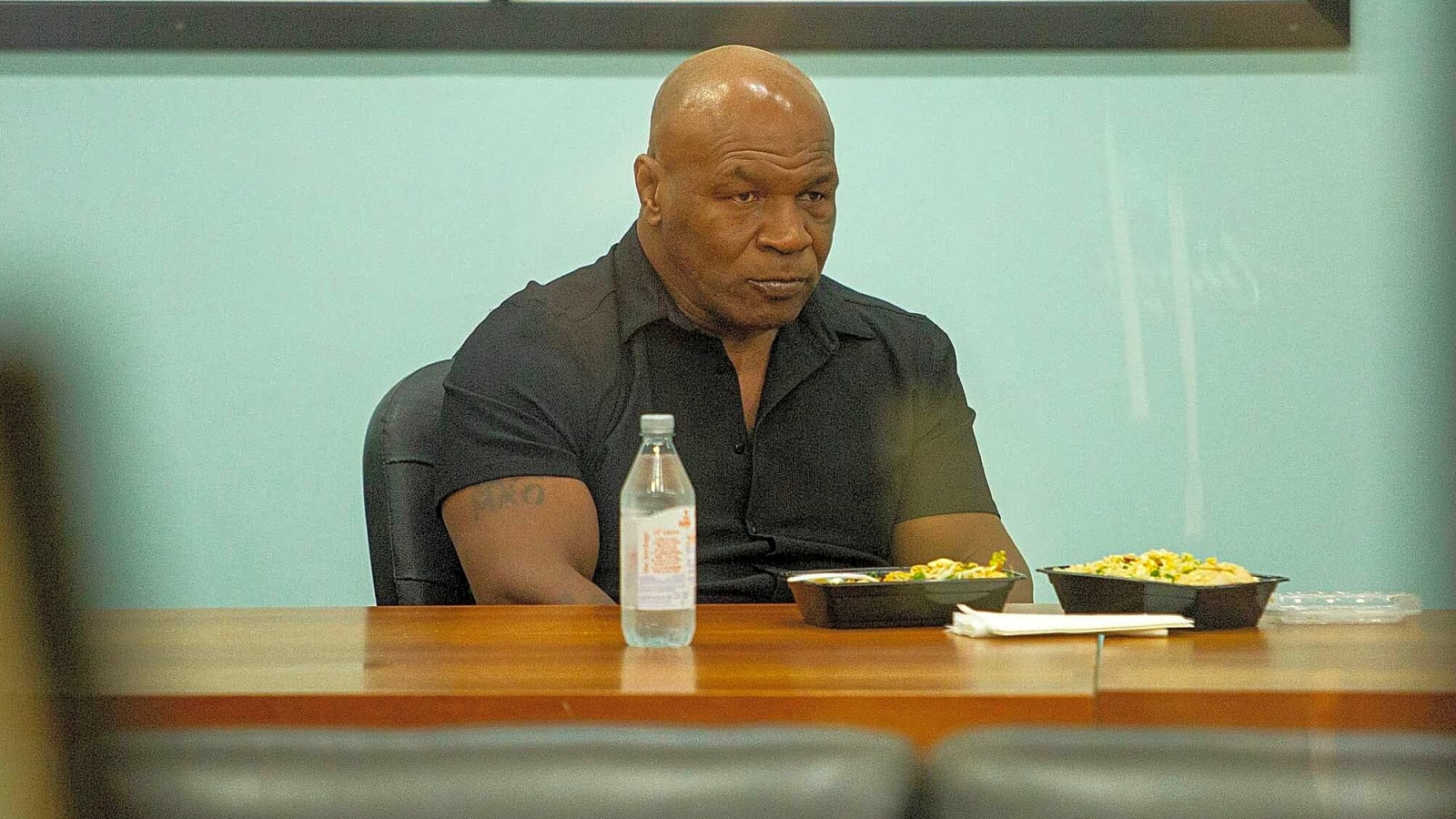
The 1997 “Bite Fight” remains one of the most memorable yet chaotic moments in sports history. It’s forever embedded into Mike Tyson’s boxing legacy, and the memory of the millions of boxing fans who watched it unfold. To understand the perspective where Tyson’s actions were a reaction to provocation, we have to look closely at the physical chess match—and the fouls—that preceded that infamous chomp.
The “Third Weapon”: Holyfield’s Head-Butts
In the eyes of Tyson and his supporters, Evander Holyfield wasn’t just boxing. He was using his head as a third glove.
- The First Encounter: In their 1996 fight, Tyson felt Holyfield used head-butts to disrupt his rhythm. It’s a tactic that left Tyson frustrated and dazed.
- The 1997 Rematch: Early in the second round, a massive accidental head-butt from Holyfield opened a deep gash over Tyson’s right eye. Tyson screamed to referee Mills Lane that it was intentional, but Lane ruled it accidental.
- The Escalation: To Tyson, the ring had become a place where the rules weren’t being enforced. He felt he was being “fouled out” of the fight by a veteran fighter who knew how to use roughhouse tactics just outside the referee’s vision.
The Snap: From Boxer to Animal Instinct
When the human brain perceives that it is being physically harmed without protection, the “fight-or-flight” response can bypass the civilized mind.
“I just wanted to kill him. Anyone could see that the head-butts were intentional. I was furious, I was a disciplined soldier and then I lost my discipline.” — Mike Tyson, reflecting on the moment.
- Tyson’s Fury: After the cut in the second round, Tyson made a comeback. He was looking like vintage Tyson, landing shots on Holyfield repeatedly in the third round. Holyfield maintained his headfirst strategy. Upon butting into Tyson’s already cut eye in the final minute of the round, Tyson found a way to “equalize” the pain.
- The Animal Instinct: Tyson has often described his upbringing and boxing persona as being built on raw, primal aggression. When the “sweet science” failed him because of the head-butts, he reverted to a streetfighter’s survival instinct.
- The Bite: The act of biting wasn’t a tactical boxing move. It was a visceral, animalistic scream of frustration. It was an attempt to reclaim control in a fight where he felt the traditional rules had already been discarded by his opponent.
Tyson eventually apologized years later. The two famously reconciled, even filming a commercial together. In it, Mike “returns” the ear. However, for those who see the fight through Tyson’s eyes, the bite wasn’t the start of the “dirty” play. Rather, it was the explosive ending to it.
Butt That’s Not All, Folks
While the 1997 fight with Tyson is the most famous example, several of Holyfield’s other opponents and boxing contemporaries have pointed to his frequent use of his head as a tactical tool.
According to critics and fellow fighters, Holyfield’s style was often described as “clinch-heavy” or “roughhouse”. It frequently resulted in what referees ruled as accidental head-butts. Meanwhile, opponents and boxing enthusiasts viewed it as a calculated “third weapon.”
Notable Incidents and Opponent Claims:
- Hasim Rahman (2002): In one of the most visually shocking examples, a head-butt from Holyfield caused a massive, “alien-like” hematoma to grow on Rahman’s forehead. This happened within seconds after impact. Rahman was critical after the fight. He jokingly stated he would “wear a helmet next time”. He argued that the outcome wasn’t a fair reflection of the boxing match.
- Lennox Lewis : The former undisputed champion has spoken openly about Holyfield’s tactics. Lewis even claimed to have seen Holyfield training with a tire wrapped around his heavy bag. Lewis interpreted it as a way to practice the timing and placement of his headbutts during infighting.
- George Foreman: The legendary heavyweight once remarked that Holyfield was one of the “dirtiest” fighters he ever faced. He specifically noted how sneaky and clever Holyfield was at using his head to disrupt an opponent’s rhythm without catching the referee’s attention.
- Michael Dokes : Film studies of Holyfield’s earlier career show instances where he would lead with his head down. This has been compared to a bull—to land a “butt” on the chin. It was often followed up with a punch to keep the opponent from being able to complain to the ref immediately.
The “Nod” Strategy
Boxing analysts often describe Holyfield’s head-butts as a “nod.” Instead of a wild lunge, it was a subtle movement during a clinch. He would skillfully rest his head on an opponent’s shoulder and then “nod” upward or sideways into their face or temple.
Because Holyfield was shorter than many heavyweights (like Lewis), his head naturally sat at the level of his opponents’ chins and eyes. This allowed him to maintain “head control”. The strategy is a wrestling-adjacent tactic that forced opponents to either back off or risk a clash of heads. This effectively neutralized “swarmers” like Tyson who wanted to fight on the inside.
And in Conk-lusion
Holyfield’s style simply wasn’t accidental. While he was a physically gifted boxer, and his intention may not have been to win by headbutting his opponent, the advantage was evident. The devastation caused by landing unpenalized headbutts into the opponent’s face cannot be overlooked. This was clearly his strategy and a calculated effort to intimidate opponents who dared stand toe to toe with him—or face the consequences.
Like us on Facebook and follow us @TheForkball on X for ongoing coverage of all sporting news, breakdowns and opinions.
More must-reads:
- Three key matchups to watch in NFL Week 5 games
- USWNT vs. Spain: Key takeaways from a battle of the world's best
- The 'Rushing TDs by active NFL WRs' quiz
Breaking News
Trending News





Customize Your Newsletter
 +
+




Get the latest news and rumors, customized to your favorite sports and teams. Emailed daily. Always free!
PRIVACY POLICY COOKIE POLICY CONTACT US
ABOUT YARDBARKER TERMS OF SERVICE


By using this site, you agree to our Terms of Service and Privacy Policy.
This site is for entertainment purposes only.
There is no gambling offered on this site.
Gambling Problem? Call 1-800-Gambler.
