Whether dubbing an entire team or a particular unit within a squad, there are certainly some creatively genius nicknames that have graced the world of sports. Here's our list of the 25 best.
Icon Sportswire/Getty Images
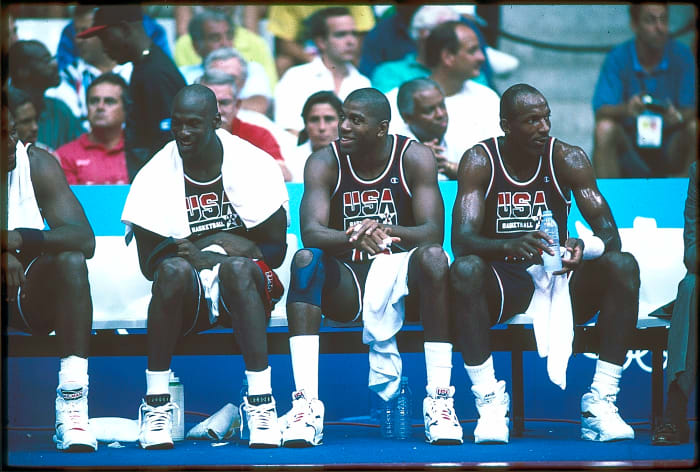
Also known as the United States men's basketball team that competed at the 1992 Summer Olympics in Barcelona. The single greatest collection of basketball talent on the planet, the U.S roster featured Charles Barkley, Larry Bird, Clyde Drexler, Patrick Ewing, Magic Johnson, Michael Jordan, Karl Malone, Chris Mullin, Scottie Pippen, David Robinson, John Stockton, and college superstar Christian Laettner. Coached by Detroit Pistons legend Chuck Daly, the "Dream Team" went undefeated at the Games, winning gold by an average margin of 44 points.
2 of 25
24. "Orange Crush"
Focus on Sport/Getty Images
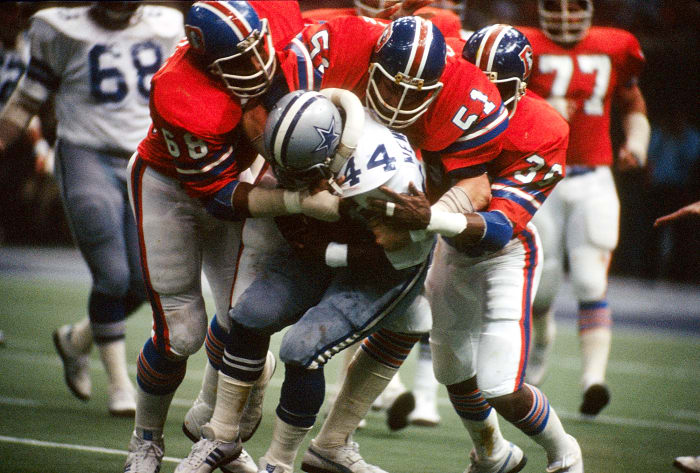
Longtime Denver sports writer Woody Paige has long been credited with concocting this popular nickname for the stout Denver Broncos defenses of the late 1970s and into the '80s. The name was fitting, playing off Denver's orange uniform tops and the similarly named soft drink. The 3-4 defensive scheme was mastered by hard-hitting linebackers Tom Jackson and Randy Gradishar, along with a menacing front four that included Paul Smith, Barney Chavous, Lyle Alzado, and Rubin Carter. That unit led the Broncos to a 12-2 record and a Super Bowl appearance in 1977.
3 of 25
23. "Greatest Show on Turf"
Scott Rovak/AFP via Getty Images
From 1999-2001, the St. Louis Rams' fast-paced, speed-burning, high-octane offense led the NFL in average points (32.7), total points (1,569), and touchdowns (195). Led by NFL MVPs Kurt Warner and Marshall Faulk, plus elite receivers in Torry Holt and Isaac Bruce, the Rams offense, which earned the nickname, reportedly from famed ESPN personality Chris Berman, helped the franchise to a 37-11 record during that three-season span and victory in Super Bowl XXXIV.
George Gojkovich/Getty Images
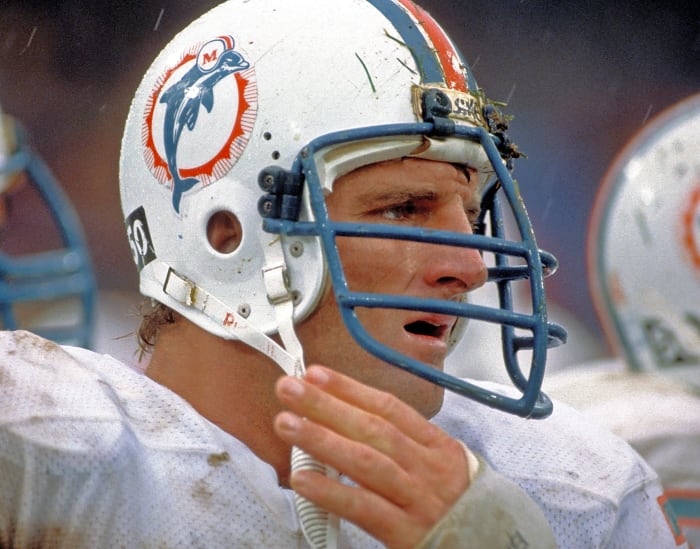
During the early 1980s, the Miami Dolphins fielded one of the NFL's top defensive units. For the 1982 and '83 seasons combined, Miami allowed a league-low 15.2 points per game and yielded an average of 318.7 total yards. The Dolphins reached the Super Bowl to culminate the 1983 season. Among the stars of those units were Kim Bokamper, Bob Baumhower, Doug Betters, Charles Bowser, Bob Brudzinski, and the brothers Glenn & Lyle Blackwood. Each has a last name starting with the letter "B." Thus, birthing the popular "Killer B's" moniker.
5 of 25
21. "Bronx Bombers"
The Stanley Weston Archive/Getty Images
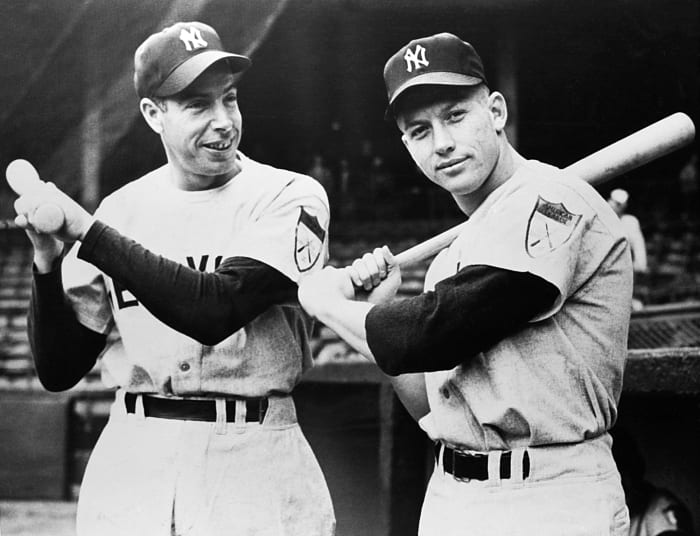
The term "Bronx Bombers" is essentially an all-encompassing, historical nickname for the New York Yankees' perennial status as one of baseball's all-time great power-hitting franchises. While playing in the Bronx, the Yankees have produced legendary and iconic home run hitters like Babe Ruth, Lou Gehrig, Yogi Berra, Joe DiMaggio, Mickey Mantle, and more recently with the likes of Reggie Jackson, Alex Rodriguez, and Aaron Judge.
6 of 25
20. "The Fun Bunch"
Washington Commanders/National Football League
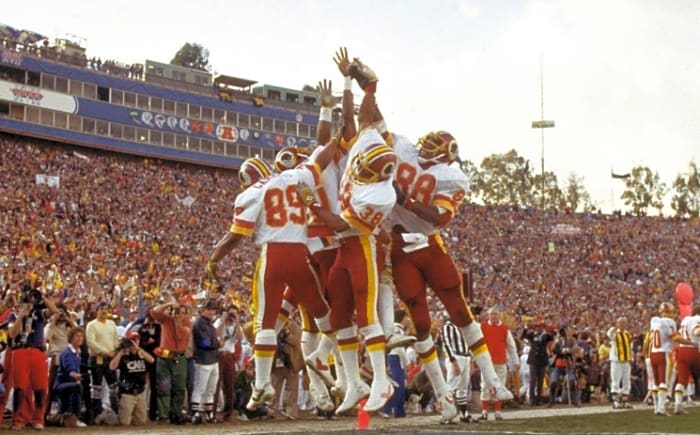
This won't be the first group within the Washington Commanders organization that we will highlight. Beginning during the 1982 season, "The Fun Bunch" was a group of Washington receivers, running backs and tight ends that celebrated touchdowns with a choreographed swinging of their arms that led into a leaping collective high-five. Principal members of "The Fun Bunch" included Art Monk, Virgil Seay, Charlie Brown, Alvin Garrett, Otis Wonsley, Rick Walker and Don Warren. The group was also a key reason the NFL began to penalize teams for excessive scoring celebrations in 1984.
7 of 25
19. "Doctors of Dunk"
George Gojkovich/Getty Images
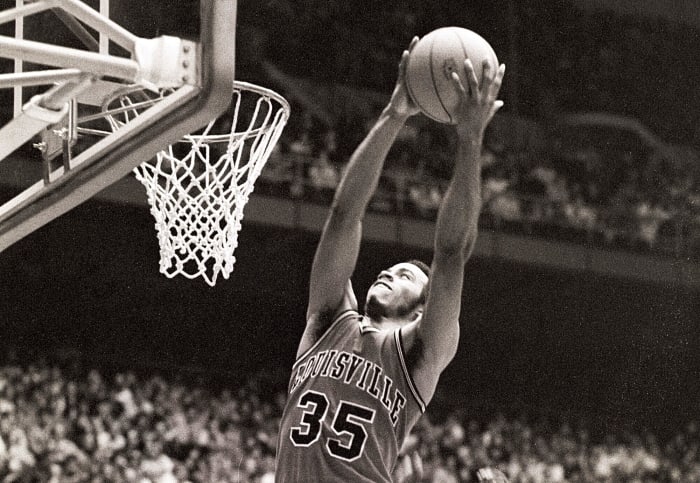
When the dunk was re-allowed in college basketball in 1976, nobody did it better out of the gate than Louisville. The "Doctors of Dunk" were led by high-flying superstar Darrell Griffith, aka "Dr. Dunkenstein," a national player of the year recipient and one of the most exciting players of the era. The Cardinals of the late 1970s and early 1980s were highly entertaining for their fast-paced, over-the-rim play. Louisville won it all in 1980 and reached the Final Four in 1983.
8 of 25
18. "The French Connection"
Robert Shaver/Bruce Bennett Studios via Getty Images
Playing off the popular movie of the early 1970s, this NHL version of "The French Connection" featured the Buffalo Sabres' line of Hall-of-Fame center Gilbert Perreault and All-Star wingers Rick Martin and René Robert that paced the franchise from 1972-'79. The three all hailed from Quebec and had French-Canadian ancestry. Together, the trio amassed nearly 1,700 points across 1,536 combined games and helped the Sabres reach the 1975 Stanley Cup Final.
9 of 25
17. "Pony Express"
Staff/The Denver Post via Getty Images
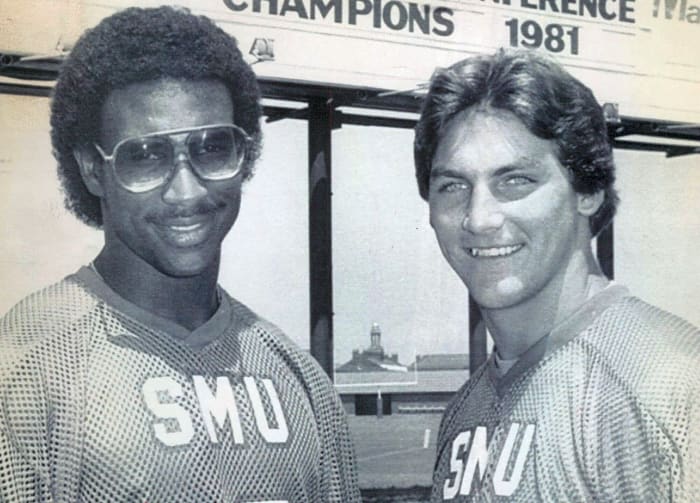
Eric Dickerson and Craig James made up the famous backfield of the SMU Mustangs during the early 1980s. Diminutive quarterback Lance McIlhenny orchestrated the wishbone attack, as this potent trio ran up and down the field, and through opposing defenses, in helping the Mustangs finish 11-0-1 during the 1982 season. That was good enough for a No. 2 final ranking. Of course, amid all the on-field success for the "Pony Express," was the fact that players were being paid or given extravagant gifts to be part of a program that received the infamous "Death Penalty" in 1987.
10 of 25
16. "Legion of Boom"
Robert Deutsch/Imagn Images
Throughout NFL history, dominant defenses have been led by brash, colorful personalities. Like the Seattle Seahawks' hard-hitting, ball-hawking, jaw-yapping secondary during a good chunk of the 2010s, aka the "Legion of Boom." Richard Sherman, Earl Thomas, Kam Chancellor, Brandon Browner, Walter Thurmond , and Byron Maxwell made up the initial version of the group. Eventually, it seemed the entire Seahawks defense wore the moniker. From 2012-'20, Seattle's defense helped the franchise to nine straight winning seasons, four division titles, two Super Bowl appearances, and a 43-8 victory over Denver in Super Bowl XLVIII.
11 of 25
15. "New York Sack Exchange"
Ronald C. Modra/Getty Images
The New York Jets' defensive front four during a sizable portion of the early 1980s featured four of the game's best. Mark Gastineau was the team's top sack producer and larger-than-life personality. Joe Klecko was the powerful leader, Marty Lyons was dynamic at stopping the run, while Abdul Salaam was a versatile beast. Playing off the New York Stock Exchange, the nickname was coined during the 1981 season, when the team led the NFL with 66 sacks. That unit also helped the Jets reach the AFC Championship game the next season.
12 of 25
14. "Harvey's Wallbangers"
Ronald C. Modra/Getty Images
The Milwaukee Brewers made their only World Series appearance in 1982. And, it was a potent offense that helped the Brewers win the American League pennant. Managed by Harvey Kuenn, the team earned the nickname (which is also a play on the famous cocktail) while clubbing an MLB-high 216 home runs that season. Those Brewers, led by Gorman Thomas (39 home runs), Ben Oglivie (34 HRs), Cecil Cooper (32 HRs), Robin Yount (29 HRs), Ted Simmons (29 HRs), and Paul Molitor (19 HRs), also led the majors in runs (843) and slugging percentage (.455).
13 of 25
13. "Nasty Boys"
Facebook/Cincinnati Reds
Norm Charlton, Rob Dibble , and Randy Myers were the main figures that comprised the Cincinnati Reds' daunting bullpen for the 1990 and '91 seasons. In helping the Reds win the '90 World Series, the trio combined for 44 saves and 351 strikeouts. The name, which was a reference to their tough-to-hit pitching and gritty, boisterous demeanor, was inspired by the popular Janet Jackson song of the same name.
14 of 25
12. "Fearsome Foursome"
Los Angeles Rams
There have been numerous NFL teams to sport the "Fearsome Foursome" tag for a successful defensive front line, but the most popular and recognized remains that of the Los Angeles Rams during a span of 1963-'66. Led by Hall-of-Fame end Deacon Jones and tackle Merlin Olsen, the Rams' defensive front, which also included stalwarts Rosie Grier (tackle) and Lamar Lundy (end), was formidable in stopping both the run and pass. Disruptive quarterbacks and running backs alike.
Focus on Sports via Getty Images
When it came to embracing an unapologetic, hard-nosed style of basketball, the Detroit Pistons of the late 1980s and early '90s did it better than any team has, before or after. Coached by Chuck Daly and led by star Isiah Thomas and tough guys Bill Laimbeer and Dennis Rodman, the Pistons reached the NBA Finals for three straight seasons (1988-'90). They won back-to-back titles during that span, doing so with a no-holds-barred, physical approach that bred intimidation and even some respect.
16 of 25
10. "Steel Curtain"
George Gojkovich/Getty Images
Symbolizing the blue-collar, tough-as-nails nature of the Pittsburgh community, the Steelers' daunting defenses of the 1970s work hard to dominate opponents and help the franchise win Super Bowls IX, X, XIII, XIV from 1974-'79. "Mean" Joe Greene, L.C. Greenwood, Jack Lambert, and Mel Blount were the superstars of a unit that helped the Steelers record 10 shutouts and hold 34 opponents to fewer than 10 points during that dynasty-producing six-year period.
ESPN/University of Michigan
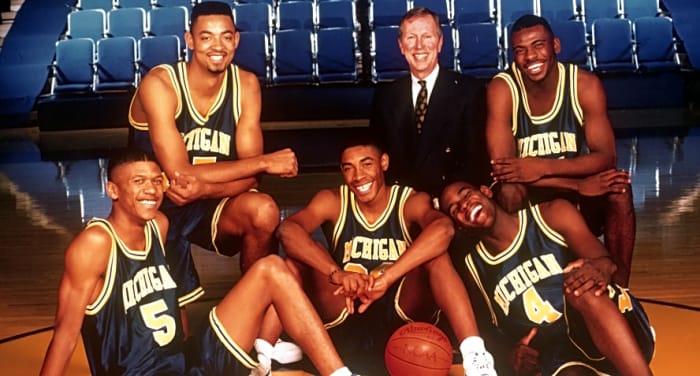
Beginning in Fall 1991, a college basketball phenomenon was born. Five freshmen -- Chris Webber, Jalen Rose, Juwan Howard, Jimmy King, and Ray Jackson -- took the nation by storm while starring for the Michigan Wolverines. The nickname was simple enough; however, the impact these five players collectively had on influencing the style of play and look of college players of the day was truly a cultural revolution on and off the court. The "Fab Five" owned college basketball for two seasons, leading Michigan to the national championship game in 1992 and '93.
Wally McNamee/CORBIS/Getty Images
Beginning in the mid-1980s and running into the early '90s, there was no more stout offensive line unit than "The Hogs" of Washington. Offensive line coach Joe Bugel came up with the name for a unit that wasn't pretty, but certainly effective in pushing opponents around the line of scrimmage, while helping the franchise win Super Bowls XVII, XXII , and XXVI. Among the stars of Washington's original "Hogs" were Jeff Bostic, Russ Grimm, Mark May, Joe Jacoby, George Starke, and Fred Dean, plus tight ends Don Warren and Rick Walker.
19 of 25
7. "Broad Street Bullies"
B Bennett/Getty Images
Much like the aforementioned "Bronx Bombers," the "Broad Street Bullies" nickname surfaced during the 1972-73 season and continues to hover over the franchise. Back then, and much of the 1970s, the Flyers were known for their physical, almost bruising and punishing play, thus leading to the nickname that included Philadelphia's popular thoroughfare. While the Flyers were among the most penalized teams in the NHL at the time, they also reached the Stanley Cup Final four times, winning twice, from 1974-'78.
20 of 25
6. "Phi Slama Jama"
University of Houston
The 1982-83 Houston Cougars remain one of the most dominant teams in college basketball history. Led by Clyde Drexler and Hakeem Olajuwon (then going by Akeem), the Cougars dunked every chance they could and lost their only two regular-season games in December. During that season, Houston sports writer Thomas Bonk coined the nickname "Phi Slama Jama" is describe the team's collective above-the-rim prowess. Of course, all that dunking could not produce a national championship, as the Cougars were upset by North Carolina State, fittingly via Lorenzo Charles' last-second dunk, 54-52 in the title game.
21 of 25
5. "Murderers' Row"
Mark Rucker/Transcendental Graphics/Getty Images
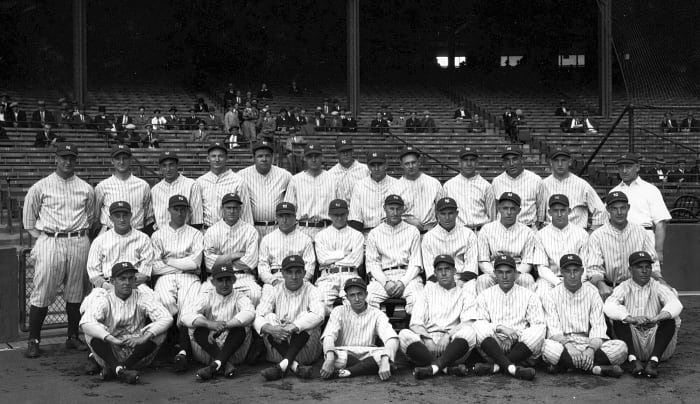
Back in 1927, the New York Yankees turned out a potent lineup that remains one of the most daunting offensive teams of all time. En route to winning the World Series, the Yankees batted .307, clubbed 158 homers, and scored almost 1,00 runs. The "Murderers' Row nickname came because there was no easy out among the team's usual first six batters -- Earle Combs, Mark Koenig, Babe Ruth, Lou Gehrig, Bob Meusel, and Tony Lazzeri -- in the order. That season, Ruth hit 60 home runs, and Gehrig went deep 47 times, while the legendary duo combined for an amazing 338 RBIs.
22 of 25
4. "Monsters of the Midway"
Herb Weitman/Imagn Images
The famed nickname that described the Chicago Bears, pioneers of the NFL and one of the game's most dominant franchises from 1932 to '46, when it won six league championships. The "Monster" portion refers to the Bears' menacing, physical presence on the field, while the "Midway" is in reference to the Midway Plaisance landscape, located on Chicago's South Side. Near the University of Chicago, whose football team, according to lore, was the first to use the nickname. The moniker has been used throughout the Bears' existence.
23 of 25
3. "Purple People Eaters"
Focus on Sport/Getty Images
We've covered some of the most daunting defensive units in the history of the NFL, but when it comes to the ultimate defensive line, in terms of overall domination and imposing opposition fear, it's all about the Minnesota Vikings' "Purple People Eaters." Led by Hall-of-Famers Alan Page and Carl Eller, plus Pro Bowlers Jim Marshall and Gary Larsen, and the dependable Doug Sutherland, the Vikings' defensive front of the late 1960s and well into the '70s helped the franchise reach the Super Bowl four times, while earning the moniker that was also a popular song by Sheb Wooley.
24 of 25
2. "Big Red Machine"
Bettmann/Contributor/Getty Images
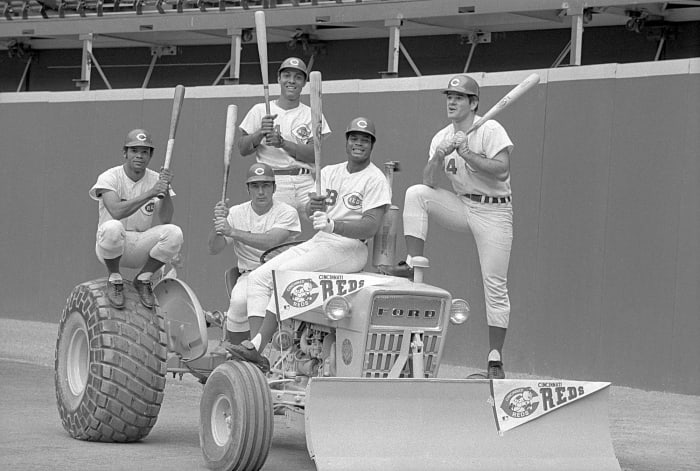
Pete Rose, Johnny Bench, Joe Morgan, Tony Pérez , and Dave Concepción, George Foster, César Gerónimo , and Ken Griffey. Essentially, this was the bulk of the famed Cincinnati Reds' lineup that earned one of the greatest nicknames in sports history. From 1970-'79, mostly coached by the legend Sparky Anderson, the Reds averaged more than 95 victories per season, won six division titles, and reached the World Series four times, winning back-to-back crowns in 1957 and '76.
25 of 25
1. "Four Horseman"
Bettmann/Contributor/ACME B/W PHOTOGRAPH/Getty Images
In 1924, when sportswriter Grantland Rice pronounced Notre Dame's football backfield of Quarterback Harry Stuhldreher, fullback Elmer Layden, and halfbacks Don Miller and Jim Crowley, the "Four Horsemen," as a comparison to the biblical Four Horsemen of the Apocalypse, did he realize it would become one of the most iconic and legendary nicknames in all of sports? The foursome, coached by the legend Knute Rockne, actually played together from 1922-'24. They lost just two games during that stretch and led the Fighting Irish to the 1924 national championship.





 On Facebook
 On Flipboard













 +
+






