
-

-


Follow Us
-

 On Facebook
 On Flipboard


The Colorado Rockies entered the trade deadline buried in last place in the National League West with a 45-68 record, yet the front office chose to hold onto its most valuable trade chip, catcher Hunter Goodman. While the Rockies moved outfielder Brenton Doyle, reliever Antonio Senzatela and reliever Victor Vodnik for modest prospect returns, keeping Goodman off the market represents the single biggest mistake of their deadline. For a rebuilding club with no realistic path to contention in 2026, failing to cash in on a catcher enjoying a historic power surge is a decision that could haunt the organization for years.
A Missed Window at Peak Trade Value
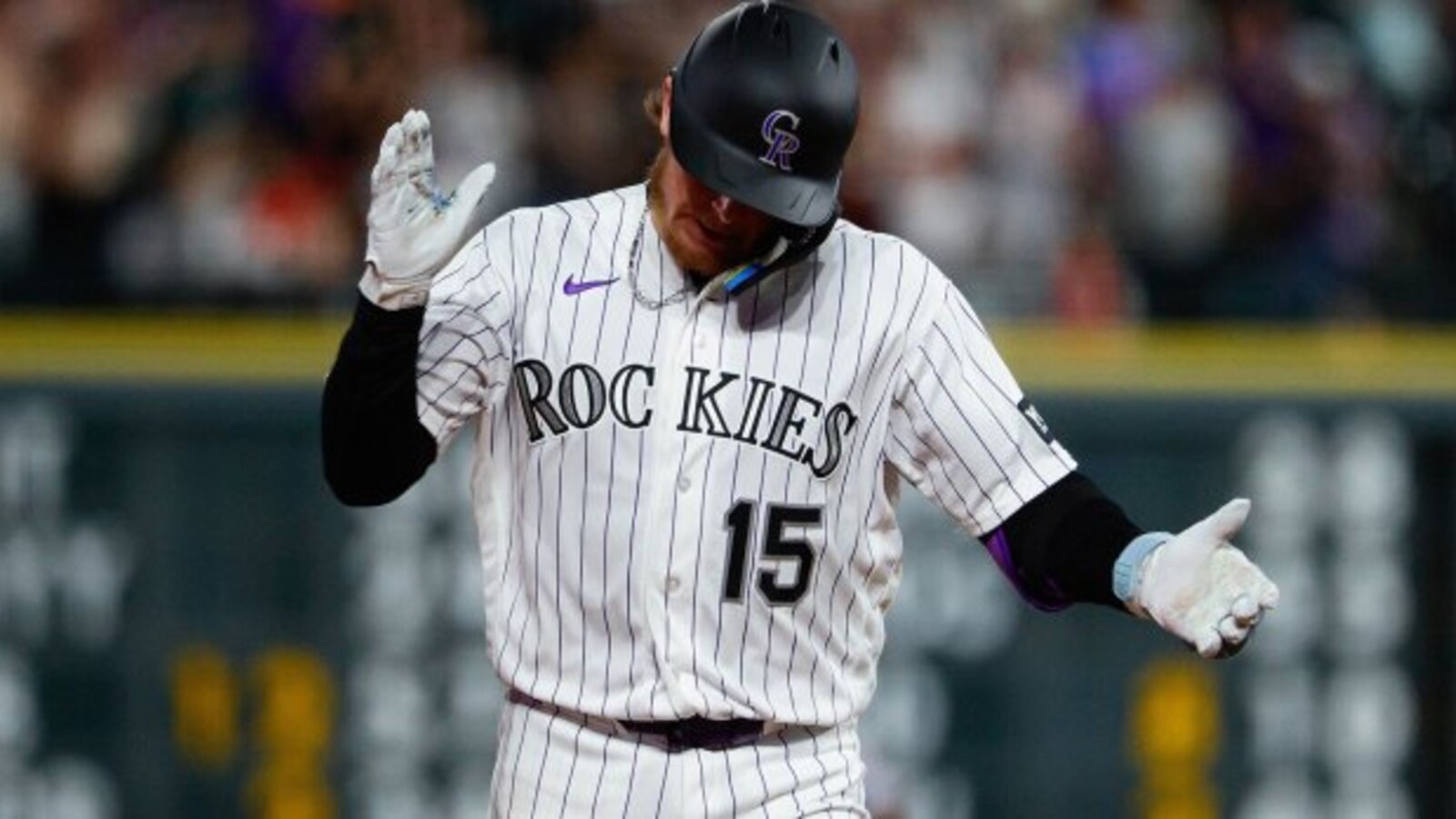
Goodman’s first-half surge was nothing short of historic, as his 27 home runs before the All-Star break topped any National League catcher’s total since Johnny Bench in 1970. He’s now hitting .256 with 33 home runs, 66 RBIs and an .878 OPS on the season, numbers that made him one of the most coveted names on the deadline market. Rival executives view Goodman as a rare two-way asset behind the plate, and his underlying Statcast profile, including a 43.1% hard-hit rate and a .375 wOBA, suggests his production is sustainable rather than a fluke.
Trade value for catchers this productive rarely lasts, and letting this specific window close without extracting a premium prospect package is a costly gamble. Goodman remains under team control only through the 2029 season, meaning the Rockies had years of team control to sell if they wanted to maximize his return, yet they let the deadline pass without engaging seriously.
Ignoring the Roster’s True Timeline
Colorado’s front office has publicly maintained there was no mandate to move anybody at the deadline, but that logic clashes directly with a 156-305 record dating back to Goodman’s 2023 debut. A team that far from contention should be stockpiling young, controllable talent at every position, and Goodman represented the best possible return the roster could generate this summer. Instead, Colorado settled for lower-impact depth pieces in the Doyle, Senzatela and Vodnik deals while holding its most marketable trade chip out of the conversation entirely.
That decision becomes even more curious given Goodman’s home-road splits, as he’s hit just .238 with a .524 SLG at Coors Field compared to .273 with a stronger SLG on the road, a profile that could make some rival executives skeptical of his long-term outlook away from altitude-aided power numbers. If evaluators are already debating how much of his production is ballpark-driven, the Rockies risked seeing his trade value erode further the longer they waited, making this Deadline the ideal moment to sell rather than hold.
A Costly Bet Without an Extension in Place
Compounding the mistake, the Rockies haven’t even initiated contract extension discussions with Goodman despite his openness to a long-term deal. That leaves Colorado in the worst of both worlds: no extension securing his long-term future in Denver, and no trade return to accelerate the rebuild around younger, cost-controlled talent. Holding a 26-year-old catcher with peak trade value on a team going nowhere, without a clear plan to either extend or deal him, is the type of indecision that can set a rebuild back multiple seasons.
Unless the front office moves quickly to either lock up Goodman long-term or maximize his trade value before next summer, this Deadline inaction will likely be remembered as the moment Colorado let its best asset’s value simply erode.
More must-reads:
- Braves report raises questions about Tigers-Dodgers Tarik Skubal deal
- This may be the end for Pirates legend Andrew McCutchen
- The 'Three-time batting champions' quiz
Breaking News
Trending News


Customize Your Newsletter
 +
+




Get the latest news and rumors, customized to your favorite sports and teams. Emailed daily. Always free!
PRIVACY POLICY COOKIE POLICY CONTACT US
ABOUT YARDBARKER TERMS OF SERVICE


By using this site, you agree to our Terms of Service and Privacy Policy.
This site is for entertainment purposes only.
There is no gambling offered on this site.
Gambling Problem? Call 1-800-Gambler.
