x
25 NBA players who were ahead of their time
Focus on Sport via Getty Images

25 NBA players who were ahead of their time

NBA history is full of players who were perfectly of their era, possessing the right skills and attributes to thrive during their time. There are also plenty of guys whose careers might have played out differently had they been born years later. These are some of the biggest examples of players who were ahead of their time.

 
1 of 25

George Mikan

George Mikan
NY Daily News/Getty

Mikan played in an important time for basketball, at the very start of the NBA in the late 1940s and early '50s. He was one of the league's first stars, in some ways so ahead of the rest of the field that the game had to adapt to him. Thanks to his low-post dominance, the league widened the lane and updated its goaltending rules.

 
Wilt Chamberlain
Malcolm Emmons/Imagn

Wilt was similar to Russell with his extraordinary athleticism. Frankly, you don't score 100 points in a game and average 50 over the course of an entire season without being ahead of your time. Like Mikan, Chamberlain also prompted some rule changes, like the NBA widening the lane again.

 
3 of 25

Oscar Robertson

Oscar Robertson
Malcolm Emmons/Imagn

Well-rounded players are valued more now than they have ever been. Back in his era, Oscar was a standout in his regard. He was the first player to average a triple-double over the course of a season, and it would be decades before another player duplicated the feat.

 
4 of 25

Pete Maravich

Pete Maravich
Manny Rubio/Imagn

Maravich set college basketball on fire with his creativity, both with scoring and ball-handling. That carried over to the NBA, too, and he was a stud there, as well, leading the league in scoring in 1977. He could have been a different monster post-three-point-line, since he took long-range shots even without it there.

 
5 of 25

Bill Russell

Bill Russell
Malcolm Emmons/Imagn

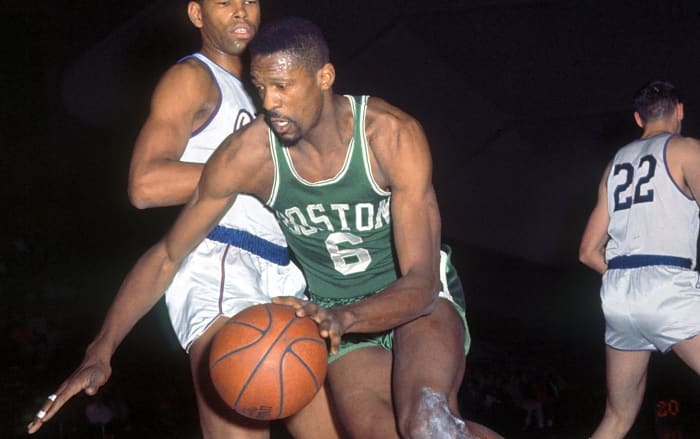
In a time when basketball was in its relative infancy, Russell was a superior athlete and used that to his advantage. This was especially true on the defensive end, where his leaping ability helped him to block shots and grab rebounds more effectively than just about anybody. He illustrated a future where defensive-minded players could be the core of a team.

 
6 of 25

Magic Johnson

Magic Johnson
Malcolm Emmons/Imagn

Johnson was as positionless as any player had been before the modern era. He was 6'9", big enough to be a forward, but instead, he thrived at point guard. He could play any position, though, even suiting up at center when the situation called for it.

 
7 of 25

Jack Sikma

Jack Sikma
Malcolm Emmons/Imagn

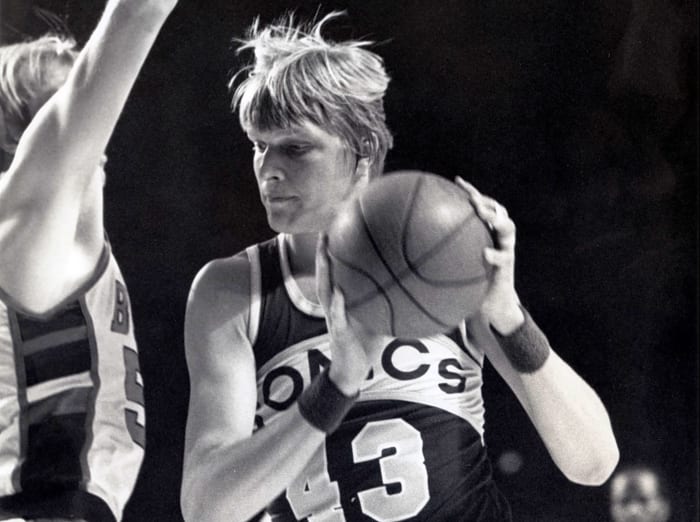
Sikma was one of his era's best bigs, a seven-time All-Star in the late '70s and early '80s. Towards the end of his career, though, there were flashes of what he could have looked like as a modern-style stretch big. He started shooting threes in his final three seasons and hit a respectable 35 percent of them, an aspect of his game that would have been a bigger focus had his career taken place later.

 
8 of 25

Lamar Odom

Lamar Odom
Mark J. Rebilas/Imagn

Odom was never quite an All-Star, but that could have been different had his career started 20 years later. He stood at 6'10" but could handle the ball and initiate offense. As a lengthy, athletic, and relatively positionless player, Odom was built for the modern NBA.

 
9 of 25

Bill Walton

Bill Walton
Malcolm Emmons/Imagn

Walton was a rebounding and shot-blocking threat, two attributes that remain valuable in the contemporary game. Walton, though, was also a superlative passer at the center position. Between that and his defensive abilities, this would make him tough to stop in today's game (even more so if modern medicine were able to keep him on the court more often).

 
10 of 25

Detlef Schrempf

Detlef Schrempf
Focus on Sport/Getty

Schrempf was a fringe All-Star during his career, making the team three times. He would have likely gotten over the hump more often, though, had his shooting been prioritized. He shot 38 percent from long range over the course of his career, but during his peak season in 1996, he took just 2.8 threes a game.

 
11 of 25

Larry Bird

Larry Bird
USA TODAY Sports/Imagn

Larry Legend was a standout shooter from long range, but three-pointers weren't yet a core part of NBA offenses when he played. In 1987, he led the league in three-point attempts per game, with 3. For reference, the three leaders in that category for the 2025 season each took over 10 a night.

 
12 of 25

Julius Erving

Julius Erving
Malcolm Emmons/Imagn

Erving was an uncommonly gifted athlete. There were few, if any, other players in his era who could attack the rim quite like Dr. J. While there's a perception that today's game is more athletic than in years past, Julius is one icon who could hang with the physicality of modern guards.

 
13 of 25

Jerry West

Jerry West
Malcolm Emmons/Imagn

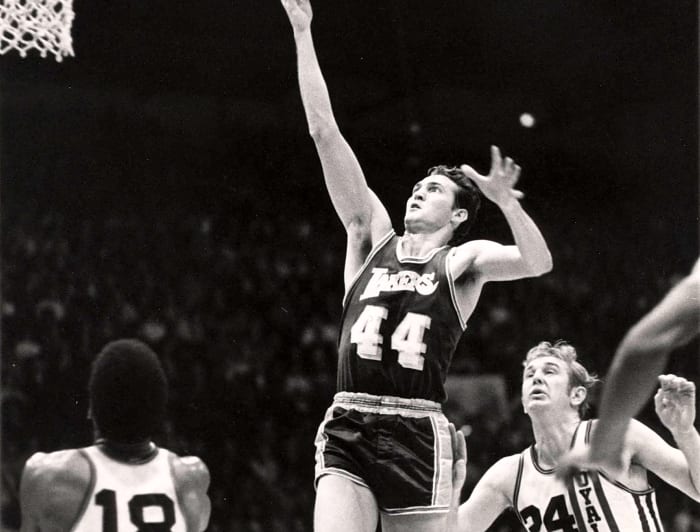
Though he was a point guard, West was an early example of a combo guard. He could run the offense, move off the ball, distribute, and set himself up for scoring opportunities. "The Logo" also did something that will likely never be repeated: He was named the Finals MVP in 1969 despite his team losing the series.

 
14 of 25

Scottie Pippen

Scottie Pippen
USA TODAY Sports/Imagn

While Pippen spent the bulk of his career as MJ's sidekick, he's a Hall-Of-Famer in his own right. This is thanks to his versatility, which would translate tremendously to the modern game. He could guard multiple positions at an All-NBA level and had a versatile offensive game, too.

 
15 of 25

Steve Nash

Steve Nash
Jennifer Stewart/Imagn

Nash's Suns were pioneering with their uptempo brand of basketball. With Nash leading the way, the team essentially established what the modern game would come to look like. While he just missed playing in the modern era, Nash's three-point shooting would have been another weapon, as he hit a good amount of the ones he did take.

 
16 of 25

Reggie Miller

Reggie Miller
RVR Photos/Imagn

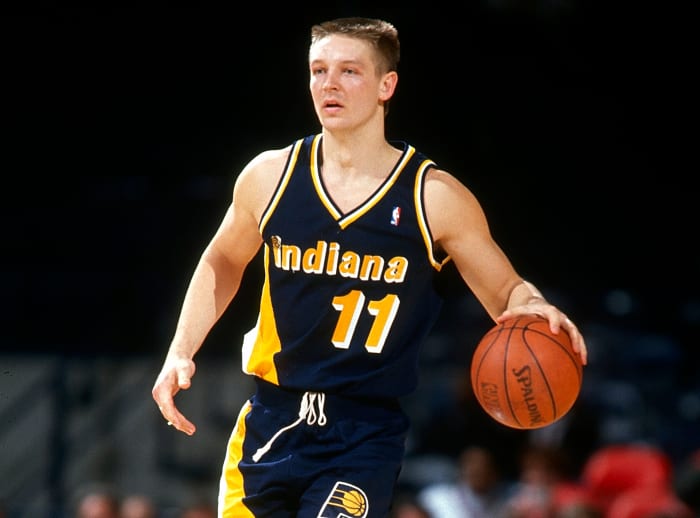
For a while, Miller was the greatest three-point shooter of all time. This was before the NBA valued the long-range shot like it does today. Had Miller been playing in the modern era and taking more threes per game, his impact would have undoubtedly been even greater than it already was.

 
17 of 25

Shawn Marion

Shawn Marion
Kirby Lee/Imagn

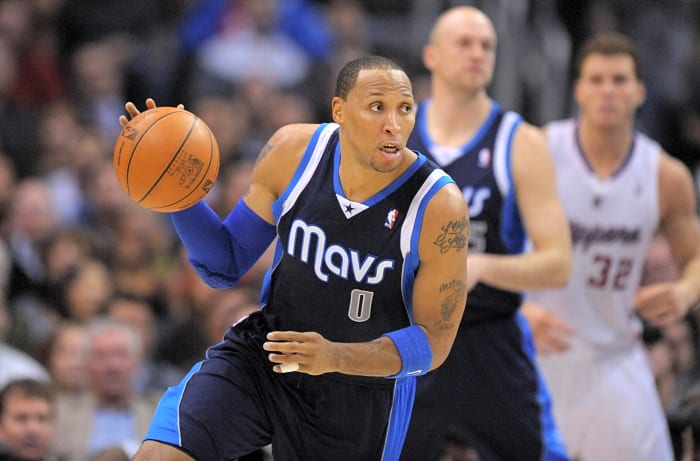
Marion was one of the most versatile players of his era. He could shoot (despite how silly his form looked), rebound, and defend at a high level. At 6'7", he was the perfect height to be able to switch between guarding different positions, and he'd be even better at that today in a league that has more small-ball lineups.

 
18 of 25

Peja Stojaković

Peja Stojaković
Mark J. Rebilas/Imagn

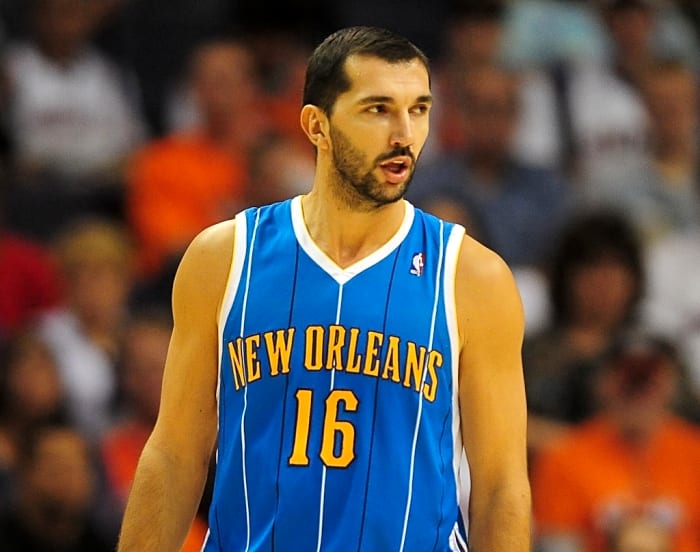
Peja was a volume three-point shooter for his era, routinely averaging over 6 attempts a game. That number wouldn't have even cracked the top 20 for the 2025 season, though. As a shooter in the contemporary game, Stojaković would have been a problem.

 
19 of 25

Hakeem Olajuwon

Hakeem Olajuwon
USA TODAY Sports/Imagn

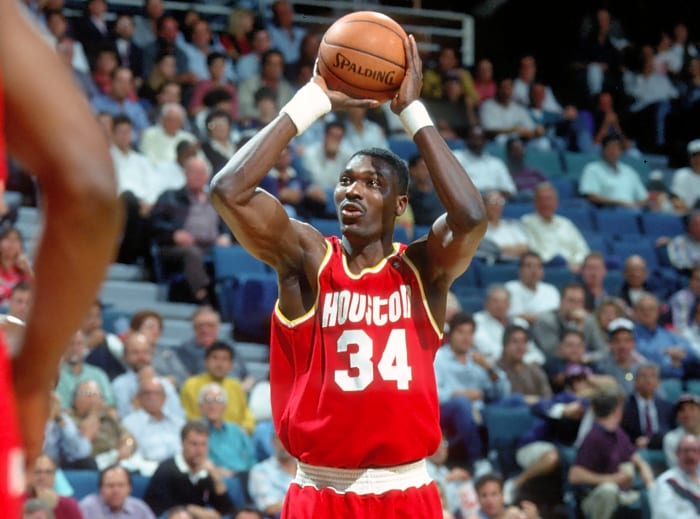
Olajuwon was an imposing threat in the post, but he also played with nimble finesse. He didn't rely on power and had a skill-driven game. His game was one that would have fit in any era, and his combination of athleticism and ability would remain valuable today.

 
20 of 25

Elgin Baylor

Elgin Baylor
Darryl Norenberg/Imagn

NBA basketball wasn't a super above-the-rim game in the '60s. Baylor, though, used his athleticism to attack the rim. Although he was a forward, he relied not on post-ups, but on athletic finishes.

 
21 of 25

Andrei Kirilenko

Andrei Kirilenko
Geoff Burke/Imagn

Kirilenko was perhaps the most versatile player in the league in the 2000s. He's one of the few players to record multiple "five-by-five" games (at least five points, rebounds, assists, steals, and blocks) in his career. He was as positionless as they came, and it's hard to think he wouldn't have been even more valuable today.

 
22 of 25

Rick Barry

Rick Barry
Bettmann Archive/Getty

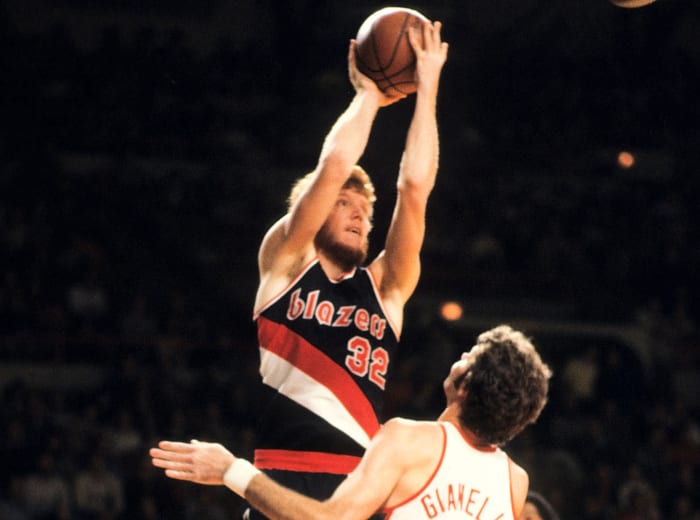
Barry was one of the best scorers of his era, and specifically, one of the best shooters. The NBA only introduced the three-point line in the 1980 season, Barry's final year in the league. He took to it quickly, though, leading the league in attempts per game, and he likely would have embraced the shot further had he played in an era that prioritized it.

 
23 of 25

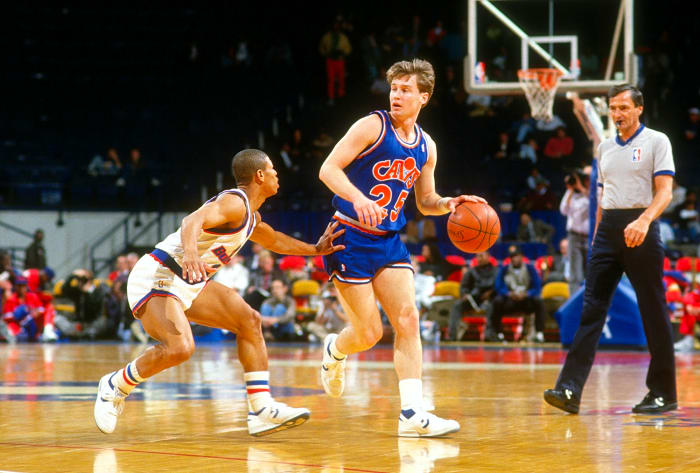
Mark Price

Mark Price
Focus on Sport/Getty

Price might have been a bit short by NBA standards at an even six feet tall, but the skills were there. He was one of the best shooters of his era and an exemplary playmaker, too. He was still an All-Star, but his game could have been even better suited for today.

 
24 of 25

Brent Barry

Brent Barry
Kirby Lee/Imagn

Barry was perhaps the league's best three-point shooter in a time when the shot wasn't nearly as valued as it is today. He shot over 40 percent for his career, including a league-leading 47 percent in 2001. You can't shoot too much in today's game, and Barry would have embraced the opportunity.

 
25 of 25

Dennis Rodman

Dennis Rodman
USA TODAY Sports/Imagn

Rodman was more valuable than just about anybody in terms of defense and rebounding. These skills translate well to the modern game, especially his ability to defend multiple positions in small-ball lineups. He wasn't much of a scorer, but his other abilities could keep him relevant in today's game.

More must-reads:

Customize Your Newsletter

Yardbarker +

Get the latest news and rumors, customized to your favorite sports and teams. Emailed daily. Always free!