
-

-


Follow Us
-

 On Facebook
 On Flipboard

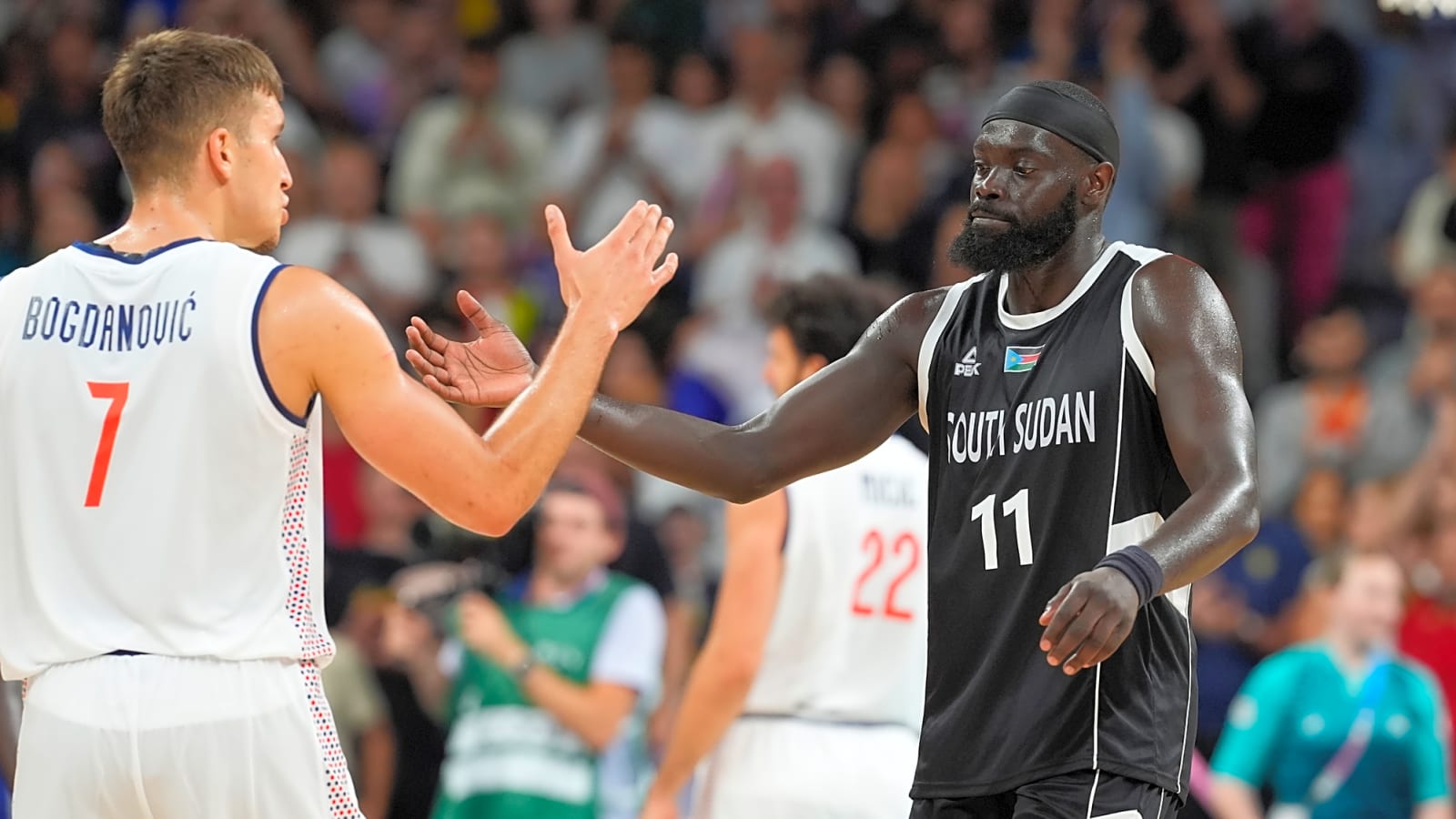
Former Raptor Stanley Johnson recently played in the biggest game of his professional career.
As the Japanese B. League’s Sixth Man of the Year, he helped take his top division team, Nagasaki Velca, to its first-ever championship.
Nagasaki rapidly rose from being a Division 3 expansion team to becoming a top division champion in the short span of five years. The team embraced its outsider identity, proved naysayers wrong, and adopted a slogan familiar to Raptors fans: We The Nagasaki (and We The Velca). Imitation is the highest form of flattery.
A former Raptor playing in Japan and the adoption of the We The North slogan isn’t the only bellwether of Canadian influence in the Land of the Rising Sun.
Canadians have come in dribs and drabs, but high-level Canadians – those who have international basketball recognition – are making a big name for themselves. The Chiba Jets who had a few familiar faces – former Raptor Yuta Watanabe and assistant coach Trevor Gleeson – initially signed Gordie Herbert before the start of the 2024-25 season. After turning the once-lowly Kyoto Hannaryz into a playoff contender in only three seasons, Roy Rana has returned to Japan to turn a semi-finalist into a championship team.
A notable Canadian player in the B. League this year was Marial Shayok, the most accomplished Canadian to have played since Robert Sacre. Yes, this Sacre when the league was still in its infancy.
Shayok was drafted by the Sixers, and played for the 2024 South Sudanese Olympic team that nearly upset Team U.S.A. in the tune-up game. He has played against some of the best players in the world like LeBron James and Nikola Jokić.
“I’ve been here a short time, but it’s all been love,” Shayok said about his time in Japan. “If I’m fortunate enough, I could see myself playing here for a long time because of how comfortable they make me (feel) and how much I enjoy being here.”
Like Nagasaki, Shayok’s former team, Altiri Chiba, rapidly rose up from the third division to the first. Altiri is to the Chiba Jets what the NBA’s Brooklyn Nets are to the Knicks; the new team in town desperately trying to prove itself against its established crosstown rivals.
Though the Altiri were a bottom feeder Division 1 team this past season, the fact that they could afford Shayok in a losing season was one sign of the league’s growth as an attractive basketball market. Shayok had already played for global basketball powerhouses lke Fenerbahce and Maccabi Tel Aviv, as well as several CBA teams.
The B. League not only competes with EuroLeague and China, it expects to become second fiddle to the NBA with plans to send five players to the world’s top league by 2030 (one down as Yuki Kawamura signed a two-way contract). The league will eliminate its system of promotion and relegation next season, and membership into its top division, B. Premier, will be based on two key metrics: a minimum average attendance of 4,000 fans in an arena with a minimum capacity of 5,000, and a specified annual team revenue. And talent, too, is on the rise. This past season, other former NBA players consisted of Jahlil Okafor and Jarrett Culver.
Stanley Johnson hoisted the B1 (DIvision 1) championship trophy right before B. Premier’s inaugural season. Teams will be constrained by salary cap restrictions, and the games will be more laissez-faire with no foreign player restrictions on the court. This means that three imports plus a naturalized or Asian import player could all play at the same time – an attractive proposition for elite players looking for the best competition. The logic behind this rule change is to keep the best possible talent on the floor.
Shayok has credited the B. League for giving him a “peace of mind” and hopes to be back in Japan for next season. He’s had to prove himself in the G League, Turkey, China, and Israel before finding a place he really loved.
This reminded me of what Xavier Rathan-Mayes said about the reality of overseas basketball: “You gotta go through a process of five, six, seven, eight, nine years from a young age to where you get … big money.” He cautioned against the warped perception — in part fueled by the NIL bubble — giving younger players the impression that they can just walk into a coveted gig.
Though Shayok’s future remains uncertain, Rana will be back in Japan, coaching the Nagoya Diamond Dolphins. Former Raptor Stanley Johnson won it all and his championship team adopted a distinctively Toronto slogan.
As Canada’s golden generation makes its mark globally, the growing list of elite Canadians in Japan could soon turn out to be a long one.
More must-reads:
- Jazz lock up Keyonte George with well-deserved contract extension
- NBA insider reveals important Jalen Brunson injury update
- The 'Most lefty-homers in a season' quiz
Breaking News
Trending News






Customize Your Newsletter
 +
+




Get the latest news and rumors, customized to your favorite sports and teams. Emailed daily. Always free!
PRIVACY POLICY COOKIE POLICY CONTACT US
ABOUT YARDBARKER TERMS OF SERVICE


By using this site, you agree to our Terms of Service and Privacy Policy.
This site is for entertainment purposes only.
There is no gambling offered on this site.
Gambling Problem? Call 1-800-Gambler.
