x
The 20 most unexpected breakout seasons in NBA history
Brace Hemmelgarn-Imagn Images

The 20 most unexpected breakout seasons in NBA history

NBA teams tend to know where the value is on their roster. Sometimes, though, a player will come out of nowhere to become a key contributor or even a star. These are the biggest, least expected breakout seasons in league history.

 
1 of 20

Jeremy Lin: 2012

Jeremy Lin: 2012
Brace Hemmelgarn/Imagn

In 2012, Lin was concerned that he was on his way out of the NBA after failing to make an impact in the league. Then, in February 2012, the Knicks were dealing with injuries, which led to more playing time for Lin. He capitalized, delivering clutch moments and high-scoring games, making "Linsanity" one of the year's biggest sports stories.

 
2 of 20

Isaiah Thomas: 2017

Isaiah Thomas: 2017
Mark J. Rebilas/Imagn

Before arriving in Boston, Thomas was a good scorer, but it seemed his ceiling was ultimately limited by his 5'9" frame. In his second season with the Celtics, though, Isaiah had a special campaign, averaging nearly 30 points a game, regularly delivering as one of the league's most clutch players, and even earning some fringe MVP conversation.

 
3 of 20

Zach Randolph: 2004

Zach Randolph: 2004
Kirby Lee/Imagn

Randolph was decent but unremarkable during his first two seasons with the Blazers, averaging about 8 points and 4 rebounds per night in Year 2. Then, he saw increased opportunity in his third season and capitalized in a huge way, raising his averages to 20 points and 10 rebounds. He was a clear Most Improved Player winner, and he went on to put up similar numbers for much of the rest of his career.

 
4 of 20

CJ McCollum: 2016

CJ McCollum: 2016
Soobum Im/Imagn

McCollum has been a 20-a-game scorer for the past decade now, so it's easy to forget where he started in the NBA. In his first two seasons, he had limited opportunities and had scoring averages in the single digits. His third season, though, he broke out, putting up over 20 points a night and winning the Most Improved Player award.

 
5 of 20

Jermaine O'Neal: 2002

Jermaine O'Neal: 2002
Mark J. Rebilas/Imagn

Through his first four seasons in Portland, O'Neal had career averages of 4 points and 3 rebounds in 12 minutes per game. Then he was traded to Indiana and improved, but it was in his second year with his new team that he started fulfilling his potential. In the 2002 season, he averaged about 19 points, 10 rebounds, and 2 blocks per game, earning not just the Most Improved Player award, but his first All-Star selection.

 
6 of 20

Dana Barros: 1995

Dana Barros: 1995
Focus on Sport/Getty

Barros was decent for his 14-year career, but for one season, in 1995, he was an All-Star. While he was usually a backup or otherwise more of an ancillary piece, Barros took the reins in '95 and averaged about 20 points and 8 assists per game. He was a sniper from beyond the arc, too, shooting over 46 percent from three-point range.

 
7 of 20

Fred VanVleet: 2020

Fred VanVleet: 2020
Sergio Estrada/Imagn

With increased opportunity, VanVleet gradually improved and became a bigger contributor over his first three seasons in Toronto. He started to show some star potential in the 2020 campaign, when he became a full-time starter for the Raptors. He averaged just under 18 points and 7 assists per game that year, which was a long way from going undrafted just a few years prior.

 
8 of 20

Pascal Siakam: 2019

Pascal Siakam: 2019
Kevin Sousa/Imagn

There must have been something in the water in Toronto, as at the same time as VanVleet's breakout, Siakam was having one of his own. In 2019, Pascal more than doubled his scoring average, going from 7 points the season prior to just under 17. He upped his performance even more that postseason as a key contributor to the Raptors' championship run.

 
9 of 20

Gilbert Arenas: 2003

Gilbert Arenas: 2003
Gary A. Vasquez/Imagn

Arenas was an early second-round pick in the 2001 draft, and in his rookie year, he showed some offensive potential by averaging 10 points a game. He then upgraded the next season, becoming a full-time starter and averaging about 18 points and six assists per game. This wasn't the only major between-seasons leap of his career: From 2004 to 2006, his per-game scoring rose from 19 to 25 to 29.

 
10 of 20

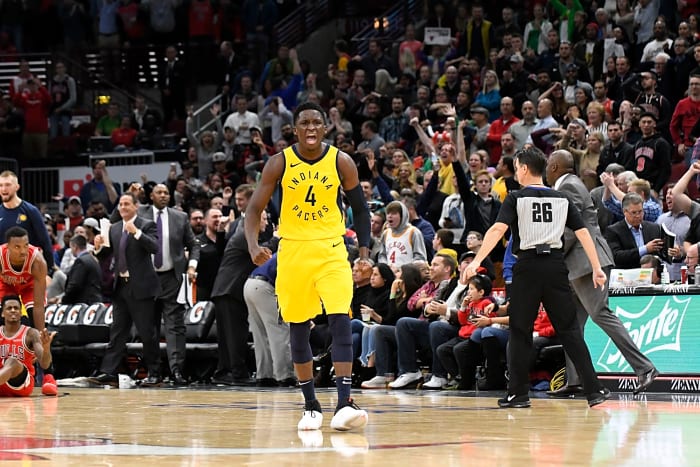
Victor Oladipo: 2018

Victor Oladipo: 2018
David Banks/Imagn

Oladipo experienced a nice statistical bump between his rookie and sophomore years, but after that, his scoring numbers fell into a slight decline. Once he was traded to the Pacers for his fifth season, though, he took off, both as a scorer and defender. He averaged 23 points and a league-leading 2.4 steals per game, making an All-Defense team, an All-NBA team, earning an All-Star selection, and being named the Most Improved Player.

 
11 of 20

Jimmy Butler: 2015

Jimmy Butler: 2015
Mike DiNovo/Imagn

Butler established himself as a top-tier defender early in his career, making an All-Defense team in his third season. In his fourth year, 2015, though, he became a more pronounced offensive threat, upping his scoring average from 13 to 20 points per game while maintaining his lockdown defense. It was a big enough glow-up to net Butler the Most Improved Player award.

 
12 of 20

Lauri Markkanen: 2023

Lauri Markkanen: 2023
Trevor Ruszkowski/Imagn

Over his first five years in the league, Markkanen showed, and sometimes capitalized on, potential, but he seemed to have peaked early during his second season. Once he relocated to Utah, though, he was handed the keys to the offense, and he increased his scoring output from 15 to 26 points per game. He was a clear Most Improved Player selection and has been an All-Star-caliber player ever since.

 
13 of 20

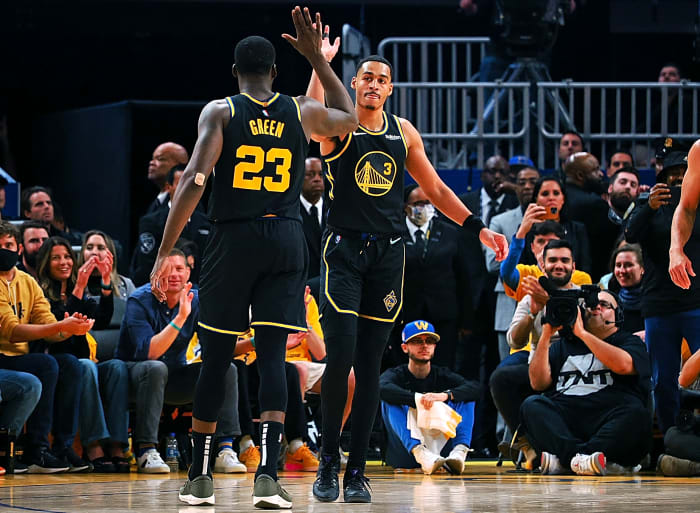
Jordan Poole: 2022

Jordan Poole: 2022
Kelley L Cox/Imagn

Poole started his career as a productive supporting piece, but in his third season, he moved into more of a featured role. He bumped his scoring average from the low to the high teens as a starting guard alongside Stephen Curry. He was clutch in the postseason, too, delivering some big scoring nights en route to a championship.

 
14 of 20

Dejounte Murray: 2022

Dejounte Murray: 2022
Soobum Im/Imagn

Murray's reputation early on was built on defense, making an All-Defense team in his second year. Seasons later, though, he started to flourish as an offensive star, too, putting up over 20 a game for the first time in 2022. That was along with 9 assists and a league-best two steals per game, establishing Murray as a significant all-around threat.

 
15 of 20

Shai Gilgeous-Alexander: 2023

Shai Gilgeous-Alexander: 2023
Alonzo Adams/Imagn

SGA's development after being dealt by the Clippers as part of the Paul George trade caused many retrospective re-evaluations of the deal. He blossomed into a star in OKC, especially starting in 2023, when he reached the point where he was a regular in MVP conversations, averaging 31 points per game. He did end up actually winning the award for the first time in 2025.

 
16 of 20

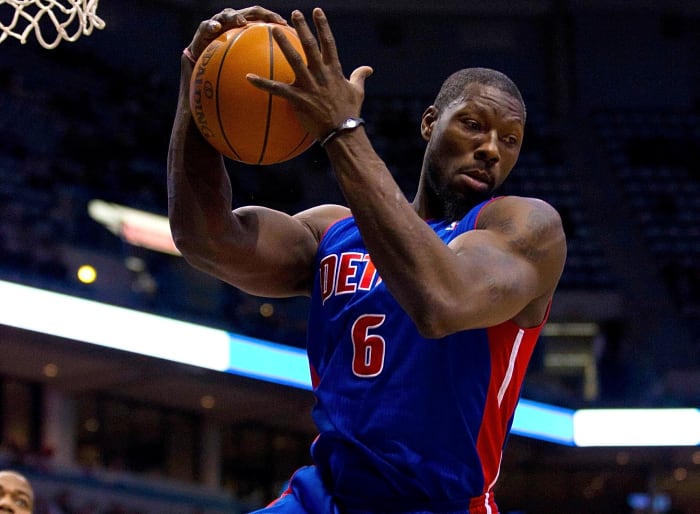
Ben Wallace: 2002

Ben Wallace: 2002
Jeff Hanisch/Imagn

Wallace carved out a role for himself as an elite defensive specialist, leading the league in rebounds and blocks per game in the 2022 campaign, his sixth year in the league. He was named the Defensive Player Of The Year, too, kicking off a stretch where he'd win the award four times in five seasons. The Pistons were one of the better teams of the 2000s, and Wallace had a lot to do with that.

 
17 of 20

Draymond Green: 2015

Draymond Green: 2015
Sergio Estrada/Imagn

Considering Draymond was a second-round pick, his first two years in the league were pretty good. Then, his third season was great regardless of his origins: He just barely missed out on being named Defensive Player Of The Year. His defense and his playmaking ultimately helped the Warriors win their first title in 2015 and launch the NBA's most prosperous modern franchise.

 
18 of 20

Chauncey Billups: 2003

Chauncey Billups: 2003
Julian H. Gonzalez/Imagn

After five seasons, it seems Billups was fizzling out, or perhaps running in place. In his first season in Detroit, though, he shouldered more responsibility and scored 16 points per game to go along with 4 assists. He helped elevate the team to playoff contention, later helping win a title and earning Finals MVP honors the next season.

 
19 of 20

Peja Stojaković: 2001

Peja Stojaković: 2001
Jed Jacobsohn/Getty

Peja was a valuable sixth man for two years with the Sacramento Kings. In his third season, he got the starting nod and immediately broke out as one of the league's most potent offensive threats, scoring 20 points per game as one of the NBA's most accurate three-point shooters. The year put him on the map, and he had his first All-Star selection the next season.

 
20 of 20

Steve Nash: 2001

Steve Nash: 2001
RVR Photos/Imagn

Nash was a decent but unremarkable option at point guard over his first four seasons. That started to change in 2001, when he was given more responsibility in Dallas and delivered with averages of 15 points and 7 assists per game. It was the start of his journey to winning back-to-back MVP awards just a few years later.

Derrick Rossignol

Derrick Rossignol has written about music, sports, video games, pop culture, technology, and other topics for publications like The Boston Globe, The Guardian, Nintendo Life, The AV Club, and more. He also takes photos and does some other stuff. 

More must-reads:

Customize Your Newsletter

Yardbarker +

Get the latest news and rumors, customized to your favorite sports and teams. Emailed daily. Always free!