
-

-


Follow Us
-

 On Facebook
 On Flipboard
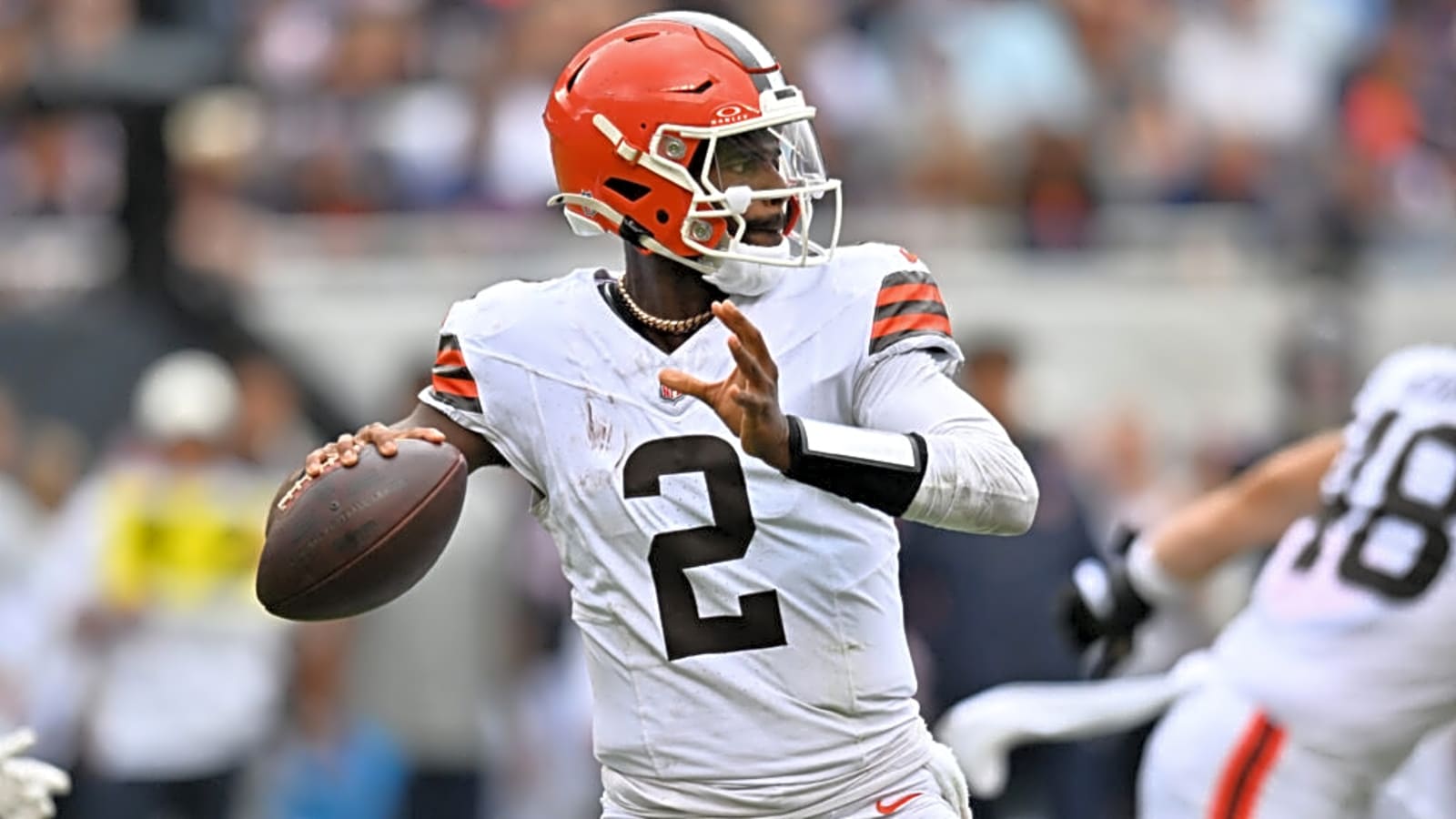
Cleveland Browns quarterback Shedeur Sanders made his preseason debut against the Chicago Bears and immediately showed flashes of the talent that initially made him a high-profile draft prospect.
But he also displayed why he can be so frustrating under center.
Entering the game in the third quarter after Deshaun Watson handled the first half, Sanders completed a pair of impressive downfield throws, including a 35-yard strike to Luke Floriea and a 24-yard connection with Gage Larvadain. Those plays demonstrated his arm talent and ability to stretch the field.
Yet the lasting image from his appearance came on a subsequent attempt that sailed into the arms of Bears defensive back Beanie Bishop Jr., producing a viral interception that ended Sanders’ night.
Sanders himself took responsibility afterward, explaining that he had made the correct read but simply failed to execute the throw cleanly. The ball slipped, he said, and the mistake frustrated him because the decision itself had been sound.
Head coach Todd Monken, reviewing the sequence, offered a measured assessment that centered on process rather than pure outcome.
“I’d love to see if there was a little push that got in his face. Looked like we had a clear out with a dagger concept and looked like he was open. Looked like the ball sailed a little bit on him,” Monken said. “The positive thing is they were both in the right place. I believe that. Again, I’ll have to see the film, but I believe they were in the right spot, both interceptions.”
Monken’s comments revealed a coach prioritizing fundamentals and alignment over a single incomplete result. By noting that both the quarterback and the intended receiver appeared to be where the play design called for them to be, he framed the interception as a mechanical issue rather than a conceptual breakdown.
The possibility of pressure affecting the throw further softened the criticism, suggesting external factors may have contributed to the ball’s trajectory. In the high-stakes environment of an NFL quarterback competition, such nuance matters.
Sanders is still competing for the starting job alongside Watson, and the coaching staff has already signaled that the evaluation process will continue through the next preseason contest against the Buffalo Bills, where Sanders is scheduled to start and play the first half.
What stood out most in Sanders’ postgame remarks was his own perspective on success. He downplayed the highlight-reel completions and instead celebrated the mental side of the game—reading coverages, processing information, and operating within the offense’s structure.
In his view, the most satisfying throw of the evening was a simple checkdown to a running back in the red zone under pressure from a zero-coverage blitz. That emphasis on decision-making and timing aligns closely with Monken’s focus on correct placement and concept execution.
For a young quarterback still adapting to the speed and complexity of the professional level, those shared priorities may prove more valuable than any single highlight or lowlight from a preseason outing.
More must-reads:
- Preseason loss to Bears confirms bleak Browns QB outlook
- Rookie QB Ty Simpson shines in Rams preseason debut
- The '2008 Week 1 starting QBs' quiz
Breaking News
Trending News




Customize Your Newsletter
 +
+




Get the latest news and rumors, customized to your favorite sports and teams. Emailed daily. Always free!
PRIVACY POLICY COOKIE POLICY CONTACT US
ABOUT YARDBARKER TERMS OF SERVICE


By using this site, you agree to our Terms of Service and Privacy Policy.
This site is for entertainment purposes only.
There is no gambling offered on this site.
Gambling Problem? Call 1-800-Gambler.
