
-

-


Follow Us
-

 On Facebook
 On Flipboard

Momentum can make a front office more aggressive than people expect, and this seems like the right starting point for New England. A Super Bowl run changed the perception of the roster, but it didn’t erase the weak spots that were highlighted when the stakes were highest. Mike Reiss reported that the Patriots are expected to explore using some of their Day 3 picks to move around the draft board, which is significant because New England has plenty of resources.
The team holds a total of 11 picks, starting at No. 31, with eight selections on Day 3, and that setup allows a team to approach the draft with a more proactive mindset.
Another important aspect of the situation is Eliot Wolf’s public statement that the organization still wants Christian Gonzalez to remain with the Patriots, and it indicates how the front office views its core players.
The Patriots are not entering this draft looking to replace their best young cornerback, but they aim to build around players they already trust, and it shapes their drafting strategy, as they need to draft like a team that is trying to close a small gap.
That’s why bold predictions for this class are less about random surprises and more about how the Patriots are likely to leverage their position.
They will trade up on Day 1

Not by ten spots or for a dramatic headline, but enough to get ahead of a cluster of teams targeting the same type of player.
Everything about New England’s draft board suggests this direction, and the Patriots pick near the end of the first round, where the board often begins to flatten, making a small climb significantly more impactful than fans may realize.
Reiss reported that league scouts do not view this year’s Day 3 talent as strong as last year’s, which creates an environment that encourages a team with extra fourth- and sixth-round picks to consolidate and move higher up the board, and is particularly relevant for a roster like theirs, where the first two days of the draft hold much more importance than the later picks.
A move up would also align with the team’s offseason strategy, as the Patriots have not behaved like a team satisfied with their previous accomplishments, but they have acted like a team that believes another push is warranted.
Draft weekend should reflect this approach, and while sitting at No. 31 and letting the draft come to them is a defensible strategy, it is not the most likely scenario for a franchise with such late-round flexibility and a clear need for one or two immediate contributors.
The more intriguing question is what type of player would drive that move.
A cornerback might seem like the obvious choice, especially given the contract discussions surrounding Gonzalez, which have led to increased chatter about the position. However, this doesn’t appear to be the actual target.
Wolf’s public stance on Gonzalez indicates stability, not insecurity, and there is no compelling reason for the Patriots to expend assets to move up for a defensive back when their roster and management comments suggest that other areas require more attention.
A more plausible scenario involves trading up for a trench player or a receiver that the staff views as more than just a WR2, and this is where the roster still has the clearest opportunity for improvement, particularly around quarterback Drake Maye.
The Patriots will wait until Day 2 for a pass catcher
There will be pressure to select a pass catcher in Round 1, especially since surrounding Maye with talent is the easiest narrative to sell, but that doesn’t mean it will happen.
New England’s offense does need another reliable option in the passing game, which is evident, and the mistake would be to assume this need must be addressed before other priorities.
There is a significant difference between recognizing that the Patriots need a pass catcher and insisting they need one at the 31st pick, and the draft class and the team’s current circumstances do not necessitate such urgency.
Reiss’ reporting offers further insights, as Wolf indicated that the receiver and tight end groups are relatively strong compared to recent years, while also emphasizing that the offensive and defensive lines are especially robust in this draft, and it suggests a sensible approach for the draft strategy: prioritize the more valuable trench positions with the first pick and then look for a receiver or tight end on Day 2, where there may still be enough quality players available to justify the wait.
The strategy is far more effective than forcing a first-round pick for a skill position just because the team needs one, and the tight end position deserves serious consideration in this context as well. Reiss also noted that Vrabel hopes to add a tight end in the draft and mentioned the team’s visit with Georgia’s Oscar Delp, and it should not be overlooked.
Hunter Henry is entering the final year of his contract, and the team’s tight end room is not in a position to be neglected. Selecting a tight end on Day 2, along with an opening-round lineman, would effectively enhance this roster, and this combination would support Maye without turning the draft into solely a debate about wide receivers.
While a receiver still seems more likely than a tight end if the board gravitates that way, the overarching point remains.
New England can effectively improve its passing game without feeling compelled to address this immediate need, particularly when the board may not offer the right fit, and it shows how successful draft rooms typically navigate such classes: they do not prioritize need simply because fans are eager for a solution, as they focus on drafting in alignment with the board’s strength.
A quarterback will be added late
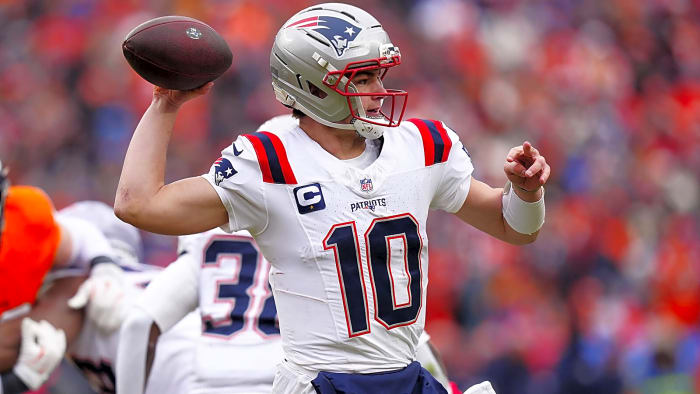
The Patriots plan to add a third quarterback, either through the draft or undrafted free agency, after releasing Josh Dobbs, and that decision will not come early enough to alter their roster significantly, but it will be late enough to change the depth chart.
The team has conducted visits with several quarterbacks, including Jalon Daniels, Behren Morton, and Joe Fagnano, and this indicates two things: First, the Patriots are still considering their options behind starting quarterback Maye.
Second, the coaching staff does not view this as an urgent concern that needs to be resolved in the early rounds of the draft.
Given the broader context of the draft class, it makes sense for a team with 11 picks and an established franchise quarterback to avoid using a high draft pick on a developmental quarterback. Instead, they should look to fill out their roster effectively, and with 11 picks available, it would be imprudent to leave the quarterback position untouched, especially if there is a suitable option in the later rounds.
Adding a quarterback in the later rounds is a practical move for roster management, as it may not generate headlines, but it contributes to building a healthier and younger quarterback room over time.
Overall, this draft should appear more aggressive than what might be expected from the Patriots’ position at 31.
The extra late-round picks will be utilized effectively, aligning with the team’s needs for improvement, and the coaching staff has already indicated their priorities, leading to a clearer draft strategy: move up slightly and use the later rounds to enhance depth, which includes selecting a third quarterback, making sense based on the current roster and aligns with how the organization has communicated its draft strategy over the past two months.
More must-reads:
- Patriots QB Drake Maye has one word to describe Super Bowl loss
- Dianna Russini speaks out amid allegations while confirming resignation in wake of Mike Vrabel controversy
- The 'Three-point leaders by NBA season' quiz
Breaking News
Trending News



Customize Your Newsletter
 +
+




Get the latest news and rumors, customized to your favorite sports and teams. Emailed daily. Always free!
PRIVACY POLICY COOKIE POLICY CONTACT US
ABOUT YARDBARKER TERMS OF SERVICE


By using this site, you agree to our Terms of Service and Privacy Policy.
This site is for entertainment purposes only.
There is no gambling offered on this site.
Gambling Problem? Call 1-800-Gambler.
