
-

-


Follow Us
-

 On Facebook
 On Flipboard


Jeremy Chinn played virtually every defensive snap for most of the 2025 season. He racked up tackles, set the tone from the back end, and graded out as one of the better safeties on the Las Vegas roster. Then the 2025 season ended, and instead of extension talks, his name started showing up in a different kind of conversation. Not about what he’d done. About what he was worth to someone else. A two-year contract worth just over $16 million suddenly looked less like commitment and more like a price tag.
The Season That Should Have Settled It
Chinn posted 114 tackles for the Raiders in 2025, following a high‑volume, triple‑digit tackle season the year before in Washington. That kind of back-to-back production from a safety usually earns a long-term home. His PFF overall defensive grade hit 67.7, and public charting placed him in the league’s middle-to-upper tier among qualifying safeties. He earned more than $12 million guaranteed on that deal. By every reasonable measure, he outplayed a mid-tier contract. And yet the Raiders’ front office apparently saw something besides a cornerstone.
The Youth Movement Nobody Warned Him About

Most fans assumed a productive starter on a fair deal would stick around. That assumption cracked the moment Las Vegas started pouring draft capital and developmental snaps into younger defensive backs. The Raiders entered the 2026 offseason with significant cap space and a long list of pending free agents. That volume of roster turnover doesn’t happen around players a team considers untouchable. Chinn’s position group filled up behind him while he was still working back from a late-season stint on injured reserve.
The Real Meaning of “Trade Candidate”
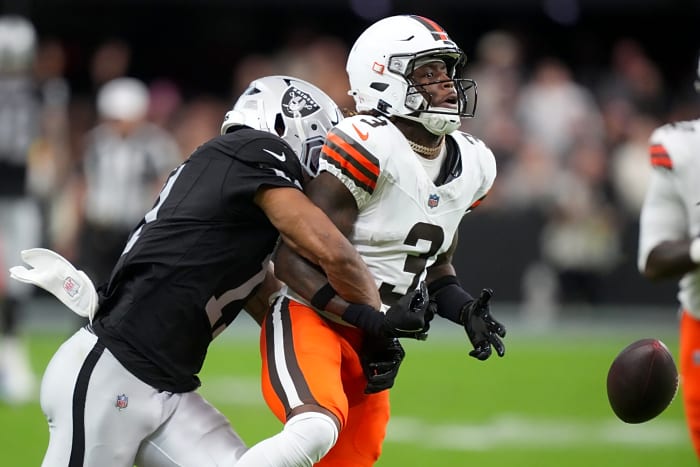
Around the league, Chinn’s name keeps appearing in the same place: on analyst and insider lists of players the Raiders could realistically move. PFF featured him among 15 trade candidates heading into 2026 training camps. Heavy called him a “sneaky-good trade chip.” Just Blog Baby flagged his contract as movable. The Raiders haven’t publicly placed Chinn on the trade block. They don’t have to. When multiple independent outlets circle the same starter, the organization has effectively listed him as an option. His 2026 base salary sits in a range most teams can absorb. Affordable enough to attract buyers.
How the Cap Math Turns a Starter Into a Chip

The 2026 NFL salary cap climbed past the $300 million mark. Against that ceiling, Chinn’s base salary is roughly a small single‑digit percentage of a team’s total budget. That makes him a plug-and-play upgrade for any safety-needy roster without blowing up their books. Meanwhile, the Raiders have already committed premium dollars at quarterback and offensive line. Priorities crystallize through spending. Las Vegas chose to invest big money there. Chinn’s position got youth and volume instead of long-term guarantees.
The Numbers Behind the Paradox

Consider this: Chinn logged 114 tackles, played heavy snaps and posted a 67.7 overall PFF grade in 2025 while serving as one of the Raiders’ most active defenders. He was, by usage and impact, one of the main pieces holding the back end together. That level of availability and production from a safety usually commands extension conversations, not trade speculation. In a unit still trying to turn a corner, trading one of the few steady pieces feels like pulling a load-bearing wall out of a house that hasn’t finished construction yet.
Who Loses If Chinn Gets Moved

The Raiders’ secondary doesn’t just lose a tackler. It loses the player through whom coverage calls and alignment checks ran for an entire season. Younger defensive backs drafted to replace that kind of presence haven’t proven they can handle the communication load. The ripple extends beyond Las Vegas, too. Teams with questions at safety have already been mentioned as potential landing spots for a versatile starter on a manageable deal. If Chinn moves, the Raiders convert experience into draft picks while handing a competitor a proven starter on a contract that fits under a rising cap.
The New Rule Nobody Voted On
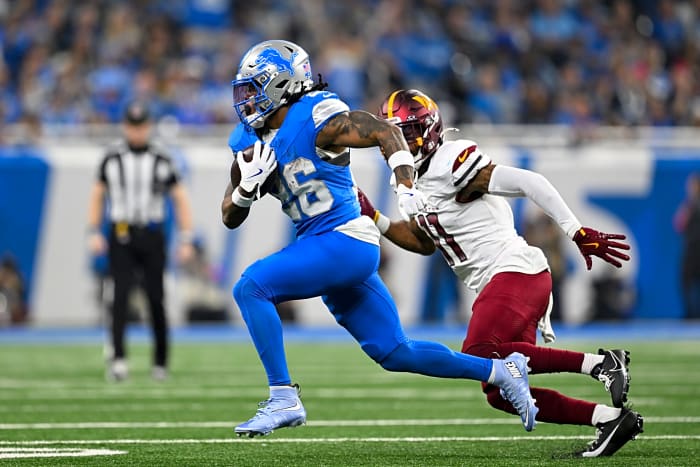
Once you see how contract timing, cap allocation, and a youth-heavy secondary overhaul intersect, Chinn’s trade rumors look less like disrespect and more like a predictable outcome. The old belief was simple: play well on a fair contract, and your team builds around you. That belief is dead. The new reality treats even ascending mid-tier starters as convertible assets the moment positional depth and draft capital align. Recent multi‑year deals for off‑ball defenders show where guaranteed money flows now. Chinn’s position group didn’t make the cut.
A Contract Year With No Safety Net
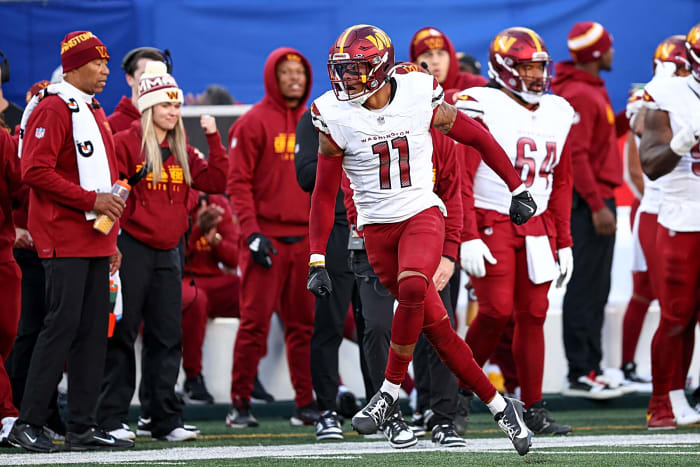
Chinn enters 2026 on the final year of his deal with zero long-term security. If the Raiders keep him, he plays for a team openly evaluating his replacement. If they trade him, he lands somewhere mid-cycle and tries to earn a third contract with a new scheme and new teammates. Either path punishes a player who did exactly what was asked. Carolina drafted him. Washington signed him. Las Vegas paid him. None of them kept him past the first chance to move on.
What This Means for Every Starter on a “Fair” Deal

Chinn’s situation is like a house a family still lives in but quietly has on Zillow as “accepting offers.” No sign on the lawn, but the listing is real. Every mid-tier veteran watching this saga now understands the math: outperform your deal and you become more tradeable, not less. The Raiders haven’t publicly announced Chinn is available. They don’t need to. His value, his contract year, and their roster model already did the announcing. The only open question is which team calls first and what Las Vegas considers enough to pick up the phone. If you were running the Raiders, would you cash in Chinn’s value now or ride out his contract and try to extend him?
More must-reads:
- A.J. Brown makes wild claim about his first Patriots practice
- Aaron Donald has one condition to possibly unretire, join Myles Garrett with Rams
- The '20-point Stanley Cup Playoffs' quiz
Breaking News
Trending News




Customize Your Newsletter
 +
+




Get the latest news and rumors, customized to your favorite sports and teams. Emailed daily. Always free!
PRIVACY POLICY COOKIE POLICY CONTACT US
ABOUT YARDBARKER TERMS OF SERVICE


By using this site, you agree to our Terms of Service and Privacy Policy.
This site is for entertainment purposes only.
There is no gambling offered on this site.
Gambling Problem? Call 1-800-Gambler.
