
-

-


Follow Us
-

 On Facebook
 On Flipboard

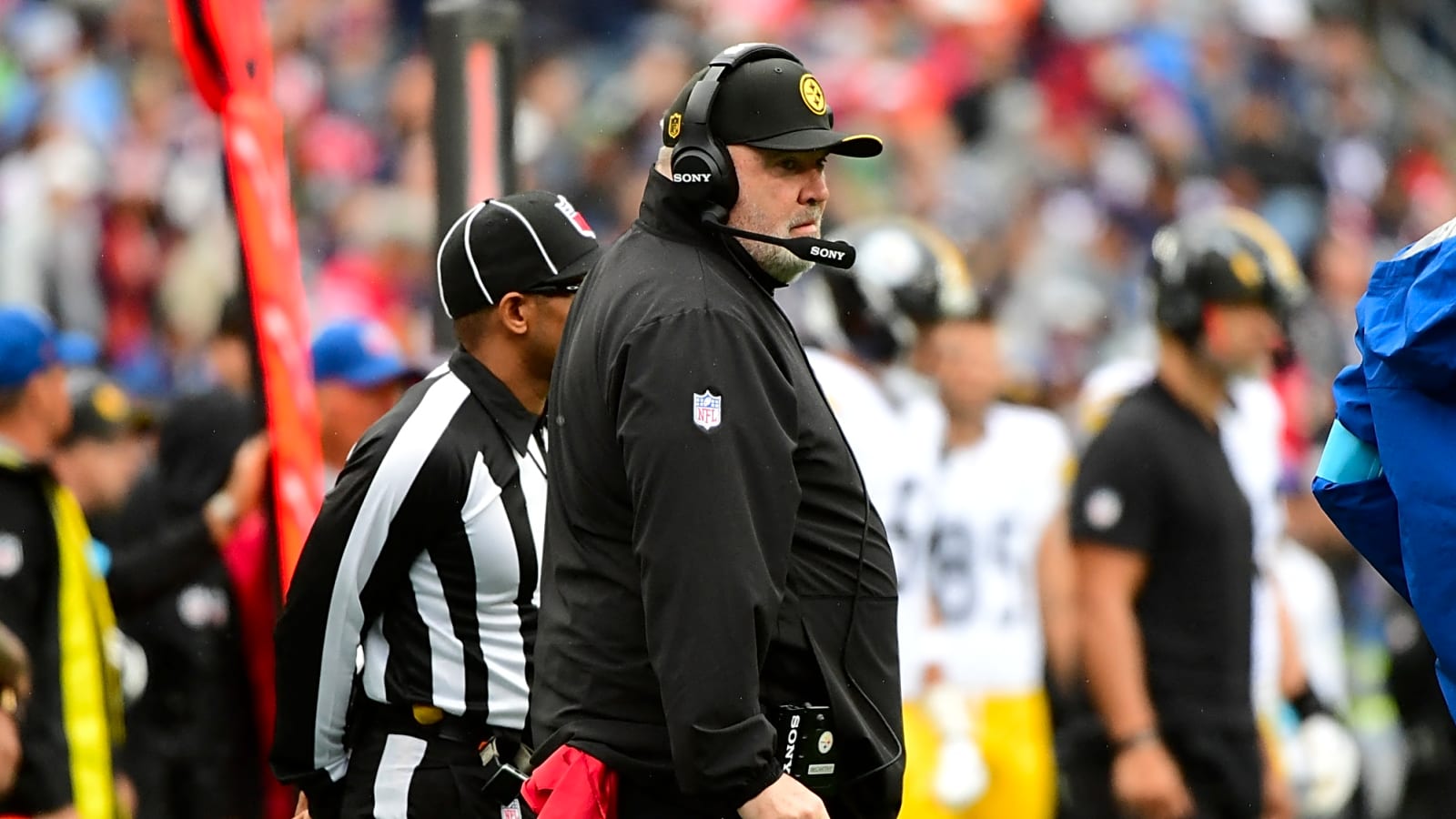
The Pittsburgh Steelers didn’t need to spend much time searching for the biggest problems from Sunday’s 20-3 loss to the New England Patriots. The offense scored only three points, punted eight times and converted just two of 12 third-down opportunities despite possessing the football for nearly 33 minutes.
What may be more important is how Mike McCarthy and his staff plan to respond. Rather than adding more to an offense still finding its footing, the Steelers appear ready to simplify things as they prepare for Sunday’s AFC North matchup with the Cincinnati Bengals.
McCarthy acknowledged Monday that Pittsburgh may have carried too much into the New England game plan. His preferred philosophy is what he called “less volume, more creativity,” but the Steelers were not as clean during the week of practice as he wanted. Looking back, McCarthy felt that should have been a warning sign.
There is an obvious temptation to lean heavily on Aaron Rodgers‘ experience. Few quarterbacks have seen more defensive looks or handled more responsibility at the line of scrimmage, and McCarthy admitted that Rodgers’ knowledge may have contributed to the amount Pittsburgh tried to carry into Week 2. The problem is that the quarterback is only one part of the operation.
Protection problems begin up front
The most damaging issues against New England came in pass protection. Rodgers was sacked four times for 43 yards, and one of those sacks produced the fourth-quarter fumble that New England returned for a touchdown. What had been a 13-3 game suddenly became a 17-point deficit.
Another fumble resulted in a 29-yard loss, leaving the Steelers facing an almost unbelievable 4th-and-43.
McCarthy described the Steelers as a “protection-first” offense and made it clear that Pittsburgh did not live up to that standard. Offensive coordinator Brian Angelichio did not point toward one particular breakdown, either. In his assessment, the problems moved around, making consistency and communication the larger concern rather than one individual player or one recurring mistake.
Some of that can be traced back to continuity. Pittsburgh spent much of the offseason and training camp working through different offensive line combinations, and McCarthy noted that the current group simply hasn’t accumulated a large number of snaps together. His solution is not necessarily another round of personnel changes, but more repetitions within the concepts the Steelers intend to rely upon.
That becomes especially important this week with Cincinnati defensive tackle Dexter Lawrence waiting on the other side. McCarthy is very familiar with Lawrence from his time in Dallas and called him a player who demands attention every week. Pittsburgh’s interior offensive line will have to be considerably sharper than it was in Foxborough.
The offense has yet to find a rhythm
Protection is only part of the issue. The Steelers have also struggled to build any sustained offensive rhythm through the first two games. Pittsburgh managed 235 total yards against New England and averaged just 3.5 yards per play. Even when drives started to develop, they rarely continued long enough to put pressure on the Patriots defense.
Angelichio believes that problem carries directly into the running game. Pittsburgh rushed for 91 yards and averaged four yards per attempt, but the ground attack never became something the offense could consistently lean on. He explained that the Steelers have to begin stacking successful plays before the run game, and eventually the explosive plays, can start showing up more frequently.
That has also limited what Pittsburgh has been able to get from DK Metcalf. The veteran receiver played 68 of the team’s 70 offensive snaps and was targeted nine times against New England, but those opportunities resulted in only four catches for 27 yards.
And let’s not ignore the elephant in the room: Metcalf has also let several catchable passes get away from him. That also has to be cleaned up.
Angelichio said the Steelers do not intend to force the football to any particular receiver, though the staff will continue looking for ways to put Metcalf in situations that fit his strengths. Yet, there is a difference between force-feeding a player and finding better ways to feature one of the offense’s most dangerous weapons.
So far, Pittsburgh has not consistently produced the explosive plays that were expected when Metcalf was added to the offense.
Less may be more against Cincinnati
The encouraging part for Pittsburgh is that the coaching staff does not seem interested in solving these problems by making the offense even more complicated. McCarthy’s comments suggest the opposite. More repetitions, fewer moving parts and a clearer identity could help a young offensive line play faster while giving Rodgers and the skill players a better opportunity to establish an early rhythm.
That approach will be tested immediately. Cincinnati comes to Pittsburgh for the Steelers’ first AFC North game of the season, and another slow offensive start could put Pittsburgh in the same uncomfortable position it faced throughout Sunday afternoon in New England.
If that’s the case, we could see some wholesale changes, including playing this year’s first round draft selection Max Iheanachor, and potentially seeing where veteran guard Brock Hoffman, or rookie Gennings Dunker, fit into the equation.
For now, the Steelers don’t necessarily need to reinvent their offense before Week 3. They may simply need to get better at the things they already want to do. However, the clock has already started ticking on how soon that has to happen!
More must-reads:
- Giants have an obvious trade replacement for Jaxson Dart
- Packers make telling decision about Micah Parsons' injury return
- The 'Most 300-yard, 3-TD NFL games' quiz
Breaking News
Trending News





Customize Your Newsletter
 +
+




Get the latest news and rumors, customized to your favorite sports and teams. Emailed daily. Always free!
PRIVACY POLICY COOKIE POLICY CONTACT US
ABOUT YARDBARKER TERMS OF SERVICE


By using this site, you agree to our Terms of Service and Privacy Policy.
This site is for entertainment purposes only.
There is no gambling offered on this site.
Gambling Problem? Call 1-800-Gambler.
