
-

-


Follow Us
-

 On Facebook
 On Flipboard

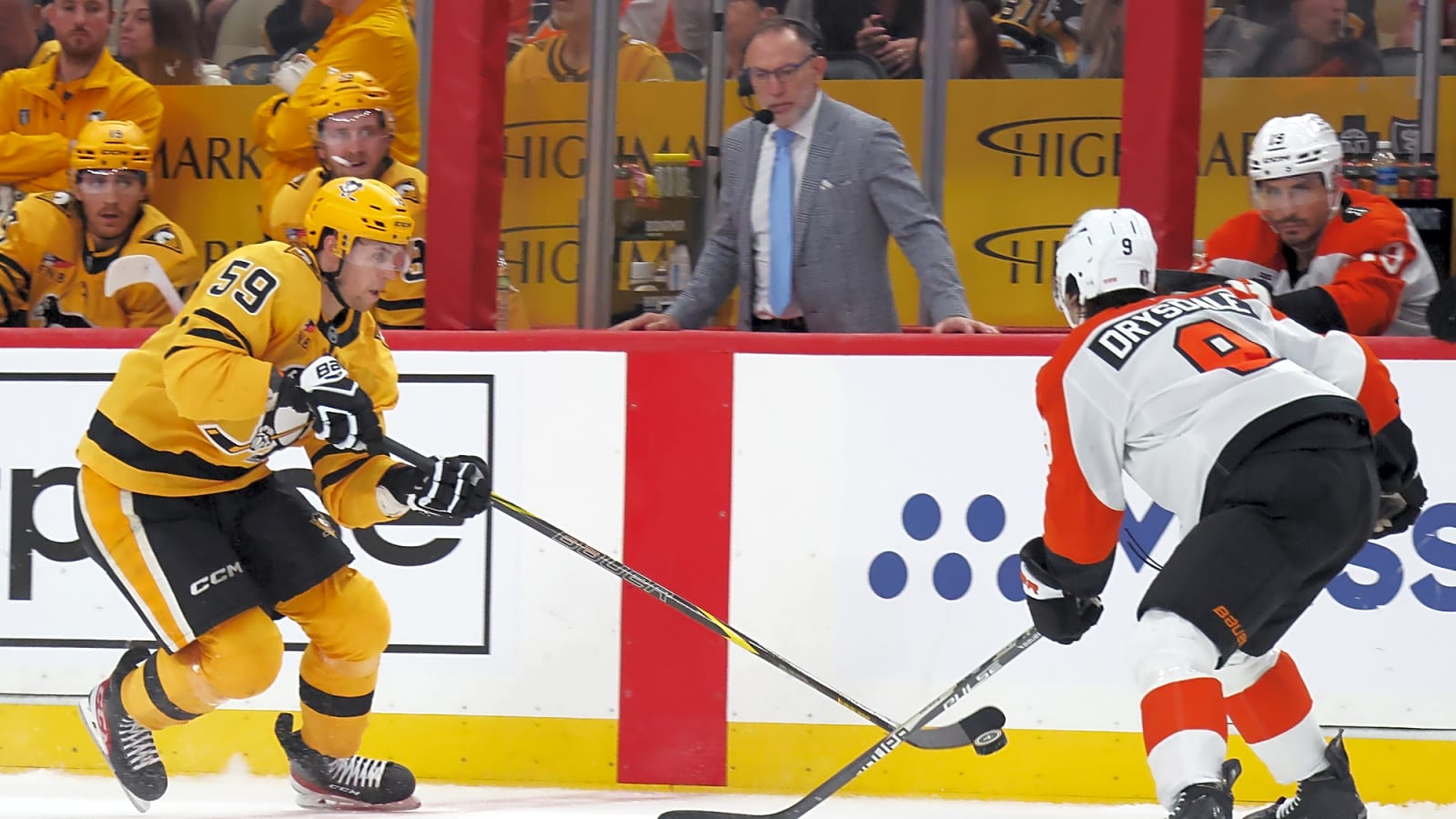
The Pittsburgh Penguins and forward Egor Chinakhov are in the honeymoon stage of their relationship, basking in the early success of a late-December trade that brought Chinakhov from the Columbus Blue Jackets to the Steel City. Playoffs aside, Chinakhov was a revelation during the regular season after arriving in Pittsburgh in a trade that sent a 2026 second-round pick (from St. Louis), a 2027 third-round pick (from Washington), as well as Danton Heinen to Columbus. The 25-year-old had struggled with the Blue Jackets and had asked for a trade, which ultimately led to the move to Pittsburgh. With Chinakhov’s fit in Pittsburgh, a summer contract negotiation is set to take place and will be one of the more interesting and perhaps more complicated negotiations.
Chinakhov was the 21st overall pick in 2020 and made his debut with the Blue Jackets in October 2021, going scoreless in his first five NHL games before recording two assists in his sixth game. He would go on to post seven goals and seven assists in 62 games as a 20-year-old, giving the Blue Jackets hope that the young Russian was just scratching the surface of his offensive potential.
2022-23 saw Chinakhov start strong with 13 points in 30 games before an ankle injury in mid-December sidelined him for 29 games. Chinakhov returned late in February 2023 and was loaned to the AHL, where he posted eight points in seven games.
2023-24 began with more of the same, as Chinakhov dealt with a back injury, missing six games before being sent to the AHL. He would miss significant time again throughout the season, finishing the year with 29 points in 53 games. This became the narrative around Chinakhov, a talented skater with offensive capabilities but unable to stay healthy, as he missed half of the 2024-25 season with a back injury.
Therein lies the issue with Chinakhov’s negotiations. While he has been terrific for Pittsburgh, he’s dealt with many injuries in his short career, and the Penguins have a long history of being an injury-prone team. Chinakhov also never scored in Columbus the way he has in Pittsburgh. In 204 games with the Blue Jackets, Chinakhov recorded 37 goals and 40 assists, roughly a 31-point pace per 82 games, while in Pittsburgh, he has scored at a 69-point pace.
The dichotomy makes for a very complex and confusing contract negotiation. If you are Pittsburgh, which version of the player are you getting if you extend him for five or six years? But the flip side of the coin is that you offer a bridge contract for a year or two, and he continues his breakout and takes you to the cleaners in a year or two when his bridge deal expires. Teams have been burned by that before; however, it might be better than the alternative, which is locking a player in long term who went on a heater and outscored his own abilities.
Penguins’ general manager Kyle Dubas has been bold in acquiring talent over the past two years. Given that he scouted Chinakhov and made an aggressive trade to acquire him, even as other teams, such as the Toronto Maple Leafs, were also in pursuit of him, Dubas may be the best person to negotiate Chinakhov’s contract. It’s an important negotiation for him, as it represents an opportunity to show the naysayers that he can, in fact, lock up young players without having to cave to their every demand. That, of course, was the knock on Dubas in Toronto, where fans felt he gave the Maple Leafs’ young stars too much say and too much money in their contracts, and allocated too much of the salary cap to them.
It’s hard to argue with that narrative, given that Dubas never seemed able to get Toronto’s young stars to concede anything on their deals, and he has done little to turn that around in Pittsburgh, although he hasn’t really had the chance in the past two years. Dubas’ early negotiations in Pittsburgh were rough, as he signed Ryan Graves and Tristan Jarry to disastrous contracts that handcuffed the Penguins until Jarry was dealt late in 2025. The Graves contract remains on the books and could either be dealt for another bad contract or be buried in the AHL for the remaining three years.
Back to Chinakhov: he is arguably the first of the “future” Penguins to ink a long-term deal. If the Penguins get it right, it could set the tone for future deals with potential cornerstones such as Benjamin Kindel, Harrison Brunicke, and Sergei Murashov. But if the Penguins get it wrong and overpay Chinakhov, they will have a tougher time signing their other core pieces to discount extensions, which plagued Dubas in Toronto and eventually led him to pay his core four forwards about half of his salary cap allocation. Dubas is certainly aware of this, and it will be fascinating to see how he approaches the negotiations. Does he lean on the experience he had in Toronto and figure out a better approach to signing young players long term, or does he commit the same errors?
There is one other factor to consider that should be interesting: keeping the players happy, particularly with Chinakhov, who requested the aforementioned trade out of Columbus. If the contract talks go sour, will it sour Chinakhov, and how much does he enjoy playing in Pittsburgh? Will it affect the other young players who know they have deals to be made? These are all factors Dubas must consider when negotiating this summer on what should be a complex contract.
More must-reads:
- Will first-round sweep be the end of Brady Tkachuk's Senators tenure?
- Goalie switch helps Penguins fight off elimination vs. Flyers
- The 'Stanley Cup Playoff hat-tricks' quiz
Breaking News
Trending News





Customize Your Newsletter
 +
+




Get the latest news and rumors, customized to your favorite sports and teams. Emailed daily. Always free!
PRIVACY POLICY COOKIE POLICY CONTACT US
ABOUT YARDBARKER TERMS OF SERVICE


By using this site, you agree to our Terms of Service and Privacy Policy.
This site is for entertainment purposes only.
There is no gambling offered on this site.
Gambling Problem? Call 1-800-Gambler.
