-

-


Follow Us
-

 On Facebook
 On Flipboard



The Edmonton Oilers have opened the 2026-27 season with a 7-1-1 record, collecting 15 of a possible 18 points through their first nine games. Under new head coach Mike Babcock and associate coach D.J. Smith, Edmonton has shown signs of becoming a more structured, defensively-responsible team. However, a closer examination of the underlying numbers suggests the Oilers might not be playing as well as their record indicates.
Edmonton has scored 41 goals while allowing 27, giving the club a plus-14 goal differential. Its 4.56 goals per game rank among the NHL’s best, while its 3.00 goals against per game are slightly better than the league average. Those numbers are encouraging, particularly considering the injuries that have affected the lineup. However, Edmonton’s five-on-five performance, unusually high shooting percentage, and inconsistent special teams raise legitimate questions about whether this pace is sustainable.
Perhaps the most interesting part of Edmonton’s start is that nobody really knows what this team is capable of yet. The Oilers have accumulated wins without having their full roster available, making it difficult to determine their ceiling under a new coaching staff.
Edmonton’s Five-on-Five Numbers Tell a Different Story
The Oilers’ record suggests they have been one of the NHL’s most dominant teams, but their underlying statistics paint a more complicated picture. Through nine games, Edmonton has controlled just 48.9% of five-on-five shot attempts, meaning opponents have generated slightly more attempts than the Oilers. Their scoring-chance share sits at 48.7%, while their high-danger chance share is even lower at 48.1%. Those figures suggest Edmonton has not consistently controlled the flow of play.
However, expected goals provide a more encouraging outlook. Edmonton has generated 19.0 expected goals at five-on-five while surrendering 17.1, producing an expected-goals share of approximately 52.6%. That distinction is important. Although opponents are generating more shot attempts and scoring chances overall, Edmonton has maintained an advantage in expected goal quality. The concern is the difference between actual production and expected production.
The Oilers have scored 26 five-on-five goals compared to 19.0 expected goals, outperforming their underlying offensive numbers by seven. Their five-on-five shooting percentage sits at 13.5%, considerably higher than the league average of 8.9%. That level of finishing is unlikely to continue indefinitely. Edmonton’s five-on-five PDO, which combines shooting and save percentages, is approximately 105.1. Teams generally trend toward 100 over larger samples, although roster talent and goaltending quality can create sustained differences. A regression in shooting percentage could make Edmonton’s record considerably less impressive unless its ability to generate scoring chances improves.
Babcock and Smith Are Changing Edmonton’s Defensive Identity
One of the most noticeable developments has been Edmonton’s commitment to defensive structure under Babcock and Smith. After surrendering 13 goals across their first two games against the Vancouver Canucks, the Oilers allowed just 14 over their next seven contests, an average of two per game. That is a substantial improvement, although the sample remains small. Edmonton’s five-on-five expected goals against of 17.1 through nine games also suggests the team has done a reasonable job limiting the quality of opportunities against.
The coaching staff deserves consideration for that improvement. During his introductory press conference, Smith emphasized that the staff would use statistical evidence to shape its systems rather than simply relying on coaching preferences. He explained that their decisions would be based on what the numbers supported. That philosophy appears to be influencing Edmonton’s defensive approach, particularly its emphasis on limiting odd-man rushes and improving positioning through the neutral zone.
During an Oct. 15 appearance on Oilers NOW, Smith specifically highlighted the reduction in odd-man rushes and the team’s improved ability to defend opponents entering the offensive zone. However, not every aspect of Edmonton’s defensive play has improved. The penalty kill is operating at just 74.1%, well below the league average of approximately 79.1%. That is particularly concerning considering Smith’s involvement in the penalty-killing structure.
Meanwhile, Edmonton’s power play has converted on 31.0% of its opportunities, helping compensate for some of those defensive shortcomings. The next challenge for Babcock and Smith will be ensuring Edmonton’s defensive improvements translate into consistent five-on-five control rather than relying on special teams and timely scoring.
Injuries Have Made Edmonton Difficult to Evaluate
Perhaps the biggest reason to avoid drawing conclusions about the Oilers is that their intended lineup has barely had an opportunity to play together. Ryan Nugent-Hopkins has yet to make his season debut, while Zach Hyman, Matt Savoie, and Jason Dickinson have also missed time. Those absences have affected Edmonton’s forward depth, particularly its ability to generate offence beyond Connor McDavid and Leon Draisaitl.
The potential second line featuring Hyman, Nugent-Hopkins, and Savoie could dramatically change the team’s five-on-five outlook. Hyman provides a strong net-front presence and forechecking ability, Nugent-Hopkins offers playmaking, defensive awareness and another legitimate option down the middle, and Savoie adds speed and offensive creativity. Their return would give Edmonton a more balanced forward group and potentially reduce the need to overplay its superstars.
Following the Oct. 15 loss to the Utah Mammoth, Babcock acknowledged the workload problem. “We needed our big boys, obviously. I played them too much,” he said. The comments highlight a problem Edmonton has faced for years: balancing the desire to maximize McDavid and Draisaitl’s offensive production against the need to develop reliable secondary scoring. Smith also acknowledged that Edmonton’s true potential remains unknown until its injured players return. During his interview with Bob Stauffer, he explained that the coaching staff would need several games with a healthy lineup before understanding how all the pieces fit together. That is an important distinction. Edmonton’s current five-on-five statistics reflect a team operating without several expected contributors, not necessarily the version that will compete later in the season.
Edmonton’s Winning Percentage Will Likely Regress
The Oilers have collected 83.3% of the available points through nine games, a pace that would produce approximately 137 points over an 82-game season. Maintaining that pace would be extraordinarily difficult. Edmonton’s 13.5% five-on-five shooting percentage is one obvious candidate for regression, particularly given the team’s below-50% share of shot attempts and scoring chances. However, regression in shooting percentage does not automatically mean Edmonton will begin losing consistently.
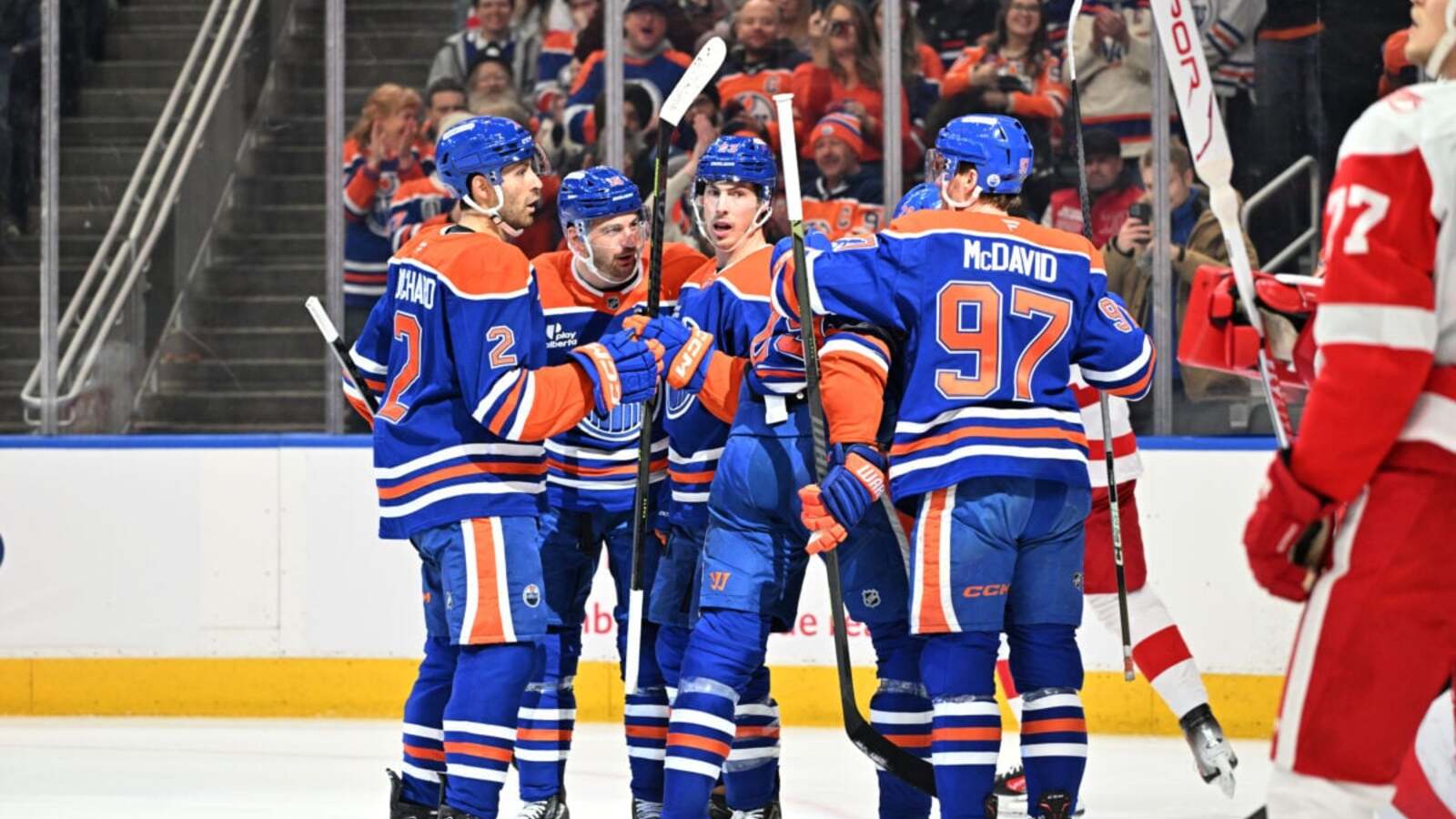
If Hyman, Nugent-Hopkins and Savoie return and improve Edmonton’s ability to sustain offensive-zone pressure, the team could generate more expected goals even as its shooting percentage declines. That would represent a healthier foundation for long-term success. The quality of opposition also matters. Edmonton’s early schedule has included games against rebuilding clubs such as Vancouver and the San Jose Sharks, along with more competitive opponents like the Anaheim Ducks, Minnesota Wild, and Mammoth.
Its early strength-of-schedule rating of minus-0.13 suggests the opposition has been slightly below average overall. The Oilers will need to demonstrate that their defensive structure and five-on-five performance hold up against stronger opponents before their record can be considered a reliable indicator of championship potential.
The Oilers Have Room to Become a More Complete Team
There are legitimate reasons to be encouraged by Edmonton’s start. The Oilers are winning games, their defensive play has improved considerably since opening week, and their coaching staff appears committed to addressing weaknesses rather than being satisfied with results. Babcock’s emphasis on structure and accountability, combined with Smith’s focus on defensive details, offers a foundation for continued improvement.
However, Edmonton is still allowing opponents to control slightly more than half of the five-on-five shot attempts and scoring chances. Its shooting percentage is elevated, its penalty kill needs improvement, and its forward depth has yet to be properly evaluated. Those are meaningful concerns for a team with Stanley Cup aspirations. The encouraging part is that Edmonton has already built a 7-1-1 record while dealing with those limitations. The question is not whether the Oilers can maintain an .833 points percentage. They almost certainly will not.
What matters is whether their underlying performance improves as the roster gets healthier and Babcock and Smith continue implementing their systems. The Oilers might not be as dominant as their record suggests, but they could still be considerably better than the team we’ve seen through nine games.
More must-reads:
- Struggling Kings could get key offensive forward back on Tuesday
- Why Giants reportedly are starting J.J. McCarthy over Jameis Winston vs. Texans
- The 'Most NBA games played' quiz
Breaking News
Trending News





Customize Your Newsletter
 +




Get the latest news and rumors, customized to your favorite sports and teams. Emailed daily. Always free!
PRIVACY POLICY COOKIE POLICY CONTACT US
ABOUT YARDBARKER TERMS OF SERVICE


By using this site, you agree to our Terms of Service and Privacy Policy.
This site is for entertainment purposes only.
There is no gambling offered on this site.
Gambling Problem? Call 1-800-Gambler.