
-

-


Follow Us
-

 On Facebook
 On Flipboard


[Editor's note: The following article is from Athlon Sports' commemorative 2026 World Cup Preview magazine. Order your issue online today, or grab a copy at newsstands and retail racks nationwide.]
It’s March 2025, barely six months into Mauricio Pochettino’s tenure as United States national team manager. He faces his first real test in the post — with the World Cup not-so-far-down the road — and it’s all going wrong in the worst way. Home-soil losses to Panama and Canada three days apart. Listless, heartless, charmless displays, a shaky step beyond the previous summer’s Copa América debacle, that has everyone, it seems, wondering just how bad it’s going to be come June 12, 2026, when the US faces Paraguay in the host nation’s first World Cup game.
A year later, the impossible suddenly seems, well, not so impossible. Maybe. We’ll see, but the Yanks’ quick transformation under Pochettino — from the stale, entitled underachievers in last spring’s Nations League fiasco to the brilliantly imaginative crew that dissected a most worthy Uruguay side in November — has them approaching FIFA’s grand spectacle with real belief and the means to make it mean something.
This is the deepest and most talented group the US has ever gathered. The squad includes more than a few significant figures at big European clubs; a couple of them (AC Milan’s Christian Pulisic, Juventus’ Weston McKennie) are difference-makers — with World Cup experience all over the pitch and, maybe best of all, an understanding of the greater mission and through that a brotherhood created during the tumultuous journey that has brought them from then to now.
Pochettino, who formerly led top European clubs Chelsea, Paris-Saint Germain, and Tottenham, stepped aboard following the devastating failure to advance from the 2024 Copa América group stage. He needed half a year to get a feel for the landscape, then got to work for real, establishing a culture and identity that hearkens back to the roots of all this — longtime fans will fondly remember Paul Caligiuri’s “Shot Heard ’Round the World” that sent the US to the World Cup in 1990, its first in 40 years, and what followed — and provides a tantalizing path forward.
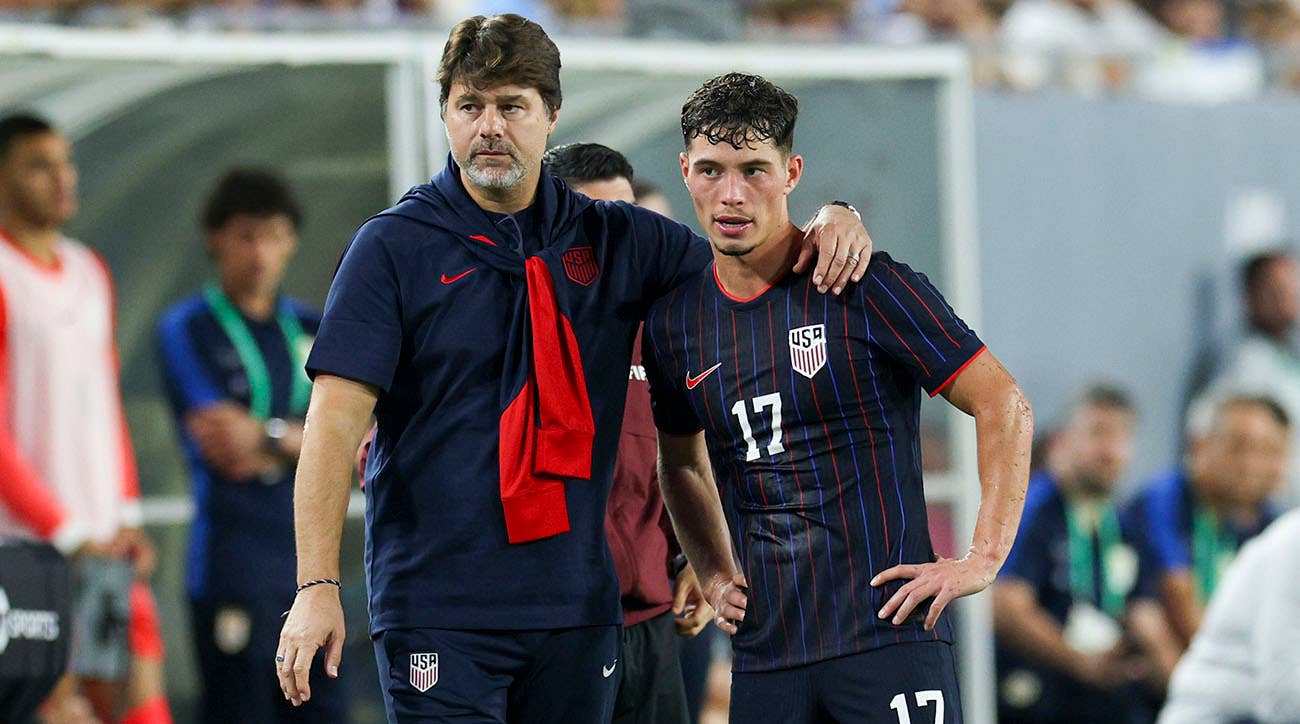
How far that will take the Yanks comes down to form and fortune over a few short weeks in June and perhaps July. But recall the chatter the last time the US staged the World Cup, back in 1994, that the day was not far off when the Americans would be challenging for, eventually winning the biggest prize on the planet.
Has that day arrived?
Pochettino, their biggest-name manager since Bora Milutinovic guided a pioneering 1994 group into the knockout stage, had that conversation with the president at the World Cup draw in Washington DC. “He asked me,” Pochettino reported, “‘What do you think, coach? Can you win the World Cup?’” The Argentine’s response: “Of course.
“Because it’s the USA,” he explained. “The American dream is there. It is about being first. Being the number [one]. . . . We really believe we can win. We are in a place where, after a year and a half [of toil], people are starting to feel that we can win.”
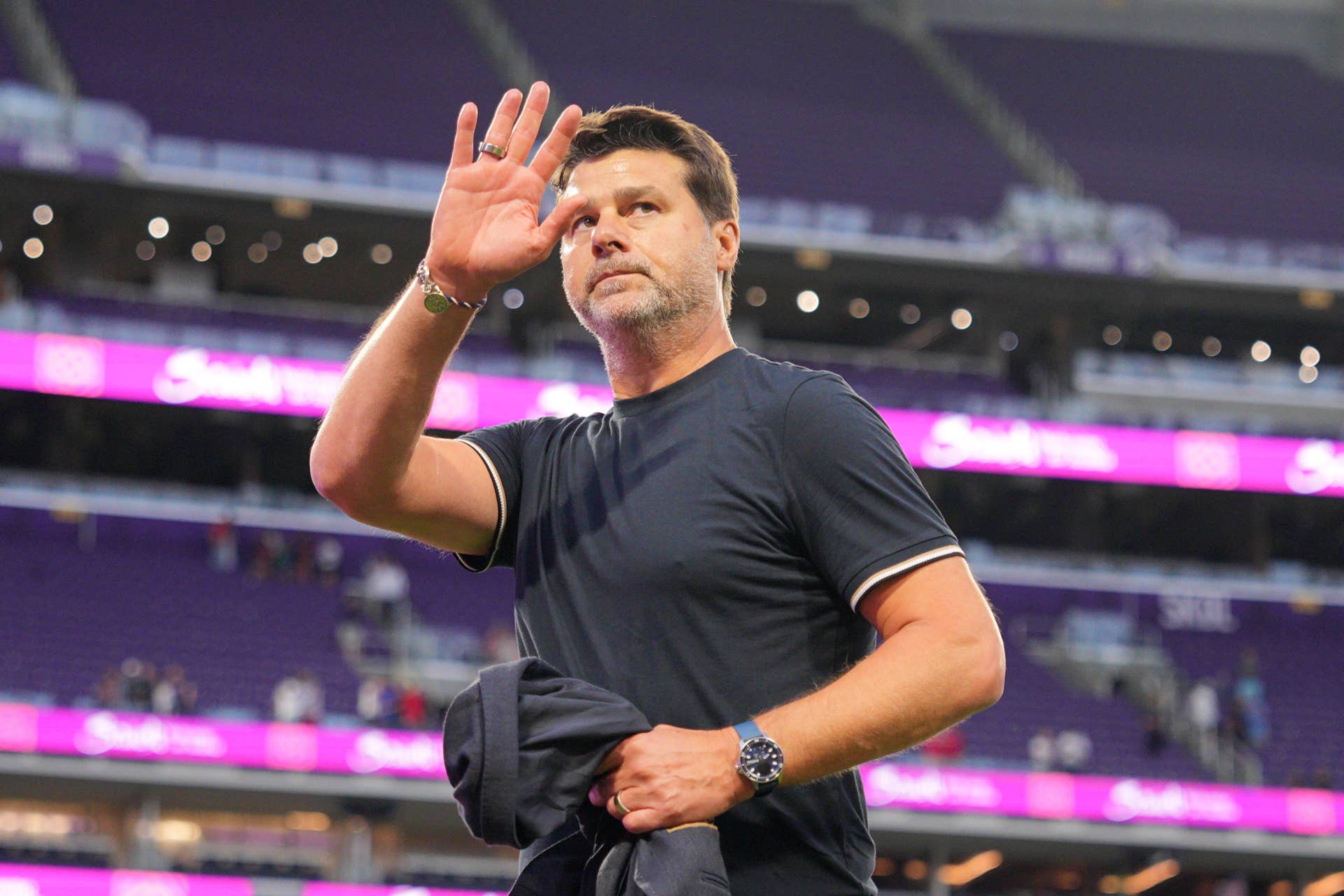
They looked like world-beaters through a hugely prosperous autumn of 2025 — five wins in six impressive performances against Cup qualifiers, the finale that 5-1 stunner in Tampa over Uruguay. It was all made possible through six months of renovation and reinvention — a pivotal piece was a savvy tactical shift to soothe some longstanding issues — that emerged from the soul-search following the Nations League failure.
“From then,” Pochettino noted, months later, “we start to work in a very intense way.” It was a formidable undertaking. He’d inherited something of a mess.
The Americans had descended into turmoil following a round-of-16 run with the World Cup’s second-youngest roster four years ago, a good deal of it ugly family stuff involving the families of then-head coach Gregg Berhalter and his 2002 teammate Claudio Reyna.
The kerfuffle was prompted by Berhalter’s “off-the-record” discussion of star midfielder Gio Reyna’s problematic conduct in Qatar going public. Berhalter was sidelined eight months as US Soccer investigated, returned after the US exited the Gold Cup in the semifinals, guided the Yanks to a third successive CONCACAF Nations League title, then watched his team fold in dispiriting 2024 Copa América losses to Panama and Uruguay. He was gone for good only 10 days later.
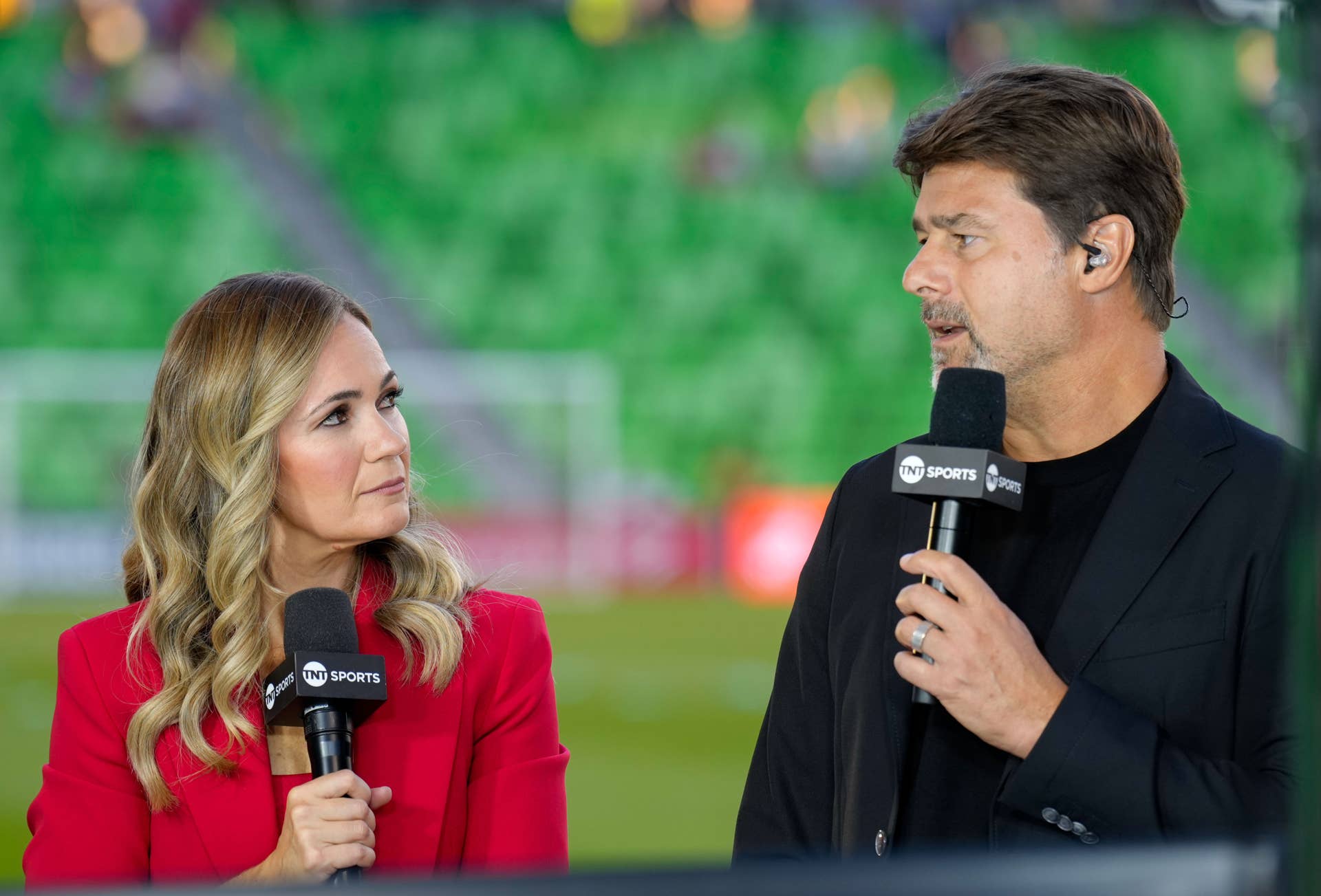
Pochettino was hired two months later, relied on the existing player pool in a couple of October friendlies and the Nations League quarterfinal home-and-home with Jamaica in November, looked into depth during the January camp in 2025, then assembled something akin to a first-choice group for the semifinal with Panama and the expected final against archrival Mexico.
In the brutal 1-0 Panama loss, the lesson was harsh. His team, almost to a man, had no fight, few ideas, and not a whole lot of impetus, and the reaction was swift and brutal, from the legends, the media, the fan base. And, from the inside. Pochettino, who called the defeats “painful,” and said he felt “shame,” told his players “you cannot win with your shirt,” that they must “suffer and win the duels and work hard” or “it’s not going to be enough.”
Midfield general Tyler Adams said everyone needed to “buy into exactly what we’re doing and what we’re trying to do,” and Pulisic acknowledged. “We’re not at our best now. … Some things need to change. I don’t have all the answers at the moment.”
Neither did Pochettino, but he warned against giving it more weight than warranted. He told fans not to “be pessimistic,” that “in football, anything can happen.”
“Now is time to be calm,” he said. “Here is not to blame, is not to find some guilty . . . there’s still a lot of time until the World Cup.”
Well . . . a year, anyway.
First priority, figuring out how this works. Pochettino and most of his staff had worked together at a series of clubs for a decade and a half, but running a national team is very different than working within clubs. “We are,” he said, “discovering things that we need to pay attention to in a different way.”
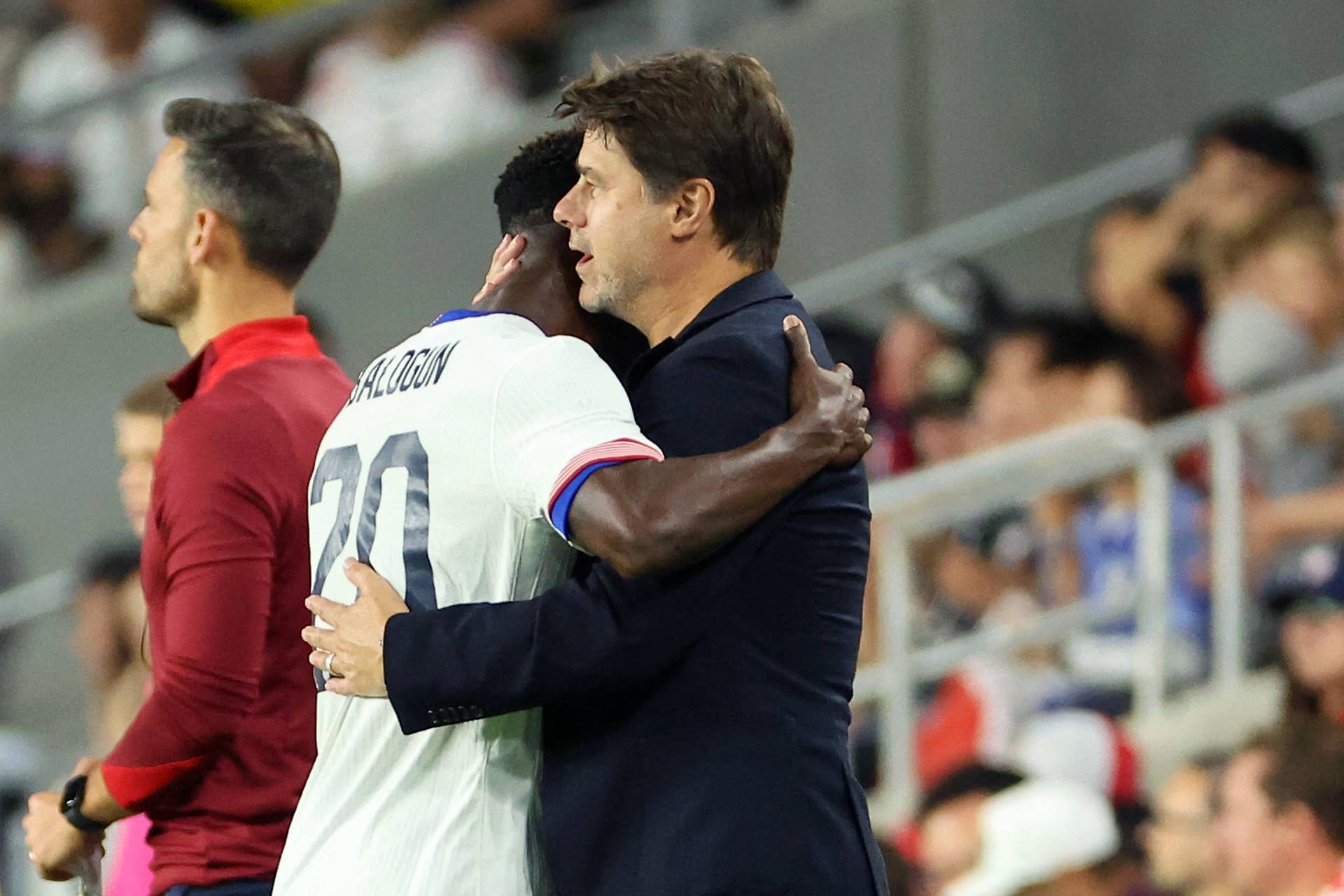
Most important was instilling a culture emphasizing collaboration and a fierce winning mentality, the kind of grit that governed US teams in previous generations . . . but more of it. There would be no more free rides, and when young talent performed well, it was rewarded. There were certainly opportunities, usually through injury — more than a dozen vital players were out for some stretches, some quite lengthy — and Pochettino, endlessly experimented with personnel, broadened the pool and constructed a foundation over the next six months.
It didn’t always show on the field. The Yanks were outclassed by Türkiye and destroyed by Switzerland ahead of the 2025 Gold Cup, where they maneuvered through to the title game and lost, deservedly, to Mexico. These squads were largely a second team — Pulisic had begged out of the tournament, to sharp criticism from, among others, Landon Donovan (page 142); the Club World Cup occupied a few others; and there are always injuries — but several players had breakthrough performances. Most notable was probably New York City FC goalkeeper Matt Freese, the new No. 1, whose three stops fueled a penalty-kicks triumph over Costa Rica in the tournament quarterfinal.
Crystal Palace center back Chris Richards also nailed down a first-choice role, taking a huge stride toward earning US Soccer’s player-of-the-year honor, and another five — fullbacks Alex Freeman and Max Arfsten, midfielders Malik Tillman, Sebastian Berhalter, and Diego Luna — cemented regular roles. The soccer wasn’t brilliant, but things were starting to fall into place.
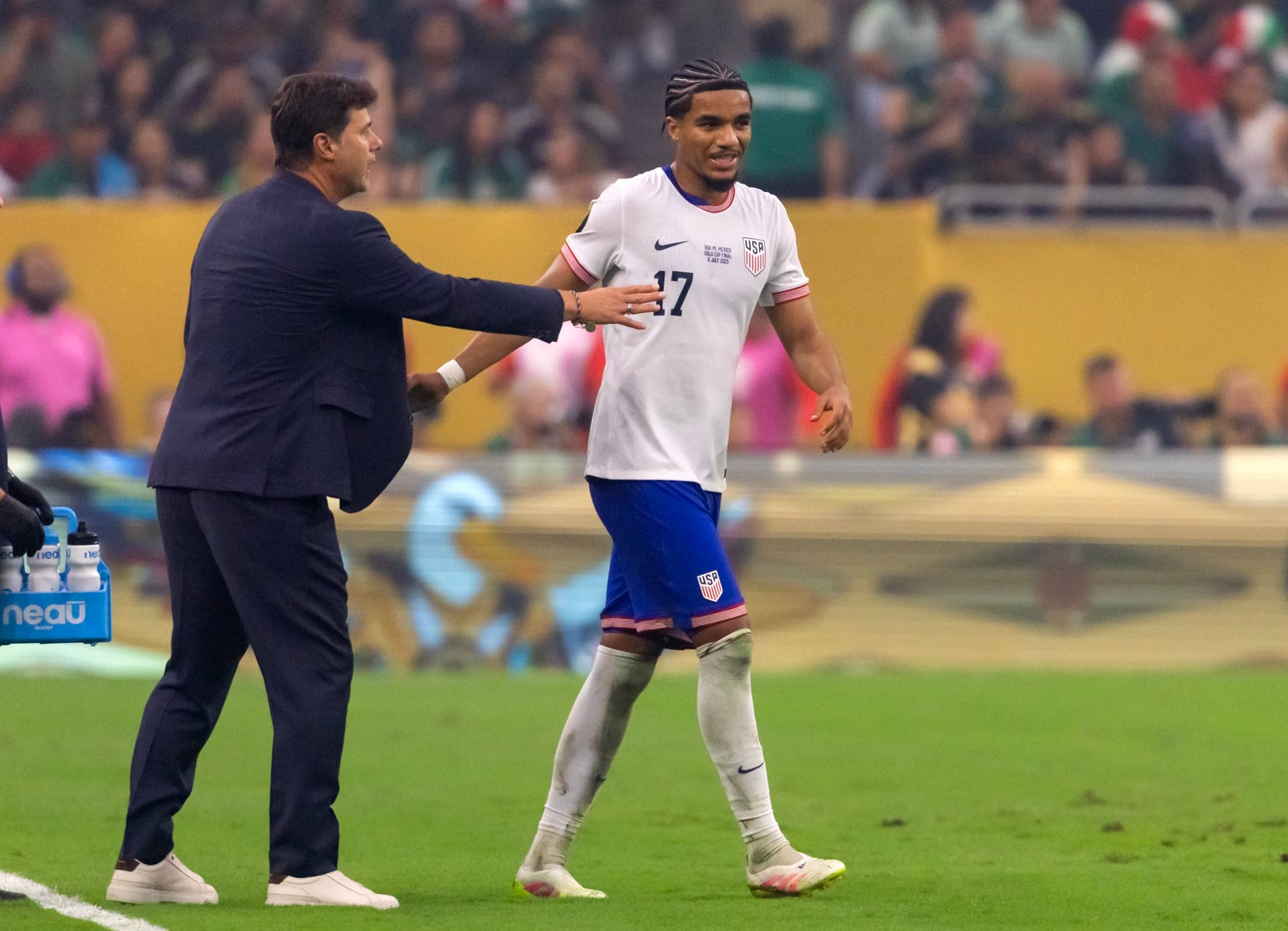
“I think we understand what the standard is now,” US captain and center back Tim Ream said afterward. “We understand what we need to do on and off the field. We understand what kind of culture is wanted from us. It took a little bit longer than it probably should have.”
But next time out, not so good. South Korea toyed with the US in a 2-0 decision in an early September friendly, but a tactical tweak heading into the second half — a shift from Pochettino’s preferred 4-2-3-1 to a three-center-back alignment — offered a path forward. The Yanks started with three at the back, two wingbacks, a midfield box, and a striker, and looked like a different team. The next two slates of games, and especially 2025’s last against Uruguay, provided confirmation.
The formation, more of a shape-shifting hybrid than centered around a true three-man backline, led to greater attacking lucidity, width, and movement, and defensive organization. The performance against Uruguay, behind a rotated lineup averaging just 14 caps, was revelatory. Ream called the move “a stroke of genius.” Pochettino saw an American identity within.
“I cannot lie,” he said after the draw, “the last few games, the team showed a very good [brand of soccer] … I think we start to show that we are USA, that [this] is the culture here, about winning, about fight and never give up, and I think that is why we start to be a little bit more happy and focused [on evolving] in different areas: technical, tactical, fitness. I think we start to talk about being more or better than the opponent in different aspects on the pitch. I think when our standards are where we are now, we can evolve very, very quick.”
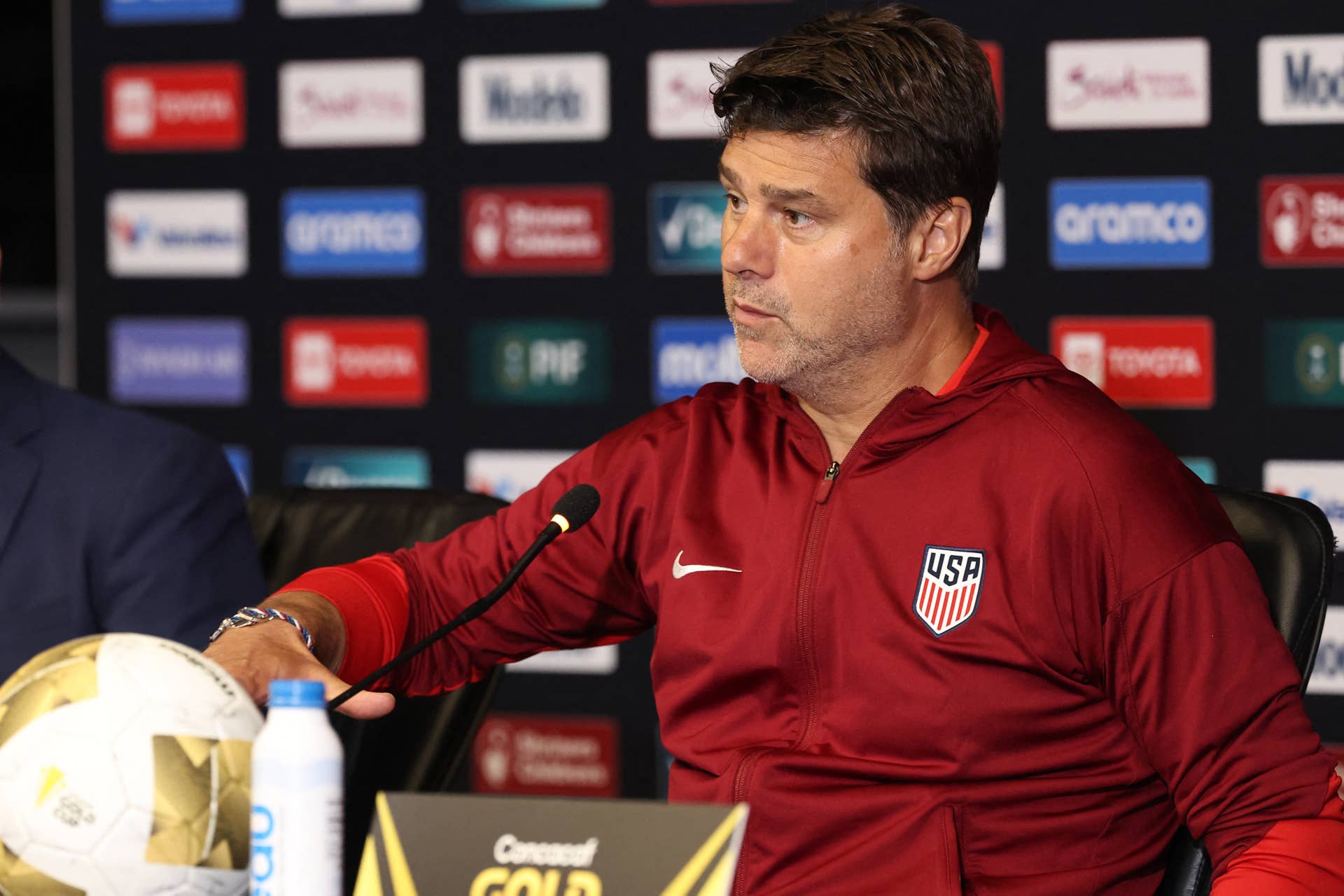
His team believes, and, he says, “belief in soccer is everything.
“Without belief, you can have talent, you can have very good strategy, but in the end, [you ’ll fail] if you don’t have the belief and the spirit to fight. Because that is [an] emotional thing that you need to connect with this energy that puts you in the possibility to express your talent.”
The Yanks have talent. Could they do something truly special? History is not on their side — only twice in a dozen World Cups has the US won two games — way back in 1930, the first World Cup, then in that magical 2002 quarterfinal run under Bruce Arena, when they might have gone further had Germany’s Torsten Frings been whistled for a handball. That team also beat Mexico in one of the rivalry’s famous “dos-a-ceros,” to get there, their lone triumph in six all-time World Cup knockout matches.
Reaching the knockout stage was “success” in the US’s first few World Cups after qualifying in 1990 for the first time in four decades. The 2002 wins pushed the standard higher, and so everything since has disappointed. The US has been to the last 16 in its last three finals, pushed Belgium and Netherlands to overtime in the past two. Not good enough. Drawn twice with England in group play, the US finished ahead of them in 2010. Not good enough.
What constitutes success now, Professor Pochettino?
“Win the World Cup.”
Scott French has been covering soccer in the US since the 1970s, from the NASL to the entire history of MLS, plus six — soon to be seven — World Cups.
More must-reads:
- Manchester City draw hands Arsenal Premier League title
- Emmitt Smith has strong reaction to Cowboys' controversial George Pickens decision
- The 'NBA steals-per-game leaders' quiz
Breaking News
Trending News






Customize Your Newsletter
 +
+




Get the latest news and rumors, customized to your favorite sports and teams. Emailed daily. Always free!
PRIVACY POLICY COOKIE POLICY CONTACT US
ABOUT YARDBARKER TERMS OF SERVICE


By using this site, you agree to our Terms of Service and Privacy Policy.
This site is for entertainment purposes only.
There is no gambling offered on this site.
Gambling Problem? Call 1-800-Gambler.
