
-

-


Follow Us
-

 On Facebook
 On Flipboard


 Free Newsletters
 On YouTube
Trent Grisham News / Pinstripe Alley / June 27
Yankees news: Grisham on the comeback trail 
New York Post | Greg Joyce: Trent Grisham met the Yankees at Fenway Park Thursday to take the next step in his recovery from a hamstring strain. The center fielder took BP and did some fielding drills, a first step before a (likely brief) rehab stint to slated begin soon.
Aaron Judge News / Viral Sports News / June 27

Yankees Rocked by Troubling Aaron Judge Injury News
The New York Yankees continue to post one of the strongest performances across Major League Baseball, even after losing their standout leader Aaron Judge for nearly an entire month.

MLB News / Viral Sports News / June 27

Yankees Land Tarik Skubal Message After Will Warren Meltdown
The New York Yankees have been connected to Detroit Tigers pitcher Tarik Skubal several times in the lead up to the MLB trade deadline, even if it might not make the most sense.

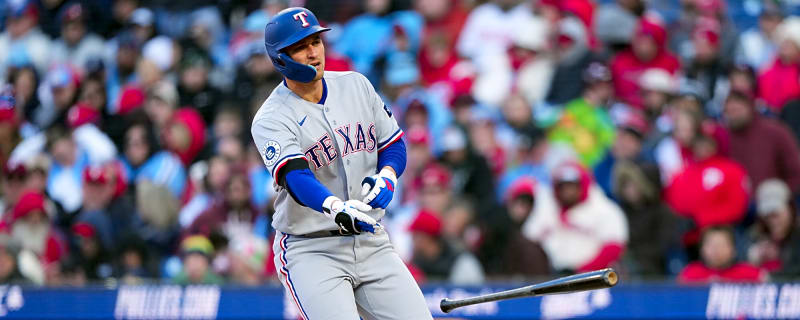
The 'MLB playoff HR leaders' quiz
In the history of MLB, 31 players have hit 13 or more home runs in the postseason over the course of their careers. How many can you name in six minutes?

25 MLB players most likely to be traded by the deadline
The MLB Trade Deadline has been quieter in recent years, in part due to playoff expansion, but 2026 is shaping up to be a more exciting one with several big names.
MLB News / Pinstripe Alley / June 26
Red Sox no-hit Yankees into sixth in feeble loss at Fenway
Payton Tolle last faced the Yankees on April 23rd, when he held them to a run on just three hits in six innings, tallying a career-high 11 strikeouts.
MLB News / Athlon Sports / June 26

Yankees' Aaron Boone Weighs in on Carlos Mendoza Firing
New York City was rocked on Friday morning when New York Mets manager Carlos Mendoza was relieved of his duties. Ahead of their game against the Boston Red Sox, New York Yankees manager Aaron Boone was asked about his thoughts on his Big Apple counterpart.
MLB News / MLB on ClutchPoints / June 26

Yankees-Red Sox rivalry reignited as benches clear at Fenway Park
The New York Yankees are taking on the Boston Red Sox at Fenway Park on Friday for the second matchup of a four-game series. In the bottom of the fifth inning, the rivalry seemingly reignited when benches cleared after Will Warren’s four-seam fastball was ruled a ball after going up and in on Willson Contreras.
New York Yankees News / MLB on ClutchPoints / June 26

Yankees’ Aaron Judge, Giancarlo Stanton get injury updates from Aaron Boone
New York Yankees stars Aaron Judge and Giancarlo Stanton are recovering from injuries. Judge is out due to a rib injury while Stanton is battling a calf injury.
Ben Rice News / Athlon Sports / June 26

Yankees Make Disappointing Ben Rice Decision Before Red Sox Game
The New York Yankees will give their first baseman Ben Rice a day off Friday in the team's road series against the Boston Red Sox, a night after he went hitless in five at-bats during a 6-3 loss in the series opener.
Carlos Lagrange News / New York Yankees on SI / June 26

Carlos Lagrange's 1st Triple-A Save Adds New Layer to Potential Yankees Call-Up Timeline
The future in the Bronx is bright, as the Yankees' prospect pipeline is filled with promising up-and-comers. Some look like future MLB All-Stars while others are diamonds in the rough, needing the right development to reach that next level.

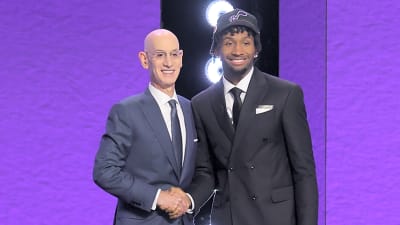
25 MLB players who could be first-time All-Stars in 2026
Being named to the Midsummer Classic is one of the biggest honors for MLB players. These 25 players have a chance to make their first All-Star appearance in 2026 based on their first-half performances.
New York Yankees News / Pinstripe Alley / June 26
The Yankees’ bullpen isn’t elite, but it’s solid
It’s approaching the halfway point of the season, and we have a pretty good idea of who these Yankees are. Their starting rotation is a top-five group in Major League Baseball, possessing both elite talent at the front and enviable depth at the back.
Aaron Judge News / Pinstripe Alley / June 26
Do the Yankees really swoon in June?
For all but one year of the Aaron Judge era, the Yankees have been pretty good. They’ve won at least 90 games in seven of the eight full seasons since he ushered in a new era of contention in the Bronx in 2017, with the lone exception being the 2023 season, where poor roster construction met Judge’s toe injury.





Tarik Skubal News / New York Yankees on SI / June 26

NL East Ace Should Be Yankees' Backup Plan If Tarik Skubal Trade Doesn't Happen
The big fish of the MLB trade deadline—and, potentially, free agency—is Tigers ace Tarik Skubal. The Yankees were already the best team in the American League without him, and landing the big lefty widens the talent gap between them and the rest of the AL.
Ryan Weathers News / Pinstripe Alley / June 26
Yankees Sequence of the Week: Ryan Weathers (6/24)
The Yankees rebounded from a recent three-game losing streak to secure the final two games of their series against the Tigers. They couldn’t keep that momentum rolling into the series opener against the Red Sox as countless mental errors piled up en route to a 6-3 loss.
New York Yankees News / New York Yankees on SI / June 26

Yankees Have a Bigger Infield Need Than Catcher Right Now as Trade Deadline Approaches
Catcher is often the position thrown around as a must-have for the Yankees before August's MLB trade deadline. You can understand that, since Austin Wells is one of the worst everyday hitters in baseball.
MLB News / Field Level Media / June 26

Yankees strive for better defensive effort vs. Red Sox
The visiting New York Yankees made Thursday's game easy for the Boston Red Sox. The Yankees will try to avoid a repeat performance when the teams meet Friday night in the second matchup of a four-game series.
New York Yankees News / Pinstripe Alley / June 26
The Yankees Rotation Depth Inventory: June
Throughout the course of a season, attrition will strike any major-league roster. The unit most vulnerable is often the starting pitching corps. The Yankees began the year without Gerrit Cole, Carlos Rodón, and Clarke Schmidt, and while Cole and Rodón are back, the team has since lost Max Fried to injury.

Isaac Paredes News / New York Yankees on SI / June 26

Projected Isaac Paredes Trade Helps Yankees Put 3B Concerns to Rest
The 2026 MLB trade deadline is less than six weeks away, meaning it won't be much longer until movement ramps up. If general manager Brian Cashman has his club's best interest at heart, the Yankees will be major buyers heading into the Aug.
New York Yankees News / MLB on ClutchPoints / June 26

Yankees’ Aaron Boone defends Jose Caballero amid outfield struggles
The New York Yankees weren’t the best bunch out there on Thursday. Despite a solid start by Cam Schlittler, New York ended up suffering a 6-3 loss in a series opener against the Boston Red Sox at Fenway Park in Boston.
MLB News / Yardbarker / June 25

Yankees waste Cam Schlittler's historic outing in loss to Red Sox
Even in a game the New York Yankees failed to win, right-hander Cam Schlittler still managed to make more history.
New York Yankees News / Yardbarker / June 25

Key stat shows why Yankees are the team to beat in the AL
The New York Yankees have been a juggernaut thus far in 2026. They are showing no signs of stopping.
Aaron Judge News / Field Level Media / June 24
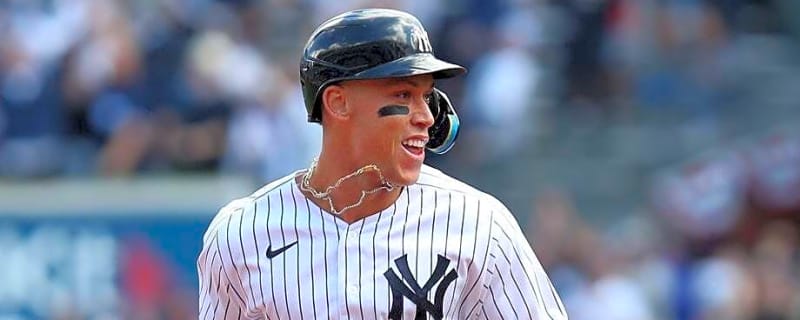
Special Aaron Judge jersey expected to fetch $3M-$5M at auction
Judge, a seven-time All-Star, is a lifetime .291 hitter with 385 homers, 868 RBI, 213 doubles and 70 stolen bases in 1,204 games with the Yankees.
New York Yankees News / Yardbarker / June 24
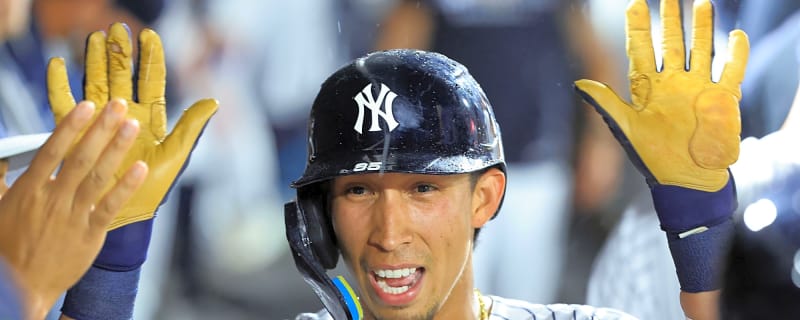
Yankees to recall super utilityman
For the first time since he suffered a gruesome leg injury in May of 2025, the New York Yankees have their switch-hitting, super utilityman back in the major leagues.
New York Yankees News / Larry Brown Sports / June 24

Yankees' Aaron Boone blasts Jazz Chisholm for unprofessional move
New York Yankees infielder Jazz Chisholm will be hearing about something he did Monday from his manager.
Jazz Chisholm News / Larry Brown Sports / June 22

Jazz Chisholm pulls an unprofessional move during game
The optics are still not looking great for New York Yankees infielder Jazz Chisholm. Chisholm sparked backlash during Monday’s game against the Detroit Tigers.
Breaking News
Trending News






Customize Your Newsletter
 +
+




Get the latest news and rumors, customized to your favorite sports and teams. Emailed daily. Always free!
MY ACCOUNT
SUBSCRIBE
ADVERTISE
JOBS
FAQ
PRIVACY POLICY COOKIE POLICY CONTACT US
ABOUT YARDBARKER TERMS OF SERVICE


PRIVACY POLICY COOKIE POLICY CONTACT US
ABOUT YARDBARKER TERMS OF SERVICE
Copyright 2026 YB Media, LLC. All rights reserved.
By using this site, you agree to our Terms of Service and Privacy Policy.
This site is for entertainment purposes only.
There is no gambling offered on this site.
Gambling Problem? Call 1-800-Gambler.

By using this site, you agree to our Terms of Service and Privacy Policy.
This site is for entertainment purposes only.
There is no gambling offered on this site.
Gambling Problem? Call 1-800-Gambler.