
-

-


Follow Us
-

 On Facebook
 On Flipboard


 Free Newsletters
 On YouTube
Jayden Daniels News / Viral Sports News / June 29
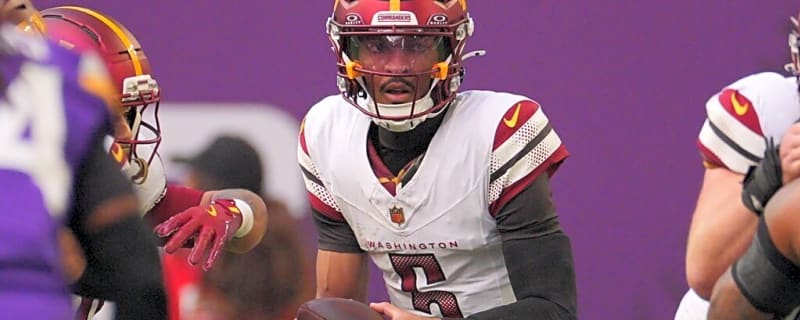
Commanders Linked to Unexpected 1,000-Yard Weapon for Jayden Daniels
The Washington Commanders were one of the most disappointing teams in the NFL last season, and a big reason for that was Jayden Daniels’ inability to stay healthy.
NFL News / NFL on ClutchPoints / June 29

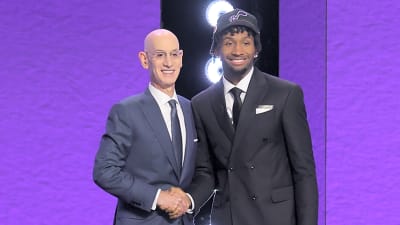
Commanders’ way-too-early 2027 NFL Draft according to PFF mock draft simulator
The Washington Commanders are once again drawn into the Brandon Aiyuk drama, with the 49ers wide receiver continuing to joke about being part of their roster, even though he is not.
Washington Commanders News / A to Z Sports / June 29

Jayden Daniels and Terry McLaurin headline 5 Commanders players that need to have a good year on offense in 2026
The Commanders are looking for an offensive resurgence in 2026 and the following five players must perform at a high level in order for it to happen. The Washington Commanders are ready to get back on track in 2026 and the team has made plenty of moves over the offseason to help make that happen.


The '100-rushing-yard NFL QBs' quiz
In the Super Bowl era (1966 to present) of the NFL, a total of 30 QBs have rushed for 100 yards or more in a regular-season game. How many of the 30 can you name in five minutes?
Amik Robertson News / Washington Commanders on SI / June 29

Commanders Roster Ranking No. 19: Amik Robertson Brings Needed Edge to Secondary
When we were making this list, we did not rank Amik Robertson No. 19 because he completely solves the Washington Commanders' cornerback questions. He landed

25 first-round NFL picks that left fans confused
The NFL Draft always delivers many twists and turns that leave fans and analysts scratching their heads. This list isn't looking at hindsight and finding the biggest busts in history.
NFL News / NFLTradeRumors.co / June 29

Hot Seat Rumors For Commanders HC Dan Quinn, Sean McDermott Potential Replacement?
According to Jason La Canfora of SportsBoom, Commanders HC Dan Quinn is viewed around the league as someone who enters 2026 with his job security in question. La Canfora’s sources pointed to the major coaching staff changes Washington underwent this past season, which is commonly viewed as a warning sign that the head coach could be next.

Jayden Daniels Builds Chemistry With D.J. Williams; Ed McCaffrey on Luke’s Prep - Commanders Daily
Welcome to today's Commanders Daily, your go-to place for Burgundy and Gold news links. Below, we’ve rounded up the top stories and essential Commanders news updates from around the web.
NFL News / Yardbarker / June 29

49ers insider warns Brandon Aiyuk about supposed Commanders interest amid uncertainty
Is Aiyuk in for a rude awakening if and when he becomes available to other teams?
John Bates News / Washington Commanders on SI / June 27

Commanders Roster Ranking No. 20: John Bates Has Rare Value as Blocking Tight End
John Bates is not No. 20 on this roster ranking because he is one of Washington’s most dangerous receiving threats. He lands here because he gives the Commanders something every serious offense needs: a physical, reliable, assignment-sound tight end who can help control the edge of the formation.
NFL News / Yardbarker / June 27

Brandon Aiyuk posts another 49ers-Commanders video to social media, and he's only hurting himself
San Francisco 49ers wide receiver Brandon Aiyuk must not realize he's lighting more "money on fire."
Will Blackmon News / The Spun / June 27

ESPN Gets Rid Of NFL Analyst Will Blackmon Before 2026 Season
With Week 1 of the 2026 NFL seasons less than three months away, ESPN has decided to part ways with analyst Will Blackmon. Blackmon, 41, played in the NFL from 2006-2016 and racked up 210 tackles, nine forced fumbles and four interceptions.

25 late-round draft picks who will impact the 2026 NFL season
The early-round picks get most of the headlines, but the later rounds are where championships are often built. These 25 late-round picks from the 2026 draft have a chance to make impacts as rookies and beyond.

Commanders Confirm PSL Planning for New Stadium, Raising Next Big Fan Cost Question
The planned return to the RFK Stadium site has certainly been a topic of discussion around the Washington Commanders over the last couple of years. Most of those discussions have been about money, mostly what the project will cost, but also public funding.

Commanders Fans Are Buying In, But Washington Still Has Questions to Answer
With camp still weeks away, fans of the Washington Commanders are already offering a pretty clear read on where their expectations are heading into the 2026 season.




Washington Commanders News / NFL on ClutchPoints / June 26

Why one Commanders coordinator is doomed, but the other can thrive
Without a doubt, the head coaching reputation of the Washington Commanders’ Dan Quinn is gambled on a young offensive coordinator. It’s also built on a first-year defensive coordinator.
Washington Commanders News / Pro Football Rumors / June 26

Zach Ertz Making Progress In ACL Rehab
Zach Ertz continues to be in the midst of his recovery from an ACL tear. The free agent tight end is still unsigned at this time, but playing in 2026 remains his target.

The Underrated Commanders Addition Who Changes Everything This Offseason
When you are looking for the loudest move the Washington Commanders made this offseason, you will not find Rachaad White's name attached to anything. He does not have the kind of name that made his signing one you hear about on national talk shows, or one that immediately rewrites the depth chart.
NFL News / Yardbarker / June 26

How 49ers’ Brandon Aiyuk is 'lighting money on fire' amid Commanders rumors, concerns
During Thursday's edition of the ESPN "NFL Live" program, league reporter Jeremy Fowler offered more information about Aiyuk's short-term future.

Brandon Aiyuk News / DC Sports King / June 26
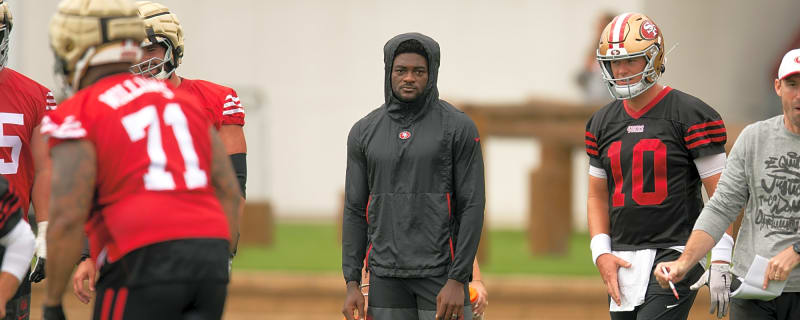
Washington Commanders: Why The Brandon Aiyuk Viral Social Media Antics Are a Blessing and Warning
If you’ve opened Instagram at any point recently, you’ve likely landed in the surreal alternate reality of the Brandon Aiyuk daily feed. Sitting on the San Francisco 49ers’ reserve/left squad list without a live game snap since October 2024, the disgruntled receiver has essentially turned his smartphone into an armed trolling machine.
Sonny Styles News / DC Sports King / June 25

Sonny Styles Taking Command of the Washington Offseason
When general manager Adam Peters and head coach Dan Quinn turned in the card for Ohio State linebacker Sonny Styles at No. 7 overall in the 2026 NFL Draft, traditional draft analysts raised a questioning eyebrow.
Da'Ron Payne News / NFLTradeRumors.co / June 25

Commanders To Let DT Daron Payne Play Out Contract
According to ESPN’s John Keim, the Commanders still plan to let veteran DT Daron Payne play out the 2026 season with a contract extension. Keim says the
Jayden Daniels News / A to Z Sports / June 25

ESPN points out glaringly obvious issue with the Washington Commanders, but it’s nothing Jayden Daniels can’t fix himself
The Commanders have plenty of questions at the skill positions on offense, but Jayden Daniels can help provide answers as long as he’s healthy. The Washington Commanders offense is a unit in transition, which is something Jayden Daniels and several others are used to, already.
Da'Ron Payne News / NFL on ClutchPoints / June 24

Why Commanders are waiting until after 2026 to talk Daron Payne contract extension
The Washington Commanders are looking energized before the 2026 season. Washington only won five games during the 2025 season, in part due to Jayden Daniels’ season-ending elbow injury.
Antonio Williams News / Athlon Sports / June 23

Antonio Williams Poised to Transform Commanders' Offense in 2026 Season
For a brief moment, the Washington Commanders legitimately believed that they had solved their offensive issues after years of walking around lost in the wilderness.
Washington Commanders News / Pro Football Rumors / June 22

Commanders Likely To Use RB Committee
The Commanders did some work to revamp their running backs room this offseason, but the team seems destined to operate without a definitive RB1. As ESPN’s John Keim writes, the Commanders will likely enter the 2026 campaign with a committee approach at the position.
Dan Quinn News / Pro Football Rumors / June 22

Commanders HC Dan Quinn On Hot Seat?
Toward the end of the 2025 season, it was reported Dan Quinn would be safe from what wound up being a long list of coaching departures around the NFL. That proved to be the case, although the Commanders’ staff will look much different in 2026.
Breaking News
Trending News









Customize Your Newsletter
 +
+




Get the latest news and rumors, customized to your favorite sports and teams. Emailed daily. Always free!
MY ACCOUNT
SUBSCRIBE
ADVERTISE
JOBS
FAQ
PRIVACY POLICY COOKIE POLICY CONTACT US
ABOUT YARDBARKER TERMS OF SERVICE


PRIVACY POLICY COOKIE POLICY CONTACT US
ABOUT YARDBARKER TERMS OF SERVICE
Copyright 2026 YB Media, LLC. All rights reserved.
By using this site, you agree to our Terms of Service and Privacy Policy.
This site is for entertainment purposes only.
There is no gambling offered on this site.
Gambling Problem? Call 1-800-Gambler.

By using this site, you agree to our Terms of Service and Privacy Policy.
This site is for entertainment purposes only.
There is no gambling offered on this site.
Gambling Problem? Call 1-800-Gambler.