
-

-


Follow Us
-

 On Facebook
 On Flipboard

 Free Newsletters
 On YouTube
Cleveland Browns News / Yardbarker / June 30

Browns reporter addresses Shedeur Sanders trade theory amid Deshaun Watson reports
During a recent chat with Michael Grant of Awful Announcing, Browns reporter Mary Kay Cabot of the Cleveland Plain Dealer addressed the theory about the Sanders trade rumors.
NFL News / Yardbarker / June 30

Cardinals CB Will Johnson sends warning to Seahawks, Rams, 49ers for 2026 season
The NFC West features a 49ers side that should again compete for at least a playoff spot, the reigning Super Bowl champion Seahawks and a Rams team that is downright scary on paper after it acquired superstar Myles Garrett.
NFL News / Yardbarker / June 30

Commanders were reportedly ready to do this for 49ers' Brandon Aiyuk before concerns
Aiyuk hasn't played in a regular-season game since he suffered a serious knee injury in October 2024.

The '100-rushing-yard NFL QBs' quiz
In the Super Bowl era (1966 to present) of the NFL, a total of 30 QBs have rushed for 100 yards or more in a regular-season game. How many of the 30 can you name in five minutes?

Washington Commanders News / Yardbarker / June 30

Commanders insider addresses Dan Quinn hot seat rumors after Sean McDermott report
A recent report suggested that the Washington Commanders could view former Buffalo Bills head coach Sean McDermott as an eventual replacement for current Washington head coach Dan Quinn.

25 first-round NFL picks that left fans confused
The NFL Draft always delivers many twists and turns that leave fans and analysts scratching their heads. This list isn't looking at hindsight and finding the biggest busts in history.
NFL News / Yardbarker / June 30

'Framework' for 49ers completing Maxx Crosby trade revealed
Is this what it would take for the 49ers to acquire Crosby?
New York Jets News / Yardbarker / June 30

Jets get major Geno Smith update after battery accusation
Is Smith's status for 2026 in jeopardy?
Tampa Bay Buccaneers News / Yardbarker / June 30

Report reveals if Buccaneers, Baker Mayfield are worried about contract situation
It is a storyline that continues to cast a large shadow over the franchise amid the NFL's ongoing summer break.
Atlanta Falcons News / Yardbarker / June 30

Falcons TE Kyle Pitts Sr. makes major admission about contract extension
Pitts is coming off the best season, to date, of his career after the fourth overall pick of the 2021 NFL Draft was somewhat of a disappointment across his first four campaigns.
NFL News / Yardbarker / June 29

Sports world reacts to former Titans RB Chris Johnson revealing ALS battle
Johnson, pick No. 24 in the 2008 NFL Draft, played 10 seasons for the Titans, New York Jets and Arizona Cardinals.


The 'Season-receiving leaders by NFL team' quiz
How many of the players responsible for the best receiving season in the history of each NFL franchise can you name in five minutes?

25 late-round draft picks who will impact the 2026 NFL season
The early-round picks get most of the headlines, but the later rounds are where championships are often built. These 25 late-round picks from the 2026 draft have a chance to make impacts as rookies and beyond.

Texas Tech Red Raiders News / Yardbarker / June 30

Brendan Sorsby has seemingly made major decision about NFL future
Has Sorsby made a decision on how and when he will attempt to enter the NFL?
Las Vegas Raiders News / Yardbarker / June 30

Raiders legend Tom Flores shares advice for Klint Kubiak, Fernando Mendoza
Numerous reports have indicated that HC Kubiak will eventually name veteran and free-agency signing Kirk Cousins the team's Week 1 starting QB over the rookie Mendoza.




NFL News / Yardbarker / June 29

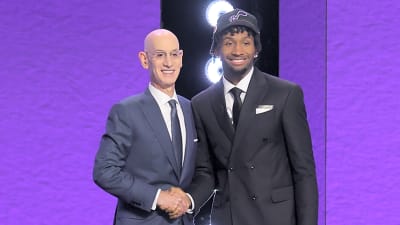
Lions get good news in latest offseason analysis
The Detroit Lions have a lot going on right now. They have a bevy of new draft picks who they're trying to get acclimated to the NFL life. They also have a star cornerback, Terrion Arnold, who was arrested on June 24 and is facing multiple felony charges, so there's plenty of uncertainty there.

Los Angeles Rams News / Yardbarker / June 30

Rams' Sean McVay has reportedly major Matthew Stafford wish amid Ty Simpson uncertainty
The Rams have the reigning MVP in Stafford atop the depth chart, but they also spent a valuable first-round draft pick on Simpson.

Baltimore Ravens News / Yardbarker / June 30

Ravens receive Zay Flowers warnings after contract extension reports
Last season, Flowers led the Ravens with 86 receptions, 118 targets and 1,211 receiving yards.
NFL News / Yardbarker / June 30

Commanders get new warning from inside source about 49ers' Brandon Aiyuk
Aiyuk generated headlines and sparked concerns via comments he has made in numerous social media videos shared over the past month or so.
NFL News / Yardbarker / June 30

Raiders' Maxx Crosby seems to make feelings on 49ers trade rumors clear
Ever since the Baltimore Ravens backed out of trading for Las Vegas Raiders star pass-rusher Maxx Crosby this past March, numerous stories and rumors have linked him with the San Francisco 49ers.
Baltimore Ravens News / Yardbarker / June 30

Why Ravens' Lamar Jackson may not sign contract extension before 2027
Jackson's contract situation continues to hover over the Ravens, and it sounds like that might not change any time soon.
NFL News / Yardbarker / June 29

Ravens' Lamar Jackson could be winner of AFC North's 'transition year'
The AFC North looks a lot different heading into the 2026 NFL season, and it's not just about the new head coaches.

Cincinnati Bengals News / Yardbarker / June 29

Joe Burrow faces potential make-or-break season after Bengals, LSU comparison
Burrow’s confidence is still as high as ever.
Las Vegas Raiders News / Yardbarker / June 29

NFL writer names Raiders as one of offseason's top winners
The Las Vegas Raiders are one of the fascinating exciting teams in the NFL to watch right now.
Dallas Cowboys News / Yardbarker / June 29

Jerry Jones, Cowboys earn high marks ahead of 2026 season
Jerry Jones isn't usually super active during the offseason. But never say never. He broke the mold this time around. As soon as the NFL offseason kicked in, Jones started making moves for the Dallas Cowboys, and now, it's already paying off.
New York Giants News / Yardbarker / June 29

Which Giants have the most on the line in 2026?
Ending the struggle starts with the stars and their play on the field, but there are plenty more Giants who can make a significant impact this season.
Cleveland Browns News / Yardbarker / June 29

Rookie KC Concepcion sends warning to NFL amid Browns' QB uncertainty
Cleveland hasn't yet named either 2025 rookie Shedeur Sanders or veteran Deshaun Watson its 2026 Week 1 starting quarterback.
Breaking News
Trending News







Customize Your Newsletter
 +
+




Get the latest news and rumors, customized to your favorite sports and teams. Emailed daily. Always free!
MY ACCOUNT
SUBSCRIBE
ADVERTISE
JOBS
FAQ
PRIVACY POLICY COOKIE POLICY CONTACT US
ABOUT YARDBARKER TERMS OF SERVICE


PRIVACY POLICY COOKIE POLICY CONTACT US
ABOUT YARDBARKER TERMS OF SERVICE
Copyright 2026 YB Media, LLC. All rights reserved.
By using this site, you agree to our Terms of Service and Privacy Policy.
This site is for entertainment purposes only.
There is no gambling offered on this site.
Gambling Problem? Call 1-800-Gambler.

By using this site, you agree to our Terms of Service and Privacy Policy.
This site is for entertainment purposes only.
There is no gambling offered on this site.
Gambling Problem? Call 1-800-Gambler.