
-

-


Follow Us
-

 On Facebook
 On Flipboard


The Miami Marlins entered the trade deadline sitting firmly in the thick of the National League Wild Card race, just 2 games back of the final playoff wild card spot at 58-55. Instead of buying to bolster that push, the Marlins sold, shipping out catcher Liam Hicks to the Rays and left-hander Braxton Garrett to the Cubs for a collection of low-level prospects that won’t move the needle in 2026. For a team fighting for its first playoff berth in years, that decision looks like the single biggest miscalculation of the entire Deadline.
Trading Hicks for Unproven Names While in the Hunt
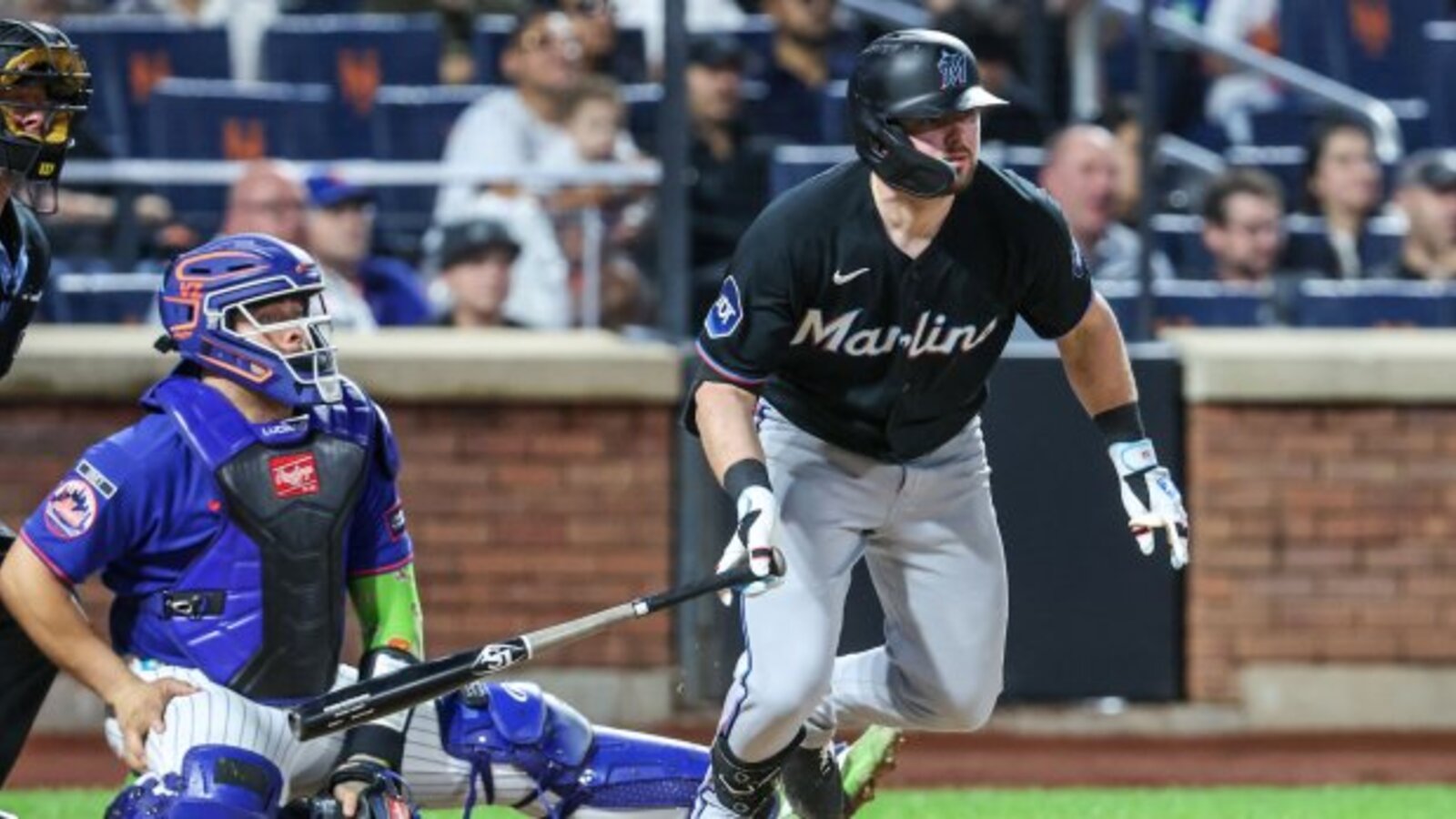
The Marlins sent Hicks to Tampa Bay in exchange for three of the Rays’ Top 30 prospects: infielder Brayden Taylor, right-hander Jacob Kisting and shortstop Adrian Santana, none of whom project to help a big-league roster in 2026. Hicks had been a legitimate offensive weapon at catcher and designated hitter, and while the presence of top prospect Joe Mack behind the plate made him expendable long-term, dealing him away in the middle of a playoff push signals a front office that prioritized 2027 and beyond over the current roster.
That’s the core problem with the timing. Miami wasn’t buried in the standings or clearly out of contention, sitting in a Wild Card position just days before making the move, which makes subtracting a productive everyday bat especially puzzling. Teams that sell at the Deadline are typically well outside the race, not sitting inside a playoff spot with real momentum on a five-game winning streak.
Dealing Garrett for Depth Pieces Thins an Already Stretched Rotation
Miami also sent Garrett to the Cubs for Triple-A infielder Jonathon Long and pitcher Jace Beck, neither of whom is likely to contribute at the major-league level in 2026. Garrett struggled in his brief major-league returns this season, but he posted a strong 2.90 ERA over 77 2/3 innings at Triple-A, giving the Marlins a viable rotation option if injuries struck down the stretch. Trading him away removes a safety net for a pitching staff that will need every bit of depth available in a tight Wild Card race over the season’s final two months.
The return in both deals underscores the mismatch between Miami’s on-field position and its front-office approach. The Marlins were exploring offers for several controllable, cost-effective players like Hicks, Otto Lopez and Xavier Edwards even before the Deadline arrived, suggesting ownership prioritized long-term financial flexibility over the current roster’s playoff equity.
A Wild Card Push Undermined By a Selling Mentality
Miami’s front office appears to be playing a longer game than its record suggests it should, and that disconnect could prove costly. The Marlins remain competitive in the standings, but subtracting a middle-of-the-order bat and a rotation depth piece for players who won’t debut in the majors this year runs directly counter to what a Wild Card contender should be doing at the Deadline.
If Miami misses the playoffs by even a game or two in September, these two trades will be remembered as the moment the front office blinked instead of pushing all-in for October.
More must-reads:
- Pete Crow-Armstrong makes more Cubs history in win over Reds
- Aaron Judge's comments on his latest injury will concern Yankees fans
- The 'Most lefty-homers in a season' quiz
Breaking News
Trending News







Customize Your Newsletter
 +
+




Get the latest news and rumors, customized to your favorite sports and teams. Emailed daily. Always free!
PRIVACY POLICY COOKIE POLICY CONTACT US
ABOUT YARDBARKER TERMS OF SERVICE


By using this site, you agree to our Terms of Service and Privacy Policy.
This site is for entertainment purposes only.
There is no gambling offered on this site.
Gambling Problem? Call 1-800-Gambler.
