Every true basketball fan wants to know who won the NBA Finals the year he or she was born, not to mention the winners before and after.
Here we chronicle the champion of every NBA season since 1950.
Kyle Terada/USA TODAY Sports
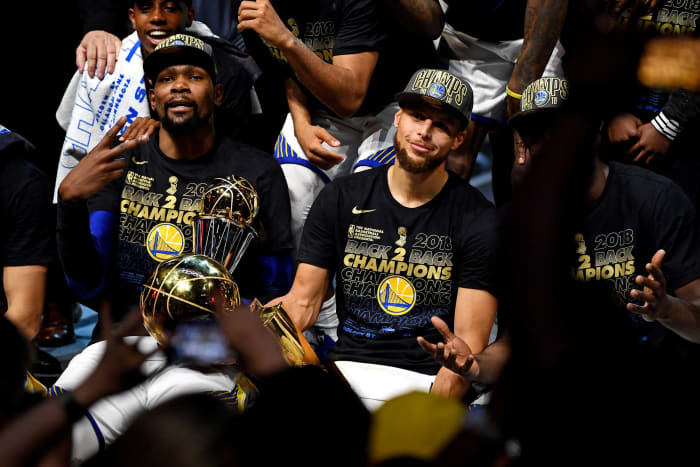
For the fourth straight year, the Warriors took on the Cavaliers in the NBA Finals, and for the third time in this four-year span, Golden State came out on top. This time, led by NBA Finals MVP Kevin Durant and the sharpshooting of Stephen Curry, the Warriors swept the Cavs, taking home second straight title.
2017: Golden State Warriors
Kelley L Cox / USA TODAY Sports
A year after the Warriors blew a 3-1 series lead and had their repeat attempt thwarted by LeBron James and the Cavaliers, they brought in former NBA MVP Kevin Durant to form an even more super super team. With Durant in tow, and taking home NBA Finals MVP, Golden State exacted revenge, defeating the Cavs for the title for the second time in three years, taking just five games to reclaim the Larry O'Brien Trophy.
Ezra Shaw / Getty Images
The Cavs, led by LeBron James, remarkably came back from trailing 3-1 in the Finals to win three straight games and defeat the 73-win Warriors. James was crowned the series MVP after bringing the title home to Cleveland.
2015: Golden State Warriors
Cem Ozdel / Anadolu Agency / Getty Images
Led by MVP Steph Curry, the Warriors marched over Cleveland 4-2 in the NBA Finals. They were first in the league in points with 110 per game and went 67-15 during the regular season.
Andy Lyons / Getty Images
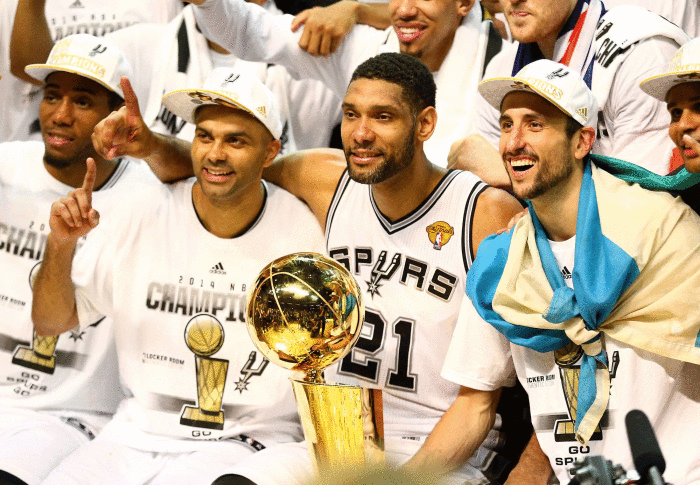
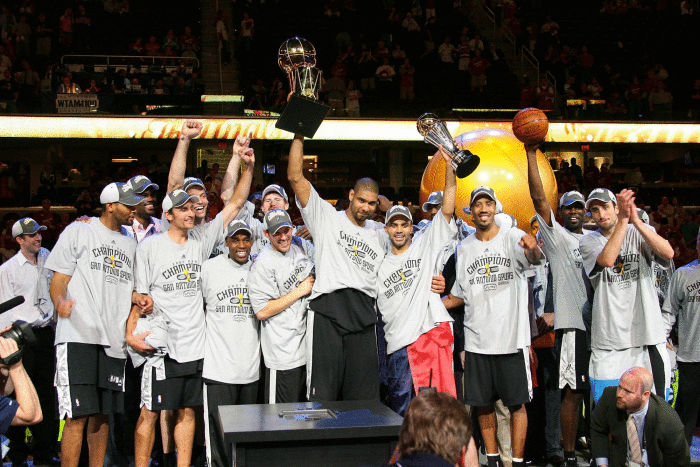
The Spurs beat the Heat in LeBron James' last season in Miami to win the NBA Finals. Tim Duncan won his fifth NBA title after going 62-20 during the regular season. The season was a full team effort, with no player averaging more than 17 points per game.
Kevin C. Cox / Getty Images
The trio of LeBron James, Dwyane Wade and Chris Bosh won back-to-back titles, taking down the Spurs in seven games in the NBA Finals. Miami went 66-16 during the regular season.
2012: Miami Heat
DON EMMERT / AFP / Getty Images
LeBron James and the Heat finally fulfilled their promise of winning an NBA title, beating the Thunder, 4-3, in the NBA Finals. The team went 46-20 during the regular season.
Glenn James / National Basketball Association / Getty Images
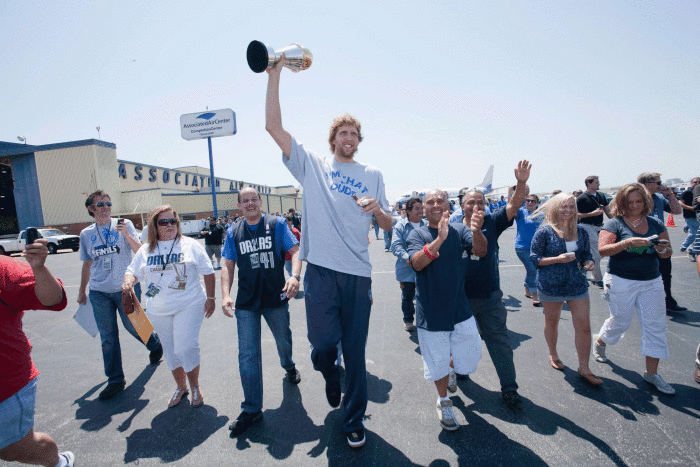
The Mavs unexpectedly won the NBA Finals, led by Dirk Nowitzki. After going 57-25 during the regular season and finishing second in the Southwest Division, Dallas cruised to the Finals and beat the favored Heat and Miami's big three.
Kevork Djansezian / Getty Images
In what would be Kobe Bryant's last title, the Lakers beat Boston, 4-3, in the NBA Finals. Bryant and Pau Gasol were the clear leaders of the Lakers, and coach Phil Jackson won his 11th championship.
2009: Los Angeles Lakers
Ronald Martinez / Getty Images
L.A. easily dismantled the Magic in the Finals, giving Phil Jackson his 10th ring. The Lakers went 65-17 during the regular season.
Jesse D. Garrabrant / National Basketball Association / Getty Images
The Celtics went all in with Paul Pierce, Ray Allen and Kevin Garnett, and the trio generated Boston's first title since 1986. Boston upset the Lakers 4-2 in the NBA Finals after going 66-16 during the regular season under coach Doc Rivers.
2007: San Antonio Spurs
Jesse D. Garrabrant / National Basketball Association / Getty Images
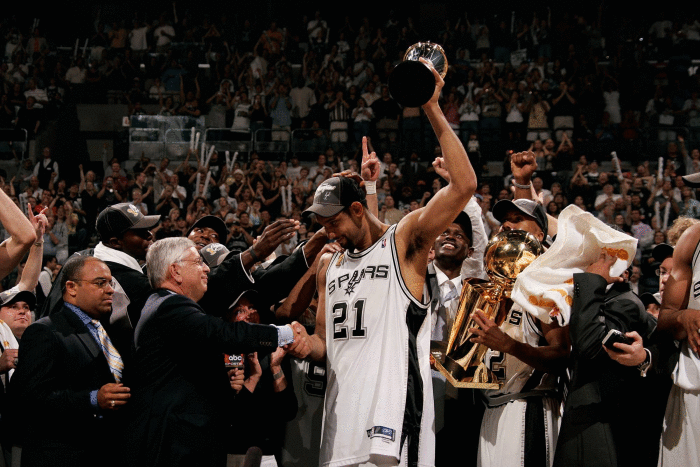
San Antonio had a dominant playoff run, capped off by a sweep of LeBron James' Cavaliers in the Finals. The Spurs were 58-24 during the regular season.
2006: Miami Heat
Ronald Martinez / Getty Images
Pat Riley took over as head coach of the Heat early in the 2005-06 season, and Dwyane Wade carried the team on his back through the playoffs. The Heat upset Dallas, 4-2, in the NBA Finals. The win also gave Shaquille O'Neal his fourth ring.
2005: San Antonio Spurs
Nathaniel S. Butler / National Basketball Association / Getty Images
The Spurs won their second championship in three years, beating the Pistons in seven games in the Finals. The team went 59-23 during the regular season.
Andrew D. Bernstein / NBAE / Getty Images
Coach Larry Brown led the Pistons to an NBA Finals win over the Lakers after going 54-28 during the regular season. The 2003-04 Pistons squad is often cited as one of the best teams ever without a clear star player, with Richard Hamilton leading the team with 17.6 points per game.
2003: San Antonio Spurs
Noah Graham / NBAE / Getty Images
MVP Tim Duncan led the Spurs to an NBA championship over the Nets in the Finals. The Spurs went 62-20 during the regular season, and Duncan averaged 23.3 points, 12.9 rebounds and 2.9 blocks.
2002: Los Angeles Lakers
Noren Trotman / NBAE / Getty Images
The Lakers swept the Nets in the NBA Finals behind the play of Kobe Bryant and Shaquille O'Neal, making it three straight Finals wins. L.A. went 58-24 during the regular season.
2001: Los Angeles Lakers
Nathaniel S. Butler / National Basketball Association / Getty Images
L.A. ousted the 76ers in the Finals 4-1 en route to the franchise's second straight championship. Kobe Bryant and Shaquille O'Neal both averaged more than 28 points during the regular season.
2000: Los Angeles Lakers
AFP / Getty Images
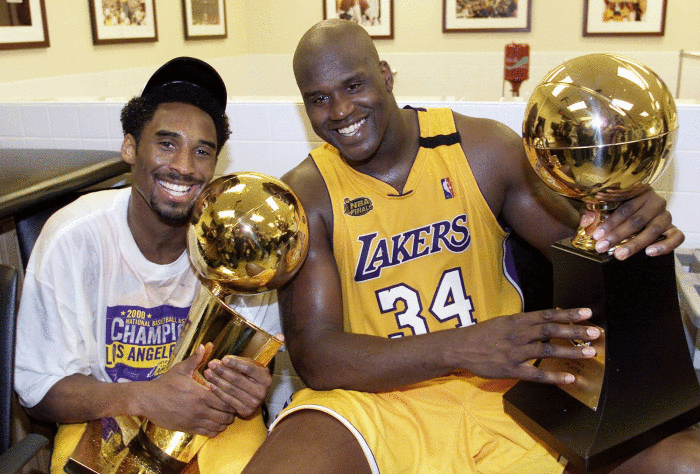
Shaq and Kobe picked up their first championship together after going 67-15 during the regular season. The Lakers team also featured Glen Rice, who averaged nearly 16 points per game. Shaq won the league MVP.
1999: San Antonio Spurs
Fernando Medina / National Basketball Association / Getty Images
Unstoppable in the paint between Tim Duncan and David Robinson, the Spurs won the first title in their decade-plus run. They defeated the Knicks 4-1 in the NBA Finals.
Scott Cunningham / National Basketball Association / Getty Images
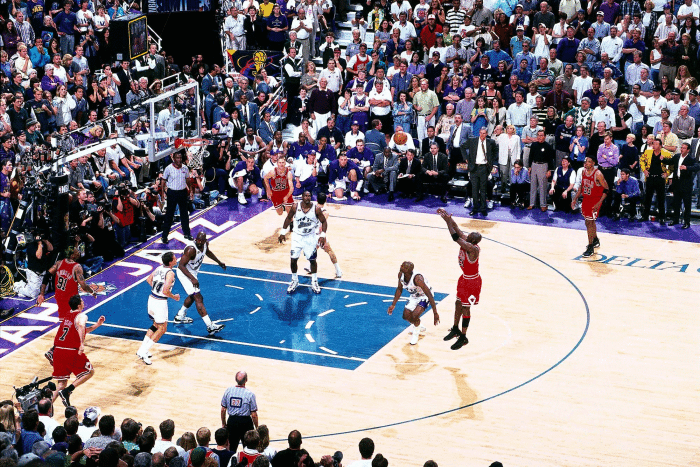
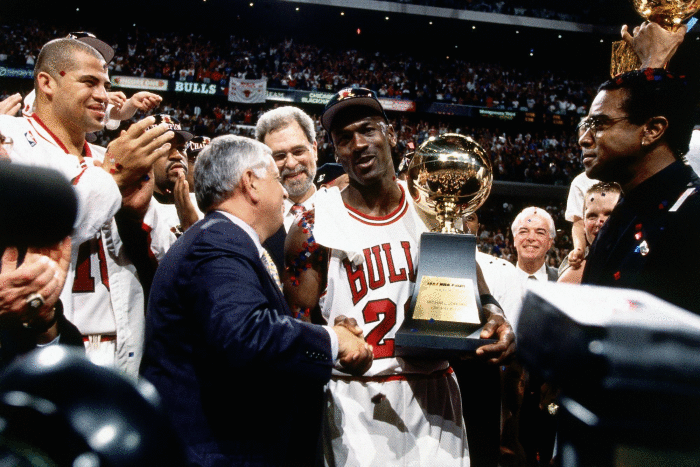
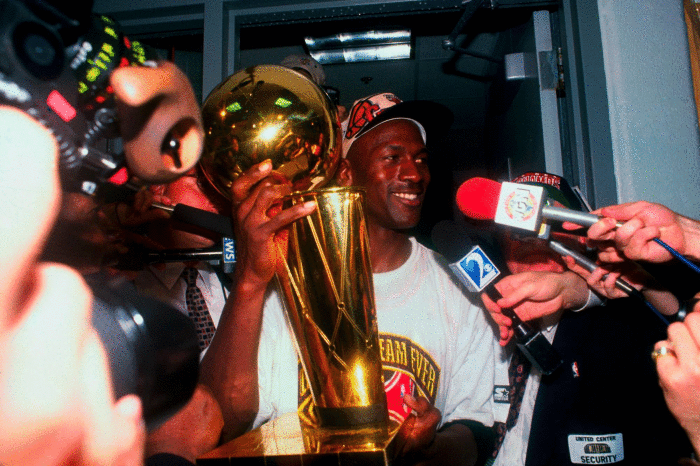
In what was thought to be Michael Jordan's final season, he made a game-winning shot in Game 6 vs. the Jazz to seal his sixth championship with the Bulls. MJ also won NBA MVP after averaging 28.7 points during the regular season. The championship was Chicago's third straight.
1997: Chicago Bulls
Nathaniel S. Butler / National Basketball Association / Getty Images
The Bulls beat the Jazz 4-2 in the Finals, capping off a 69-win regular season for their second straight title.
1996: Chicago Bulls
Scott Cunningham / National Basketball Association / Getty Images
After winning the MVP in his return from hiatus and averaging 30.4 points per game, Michael Jordan led the Bulls to a historic 72-win regular season. The Bulls beat Seattle 4-2 in the NBA Finals.
Barry Gossage / National Basketball Association / Getty Images
The Rockets made it back-to-back championships, marching over the Magic in the NBA Finals. Houston went just 47-35 during the regular season.
1994: Houston Rockets
Nathaniel S. Butler / National Basketball Association / Getty Images
Hakeem Olajuwon finished off his MVP season with his first NBA title, beating the Knicks 4-3 in the Finals. He led the team, averaging 27.3 points, 11.9 rebounds and 3.7 blocks per game.
1993: Chicago Bulls
Nathaniel S. Butler / National Basketball Association / Getty Images
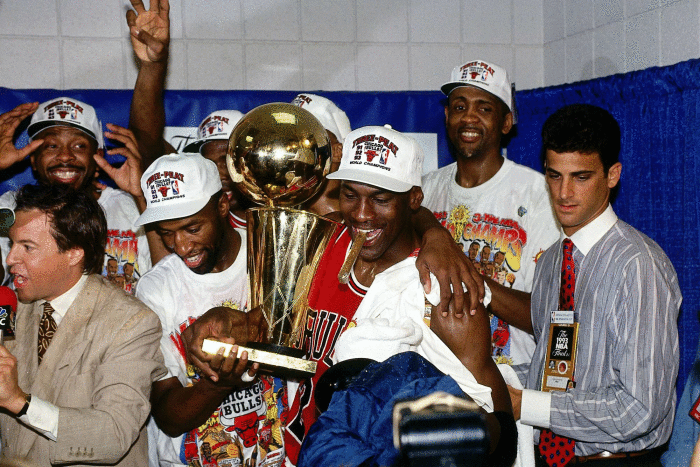
Michael Jordan and the Bulls completed their third straight championship with a 4-2 series win over the Suns and Charles Barkley in the Finals. Jordan decided to retire briefly following the season after the passing of his father.
1992: Chicago Bulls
Nathaniel S. Butler / National Basketball Association / Getty Images
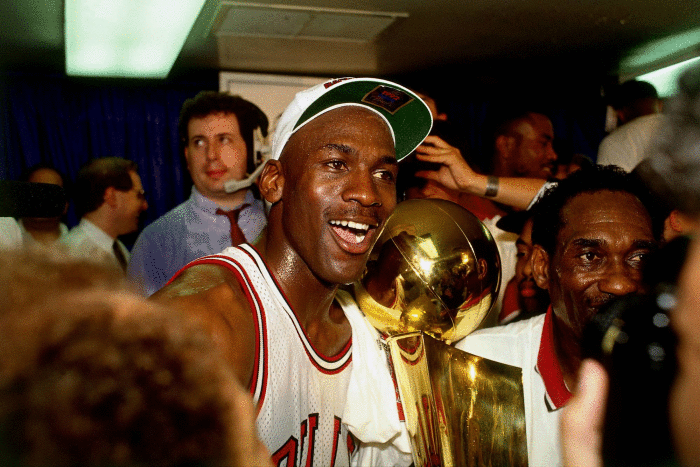
Michael Jordan won his second straight MVP and NBA championship in 1992, winning 67 games during the regular season. He averaged more than 30 points per game during the regular season.
1991: Chicago Bulls
Andrew D. Bernstein / National Basketball Association / Getty Images
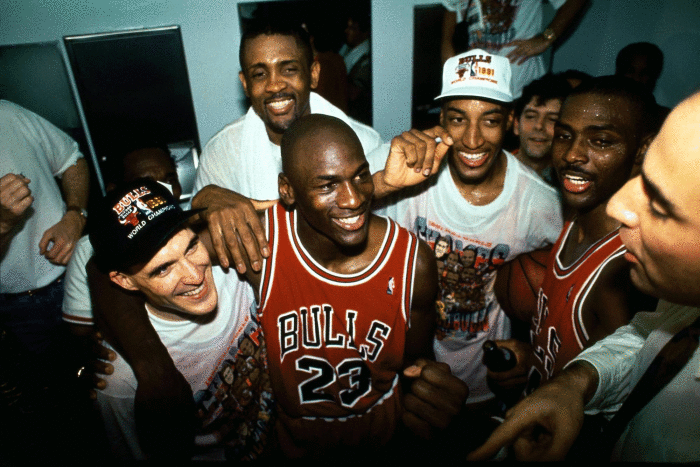
The tandem of Michael Jordan and Scottie Pippen, along with coach Phil Jackson, won their first of six titles in 1991, beating Magic Johnson's Lakers, 4-1, in the NBA Finals. Jordan averaged 31.5 points during the regular season and won MVP.
1990: Detroit Pistons
Nathaniel S. Butler / National Basketball Association / Getty Images
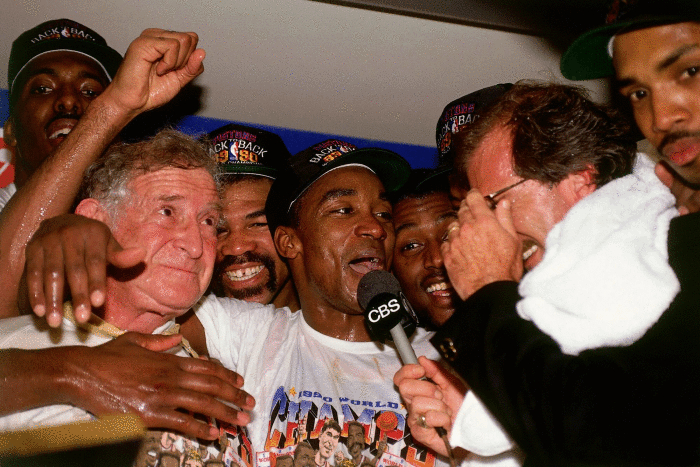
The Bad Boys were able to repeat in 1990, beating Portland, 4-1, in the NBA Finals. Isiah Thomas won Finals MVP.
1989: Detroit Pistons
Nathaniel S. Butler / National Basketball Association / Getty Images
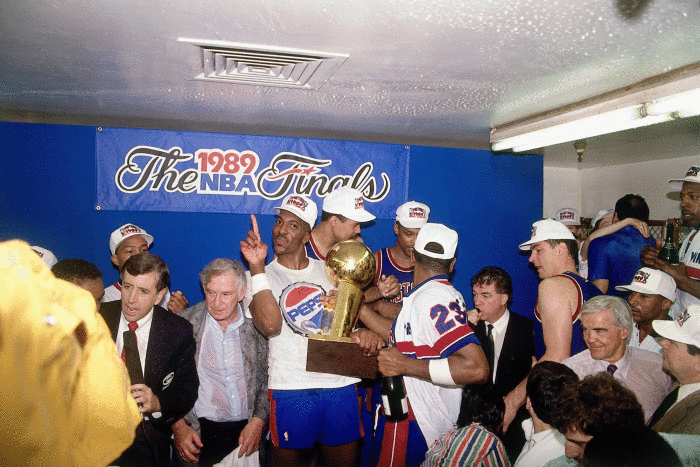
Detroit capped off a 63-19 regular season by sweeping the Lakers in the Finals. Joe Dumars won Finals MVP.
1988: Los Angeles Lakers
Andrew D. Bernstein / National Basketball Association / Getty Images
The Lakers won their second straight title and third in four years, beating the Pistons in seven games in the Finals. L.A. had three players average more than 19 points during the regular season, and James Worthy won the Finals MVP.
1987: Los Angeles Lakers
Andrew D. Bernstein / National Basketball Association / Getty Images
Magic Johnson finished off an MVP regular season by winning the NBA Finals for the second time in three years. The Lakers won 65 games during the regular season.
1986: Boston Celtics
Dick Raphael / National Basketball Association / Getty Images
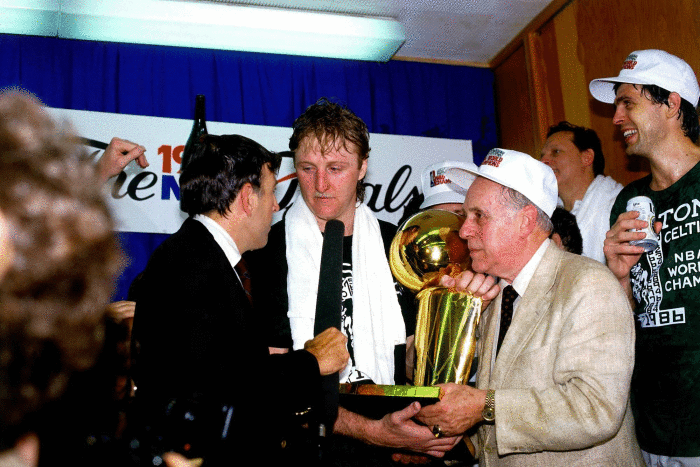
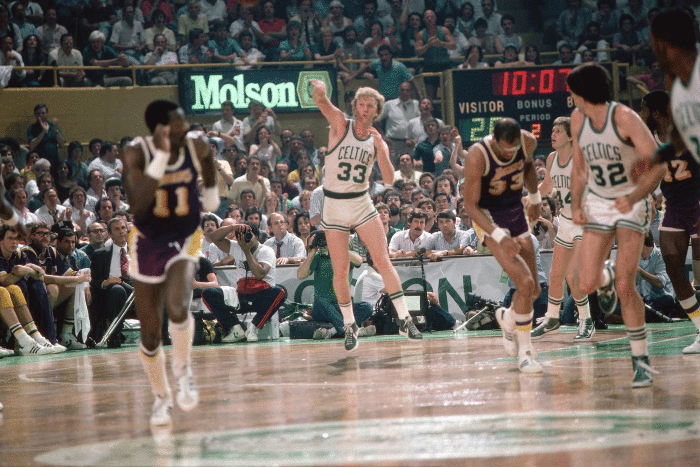
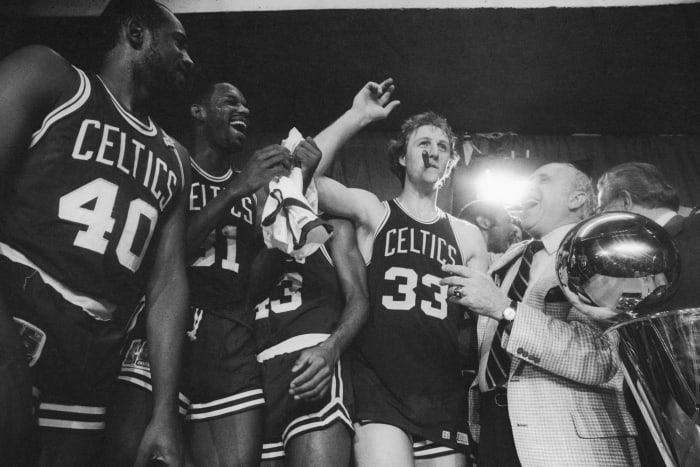
Boston won its second championship in three years, beating Houston in six games in the Finals. The team went 67-15 during the regular season, and Larry Bird won his third straight MVP, averaging 25.8 points, 9.8 rebounds and 6.8 assists.
1985: Los Angeles Lakers
Andrew D. Bernstein / National Basketball Association / Getty Images
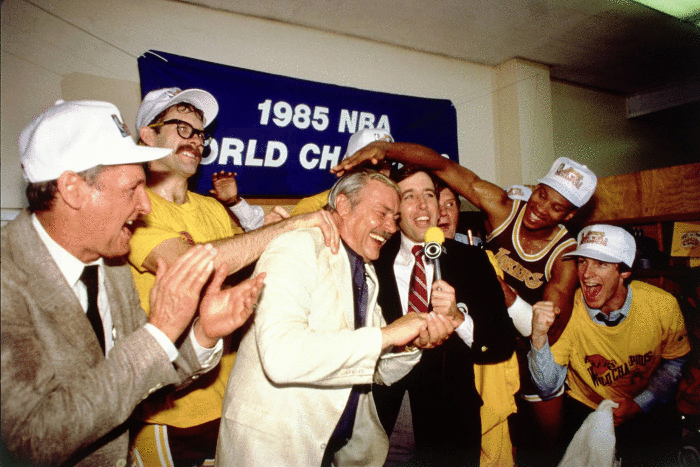
Los Angeles won its first championship since 1982, as Magic Johnson took down arch-nemesis Larry Bird in a historic six-game Finals. Kareem Abdul-Jabbar was crowned Finals MVP.
1984: Boston Celtics
Dick Raphael / National Basketball Association / Getty Images
Larry Bird won NBA MVP during the regular season and finished it off with a championship win over the Lakers in a terrific seven-game series. Bird also won Finals MVP.
1983: Philadelphia 76ers
NBA Photos / NBAE / Getty Images
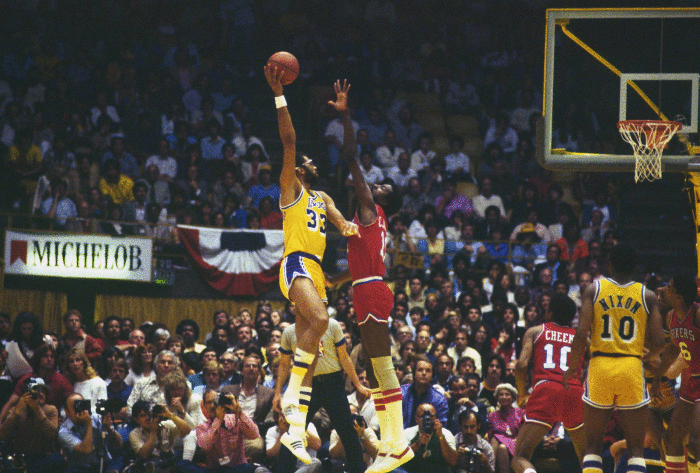
Led by MVP Moses Malone and Julius Erving, the 76ers swept the Lakers in the NBA Finals. Malone averaged 24.5 points and 15.3 rebounds during the regular season.
1982: Los Angeles Lakers
Focus on Sport / Getty Images
The Lakers claimed their second ring in three years, beating the 76ers in the six games in the NBA Finals. Coach Pat Riley took over the team early in the season and went 50-21. Magic Johnson was named Finals MVP.
1981: Boston Celtics
Bettmann / Getty Images
Cedric Maxwell was named Finals MVP after the Celtics beat Houston in six games. Boston won 62 games during the regular season.
1980: Los Angeles Lakers
Focus on Sport / Getty Images
Magic Johnson won his first ring, as the Lakers beat the 76ers in six games in the NBA Finals. Magic was named Finals MVP.
1979: Seattle SuperSonics
NBA Photos / National Basketball Association / Getty Images
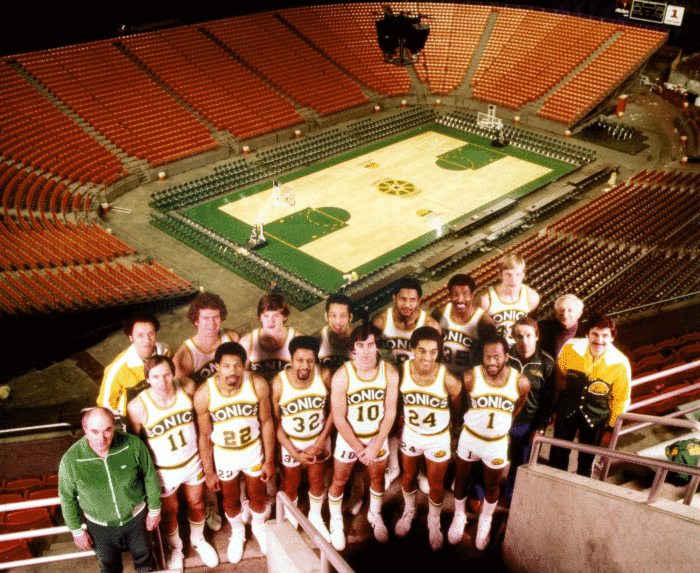
The SuperSonics, led by head coach Lenny Wilkens, defeated Washington, 4-1, in the NBA Finals. Dennis Johnson was named Finals MVP.
1978: Washington Bullets
NBA Photo Library / NBAE / Getty Images
The Bullets went only 44-38 during the regular season but beat Seattle, 4-3, in the NBA Finals to win the NBA championship. Center Wes Unseld was named Finals MVP.
NBA Photos / National Basketball Association / Getty Images
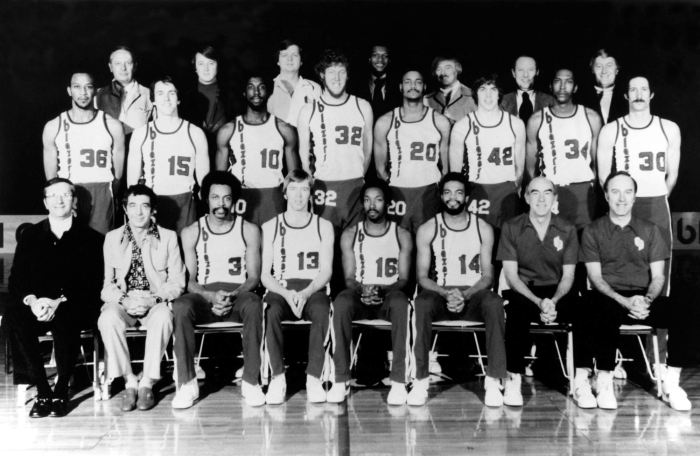
Dr. Jack Ramsay led the Blazers to a 4-2 Finals win over Philadelphia, with Bill Walton winning series MVP after averaging 18.5 points and 19 rebounds.
1976: Boston Celtics
Dick Raphael / National Basketball Association / Getty Images
Boston took down Phoenix in the NBA Finals in six games, led by Jo Jo White's 21-plus points per game.
1975: Golden State Warriors
NBA Photos / National Basketball Association / Getty Images
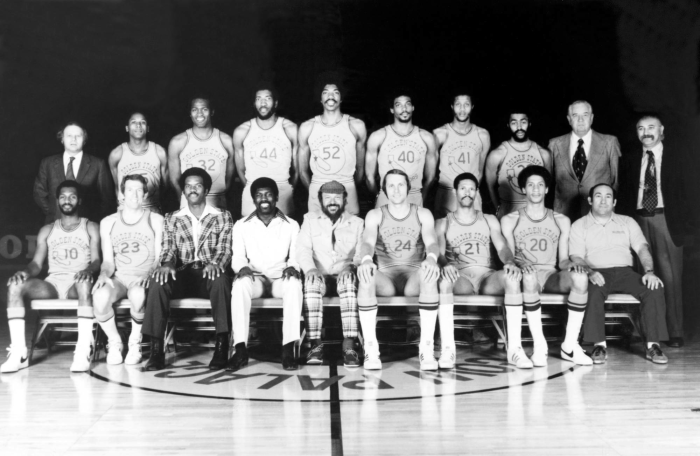
The Warriors swept the Bullets in the NBA Finals despite a 48-34 record during the regular season. Rick Barry was named Finals MVP.
1974: Boston Celtics
Dick Raphael / NBAE / Getty Images
The Celtics beat Milwaukee in seven games in the NBA Finals. Hall of Famer John Havlicek was named Finals MVP, averaging 26.4 points per game.
Bettmann / Getty Images
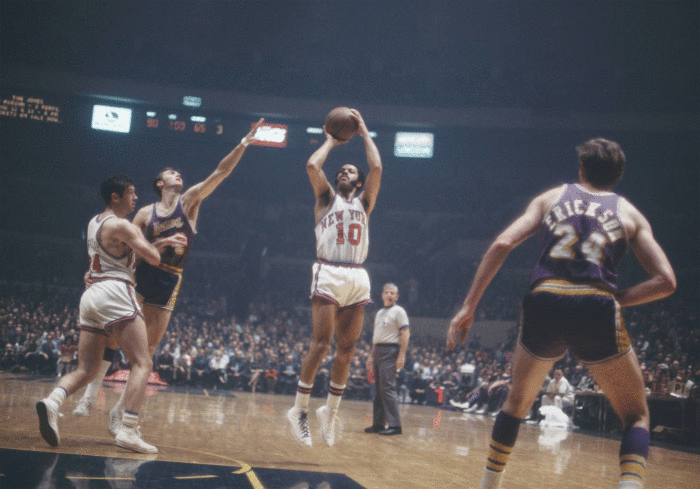
The Knicks took down the defending champion Lakers in the Finals over five games, led by Willis Reed's Finals MVP performance.
1972: Los Angeles Lakers
Focus on Sport / Getty Images
A loaded Lakers team that included Hall of Famers Jerry West, Wilt Chamberlain, Gail Goodrich and Elgin Baylor went 69-13 during the regular season and beat the Knicks in five games in the Finals. Chamberlain was the Finals MVP, averaging 19.4 points and 23.2 rebounds.
NBA Photos / National Basketball Association / Getty Images
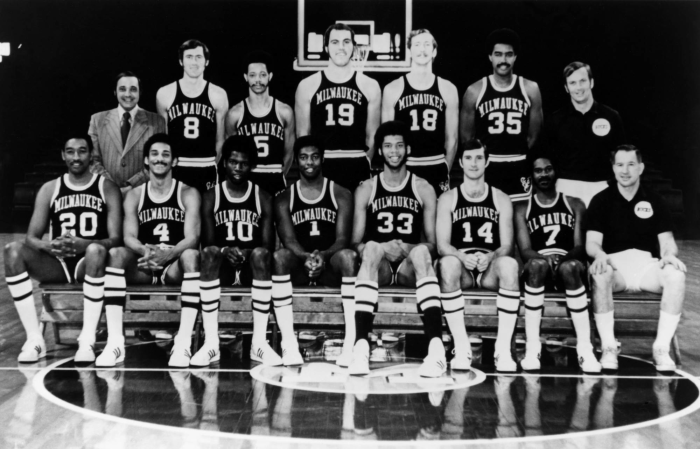
The Bucks, led by MVP Kareem Abdul-Jabbar, swept the Baltimore Bullets in the Finals.
1970: New York Knicks
Focus on Sport / Getty Images
Regular-season MVP Willis Reed and the Knicks beat the Lakers in seven games to win the NBA Finals. Reed was also the Finals MVP.
1969: Boston Celtics
Dick Raphael / National Basketball Association / Getty Images
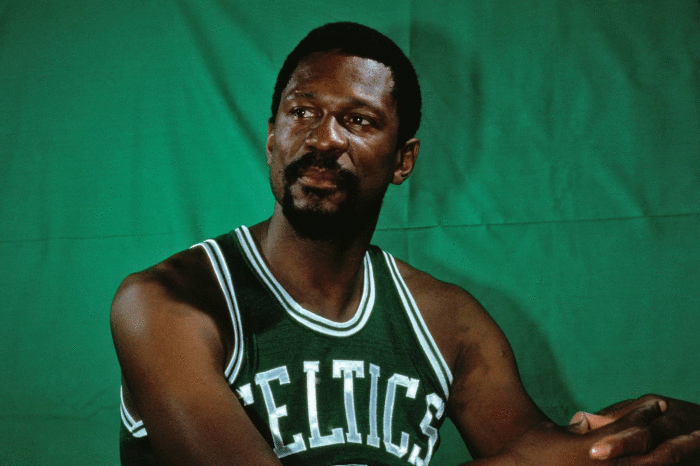
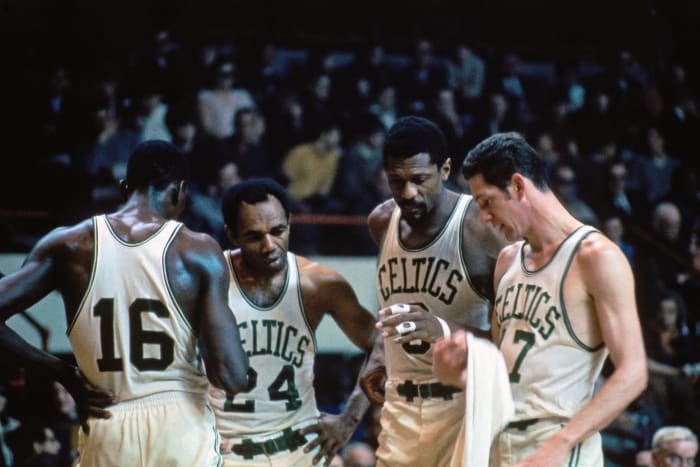
The Celtics won their second straight NBA championship and ninth of the decade by beating the Lakers in seven games. Player-coach Bill Russell led the team to a 48-34 record during the regular season, and the Celtics won the championship despite Jerry West's 37.9 points per game during the Finals. It was Russell's final season.
1968: Boston Celtics
Dick Raphael / NBAE / Getty Images
The Celtics got back on track after failing to win it all in 1967, beating the Lakers in six games. John Havlicek led the team with 27.3 points per game during the Finals.
1967: Philadelphia 76ers
NBA Photos / National Basketball Association / Getty Images
After beating the Celtics in the Eastern Finals, Philadelphia beat the Warriors in six games to win it all. Wilt Chamberlain averaged a staggering 28.5 rebounds during the Finals.
1966: Boston Celtics
Bettmann / Getty Images
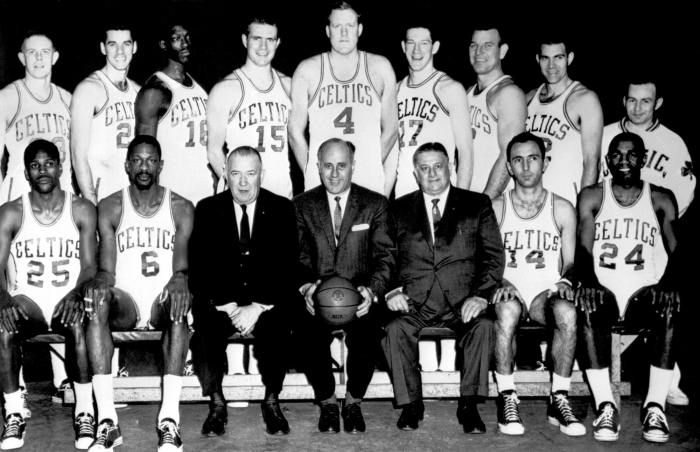
Boston won its eighth championship in a row, beating the Lakers in seven games during the Finals. Bill Russell averaged 23.6 points and 24.3 rebounds in the series.
1965: Boston Celtics
NBAP / NBAE / Getty Images
After claiming the regular-season MVP, Bill Russell helped the Celtics to their seventh straight championship with a five-game win over the Lakers in the Finals. Sam Jones also averaged 27.8 points during the Finals.
1964: Boston Celtics
Focus on Sport / Getty Images
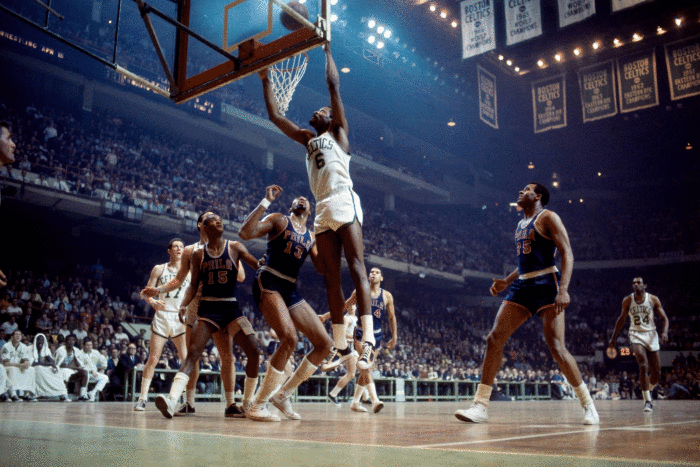
It was six straight for Boston, with the team taking down the Warriors in the Finals. Despite only averaging 11.2 points per game during the Finals, Bill Russell chipped in 25.2 rebounds and five assists per game.
1963: Boston Celtics
NBA Photos / National Basketball Association / Getty Images
Bill Russell won his third straight regular-season MVP and fifth straight championship, beating the Lakers in the Finals. He averaged 20 points and 26 rebounds during the series.
1962: Boston Celtics
NBA Photos / National Basketball Association / Getty Images
It was four straight championships for Boston, with the team beating Los Angeles in seven games in the Finals. The 60-win Celtics were led by Bill Russell again, who averaged 22.9 points, 27 rebounds and 5.7 assists per game during the Finals.
1961: Boston Celtics
NBA Photos / National Basketball Association / Getty Images
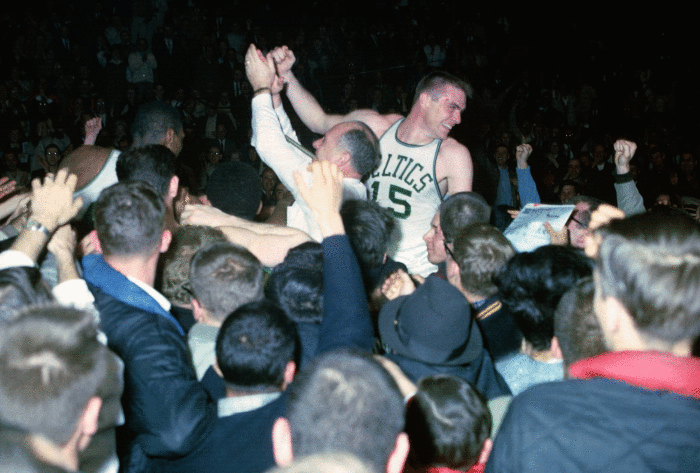
Boston beat the St. Louis Hawks in the Finals for its third straight championship. Tom Heinsohn led the team with 22 points per game in only 26.2 minutes per game during the Finals.
1960: Boston Celtics
Underwood Archives / Archive Photos / Getty Images
Boston's repeat took a seven-game series against the St. Louis Hawks in the Finals. The Celtics finished 59-16 during the regular season.
1959: Boston Celtics
Dick Raphael / National Basketball Association / Getty Images
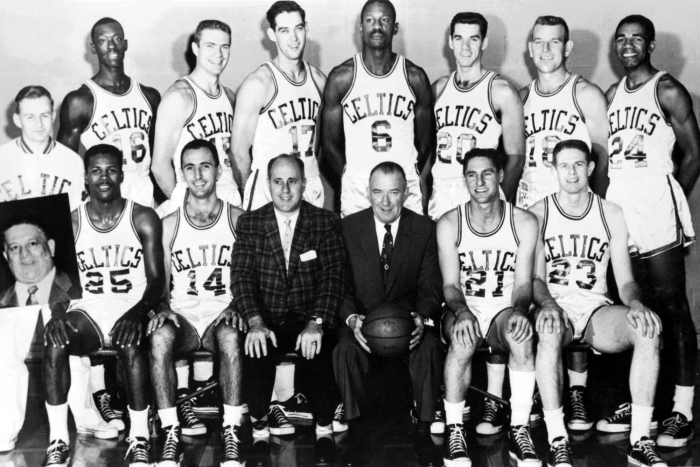
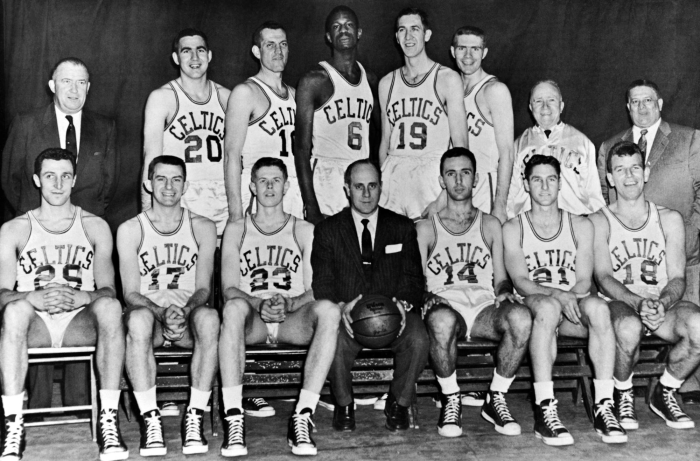
Boston won its second championship in three years, sweeping the Minnesota Lakers in the Finals. Tom Heinsohn led the team in points during the Finals, while Bill Russell had nearly 30 rebounds per game.
1958: St. Louis Hawks
NBA Photos / National Basketball Association / Getty Images
The Hawks beat Boston in six games in the Fianls after going 41-31 during the regular season. Bob Pettit was the team's top player, averaging 29.3 points and 17 rebounds in the Finals.
1957: Boston Celtics
NBA Photos / National Basketball Association / Getty Images
The loaded Celtics roster won the Finals in seven games over St. Louis, getting huge contributions out of Tom Heinsohn, Bill Sharman, Bob Cousy and rookie Bill Russell.
1956: Philadelphia Warriors
Charles T. Higgins / National Basketball Association / Getty Images
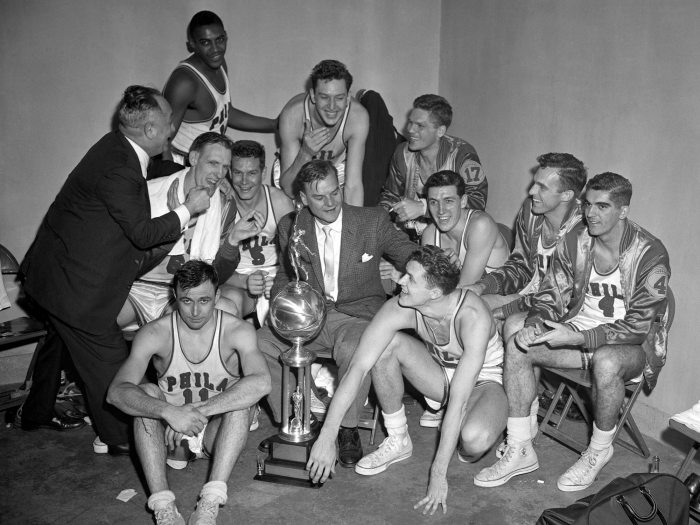
The Warriors beat the Fort Wayne Pistons in the Finals in five games after going 45-27 during the regular season. Paul Arizin led the team with 27.6 points per game during the Finals.
1955: Syracuse Nationals
The Stevenson Collection / NBAE / Getty Images
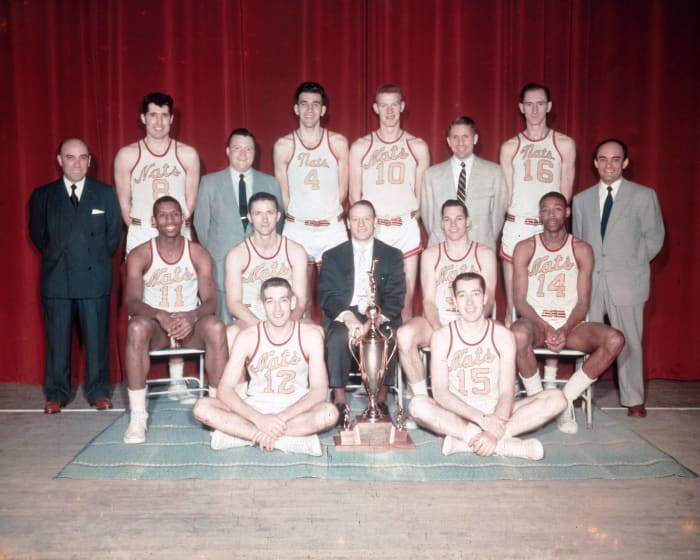
Syracuse beat the Fort Wayne Pistons during the Finals in seven games behind star player Dolph Schayes.
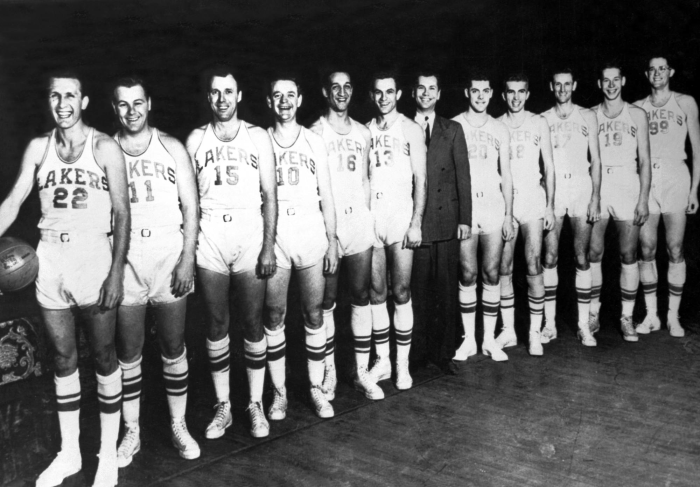
1954: Minneapolis Lakers
NBA Photos / National Basketball Association / Getty Images
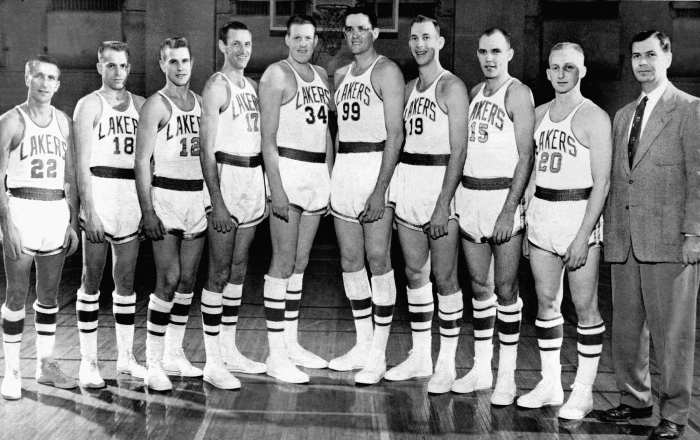
Minneapolis won its third championship in a row, beating Syracuse in seven games in the Finals. George Mikan led the team in scoring.
1953: Minneapolis Lakers
NBA Photos / National Basketball Association / Getty Images
After going 48-22 during the regular season, the Lakers beat the Knicks in the NBA Finals.
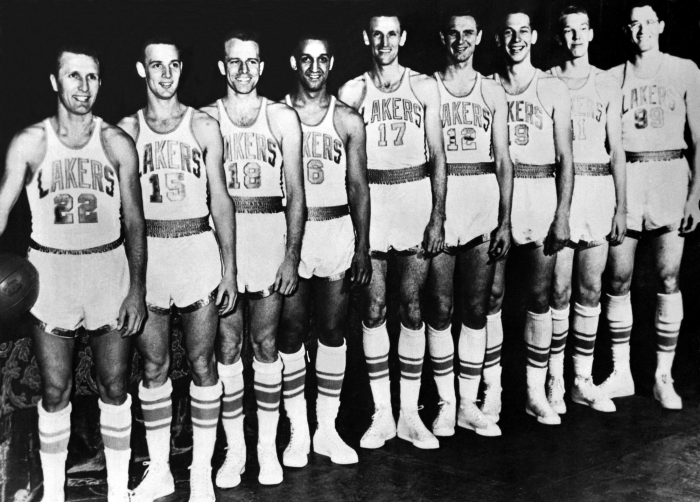
1952: Minneapolis Lakers
NBA Photos / National Basketball Association / Getty Images
The Lakers started their championship streak by beating the Knicks in seven games in the Finals. George Mikan averaged 21.7 points and 17.4 rebounds during the Finals.
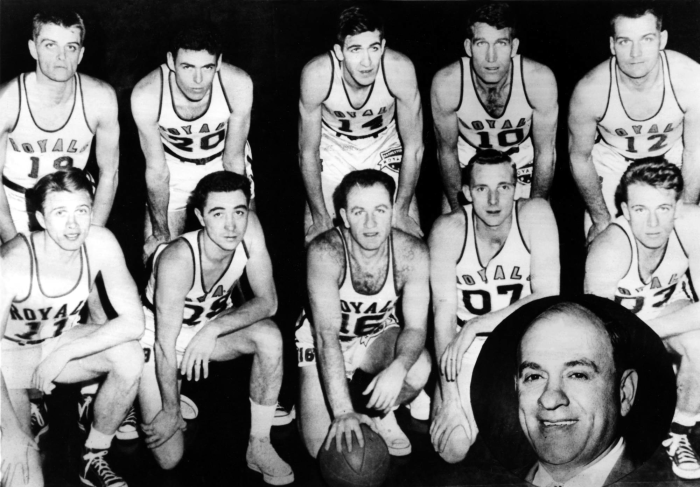
1951: Rochester Royals
NBA Photos / National Basketball Association / Getty Images
The Royals beat the Knicks in seven games. Arnie Risen averaged 21.7 points per game in the Finals.
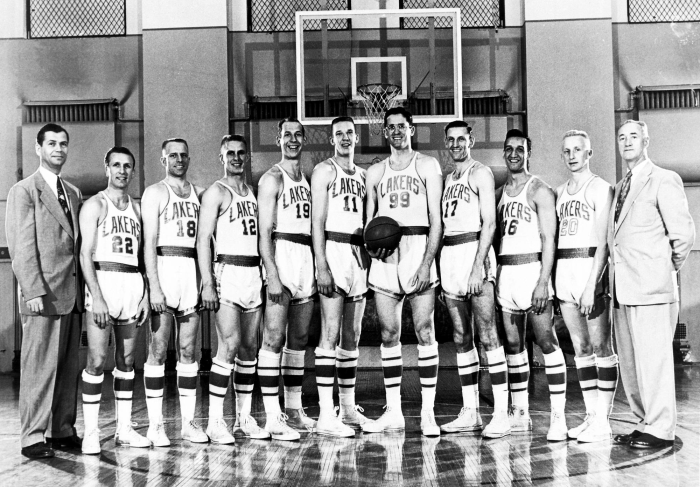
1950: Minneapolis Lakers
NBA Photos / National Basketball Association / Getty Images
The Lakers beat Syracuse in the Finals, as George Mikan led the team with 32.2 points per game in a series than spanned six games.



 On Facebook
 On Flipboard






























 +
+






