
-

-


Follow Us
-

 On Facebook
 On Flipboard
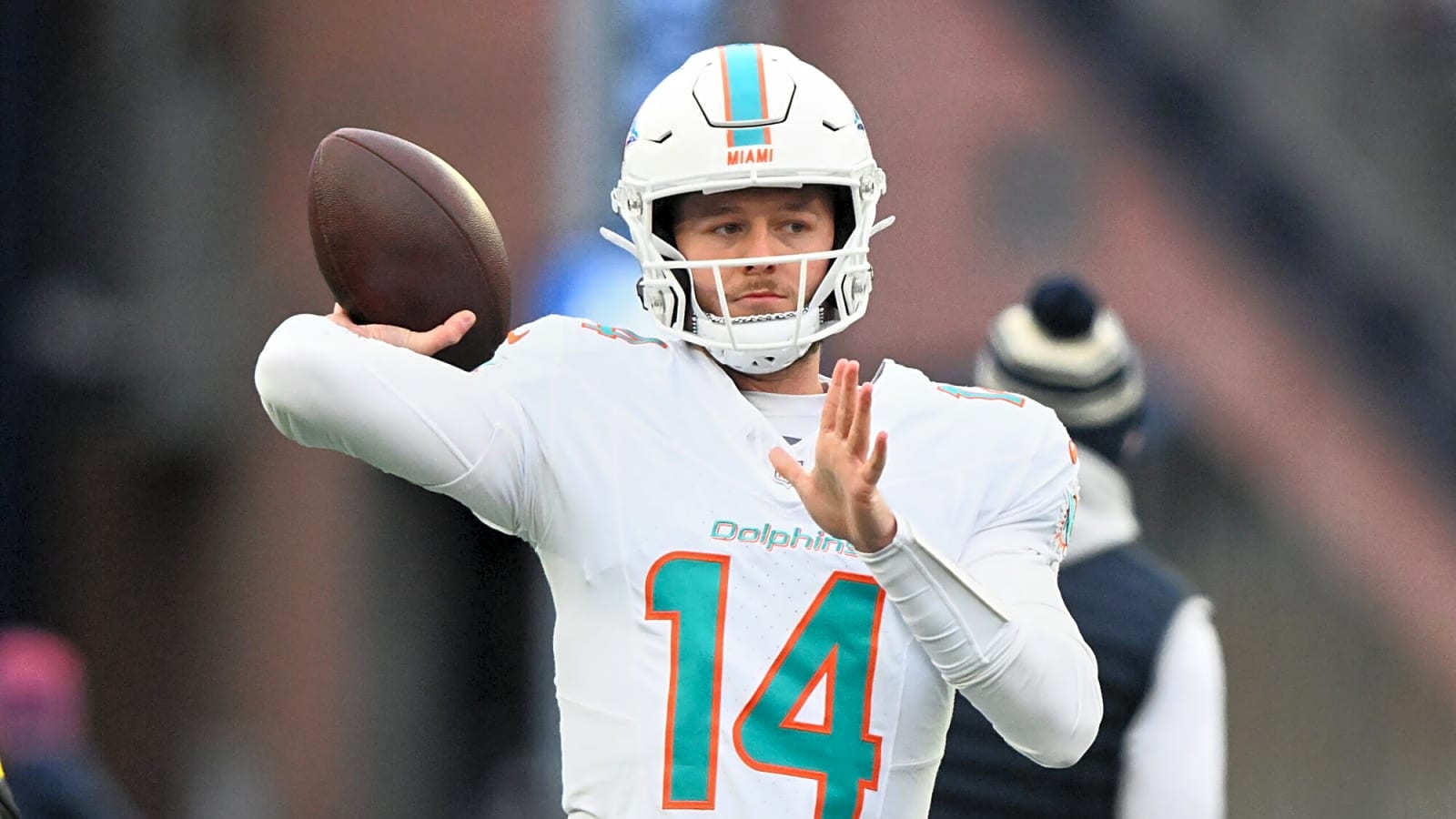
Somewhere in a draft war room this week, an NFL general manager will call a name. The kid on the other end of the phone will smile, hug his family, put on the hat. And then sign a contract worth less money than the one he just walked away from. That sentence used to be impossible. For over a century of professional football, the draft meant a raise. The 2026 NFL Draft, scheduled for April 23-25, marks the first time that math runs backward. The hat still fits. The check got smaller.
The $8 Million Decision
Quinn Ewers had $8 million in NIL offers sitting on the table at Texas. He turned them down. Entered the 2025 NFL Draft instead and signed with the Miami Dolphins as a seventh-round pick for a four-year deal valued at $4.3 million. That’s roughly half the college money, spread over four times the commitment. Ewers explained his reasoning: “It’s not about the materialistic things of this world because it comes and goes. What’s important to me is the relationships that are built along the way.” He then left Texas for Miami.
A Pattern, Not an Outlier

Ewers wasn’t alone. Ty Simpson rejected a $6.5 million transfer offer, choosing instead to bet on himself by entering the 2026 NFL Draft. “I’m absolutely a first-rounder,” Simpson said. And Dante Moore, widely projected as a top-5 pick to the New York Jets, chose to remain at Oregon entirely. A top-5 NFL prospect looked at professional money and said no thanks. The assumption that every elite player dreams of draft night just died in a spreadsheet.
The Quote That Changed Everything

Philadelphia Eagles GM Howie Roseman said it plainly: “The biggest issue is that, for the first time in the history of the National Football League, you’re taking players who are taking pay cuts. So the character of those players, their passion and love of the game, comes to the forefront even more.” First time. In history. An NFL executive admitted the league can no longer outbid a college campus. The rookie wage scale, built in 2011 to protect owner profits, now bleeds talent back to the schools it was supposed to drain.
The Machine Behind the Money

The 2021 NCAA v. Alston Supreme Court ruling put the entire amateurism model under legal siege, and rather than risk further antitrust exposure, the NCAA voluntarily opened NIL compensation in July 2021. The floodgates weren’t court-ordered; they were opened by an institution that saw the writing on the wall. The House v. NCAA settlement in June 2025 blew them off the hinges, permitting schools to share up to $20.5 million annually in direct revenue with athletes. Donor collectives now function as shadow payrolls, offering five-, six-, and seven-figure packages with minimal deliverables. College football still calls itself amateur athletics. It employs recruitment wars, annual salaries, transfer portals, and exclusivity clauses. That’s professional machinery wearing a letterman jacket, and the NFL’s rigid salary cap cannot compete with fundraising that answers to no CBA.
The Numbers That Broke the Model

Division I schools generated $14.6 billion in revenue during the 2024 fiscal year. Arch Manning’s NIL valuation peaked at $6.8 million in mid-2025 and currently sits at $5.4 million, still the highest in college football. Top returning quarterbacks in the transfer portal commanded $3 million to $5 million annually. A first-overall NFL pick earns approximately $58 million over four years, but the 32nd pick gets roughly $15.8 million. By the fourth round, college wins outright. The wage scale created a cliff, and college built a bridge over it.
The Ripple Nobody Predicted

Approximately 6,700 Division I players entered the 2026 transfer portal window. Thirteen of seventeen quarterbacks in the 2024 ESPN 300 have already transferred, four of them to a third school in three years. The draft pool shrinks as top prospects stay in college, mid-round talent thins out, and front office risk skyrockets. NFL teams now hire sports psychologists and restructure combine interviews around intrinsic motivation rather than financial incentive. Scouting departments built to evaluate talent are learning to evaluate character instead, because money no longer separates the committed from the uncommitted.
The New Rule, Not the Exception

In 2022, 90% of FBS athletic directors surveyed expressed concern that NIL payments were being used as improper recruiting inducements, and 77% predicted an unregulated NIL market would lead to increased scandal. They were right. College football now operates as a semi-professional league funded by wealthy booster collectives, granting players annual free agency through the transfer portal and guaranteed revenue sharing. Once you see it, you cannot unsee it: college offers both money AND freedom, while the NFL offers rigid structure and lower pay for anyone outside the top ten picks. Second-round picks in the 2025 draft received fully guaranteed contracts, an unprecedented milestone signaling the NFL already feels the pressure to compete.
The Dominoes Still Falling

More top prospects staying in college means a shallower draft. A shallower draft means competition for remaining talent intensifies. That means trade prices inflate and front offices gamble more capital on fewer players. Non-Power 4 schools get crushed further, unable to match wealthy collectives concentrated at elite programs. A presidential executive order already targets five-year eligibility limits and one-transfer caps, which is federal intervention language for “the system failed.” When the White House weighs in on college football roster management, the old model isn’t just broken. It’s being autopsied.
The Fight That Comes Next

The NFL’s next collective bargaining agreement, projected around 2030, will almost certainly address rookie scale compensation. It has to. The league built a pay structure that assumed college would always be free labor, and that assumption just cost them a top-5 quarterback who chose Oregon over the Jets. The person who understands this story can predict which prospects declare and which stay, which franchises overpay in trades, and which programs stockpile talent like hedge funds. The 2026 draft starts in days. The bidding war started years ago.
Sources
“College football NIL means some rookies take pay cuts by going to the pros.” Yahoo Sports, Apr. 2026.
“Quinn Ewers Heads to NFL Draft, Rejects $8 Million Transfer Deal.” The Daily Texan, Jan. 2025.
“Judge Grants Final Approval of House v. NCAA Settlement, Paving Way for Colleges to Pay Athletes.” ESPN, Jun. 2025.
“College Football Transfer Portal Trends: Costs Rising for Quarterbacks.” ESPN, Jan. 2026.
“LEAD1 Survey Reveals 90% of FBS Athletic Directors Polled Are Concerned NIL Used as Improper Recruiting Tool.” Sports Law Expert, May 2022.
More must-reads:
- Bengals make win-now move with shortsighted Dexter Lawrence trade
- Predicting landing spots for top QBs in 2026 NFL Draft
- The 'Stanley Cup Playoff hat-tricks' quiz
Breaking News
Trending News




Customize Your Newsletter
 +
+




Get the latest news and rumors, customized to your favorite sports and teams. Emailed daily. Always free!
PRIVACY POLICY COOKIE POLICY CONTACT US
ABOUT YARDBARKER TERMS OF SERVICE


By using this site, you agree to our Terms of Service and Privacy Policy.
This site is for entertainment purposes only.
There is no gambling offered on this site.
Gambling Problem? Call 1-800-Gambler.
