
-

-


Follow Us
-

 On Facebook
 On Flipboard

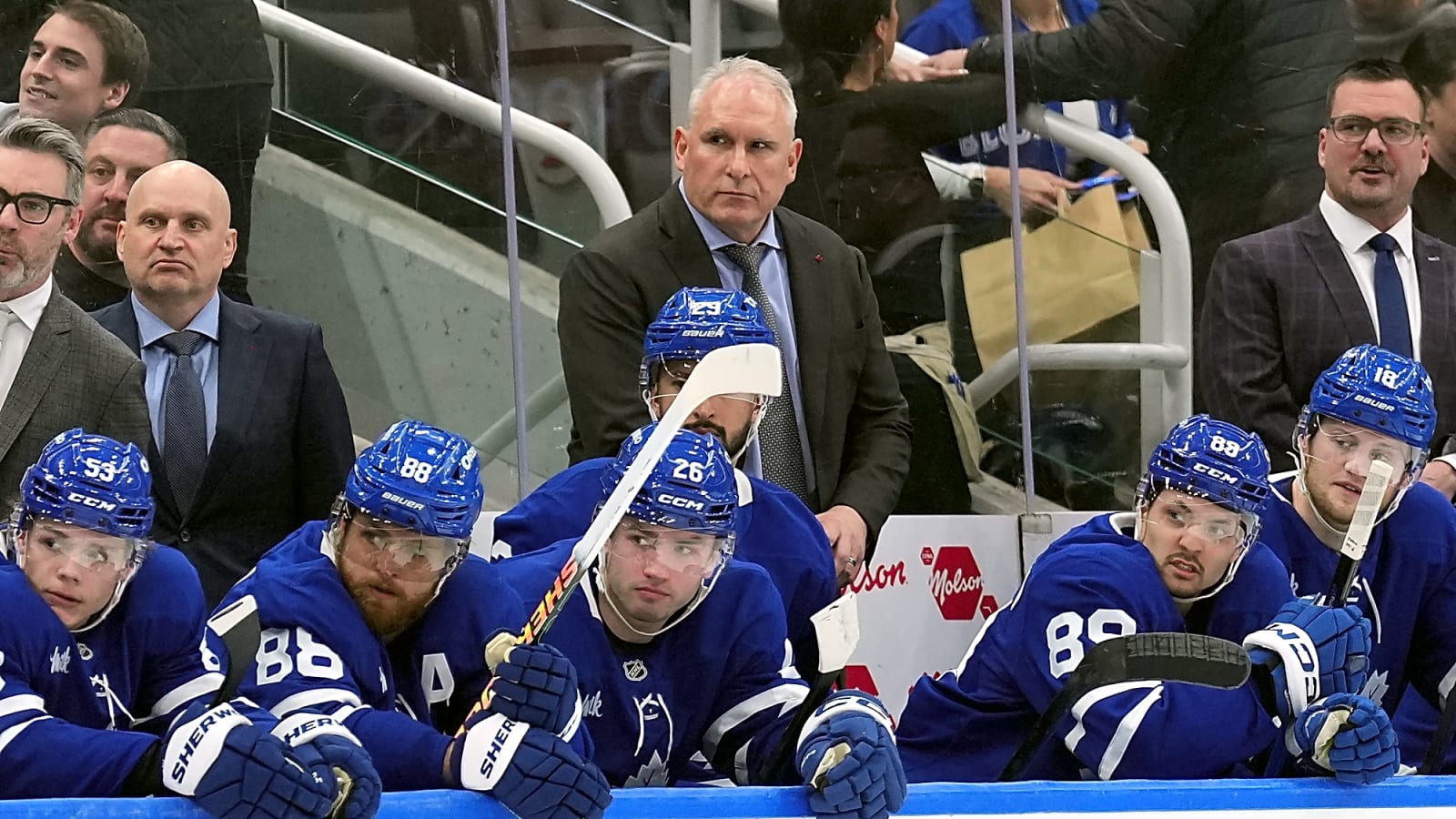
There’s been a growing sense that the Toronto Maple Leafs were a poor team trending in the wrong direction, rather than a solid team having a bad season (for one reason or another). Even smart voices like Justin Bourne raised the idea that this group may not be set up for the kind of rebound fans are hoping for.
But I keep coming back to a different question. What if the issue wasn’t simply a decline? Instead, did the team spend the season playing under a system that never really let it become what it actually is? Obviously, the new leadership team thought there was enough wrong to replace Craig Berube.
I can’t disagree. From the outside, looking at the season under Berube, there are at least a few patterns that were hard to ignore. Here are seven things I thought went wrong during Berube’s tenure as head coach.
Mistake 1: The Maple Leafs suffered an identity drift.
The idea of being “hard to play against” is fine. Every contender needs that edge. But at times, it felt like that became the entire identity instead of just one layer of it. When that happens, offence doesn’t disappear — it just becomes secondary.
Mistake 2: The Maple Leafs did too much defending.
The shot metrics told a pretty consistent story. In too many games, the Maple Leafs were being outshot and spending long stretches in their own zone. That usually isn’t random. It points to a team that isn’t controlling play enough through the neutral zone or in transition.
Mistake 3: The Maple Leafs became too one-dimensional in their thinking.
When everything gets filtered through structure and physicality, you can lose some of the creativity that separates elite teams. The game becomes simpler, but not necessarily more dangerous.
Mistake 4: The Maple Leafs’ skill was not fully unlocked.
This roster still has Auston Matthews and William Nylander. The talent is still there. The way the team played often leaned more toward chip-ins, cycle battles, and retrieval hockey rather than controlled entries and rush pressure. That matters. It changes how often your best players actually touch the puck in dangerous areas.
Mistake 5: The Maple Leafs saw hesitation creep into their play.
When the Maple Leafs’ skilled players were asked to constantly fit into a rigid structure, you could sometimes see hesitation creep in. Plays get safer. Reads slow down. Instead of dictating, the team starts reacting.
Mistake 6: The Maple Leafs became less than the sum of their parts.
Put it all together, and you get a team that didn’t look broken. It just looked muted. It wasn’t bad, but it wasn’t fully unlocked either. And with this level of talent, “pretty good” isn’t the goal.
Mistake 7: The Maple Leafs’ trust was too narrow.
There also seemed to be a limited runway for players outside the core group. That kind of roster rigidity can quietly limit internal competition and fresh energy over a long season.
Final thought about the Maple Leafs.
Taken together, this isn’t about blaming one coach for everything. It’s more about a pattern that crept into the team. The Maple Leafs became a team that leaned heavily into structure and predictability, maybe at the expense of offensive freedom and adaptability.
And if that’s even partly true, then the bigger question becomes this: Was the problem the roster… or was it that we never really saw the most dangerous version of it under Craig Berube?
I think there’s a chance it was the latter.
There’s been a growing sense that the Toronto Maple Leafs were a poor team trending in the wrong direction, rather than a solid team having a bad season (for one reason or another). Even smart voices like Justin Bourne raised the idea that this group may not be set up for the kind of rebound fans are hoping for.
But I keep coming back to a different question. What if the issue wasn’t simply a decline? Instead, did the team spend the season playing under a system that never really let it become what it actually is? Obviously, the new leadership team thought there was enough wrong to replace Craig Berube.
I can’t disagree. From the outside, looking at the season under Berube, there are at least a few patterns that were hard to ignore. Here are seven things I thought went wrong during Berube’s tenure as head coach.
Mistake 1: The Maple Leafs suffered an identity drift.
The idea of being “hard to play against” is fine. Every contender needs that edge. But at times, it felt like that became the entire identity instead of just one layer of it. When that happens, offence doesn’t disappear — it just becomes secondary.
Mistake 2: The Maple Leafs did too much defending.
The shot metrics told a pretty consistent story. In too many games, the Maple Leafs were being outshot and spending long stretches in their own zone. That usually isn’t random. It points to a team that isn’t controlling play enough through the neutral zone or in transition.
Mistake 3: The Maple Leafs did too much one-way thinking.
When everything gets filtered through structure and physicality, you can lose some of the creativity that separates elite teams. The game becomes simpler, but not necessarily more dangerous.
Mistake 4: The Maple Leafs’ skill was not fully unlocked.
This roster still has Auston Matthews and William Nylander. Yet the talent didn’t go anywhere. The way the team played often leaned more toward chip-ins, cycle battles, and retrieval hockey rather than controlled entries and rush pressure. That matters. It changes how often your best players actually touch the puck in dangerous areas.
Mistake 5: The Maple Leafs saw hesitation creep into their play.
When the Maple Leafs’ skilled players were asked to constantly fit into a rigid structure, you could sometimes see hesitation creep in. Plays get safer. Reads slow down. Instead of dictating, the team starts reacting.
Mistake 6: The Maple Leafs became less than the sum of their parts.
Put it all together, and you get a team that didn’t look broken. It just looked muted. It wasn’t bad, but it wasn’t fully unlocked either. And with this level of talent, “pretty good” isn’t the goal.
Mistake 7: The Maple Leafs’ trust was too narrow.
There also seemed to be a limited runway for players outside the core group. That kind of roster rigidity can quietly limit internal competition and fresh energy over a long season.
Final thought about the Maple Leafs.
Taken together, this isn’t about blaming one coach for everything. It’s more about a pattern that crept into the team. The Maple Leafs became a team that leaned heavily into structure and predictability, maybe at the expense of offensive freedom and adaptability.
And if that’s even partly true, then the bigger question becomes this: Was the problem the roster… or was it that we never really saw the most dangerous version of it under Craig Berube?
I think it was the latter.
More must-reads:
- Jerry Jones open to bringing Troy Aikman back to Cowboys amid ESPN drama, broadcasting uncertainty
- Colts' fire sale begins with trade of guard Quenton Nelson to Seahawks
- The 'Fewest passing-yards in a win' quiz
Breaking News
Trending News




Customize Your Newsletter
 +
+




Get the latest news and rumors, customized to your favorite sports and teams. Emailed daily. Always free!
PRIVACY POLICY COOKIE POLICY CONTACT US
ABOUT YARDBARKER TERMS OF SERVICE


By using this site, you agree to our Terms of Service and Privacy Policy.
This site is for entertainment purposes only.
There is no gambling offered on this site.
Gambling Problem? Call 1-800-Gambler.
