
-

-


Follow Us
-

 On Facebook
 On Flipboard


 Free Newsletters
 On YouTube
Chicago Cubs News / Bleed Cubbie Blue / July 7
Cubs Minor League Wrap: Josiah Hartshorn gets back on track in South Bend win 
Two Smokies got honored today. Catcher Owen Ayers was named Southern League Player of the Month for June. Over the past month, Ayers hit .451/.554/.824 with 13 doubles and seven home runs.
Chicago Cubs News / Field Level Media / July 7

Alex Bregman, Matthew Boyd helm Cubs' road win at Orioles
Matthew Boyd fired six shutout innings and Alex Bregman drove in two runs as the Chicago Cubs beat the host Baltimore Orioles 5-2 on Tuesday night in the opener of a three-game series.

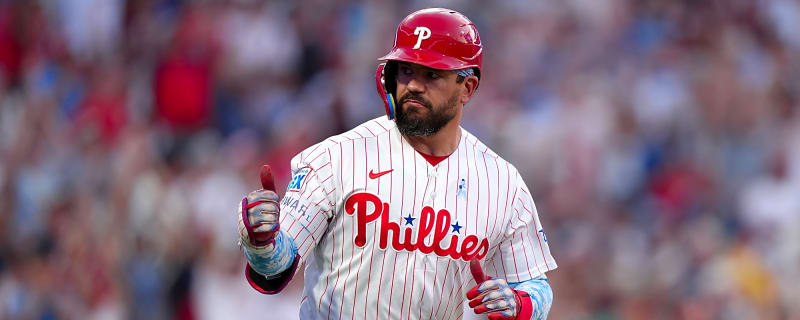
The 'Active MLB XBH leaders' quiz
How many of the active MLB players to rack up at least 500 extra base hits in their career can you name in five minutes?
Alex Bregman News / ChiCitySports / July 7

Chicago Cubs hit with strong Alex Bregman accusation
When the Chicago Cubs signed Alex Bregman to a five-year, $175 million contract in free agency, many were skeptical. It seemed like a awful lot of money to give an aging player who hasn’t really been elite in years.

25 MLB players most likely to be traded by the deadline
The MLB Trade Deadline has been quieter in recent years, in part due to playoff expansion, but 2026 is shaping up to be a more exciting one with several big names.
Chicago Cubs News / ChiCitySports / July 7
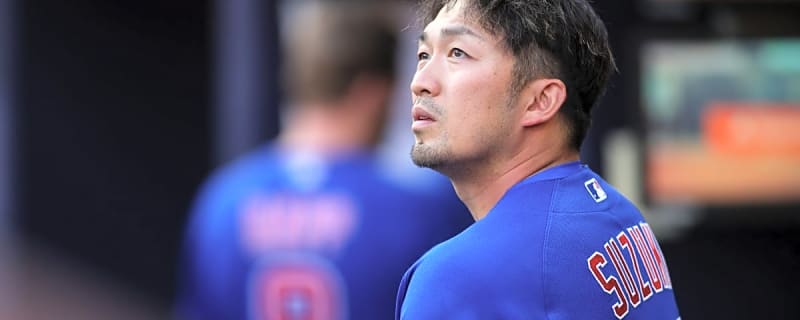
Chicago Cubs urged to listen to trade offers for outfielder
The Chicago Cubs will enter the All-Star break knowing they need to make a run in the second half of the regular season. The Cubs are 50-40 before starting their three-game series against the Baltimore Orioles on Tuesday night.
Matt Boyd News / Chicago Cubs on SI / July 7

Cubs vs Orioles Lineup: Can the Cubs Offense Heat Back Up? Boyd On the Mound, More
The Chicago Cubs managed to salvage a win in their series loss to the St. Louis Cardinals, coming through with 4 runs in the sixth inning to take the lead and hold it for a 6-4 win.
Chicago Cubs News / ChiCitySports / July 7

Chicago Cubs’ ESPN midseason grade is a testament to their true grit
The Chicago Cubs are a second place team in the NL Central Division and are currently the top seed in the National League Wild Card race. Those aren’t
Chicago Cubs News / ChiCitySports / July 7

Chicago Cubs acquire groundball specialist to help ailing pitching staff
The Chicago Cubs have gone through a legion of pitchers—of all sorts, styles, and levels of experience—in a desperate, and seemingly non-stop, effort to replace roster arms that have fallen to injury.
Chicago Cubs News / Bleed Cubbie Blue / July 7
The Cubs should change the out-of-town scoreboard to team names
Let me say, before you read any further, that this is definitely a first world problem, not that big a deal in the grand scheme of things. And I’ve written about this before, most recently in April 2025.
Chicago Cubs News / On Tap Sports Net / July 7

Mock Trade: Chicago Cubs Address Dire Pitching Needs
Should the Chicago Cubs be serious about going for a World Series championship in 2026, it’s going to take significant activity at the trade deadline. Specifically, they need to address their pitching staff, which is one of the most injured in all of Major League Baseball.


25 MLB players who could be first-time All-Stars in 2026
Being named to the Midsummer Classic is one of the biggest honors for MLB players. These 25 players have a chance to make their first All-Star appearance in 2026 based on their first-half performances.
Josh Fleming News / Cubs Insider / July 7
Cubs Sign LHP Josh Fleming to Minors Deal
Another day, another pitching addition for the Cubs. As first reported by Marquee’s Lance Brozdowski, the Cubs have signed lefty Josh Fleming to a minor league deal after he was released by the Blue Jays over the weekend.
Chicago Cubs News / Bleed Cubbie Blue / July 7
An assessment of Cubs pitching development. (Hint: It’s not pretty.)
This social media post made last week caught my eye, and probably yours too: Of those 13 pitchers, at least three (Cade Horton, Shelby Miller and Porter Hodge) aren’t expected to pitch at all the rest of this season.



Justin Steele News / Larry Brown Sports / July 7

Justin Steele was left in tears by a young fan’s letter
Chicago Cubs pitcher Justin Steele couldn’t help but be emotional over a letter sent to him by a young fan. Steele, who has yet to see action in the 2026 MLB season, recently shared photos of the letter from Tommy Lynch of Orland Park.
Pete Crow-Armstrong News / On Tap Sports Net / July 7

With A New Approach, Pete Crow-Armstrong Is Lapping Himself
In 2025, Chicago Cubs center fielder Pete Crow-Armstrong earned his first selection to the All-Star Game. He ended the year with 31 home runs, 35 stolen bases, and an fWAR (a FanGraphs statistic measuring wins above replacement) of 5.4.
Chicago Cubs News / Bleed Cubbie Blue / July 7
Chicago Cubs news — Assad, Imanaga, Hoerner, Bregman
Today’s Reflections After an offensive explosion, followed by an offensive fizzle and a pitching staff meltdown, the second part of the weekday games were a rollercoaster.
Chicago Cubs News / Field Level Media / July 6

Cubs hit road before break, take on offensively challenged O's
The Chicago Cubs have largely done good work so far this season, and they're looking to put together a strong push going into the All-Star break. They'll begin a three-game series against the host Baltimore Orioles on Tuesday night.
Chicago Cubs News / Yardbarker / July 6

Cubs need more production from Alex Bregman
Bregman has struggled to find his footing in Chicago, as he's posted a measly slash line of .241/.340/.345.
Pete Crow-Armstrong News / Athlon Sports / July 5
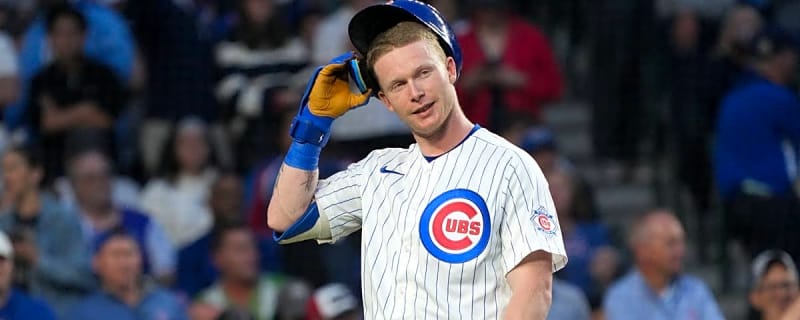
Cardinals Facing Backlash After Pete Crow-Armstrong's Injury Scare
The St. Louis Cardinals and Chicago Cubs just wrapped up a three-game weekend series at Wrigley Field. The Cardinals took the first two while the Cubs salvaged the finale. The Cardinals now sit at 47-40, third place in the National League Central with the Cubs right ahead of them at 50-40.
Michael Busch News / Athlon Sports / July 5
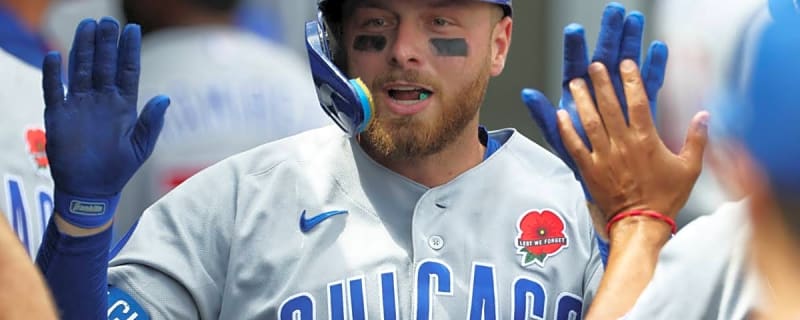
Michael Busch Traded His Bat Speed for His Walk Rate — Whether He Meant To or Not
Michael Busch is walking at a 15.2 percent clip, up from 9.5 percent a year ago and the 96th percentile in baseball, while his bat speed has sat in the 7th percentile for most of the season.
Javier Assad News / Field Level Media / July 5

Pitching-short Cubs need Javier Assad's ability, availability vs. Cards
In a season full of pitcher injuries, Chicago Cubs manager Craig Counsell has learned just how solid Javier Assad is. The 28-year-old right-hander, who pitches Sunday in Chicago to try to stop a St.
Chicago Cubs News / Larry Brown Sports / July 3
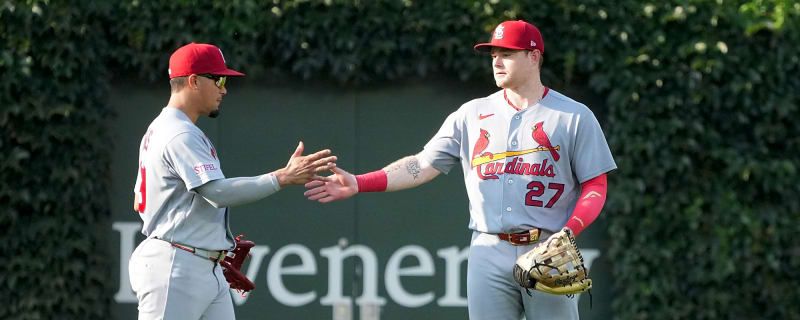
Cubs make the wrong kind of history against Cardinals
The Chicago Cubs went from the highest of highs to the lowest of lows within the span of two days. The North Side squad treated its fans to an epic blowout win on Wednesday over the San Diego Padres at Wrigley Field in Chicago, Ill.

MLB News / Yardbarker / July 3
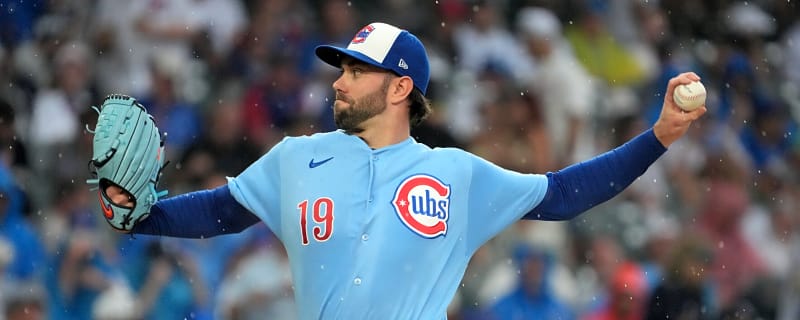
Cubs on wrong side of history after blowout loss to Cardinals
Within the span of 48 hours, the Chicago Cubs hit both ends of the scoring spectrum in a historic way.
Pete Crow-Armstrong News / Just Baseball / July 3

Pete Crow-Armstrong Wins a Much-Deserved NL Player of the Month
The calendar flipped from June to July earlier this week, closing the book on a month to remember for Pete Crow-Armstrong. Friday morning, Major League Baseball officially put the Chicago Cubs star’s 30-day stretch in its record books by name him the National League Player of the Month for June.
MLB News / Yardbarker / July 3

Historic June earns Cubs' Pete Crow-Armstrong Player of the Month honors
Chicago Cubs superstar Pete Crow-Armstrong's historic performance in June put him in the history books with two of the game's greatest and also earned him National League Player of the Month honors.
Seiya Suzuki News / Yardbarker / July 1

Cubs' Seiya Suzuki joins exclusive history with 100th career home run
After falling into a slump at the end of May and into June, Suzuki, along with Pete Crow-Armstrong, has helped turn the Cubs offense around.
Vince Velasquez News / MLB Trade Rumors / July 1

Vince Velasquez Elects Free Agency
Veteran righty Vince Velasquez elected free agency after being outrighted by the Cubs, according to the MLB.com transaction tracker. Chicago designated him for assignment on Sunday and quickly ran him through waivers.
Breaking News
Trending News











Customize Your Newsletter
 +
+




Get the latest news and rumors, customized to your favorite sports and teams. Emailed daily. Always free!
MY ACCOUNT
SUBSCRIBE
ADVERTISE
JOBS
FAQ
PRIVACY POLICY COOKIE POLICY CONTACT US
ABOUT YARDBARKER TERMS OF SERVICE


PRIVACY POLICY COOKIE POLICY CONTACT US
ABOUT YARDBARKER TERMS OF SERVICE
Copyright 2026 YB Media, LLC. All rights reserved.
By using this site, you agree to our Terms of Service and Privacy Policy.
This site is for entertainment purposes only.
There is no gambling offered on this site.
Gambling Problem? Call 1-800-Gambler.

By using this site, you agree to our Terms of Service and Privacy Policy.
This site is for entertainment purposes only.
There is no gambling offered on this site.
Gambling Problem? Call 1-800-Gambler.